
Losing one or more teeth can affect your confidence, oral health, and overall quality of life. Fortunately, modern dentistry offers several effective solutions for replacing missing teeth. The two most widely recommended treatments are dental implants and dentures. Many patients ask the same important question: what is the difference between dental implants and dentures? Understanding the distinctions between these two options can help you choose the best treatment for your needs, lifestyle, and long-term oral health goals.
To begin answering the question what is the difference between dental implants and dentures, it is helpful to understand what each solution actually is. Dental implants are small titanium posts that are surgically placed into the jawbone to replace the root of a missing tooth. After the implant integrates with the bone through a process called osseointegration, a dental crown, bridge, or denture can be attached to it. Dentures, on the other hand, are removable prosthetic devices designed to replace missing teeth and surrounding tissue. They typically sit on top of the gums and are held in place with suction, adhesives, or metal clasps.
When patients research what is the difference between dental implants and dentures, they often focus on stability and function. Dental implants are fixed solutions that behave very much like natural teeth. Because they are anchored directly into the jawbone, implants provide excellent stability when eating, speaking, or smiling. Dentures, while effective for restoring appearance, may shift slightly during daily activities. Modern dentures are much more advanced than older versions, but they still rely on the gums rather than the bone for support.
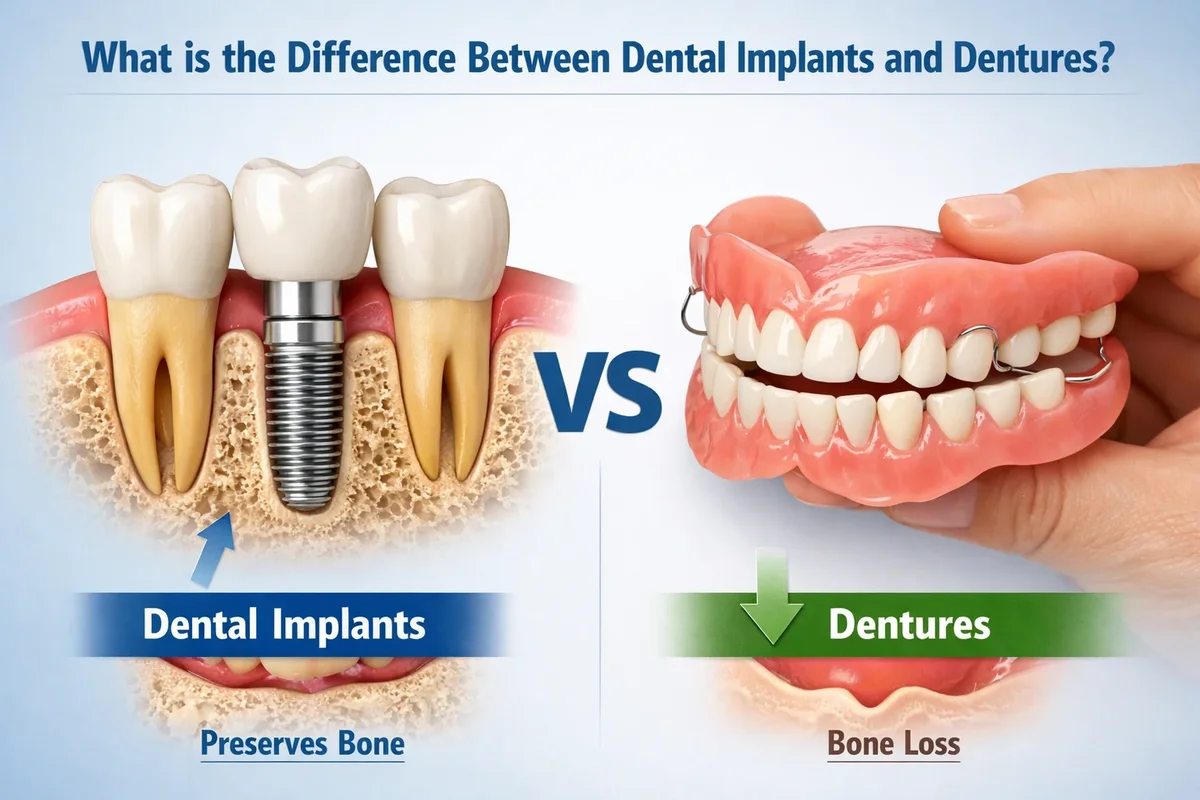
Another important aspect of what is the difference between dental implants and dentures involves bone health. The jawbone requires stimulation from tooth roots to maintain its density and shape. When teeth are lost, the bone may begin to shrink over time. Dental implants mimic the function of natural tooth roots, stimulating the jawbone and helping prevent bone loss. Dentures do not provide this stimulation, which means the jawbone may gradually resorb over the years. This difference can influence facial appearance and long-term oral health.
Patients frequently ask dentists what is the difference between dental implants and dentures in terms of comfort and convenience. Dental implants are permanently fixed in the mouth and do not need to be removed for cleaning. You brush and floss them just like natural teeth. Dentures, however, typically need to be removed daily for cleaning and soaking. Some people find this maintenance routine manageable, while others prefer the simplicity of a fixed solution like implants.
Another factor in understanding what is the difference between dental implants and dentures is the treatment process itself. Dental implant treatment usually involves several stages. After the implant is placed in the jawbone, healing can take several months before the final crown or prosthetic tooth is attached. Dentures, by comparison, can often be created and fitted in a shorter time frame because they do not require surgery or bone integration.
Patients also want to know what is the difference between dental implants and dentures when it comes to appearance. Both options are designed to restore a natural-looking smile, but implants are often considered the most natural solution because they emerge from the gum line just like real teeth. Dentures can look highly aesthetic as well, but because they sit on the gums, the feel may be slightly different.
Modern dentistry continues to improve both treatments, giving patients more choices than ever before. Some people even combine both solutions by using implant-supported dentures, which provide the stability of implants with the coverage of dentures. If you are considering treatment and wondering what is the difference between dental implants and dentures, a professional consultation can help determine which option best fits your oral health condition.
For personalized advice, you can contact a professional dental team through the Redent Klinik Contact Page. Dental professionals can evaluate bone structure, gum health, and personal preferences before recommending the most appropriate treatment.
Trusted dental organizations such as the American Dental Association also provide educational resources explaining modern tooth replacement solutions. Learning from reputable sources can help patients better understand what is the difference between dental implants and dentures and make informed decisions about their oral health.
Ultimately, the question what is the difference between dental implants and dentures comes down to several key factors: stability, bone health, maintenance, cost, and long-term durability. Dental implants offer a permanent, highly stable solution that closely mimics natural teeth, while dentures provide a removable and often more affordable option for replacing multiple missing teeth. Each option has advantages, and the best choice depends on individual health conditions, lifestyle, and treatment goals.
In the following sections of this guide, we will explore in detail what is the difference between dental implants and dentures by comparing how they function, how long they last, how they affect oral health, and which patients are the best candidates for each treatment. Understanding these differences can help you restore your smile with confidence and choose the solution that truly meets your needs. 😊
What Is the Difference Between Dental Implants and Dentures: A Complete Overview
When patients explore modern tooth replacement options, one of the most common questions they ask is what is the difference between dental implants and dentures. Both treatments are designed to replace missing teeth and restore a patient’s ability to eat, speak, and smile confidently. However, despite having the same goal, the structure, function, longevity, and maintenance requirements of these two treatments are very different.
Understanding what is the difference between dental implants and dentures is essential for making an informed dental decision. Some patients prioritize long-term stability and natural function, while others may look for a faster or more affordable solution. By examining the design, function, and clinical advantages of each treatment, patients can better determine which option aligns with their lifestyle and oral health needs.
Understanding Dental Implants
To truly understand what is the difference between dental implants and dentures, it is important to first examine dental implants. A dental implant is a small titanium post that is surgically inserted into the jawbone. This post acts as an artificial tooth root. Once placed, the implant undergoes a healing process called osseointegration, during which the implant fuses with the surrounding bone.
After the implant has integrated with the bone, a custom-made dental crown, bridge, or implant-supported prosthesis is attached to it. The result is a tooth replacement that closely mimics the structure and function of a natural tooth. When people ask what is the difference between dental implants and dentures, dentists often emphasize that implants are anchored in the jawbone, making them extremely stable and durable.
Key Characteristics of Dental Implants
Several characteristics define dental implants and help explain what is the difference between dental implants and dentures:
- Implants are surgically placed into the jawbone.
- They function similarly to natural tooth roots.
- They help preserve bone density.
- They provide excellent chewing strength.
- They are fixed in the mouth and cannot be removed by the patient.
Because of these features, dental implants are widely considered the most advanced and long-lasting tooth replacement solution available in modern dentistry.
Understanding Dentures
Another key step in understanding what is the difference between dental implants and dentures is examining how dentures work. Dentures are removable prosthetic devices designed to replace missing teeth and surrounding gum tissue. Unlike implants, dentures are not attached to the jawbone.
Instead, dentures rest directly on the gums and rely on suction, adhesives, or metal clasps for support. Dentures can replace either a few missing teeth (partial dentures) or an entire arch of teeth (full dentures). For many decades, dentures have been one of the most common tooth replacement solutions worldwide.
Although dentures are effective at restoring appearance and basic chewing function, they behave differently from implants. This difference is central to understanding what is the difference between dental implants and dentures from a functional perspective.
Key Characteristics of Dentures
The following features help highlight what is the difference between dental implants and dentures when discussing dentures:
- Dentures are removable appliances.
- They sit on top of the gums rather than inside the bone.
- They require daily removal for cleaning.
- They may rely on adhesives for additional stability.
- They can replace multiple teeth at once.
For many patients, dentures remain a practical solution, particularly when multiple teeth are missing or when surgical procedures are not suitable.
Main Functional Differences Between Implants and Dentures
When people ask dentists what is the difference between dental implants and dentures, they are often interested in how each option functions in everyday life. Functionality plays a major role in patient satisfaction.
Dental implants provide exceptional stability because they are anchored directly in the jawbone. This means patients can chew harder foods such as apples, nuts, or steak with confidence. Dentures, while functional, may sometimes shift slightly when chewing or speaking, especially if the fit changes over time.
Another difference often mentioned when discussing what is the difference between dental implants and dentures is the sensation in the mouth. Dental implants feel very similar to natural teeth because they emerge from the gums like real tooth roots. Dentures feel different because they sit on the gums and cover a larger portion of oral tissue.
Bone Health and Jaw Preservation
One of the most significant points in the discussion of what is the difference between dental implants and dentures relates to jawbone health. The jawbone requires stimulation from tooth roots to remain strong and dense. When teeth are lost, the bone may gradually shrink.
Dental implants help prevent this problem because they act as artificial roots and stimulate the bone during chewing. Dentures do not provide this stimulation, which means the jawbone may slowly shrink over time. This process can change facial appearance and may require dentures to be adjusted or replaced periodically.
Because of this biological difference, many dentists explain what is the difference between dental implants and dentures by emphasizing the long-term benefits implants provide for maintaining facial structure.
Which Option Is Right for You?
The answer to what is the difference between dental implants and dentures ultimately depends on individual circumstances. Factors such as bone density, general health, budget, and personal preferences all influence the final treatment decision.
For patients seeking a stable, long-term solution that closely mimics natural teeth, dental implants are often the preferred choice. For those looking for a non-surgical and often more affordable alternative, dentures may be suitable.
If you are considering treatment and would like expert guidance on what is the difference between dental implants and dentures, you can reach out through the Redent Klinik Contact Page. Dental professionals can assess your oral health and recommend the most appropriate treatment plan.
For additional reliable information about dental treatments, the American Dental Association provides trusted educational resources on tooth replacement options.
Ultimately, understanding what is the difference between dental implants and dentures empowers patients to make confident decisions about restoring their smile, improving oral function, and maintaining long-term dental health. 😊
How Dental Implants Work Compared to Traditional Dentures
When patients begin researching tooth replacement options, one of the most important questions they ask is what is the difference between dental implants and dentures. Understanding how each solution actually works inside the mouth helps clarify the practical differences between these treatments. While both options are designed to restore missing teeth, they operate in fundamentally different ways, which influences stability, comfort, and long-term oral health.
To fully understand what is the difference between dental implants and dentures, it is helpful to look closely at how each treatment functions from a structural and biological perspective. Dental implants interact with the jawbone, acting like artificial tooth roots. Dentures, in contrast, rest on the gums and function as removable prosthetic replacements for missing teeth.
The Biological Mechanism of Dental Implants
One of the most critical aspects of understanding what is the difference between dental implants and dentures lies in the biological process behind dental implants. Dental implants consist of three main components:
- The implant post (usually made of titanium)
- The abutment (connector piece)
- The dental crown or prosthetic tooth
The implant post is surgically inserted into the jawbone where a natural tooth root once existed. Over the following months, the bone grows around the implant surface in a process known as osseointegration. This integration allows the implant to become a stable and permanent part of the jaw structure.
This biological bonding is one of the most important reasons dentists highlight what is the difference between dental implants and dentures. Because the implant fuses with the bone, it becomes extremely stable and can support biting forces similar to natural teeth.
Osseointegration: The Key to Implant Stability
Osseointegration plays a major role in explaining what is the difference between dental implants and dentures. During this process, bone cells grow directly onto the surface of the implant, locking it firmly into place. This biological fusion prevents movement and allows the implant to function like a natural tooth root.
As a result, patients who receive implants often experience strong chewing ability, clear speech, and a natural feeling in the mouth. This stability is one of the primary advantages discussed when dentists explain what is the difference between dental implants and dentures to patients considering treatment.
How Traditional Dentures Function
Another essential step in understanding what is the difference between dental implants and dentures is examining how dentures operate. Traditional dentures are removable appliances that sit on the gum tissue rather than inside the bone.
Dentures are typically made from acrylic resin and sometimes include metal frameworks for additional support. They are custom designed to match the shape of a patient’s gums and replace either several missing teeth or an entire arch.
Instead of being anchored into bone, dentures rely on several factors for stability:
- The natural suction between the denture base and the gums
- Denture adhesives
- Remaining natural teeth (in partial dentures)
- The overall fit of the appliance
These structural differences highlight what is the difference between dental implants and dentures in terms of mechanical support. Dentures are supported by soft tissue, while implants are supported by bone.
The Role of Denture Adhesives and Fit
Many patients ask dentists what is the difference between dental implants and dentures when it comes to daily stability. Dentures may sometimes shift slightly during eating or speaking, particularly if the gums change shape over time.
Denture adhesives can help improve stability, but they do not provide the same level of fixation as implants. Additionally, dentures may need periodic adjustments because the jawbone naturally shrinks after tooth loss. This gradual change in bone structure is another key element of what is the difference between dental implants and dentures.
Chewing Efficiency and Bite Strength
Another factor patients consider when asking what is the difference between dental implants and dentures is chewing efficiency. Dental implants typically allow patients to restore up to 90–100% of their natural chewing ability.
Dentures, on the other hand, generally provide around 20–40% of natural chewing strength. This difference occurs because dentures are not anchored to the bone. When patients bite down on harder foods, the denture may shift slightly or distribute pressure across the gums.
Because implants are fixed within the jawbone, they allow patients to enjoy a wider range of foods. This functional advantage is frequently discussed when evaluating what is the difference between dental implants and dentures from a practical lifestyle perspective.
Speech and Oral Comfort
Speech clarity is another topic often included when discussing what is the difference between dental implants and dentures. Dentures cover a portion of the palate and gum tissue, which can initially affect pronunciation of certain sounds. Most patients adapt quickly, but some may require time to adjust.
Dental implants do not cover the palate or gum tissue in the same way. Because they function like individual teeth, they generally allow speech to remain natural and unaffected. This comfort factor is another reason implants are often considered the closest replacement to natural teeth.
Professional Guidance When Choosing a Treatment
If you are still wondering what is the difference between dental implants and dentures and which treatment is right for you, consulting a qualified dental professional is the best next step. Every patient’s oral health condition is different, and factors such as bone density, gum health, and medical history must be evaluated.
You can speak with dental specialists directly through the Redent Klinik Contact Page, where professionals can assess your specific needs and explain your treatment options in detail.
Additionally, trusted organizations like the American Dental Association provide educational information that helps patients understand procedures such as dental implants, dentures, and other restorative treatments.
Ultimately, understanding what is the difference between dental implants and dentures requires examining how each solution interacts with the jawbone, supports chewing forces, and affects daily comfort. Dental implants integrate with bone and function like natural teeth, while dentures rest on the gums and provide a removable replacement for missing teeth.
Both treatments have helped millions of patients restore their smiles. By learning exactly what is the difference between dental implants and dentures, patients can choose the option that best supports their oral health, comfort, and long-term quality of life. 😊
Key Structural Differences Between Dental Implants and Dentures
When exploring tooth replacement solutions, one of the most important questions patients ask is what is the difference between dental implants and dentures. While both treatments restore missing teeth and improve oral function, their structural design is fundamentally different. These differences affect stability, durability, chewing ability, maintenance, and long-term oral health.
Understanding the structural design behind each treatment makes it much easier to answer the question what is the difference between dental implants and dentures. Dental implants replace both the root and the visible portion of a missing tooth, while dentures replace only the visible portion of the teeth and sit on top of the gums. This distinction is the foundation of nearly every other difference between these two treatment options.
The Basic Structure of Dental Implants
To clearly understand what is the difference between dental implants and dentures, it is essential to look at how dental implants are built. Dental implants are designed to mimic the natural structure of a tooth. A natural tooth has two main components: the root embedded in the jawbone and the crown visible above the gums. Dental implants replicate this design.
A complete dental implant system typically consists of three key components:
- Implant Post: A titanium screw that replaces the natural tooth root.
- Abutment: A connector piece that attaches the crown to the implant.
- Dental Crown: The artificial tooth placed on top of the implant.
This root-based structure is a major reason why dentists often emphasize what is the difference between dental implants and dentures. Because the implant post is anchored in the jawbone, it provides strong support for the replacement tooth.
Why the Root Replacement Matters
The replacement of the tooth root is a critical factor in understanding what is the difference between dental implants and dentures. When a tooth root is lost, the surrounding bone may gradually shrink due to lack of stimulation. Dental implants restore this stimulation by transferring chewing forces directly into the jawbone.
This structural feature helps maintain bone density and facial structure. Dentures, in contrast, do not replace tooth roots and therefore do not stimulate the jawbone in the same way.
The Structural Design of Dentures
Another essential part of understanding what is the difference between dental implants and dentures involves the construction of dentures. Dentures are removable prosthetic devices designed to replace multiple missing teeth at once.
Dentures are typically made from acrylic resin that resembles natural gum tissue and artificial teeth made from porcelain or composite materials. Instead of replacing the tooth root, dentures rest directly on the gums.
There are two primary types of dentures:
- Full Dentures: Replace all teeth in the upper or lower jaw.
- Partial Dentures: Replace several missing teeth while attaching to remaining natural teeth.
The removable structure of dentures is one of the key elements when discussing what is the difference between dental implants and dentures. Dentures rely on suction, clasps, or adhesives rather than a fixed connection to bone.
How Dentures Stay in Place
Dentures remain in position primarily through suction and the natural shape of the gums. In some cases, denture adhesive may be used to improve stability. This structural approach explains another aspect of what is the difference between dental implants and dentures: dentures depend on soft tissue for support rather than bone.
Because gum tissue is softer than bone, dentures may sometimes shift slightly when chewing or speaking. Over time, as the jawbone naturally shrinks after tooth loss, dentures may also require relining or replacement to maintain a proper fit.
Fixed vs Removable Tooth Replacement
One of the most noticeable structural distinctions when discussing what is the difference between dental implants and dentures is whether the prosthetic is fixed or removable. Dental implants are permanently fixed in the jawbone and function like natural teeth. Patients brush and floss them just as they would their own teeth.
Dentures, however, are removable appliances. They must typically be taken out daily for cleaning and soaking. While modern dentures are designed to fit comfortably, their removable nature can feel less natural to some patients.
This difference in permanence is one of the first points dentists explain when patients ask what is the difference between dental implants and dentures. A fixed solution often offers greater stability and confidence in daily activities.
Structural Impact on Facial Appearance
The structural differences between implants and dentures also influence facial appearance. When patients research what is the difference between dental implants and dentures, they often overlook the long-term aesthetic effects.
Dental implants help maintain jawbone volume because they replace the root structure. This support helps preserve the natural contours of the face. Dentures, by contrast, sit on the gums and do not prevent bone shrinkage. Over time, this can lead to changes in facial structure such as sunken cheeks or wrinkles around the mouth.
This structural difference plays a significant role in long-term facial aesthetics and is another reason many patients investigate what is the difference between dental implants and dentures before choosing a treatment.
Consulting Dental Professionals
If you are evaluating treatment options and wondering what is the difference between dental implants and dentures, consulting a dental professional is the best way to receive personalized advice. Every patient’s oral health condition is unique, and factors such as bone density, gum health, and lifestyle preferences must be considered.
You can speak directly with experienced dental specialists through the Redent Klinik Contact Page. A professional consultation allows dentists to assess your oral health and recommend the most suitable tooth replacement option.
In addition, trusted organizations like the American Dental Association provide educational resources about restorative dentistry and tooth replacement treatments.
Ultimately, understanding what is the difference between dental implants and dentures requires examining their structural design. Dental implants replace the root and crown of a missing tooth and integrate with the jawbone, while dentures replace only the visible teeth and rest on the gums. These structural differences influence comfort, durability, and long-term oral health outcomes.
By learning the structural principles behind each treatment, patients can better understand what is the difference between dental implants and dentures and choose the option that best fits their lifestyle, oral health goals, and long-term dental well-being. 😊
Comfort and Stability: What Is the Difference Between Dental Implants and Dentures in Daily Life
For many patients considering tooth replacement, comfort and stability are among the most important factors. This is why people frequently ask dentists what is the difference between dental implants and dentures when it comes to everyday life. Both options restore the appearance of missing teeth and improve oral function, but the way they feel in the mouth can be dramatically different.
Understanding what is the difference between dental implants and dentures in terms of comfort requires examining how each solution interacts with the gums, jawbone, and surrounding oral tissues. Dental implants are fixed within the jawbone, providing stability similar to natural teeth. Dentures, however, rest on top of the gums and rely on suction or adhesives to remain in place. These structural differences influence daily experiences such as eating, speaking, smiling, and overall confidence.
How Stability Affects Everyday Activities
One of the first areas patients notice when evaluating what is the difference between dental implants and dentures is stability during everyday activities. Dental implants are anchored into the jawbone, meaning they remain firmly in place regardless of chewing pressure. This stability allows patients to bite and chew food with confidence.
Dentures, on the other hand, rely on the shape of the gums and sometimes denture adhesive to stay in place. Although modern dentures are carefully designed to fit the mouth, they may still shift slightly when eating harder foods. This subtle movement can make some patients feel less secure when chewing.
Chewing Efficiency and Food Choices
Another key point when discussing what is the difference between dental implants and dentures involves chewing efficiency. Dental implants allow patients to eat a wide variety of foods, including harder or crunchier items such as nuts, apples, or steak. Because implants are integrated with the bone, they distribute chewing forces similarly to natural teeth.
Dentures typically provide less biting force compared to implants. Many patients with dentures adapt their diets by avoiding foods that are difficult to chew. This difference in chewing performance is one of the most practical examples of what is the difference between dental implants and dentures in daily life.
Speech and Pronunciation
Another factor that helps explain what is the difference between dental implants and dentures is how each treatment affects speech. Clear pronunciation depends on the tongue, lips, and teeth working together. When teeth are replaced, the structure of the mouth can temporarily change.
Dental implants function similarly to natural teeth because they emerge from the gum line and do not cover the roof of the mouth. As a result, most patients experience minimal changes to speech after the healing process is complete.
Dentures, particularly full upper dentures, may cover part of the palate. This design can slightly alter how the tongue interacts with the mouth during speech. While most patients quickly adapt, some individuals may notice temporary changes in pronunciation when first wearing dentures.
Adapting to New Dental Prosthetics
When patients learn what is the difference between dental implants and dentures, they often ask how long it takes to adjust to each option. Dental implants generally feel very natural once healing is complete because they are fixed in place.
Denture wearers typically experience a short adaptation period as they learn how to chew and speak with the appliance. Over time, most people become comfortable with their dentures, but the sensation remains different from natural teeth or implants.
Comfort During Long-Term Wear
Comfort over long periods of time is another essential factor when evaluating what is the difference between dental implants and dentures. Dental implants do not place pressure on the gums because they are anchored in the bone. This means patients rarely experience irritation or sore spots caused by chewing.
Dentures, however, rest directly on the gum tissue. Over time, pressure from chewing may occasionally cause irritation or sore areas, particularly if the dentures become slightly loose due to natural bone changes. Regular adjustments by a dentist can help maintain comfort.
Jawbone Changes and Fit
A major biological factor that explains what is the difference between dental implants and dentures is how the jawbone changes after tooth loss. Without natural tooth roots, the jawbone gradually loses density. Because dentures do not stimulate the bone, the shape of the gums may slowly change.
As the jawbone shrinks, dentures may require relining or replacement to maintain proper fit. Dental implants help preserve bone density because they stimulate the jawbone during chewing. This helps maintain both stability and comfort over the long term.
Psychological Comfort and Confidence
Beyond physical comfort, another aspect of what is the difference between dental implants and dentures is psychological confidence. Dental implants are fixed and do not need to be removed. Many patients appreciate the feeling of having teeth that function almost exactly like their natural ones.
Dentures, while highly effective for restoring smiles, are removable appliances. Some patients feel slightly self-conscious about removing them for cleaning or worry about movement while speaking or laughing. These emotional factors often play a role in treatment decisions.
Professional Advice When Choosing Between Implants and Dentures
If you are evaluating tooth replacement options and wondering what is the difference between dental implants and dentures, consulting a qualified dental professional is essential. Every patient’s oral health situation is unique, and factors such as bone density, gum health, and lifestyle preferences must be considered.
You can speak with experienced dental professionals through the Redent Klinik Contact Page to receive personalized advice about implants, dentures, and other restorative options.
For additional reliable dental health information, the American Dental Association provides educational resources explaining tooth replacement treatments and oral health care.
Ultimately, understanding what is the difference between dental implants and dentures in terms of comfort and stability helps patients make informed decisions. Dental implants provide fixed, bone-supported stability that closely mimics natural teeth, while dentures offer a removable solution that can restore appearance and function effectively.
By learning the real-world differences in comfort, chewing ability, and long-term stability, patients can better understand what is the difference between dental implants and dentures and choose the treatment that best supports their lifestyle, health, and confidence. 😊
Longevity and Durability: Which Option Lasts Longer?
One of the most important questions patients ask when exploring tooth replacement options is what is the difference between dental implants and dentures in terms of longevity and durability. Both treatments are designed to restore missing teeth, improve oral function, and enhance appearance. However, their lifespan and resistance to wear are very different. Understanding how long each option typically lasts can help patients make a more informed decision about their oral health.
When evaluating what is the difference between dental implants and dentures, durability becomes a key factor because tooth replacement solutions represent both a financial and health investment. Patients often want a treatment that will provide long-term stability, require minimal replacements, and maintain functionality for many years.
Lifespan of Dental Implants
Dental implants are widely known for their long-term durability. When patients ask dentists what is the difference between dental implants and dentures, one of the most common answers involves the lifespan of implants compared to removable prosthetics.
A properly placed dental implant can last 20 years or more, and in many cases it can last a lifetime with proper oral hygiene and regular dental care. The titanium implant post itself is extremely strong and resistant to corrosion. Because it integrates with the jawbone through osseointegration, the implant becomes a stable part of the mouth.
Factors That Influence Implant Longevity
Several factors determine how long dental implants remain functional. These factors are important when discussing what is the difference between dental implants and dentures in long-term performance.
- Good oral hygiene and regular brushing and flossing
- Routine dental check-ups and professional cleanings
- Healthy bone density and gum tissue
- Avoiding smoking and excessive alcohol consumption
- Managing conditions such as diabetes
While the implant post can last for decades, the crown placed on top of the implant may need replacement after 10–15 years due to normal wear. Even so, implants are generally considered the most durable tooth replacement option available.
Lifespan of Dentures
Another key element in understanding what is the difference between dental implants and dentures involves the lifespan of dentures. Dentures typically do not last as long as implants because they are not anchored into the jawbone and are subject to wear and changes in the mouth.
Most dentures last between 5 and 10 years before needing replacement. Over time, the materials used in dentures can wear down, and the shape of the jawbone may change as bone resorption occurs after tooth loss.
Why Dentures Need Periodic Replacement
Several biological and mechanical factors explain what is the difference between dental implants and dentures in terms of durability. Dentures rest on the gums rather than the bone, which means their fit can gradually change.
Common reasons dentures need adjustment or replacement include:
- Jawbone shrinkage over time
- Changes in gum tissue
- Normal wear of artificial teeth
- Cracks or damage in the denture base
- Loss of suction or stability
Dentists often recommend periodic denture relining to improve the fit as the jaw structure changes. However, even with relining, dentures typically require full replacement after several years.
Durability Under Daily Chewing Pressure
Another important factor when evaluating what is the difference between dental implants and dentures is how each solution handles daily chewing pressure. Dental implants are embedded in bone, which allows them to distribute biting forces naturally across the jaw.
This structural stability means implants can withstand significant chewing pressure without shifting. Patients with implants can typically eat most foods comfortably.
Dentures distribute chewing pressure across the gums rather than the bone. Because gum tissue is softer than bone, dentures are more susceptible to movement during eating. This difference can also contribute to wear and tear on the denture material over time.
Material Strength and Wear Resistance
Material composition is another factor that explains what is the difference between dental implants and dentures in durability. Dental implants are usually made from medical-grade titanium, which is highly resistant to corrosion and extremely strong.
The crowns attached to implants are often made from porcelain or zirconia, both of which are durable materials designed to withstand chewing forces.
Dentures, in contrast, are typically made from acrylic resin and artificial teeth made of composite or porcelain. While these materials are durable, they are still more prone to wear compared to implant-supported crowns.
Long-Term Maintenance Considerations
Maintenance is another important aspect of what is the difference between dental implants and dentures. Dental implants require daily brushing, flossing, and regular dental checkups—similar to natural teeth. When cared for properly, implants rarely need major maintenance beyond occasional crown replacement.
Dentures require daily removal for cleaning and soaking. In addition, they often require periodic adjustments as the jawbone changes shape. This maintenance routine can add to the long-term cost and effort involved in denture care.
Professional Guidance for Long-Term Tooth Replacement
If you are considering your options and wondering what is the difference between dental implants and dentures in terms of durability, consulting a dental professional is the best way to receive personalized advice. Dentists evaluate bone density, gum health, and medical history to determine the most suitable treatment.
You can discuss your treatment options directly with dental specialists through the Redent Klinik Contact Page. A consultation allows professionals to recommend the most durable solution for your individual needs.
Additionally, organizations such as the American Dental Association provide trusted information about dental implants, dentures, and long-term oral health care.
Ultimately, understanding what is the difference between dental implants and dentures in terms of longevity and durability can help patients choose a treatment that aligns with their expectations and lifestyle. Dental implants generally offer superior durability and long-term stability, while dentures remain a reliable option for replacing multiple teeth but typically require replacement over time.
By learning how each option performs over the years, patients gain a clearer picture of what is the difference between dental implants and dentures and can confidently choose the treatment that provides the best long-term outcome for their oral health and smile. 😊
Oral Health Impact: Bone Loss, Gum Health, and Long-Term Effects
When patients evaluate tooth replacement options, they often focus on appearance and cost. However, an equally important factor is long-term oral health. Many people researching treatment options eventually ask the same question: what is the difference between dental implants and dentures when it comes to the health of the jawbone, gums, and surrounding oral structures. The impact each solution has on oral health can significantly influence long-term comfort, facial appearance, and overall dental stability.
Understanding what is the difference between dental implants and dentures from a biological perspective helps patients recognize why dentists often recommend implants when possible. Both treatments restore missing teeth, but the way they interact with the jawbone and gum tissue creates very different outcomes over time.
The Role of Tooth Roots in Jawbone Health
To fully understand what is the difference between dental implants and dentures, it is important to first understand the role natural tooth roots play in maintaining jawbone health. Natural teeth stimulate the jawbone whenever a person chews or bites food. This stimulation signals the body to maintain bone density in that area.
When a tooth is lost, the root is no longer present to stimulate the bone. As a result, the body begins to reabsorb the bone tissue in that area. This process, known as bone resorption, can gradually change the shape of the jaw and affect facial appearance.
Bone Resorption After Tooth Loss
Bone resorption is a natural biological process, but it highlights an important point when discussing what is the difference between dental implants and dentures. Without root stimulation, the jawbone may shrink over time. This bone loss can lead to several issues:
- Changes in facial structure
- Sunken cheeks or lips
- Loose-fitting dentures
- Reduced jaw strength
- Difficulty placing implants later
This is one reason dentists emphasize early tooth replacement whenever possible.
How Dental Implants Preserve Jawbone Structure
A major advantage often discussed when answering what is the difference between dental implants and dentures is the ability of implants to preserve bone structure. Dental implants act as artificial tooth roots that integrate directly with the jawbone.
Once the implant fuses with the bone through osseointegration, it transfers chewing forces into the bone just like a natural tooth root. This stimulation helps maintain bone density and prevents the gradual shrinking that occurs after tooth loss.
Long-Term Bone Preservation
One of the strongest arguments dentists make when explaining what is the difference between dental implants and dentures involves long-term bone preservation. Because implants stimulate the jawbone, they help maintain the natural shape of the face and jaw.
This benefit contributes to several long-term advantages:
- Preservation of facial structure
- Improved chewing strength
- Stable support for prosthetic teeth
- Reduced risk of jawbone shrinkage
For many patients, maintaining bone structure is one of the most compelling reasons to consider dental implants.
How Dentures Affect Jawbone and Gum Tissue
Another important aspect of understanding what is the difference between dental implants and dentures is examining how dentures interact with the jawbone and gum tissue. Unlike implants, dentures do not replace the tooth root. Instead, they rest on the surface of the gums.
Because dentures do not stimulate the bone, the jawbone may gradually shrink over time. This process can alter the shape of the gums and cause dentures to become loose. As a result, patients often require denture adjustments or replacements every few years.
Changes in Denture Fit Over Time
Bone shrinkage is one of the most significant factors explaining what is the difference between dental implants and dentures in long-term oral health. As the jawbone changes shape, dentures may no longer fit properly. This can lead to:
- Movement during chewing or speaking
- Pressure points on the gums
- Sore spots or irritation
- Difficulty maintaining suction
Dentists may recommend denture relining procedures to improve the fit as the jawbone changes.
Impact on Gum Health
Gum health is another important factor when analyzing what is the difference between dental implants and dentures. Dental implants are surrounded by gum tissue in a way that closely resembles natural teeth. When properly maintained with brushing and flossing, implants can support healthy gum tissue.
Dentures place pressure directly on the gums. Over time, this pressure may sometimes cause irritation or inflammation, particularly if the denture does not fit correctly. Proper denture hygiene and regular dental visits are essential to prevent gum problems.
Facial Appearance and Aging
Another interesting perspective when discussing what is the difference between dental implants and dentures is how each option influences facial appearance. Bone loss caused by missing teeth can lead to subtle changes in the shape of the face.
Dental implants help maintain the underlying bone structure, which supports the natural contours of the face. Dentures restore the appearance of teeth but do not prevent bone shrinkage. Over many years, this can sometimes lead to a slightly collapsed facial profile.
Maintaining Long-Term Oral Health
Regardless of the treatment option chosen, maintaining oral health requires proper hygiene and regular dental care. Patients who want professional guidance about what is the difference between dental implants and dentures should consult experienced dental professionals.
You can contact dental specialists through the Redent Klinik Contact Page to receive personalized advice about dental implants, dentures, and other restorative treatments.
Additionally, trusted resources such as the American Dental Association provide valuable educational information about oral health, tooth replacement options, and preventive care.
Ultimately, understanding what is the difference between dental implants and dentures from an oral health perspective reveals important long-term implications. Dental implants help preserve jawbone density and maintain facial structure, while dentures restore missing teeth but do not prevent natural bone resorption.
By considering how each treatment affects bone health, gum tissue, and facial stability, patients gain a clearer understanding of what is the difference between dental implants and dentures and can choose the solution that best protects their long-term oral health and quality of life. 😊
Cost Comparison: What Is the Difference Between Dental Implants and Dentures in Terms of Price
When patients research tooth replacement options, one of the most common concerns is cost. This is why many people searching online ask the question what is the difference between dental implants and dentures when it comes to price. While both treatments aim to restore missing teeth and improve oral function, their initial cost, long-term value, and maintenance expenses can vary significantly.
Understanding what is the difference between dental implants and dentures in financial terms requires looking beyond the upfront price. Factors such as durability, maintenance requirements, and replacement frequency all influence the overall investment over time. Some patients may initially focus on the lower cost of dentures, while others prefer the long-term stability offered by dental implants.
Average Cost of Dental Implants
Dental implants are considered a premium tooth replacement solution due to their advanced surgical placement and long-term durability. When evaluating what is the difference between dental implants and dentures, dental implants typically have a higher initial cost because they involve multiple components and procedures.
A single dental implant treatment generally includes:
- Implant post placement
- Abutment connection
- Custom dental crown
- Surgical procedure and imaging
Typical Implant Price Range
While prices can vary by country and clinic, the approximate cost of dental implants often falls within the following ranges:
- Single dental implant: $3,000 – $5,000
- Implant-supported bridge: $6,000 – $15,000
- Full arch implant restoration (All-on-4): $20,000 – $40,000
These numbers help illustrate what is the difference between dental implants and dentures in terms of initial financial investment. Although implants require a higher upfront cost, their durability and longevity can make them a cost-effective solution over time.
Average Cost of Dentures
Another key factor when exploring what is the difference between dental implants and dentures is the price of dentures. Dentures are generally more affordable initially because they do not require surgery or bone integration.
Dentures are fabricated in a dental laboratory and custom fitted to the patient’s gums. The cost varies depending on the materials used, the complexity of the case, and whether the dentures are partial or full.
Typical Denture Price Range
The approximate cost ranges for dentures are:
- Partial dentures: $700 – $1,800
- Full dentures (upper or lower): $1,000 – $3,000
- Premium custom dentures: $3,000 – $5,000
These prices highlight a major aspect of what is the difference between dental implants and dentures: dentures typically cost much less upfront than dental implants.
Long-Term Cost Considerations
Although dentures are more affordable initially, long-term costs should also be considered when evaluating what is the difference between dental implants and dentures. Dentures usually need replacement every 5–10 years because of wear and changes in the jawbone.
Patients may also need periodic adjustments or relining procedures to maintain a proper fit as the jawbone gradually shrinks. These additional treatments can increase the total cost of dentures over time.
Dental implants, in contrast, are designed to last decades. While the crown on an implant may require replacement after 10–15 years, the implant post itself can often last a lifetime with proper care.
Maintenance Costs Over Time
Maintenance is another factor that helps explain what is the difference between dental implants and dentures financially. Denture wearers may need:
- Denture adhesives
- Regular relining procedures
- Replacement dentures
- Professional adjustments
Implant patients typically maintain their restorations through regular dental hygiene practices similar to caring for natural teeth.
Value vs Initial Price
When discussing what is the difference between dental implants and dentures, dentists often encourage patients to consider long-term value rather than only the initial cost. Dental implants provide stability, improved chewing ability, and bone preservation benefits that dentures cannot offer.
For some patients, this long-term value justifies the higher initial investment. Others may choose dentures due to budget limitations or because they prefer a non-surgical treatment option.
Insurance and Financing Options
Dental insurance coverage can also influence the financial aspect of what is the difference between dental implants and dentures. Some insurance plans partially cover dentures, while implant coverage varies depending on the policy.
Many dental clinics now offer financing plans that allow patients to spread the cost of implant treatment over several months or years. This can make implants more accessible for patients who prefer a permanent tooth replacement solution.
Consulting a Dental Professional About Costs
If you are still deciding what is the difference between dental implants and dentures in terms of affordability and long-term value, a professional consultation is the best next step. Dentists can evaluate your oral health, recommend the most appropriate treatment, and provide an accurate cost estimate.
You can speak directly with experienced dental professionals through the Redent Klinik Contact Page. A consultation will help determine which tooth replacement option best fits your health needs and financial situation.
For additional reliable information about dental treatments, the American Dental Association provides trusted resources explaining tooth replacement options and oral health care.
Ultimately, understanding what is the difference between dental implants and dentures in terms of cost involves balancing initial price with long-term benefits. Dentures are typically more affordable upfront, while dental implants require a higher investment but offer greater durability, stability, and long-term value.
By carefully evaluating both the financial and functional aspects of treatment, patients can better understand what is the difference between dental implants and dentures and choose the option that aligns with their dental needs, budget, and long-term health goals. 💡
Maintenance and Cleaning Requirements for Implants vs Dentures
When patients compare tooth replacement options, daily maintenance is a major factor influencing their decision. Many people researching restorative dentistry eventually ask what is the difference between dental implants and dentures in terms of cleaning, hygiene routines, and long-term care. While both options restore missing teeth, the way they are maintained in daily life differs significantly. Understanding these differences helps patients choose a solution that fits comfortably into their lifestyle and oral care habits.
Dental implants are designed to function very similarly to natural teeth, which means they follow a familiar oral hygiene routine. Dentures, on the other hand, are removable appliances that require a different cleaning process and additional maintenance. This distinction is one of the most practical answers when patients ask what is the difference between dental implants and dentures from a hygiene perspective.
Daily Cleaning Routine for Dental Implants
Dental implants are permanently fixed in the jawbone, so their maintenance routine closely resembles the care required for natural teeth. Patients brush and floss their implants daily to remove plaque and prevent gum inflammation around the implant area.
This similarity to natural tooth care is one of the main reasons dentists explain what is the difference between dental implants and dentures in terms of convenience. Because implants do not need to be removed from the mouth, patients can maintain oral hygiene with a standard toothbrush, dental floss, and antimicrobial mouthwash.
Recommended Oral Hygiene for Implants
Maintaining healthy implants requires consistent care. Dentists typically recommend the following hygiene routine:
- Brushing twice daily with a soft-bristled toothbrush
- Flossing around the implant crown and gumline
- Using interdental brushes to clean difficult areas
- Rinsing with antibacterial mouthwash
- Scheduling professional dental cleanings every 6 months
These practices support gum health and prevent peri-implantitis, an inflammatory condition that can affect implants. This emphasis on preventive care highlights another important aspect of what is the difference between dental implants and dentures: implants require careful hygiene but generally integrate seamlessly into normal dental routines.
Cleaning Routine for Dentures
Another important part of understanding what is the difference between dental implants and dentures is examining how dentures must be cleaned. Dentures require a different hygiene approach because they are removable appliances that rest on the gums.
Unlike implants, dentures must be removed from the mouth daily for proper cleaning. Food particles and bacteria can accumulate on the denture surface and underneath the appliance, so thorough cleaning is necessary to prevent gum irritation and oral infections.
Steps for Proper Denture Cleaning
Patients who wear dentures typically follow a daily cleaning routine that includes:
- Removing dentures after meals to rinse away food particles
- Brushing dentures with a special denture brush
- Using non-abrasive denture cleanser
- Soaking dentures overnight in a cleaning solution
- Cleaning the gums and tongue before reinserting dentures
This routine demonstrates another practical example of what is the difference between dental implants and dentures. Denture hygiene requires extra steps compared to implant maintenance, particularly because the appliance must be removed and cleaned separately.
Nighttime Care and Storage
Another daily routine difference that helps explain what is the difference between dental implants and dentures involves nighttime care. Dental implants remain in the mouth permanently and do not require removal before sleep.
Dentures, however, are typically removed overnight to allow the gums to rest. Leaving dentures out during sleep also reduces the risk of bacterial growth and fungal infections such as denture stomatitis.
During this time, dentures are usually stored in a denture solution or water to prevent the material from drying out or losing shape.
Long-Term Maintenance Requirements
Beyond daily hygiene, long-term maintenance is another important factor when discussing what is the difference between dental implants and dentures. Dental implants generally require minimal long-term maintenance as long as patients maintain good oral hygiene and attend routine dental checkups.
Dentures, on the other hand, may require periodic adjustments because the jawbone naturally changes shape over time. As bone resorption occurs, dentures may become loose and require relining or replacement.
Professional Dental Visits
Both treatment options require professional dental care. However, the nature of these visits can differ:
- Implant patients typically attend regular hygiene checkups and monitoring.
- Denture patients may need adjustments, relining, or new dentures over time.
This difference further illustrates what is the difference between dental implants and dentures in long-term maintenance responsibilities.
Hygiene and Oral Health Risks
Another reason dentists emphasize what is the difference between dental implants and dentures is the potential oral health risks associated with poor hygiene. Dental implants can develop gum infections if plaque accumulates around the implant site.
Dentures, if not cleaned properly, may harbor bacteria and fungi that cause gum irritation, bad breath, or infections. Maintaining proper hygiene is essential for both treatments, although the cleaning techniques differ.
Professional Guidance for Oral Hygiene
If you are considering treatment and wondering what is the difference between dental implants and dentures regarding daily care, a dental professional can provide personalized advice based on your oral health condition.
You can consult experienced specialists through the Redent Klinik Contact Page to learn which option best suits your oral hygiene habits and lifestyle.
Additionally, trusted organizations such as the American Dental Association provide educational resources on proper dental hygiene, denture care, and implant maintenance.
Ultimately, understanding what is the difference between dental implants and dentures in maintenance requirements helps patients prepare for the daily responsibilities associated with each treatment. Dental implants integrate into a normal brushing and flossing routine, while dentures require removal, cleaning, and soaking.
By considering these hygiene routines, patients gain a clearer picture of what is the difference between dental implants and dentures and can choose the tooth replacement option that best aligns with their lifestyle, oral care habits, and long-term dental health goals. 🦷
Making the Right Choice: How to Decide Between Dental Implants and Dentures
After exploring treatment options, many patients reach the final and most important question: which solution should they choose? At this stage, understanding what is the difference between dental implants and dentures becomes essential for making a confident and informed decision. Both treatments can successfully replace missing teeth, restore your smile, and improve oral function. However, choosing the right option depends on several personal factors including health, lifestyle, budget, and long-term dental goals.
Dentists often emphasize that the answer to what is the difference between dental implants and dentures is not only about structure or cost—it is about which treatment best fits your individual situation. Every patient has unique oral health conditions, and the most suitable solution must be determined through careful evaluation.
Evaluating Your Oral Health Condition
The first step in determining what is the difference between dental implants and dentures for your specific case involves assessing your oral health. Dentists evaluate several important factors before recommending a treatment plan.
- Bone density in the jaw
- Gum health
- Number of missing teeth
- Overall dental stability
- Presence of existing dental restorations
Dental implants require sufficient jawbone density to support the implant post. If bone loss has occurred, procedures such as bone grafting may be required before implant placement. Dentures, however, do not require strong bone support because they rest on the gums.
This medical evaluation often provides the clearest explanation of what is the difference between dental implants and dentures for an individual patient.
When Dental Implants May Be Recommended
Dental implants are often recommended for patients who want a permanent, stable solution that closely mimics natural teeth. Dentists may suggest implants if the patient:
- Has adequate jawbone density
- Maintains good oral hygiene habits
- Is in good general health
- Prefers a fixed tooth replacement
- Wants to preserve jawbone structure
Because implants integrate with the jawbone, they provide exceptional stability and long-term durability. This stability is a key reason many patients researching what is the difference between dental implants and dentures ultimately choose implants.
When Dentures May Be the Better Option
While implants offer many advantages, dentures remain a reliable solution for many patients. Understanding what is the difference between dental implants and dentures also means recognizing situations where dentures may be more appropriate.
Dentures may be recommended for patients who:
- Have significant bone loss
- Prefer a non-surgical treatment
- Need to replace many teeth at once
- Have budget limitations
- Have medical conditions that prevent surgery
Dentures can restore a natural-looking smile and improve chewing ability, even if they do not provide the same level of stability as implants.
Hybrid Solutions: Implant-Supported Dentures
Another interesting aspect when discussing what is the difference between dental implants and dentures is that the two treatments can sometimes be combined. Implant-supported dentures are a hybrid solution that uses dental implants to anchor a removable denture.
This approach provides several advantages:
- Improved stability compared to traditional dentures
- Reduced denture movement
- Better chewing performance
- Enhanced comfort
For patients who want more stability than traditional dentures but cannot receive full implant restorations, implant-supported dentures may offer a balanced alternative.
Lifestyle and Personal Preferences
Another important factor in deciding what is the difference between dental implants and dentures for your lifestyle involves personal comfort and convenience. Some patients prefer implants because they function like natural teeth and do not need to be removed.
Others prefer dentures because they are removable and may involve fewer surgical procedures. Lifestyle preferences such as travel habits, daily routines, and comfort with removable appliances can influence the final decision.
Long-Term Expectations and Confidence
When evaluating what is the difference between dental implants and dentures, patients should also consider their long-term expectations. Dental implants are designed to last for decades and often provide the most natural feel and function.
Dentures, while effective, may require periodic adjustments or replacement due to natural changes in the jawbone. Some patients prioritize the permanence and stability of implants, while others prioritize affordability and simplicity.
Professional Consultation Is Essential
The best way to determine what is the difference between dental implants and dentures for your personal situation is through a professional dental consultation. Dentists can evaluate your oral health, review your medical history, and discuss treatment options tailored to your needs.
If you would like expert guidance about tooth replacement options, you can reach out through the Redent Klinik Contact Page. A consultation allows dental professionals to recommend the most appropriate treatment plan for restoring your smile.
Additionally, trusted organizations such as the American Dental Association provide educational resources to help patients understand modern dental treatments and oral health care.
Final Thoughts
Ultimately, understanding what is the difference between dental implants and dentures empowers patients to make informed decisions about their oral health. Dental implants offer a stable, long-term solution that preserves bone structure and mimics natural teeth. Dentures provide a removable and often more affordable option for replacing multiple missing teeth.
By carefully considering oral health conditions, lifestyle preferences, and long-term expectations, patients can determine which treatment best meets their needs. Whether you choose implants, dentures, or a hybrid solution, the goal is the same: restoring your smile, improving your quality of life, and maintaining healthy oral function for years to come. 😊