
Orthodontic treatment has evolved dramatically over the last decade, and one of the most revolutionary solutions for straightening teeth is Invisalign. Unlike traditional braces, Invisalign uses transparent aligners that gradually shift your teeth into the correct position. Many patients searching for orthodontic treatment want to know exactly what their journey will look like, which is why understanding the process of invisalign month by month is extremely helpful. When you know what changes to expect and how your teeth will move throughout treatment, the entire experience becomes easier, more predictable, and far less stressful. 😊
The concept of invisalign month by month refers to the gradual progression of tooth movement over time using a series of custom-made clear aligners. Each set of aligners is designed to apply controlled pressure to specific teeth, guiding them into a better alignment step by step. Because aligners are typically changed every one to two weeks, patients can often see visible changes relatively quickly. By following the treatment plan carefully, patients can observe their smile transformation invisalign month by month, which makes the entire orthodontic journey motivating and rewarding.
Before treatment begins, a dentist or orthodontist performs a digital scan of your teeth. Using advanced 3D imaging technology, they create a customized treatment plan that predicts how your teeth will move invisalign month by month. This digital roadmap is one of the most fascinating parts of the Invisalign system because patients can often preview their future smile even before the first aligner is worn. The software shows the gradual changes that occur invisalign month by month, allowing patients to understand how each stage contributes to the final result.
During the first consultation, the dental professional evaluates several factors that influence the invisalign timeline. These include the severity of tooth crowding, spacing problems, bite alignment, and jaw position. Mild alignment cases may take around six months, while moderate or complex cases can require twelve to eighteen months. Regardless of treatment length, the progress is still best understood when examining the process invisalign month by month. Each month represents a small but meaningful step toward a healthier and more aesthetically pleasing smile.
One important advantage of Invisalign is that the aligners are removable. Patients typically wear them for about 20 to 22 hours per day and remove them only for eating, drinking (except water), and brushing their teeth. Consistency plays a critical role in achieving predictable progress invisalign month by month. If aligners are not worn long enough each day, tooth movement may slow down and treatment could take longer than expected.
Another interesting aspect of the invisalign month by month process is how gradually the teeth shift into place. Unlike braces that apply constant pressure through wires and brackets, Invisalign aligners use carefully calibrated force that moves teeth little by little. Because of this controlled movement, patients often experience less discomfort compared to traditional orthodontic methods. Mild pressure or tightness may occur during the first few days of a new aligner set, but this sensation is actually a sign that the treatment is working exactly as intended.
As the months pass, patients begin to notice improvements not only in the alignment of their teeth but also in their overall confidence. Observing progress invisalign month by month can be extremely motivating. Many people report that their teeth begin to look noticeably straighter within the first three months. By the midpoint of treatment, significant improvements in spacing, crowding, and bite alignment are often visible. This steady transformation is one of the reasons Invisalign has become so popular among adults and teenagers alike.
Oral hygiene is also easier to maintain throughout the invisalign month by month process. Since aligners can be removed, patients can brush and floss normally without navigating around brackets and wires. This helps reduce the risk of plaque buildup, gum inflammation, and tooth decay during orthodontic treatment. According to the American Dental Association, maintaining good oral hygiene during orthodontic treatment is essential for protecting long-term dental health.
Regular dental checkups are another key part of tracking invisalign progress. During these appointments, your dentist evaluates how well your teeth are moving according to the treatment plan. Adjustments may be made if necessary to ensure the expected invisalign month by month progress continues smoothly. These visits usually occur every six to eight weeks and help keep your treatment on track.
Patients considering Invisalign often have many questions about how the process works and whether they are good candidates for this treatment. A consultation with a qualified dental clinic can provide personalized guidance and a detailed treatment plan. If you are interested in learning more about your orthodontic options or starting your own invisalign journey, you can easily reach out through the Redent Klinik Contact Page for professional assistance and consultation.
Ultimately, the beauty of Invisalign lies in its predictability and comfort. The treatment is carefully planned so that each stage contributes to gradual improvement. By understanding how your smile evolves invisalign month by month, you gain a clearer picture of the entire orthodontic process. Instead of wondering when results will appear, patients can track progress at every stage and feel confident that their smile is steadily improving.
In the following sections of this guide, we will explore exactly what happens invisalign month by month, including the early adjustment phase, mid-treatment changes, and final alignment stage. Each phase of treatment brings unique improvements and milestones that ultimately lead to a straighter, healthier, and more confident smile.
Invisalign Month by Month: Understanding the Complete Treatment Timeline
Understanding the complete orthodontic journey is essential for anyone considering clear aligner treatment. Many patients ask how their smile will change over time and what results they can expect during the process. This is why learning about the treatment invisalign month by month is extremely valuable. Rather than viewing Invisalign as one long procedure, it is better to understand it as a series of carefully planned stages. Each stage contributes to the gradual alignment of your teeth and the improvement of your bite. When patients follow the treatment plan consistently, the transformation that happens invisalign month by month becomes both visible and predictable.
The Invisalign system uses a set of custom-designed clear aligners that gently guide your teeth into better positions. Every aligner is worn for about one to two weeks before switching to the next one. Because of this progressive approach, tooth movement occurs slowly and safely. This controlled process is what allows patients to observe improvements invisalign month by month without the discomfort commonly associated with traditional braces.
How Invisalign Treatment Is Planned
The journey begins with a detailed digital scan of your teeth using advanced 3D imaging technology. This scan allows dentists and orthodontists to map out your entire treatment plan before you even begin wearing aligners. The software predicts how your teeth will move invisalign month by month, creating a precise timeline for your smile transformation. Patients can often preview this digital simulation, which shows how their teeth will gradually shift during each stage of treatment.
Once the digital treatment plan is finalized, a complete set of aligners is manufactured specifically for your mouth. Each aligner is slightly different and designed to apply targeted pressure to specific teeth. This gradual process is what enables orthodontists to guide the smile improvement invisalign month by month while maintaining comfort and safety. Because the aligners are transparent, many patients prefer Invisalign for its discreet appearance.
Typical Invisalign Timeline Explained
Although every patient’s treatment plan is unique, the general Invisalign timeline follows a similar pattern. Most treatments last between 6 and 18 months depending on the complexity of the case. During this period, teeth shift gradually according to the digital roadmap created at the beginning. Observing the transformation invisalign month by month helps patients understand how small adjustments eventually create major improvements.
Months 1–2: Initial Tooth Movement
The early stage of treatment focuses on making the first adjustments to the alignment of your teeth. During these months, your mouth begins adapting to the aligners and the gentle pressure they apply. Patients often notice slight changes in spacing or alignment within the first few weeks. Although these changes may seem subtle, they represent the foundation of progress invisalign month by month.
Months 3–6: Noticeable Alignment Improvements
As treatment progresses, the improvements become more noticeable. Crowded teeth start to separate, gaps begin closing, and bite alignment slowly improves. At this stage, patients frequently report visible changes when comparing their smile invisalign month by month. Because aligners are changed regularly, each new set continues guiding the teeth closer to their ideal positions.
Months 7–12: Refinement and Bite Correction
During the later stages of treatment, the focus often shifts toward refining the smile and correcting bite issues. The aligners make smaller, more precise adjustments to ensure the final result looks natural and balanced. Tracking progress invisalign month by month becomes especially exciting during this stage because the smile transformation is much more obvious.
Factors That Affect Invisalign Progress
While the Invisalign system is highly predictable, several factors influence how smoothly the process unfolds. Understanding these variables helps patients maintain steady progress invisalign month by month.
- Consistency of wear: Aligners must be worn 20–22 hours daily for optimal results.
- Case complexity: Severe crowding or bite problems may extend treatment time.
- Oral health: Healthy gums and teeth allow for smoother tooth movement.
- Compliance with aligner changes: Switching aligners on schedule keeps progress moving forward.
Patients who follow these guidelines closely usually experience very predictable improvements invisalign month by month. Skipping aligner wear or delaying changes may slow progress and extend treatment duration.
Monitoring Invisalign Progress
Throughout treatment, patients visit their dentist or orthodontist approximately every six to eight weeks. During these appointments, the professional evaluates how well your teeth are moving compared to the original plan. These visits ensure the transformation continues smoothly invisalign month by month. If necessary, small adjustments can be made to improve results.
Maintaining proper oral hygiene is also essential during this time. Since aligners are removable, brushing and flossing remain easy and effective. Dental professionals recommend cleaning your aligners regularly to prevent plaque buildup and maintain clear visibility.
According to the American Dental Association, maintaining consistent oral hygiene habits during orthodontic treatment is crucial for preventing gum disease and tooth decay. Good hygiene ensures that the smile improvements achieved invisalign month by month are supported by healthy teeth and gums.
The Psychological Benefits of Month-by-Month Progress
Another reason patients appreciate Invisalign is the motivation that comes from visible progress. Observing small improvements invisalign month by month helps people stay committed to their treatment plan. When patients see their teeth gradually becoming straighter, they feel encouraged to continue wearing aligners consistently.
This steady transformation can also boost confidence long before treatment is complete. Many individuals report feeling more comfortable smiling in photos or social situations even halfway through the process. Watching the smile evolve invisalign month by month can be incredibly rewarding and empowering.
Getting Professional Guidance for Your Invisalign Journey
Every Invisalign treatment plan is unique, which is why consulting with experienced dental professionals is so important. A qualified dentist can evaluate your teeth, determine whether Invisalign is the right option, and design a personalized plan that shows how your smile will improve invisalign month by month.
If you are considering starting Invisalign treatment or want expert advice on orthodontic solutions, visiting a trusted dental clinic can help you take the first step toward a healthier smile. You can easily request a consultation through the Redent Klinik Contact Page to learn more about your options.
By understanding how the treatment progresses invisalign month by month, patients gain confidence in the process and know exactly what to expect. Each stage builds upon the previous one, guiding your teeth toward a balanced, functional, and aesthetically pleasing smile.
Your First Month of Invisalign: Adjusting to Clear Aligners
The first few weeks of Invisalign treatment are often the most exciting part of the orthodontic journey. Patients finally begin seeing their smile transformation start, and understanding the progress invisalign month by month becomes very motivating. The first month is primarily about adaptation—your mouth is learning how to respond to the aligners, and your daily routine begins adjusting to this new orthodontic system. Although changes may seem subtle at first, the foundation of your entire treatment is being established during this early stage of the invisalign month by month process. 😊
Invisalign aligners are designed to apply gentle, controlled pressure to specific teeth. This pressure initiates the movement required to gradually guide teeth into their ideal positions. During the first month, most patients start with their first one or two sets of aligners. Each set is worn for approximately one to two weeks before being replaced with the next one in the sequence. These carefully engineered aligners ensure that progress continues steadily invisalign month by month.
What Happens During the First Week of Invisalign
During the first week of wearing aligners, patients usually experience a period of adjustment. Because the aligners apply pressure to begin moving the teeth, mild tightness or sensitivity may occur. This feeling is completely normal and typically fades within a few days as the mouth adapts to the aligners. Understanding how treatment progresses invisalign month by month can reassure patients that this early discomfort is simply part of the alignment process.
Most people quickly become comfortable wearing the aligners. Since Invisalign trays are smooth and custom-made, they usually cause less irritation compared to traditional braces. However, minor speech adjustments may occur during the first few days. Some patients notice a slight lisp while speaking, but this generally disappears as the tongue becomes accustomed to the aligners. These small adaptations are a normal part of the invisalign month by month journey.
Key Tips for the First Week
- Wear aligners at least 20–22 hours per day.
- Remove them only when eating or drinking anything other than water.
- Brush and floss after meals before reinserting aligners.
- Clean aligners regularly to maintain clarity and hygiene.
Following these habits consistently ensures that tooth movement begins correctly and the planned progress invisalign month by month remains on schedule.
Weeks Two to Four: Early Tooth Movement Begins
By the second and third week of treatment, patients typically switch to their next set of aligners. Each new aligner applies slightly different pressure points, continuing the alignment process. Even though the changes may not be dramatic yet, teeth are already beginning to shift according to the digital treatment plan. When viewed from the perspective of invisalign month by month, this early stage is crucial for initiating proper movement patterns.
Many patients notice small improvements such as minor spacing adjustments or subtle straightening of slightly crooked teeth. These changes confirm that the treatment is progressing as intended. The ability to track improvements invisalign month by month gives patients confidence that their commitment to wearing aligners is paying off.
Daily Routine With Invisalign
One of the biggest adjustments during the first month involves establishing a new daily routine. Because aligners must be worn most of the day, patients need to plan meals, oral hygiene, and aligner care carefully. Consistency is essential for maintaining predictable progress invisalign month by month.
A typical Invisalign routine might include removing aligners before meals, brushing and flossing afterward, and then reinserting the trays. This routine not only keeps the aligners clean but also protects your teeth from plaque buildup. According to the American Dental Association, maintaining good oral hygiene is essential during orthodontic treatment to prevent gum inflammation and tooth decay.
Common Questions During the First Month
Patients beginning Invisalign treatment often have questions about what they should expect during the early stages. Understanding the changes that occur invisalign month by month helps address many of these concerns.
Will my teeth look different after the first month?
In many cases, small changes may already be visible by the end of the first month. While dramatic results usually appear later in the treatment timeline, the initial tooth movement begins almost immediately. These early adjustments lay the groundwork for the larger improvements that become visible invisalign month by month.
Is discomfort normal?
Yes. Mild pressure or soreness is common when switching to a new aligner set. This sensation indicates that the aligners are applying the necessary force to move your teeth. As you progress invisalign month by month, the mouth becomes more accustomed to the aligners and discomfort typically decreases.
How important is wearing aligners consistently?
Consistency is one of the most important factors influencing Invisalign success. Aligners must be worn at least 20 hours per day for teeth to move according to the treatment plan. Skipping wear time can disrupt the expected progress invisalign month by month and may extend the treatment duration.
The Psychological Boost of Early Progress
One of the most motivating aspects of Invisalign treatment is the ability to see improvements develop over time. Even small changes can make patients feel more confident about their smile. Observing these improvements invisalign month by month encourages patients to remain disciplined with aligner wear and oral hygiene routines.
Many patients report that once they reach the end of the first month, wearing aligners becomes second nature. Eating, brushing, and speaking with aligners quickly become part of daily life. This adaptation allows the treatment to progress smoothly invisalign month by month.
Professional Monitoring During the First Month
Although the first dental checkup usually occurs after several weeks, your orthodontist will monitor the early progress of your Invisalign treatment carefully. These visits ensure that teeth are moving according to plan and that the expected improvements invisalign month by month remain on track.
If you ever experience unusual discomfort, loose aligners, or other concerns, contacting your dentist is recommended. Professional guidance ensures that the treatment continues progressing safely and effectively.
Patients interested in starting their own Invisalign journey or learning more about how treatment evolves invisalign month by month can reach out to a professional clinic for personalized advice. For consultation and further information, you can visit the Redent Klinik Contact Page.
The first month of Invisalign may seem like a small step, but it represents the beginning of a remarkable transformation. As your teeth gradually shift into healthier alignment, the changes you observe invisalign month by month will continue building toward a straighter, more confident smile.
Invisalign Month by Month Progress: What Happens in Months 2–3
By the time patients reach the second and third months of treatment, the Invisalign process begins to feel much more familiar. The early adjustment phase has usually passed, and most people have fully adapted to wearing aligners daily. At this stage, the orthodontic journey becomes more exciting because the progress invisalign month by month starts becoming easier to see. Small improvements that began during the first month continue developing, and teeth gradually move closer to their ideal alignment.
During months two and three, patients typically change aligners every one to two weeks according to their dentist’s instructions. Each new aligner introduces carefully calibrated pressure points that guide specific teeth into new positions. Because of this systematic design, the smile transformation continues steadily invisalign month by month. Although changes may still appear subtle from day to day, comparing photos or dental scans often reveals clear improvements.
How Teeth Move During Months 2–3
Tooth movement is a biological process that occurs as pressure from the aligners stimulates the bone surrounding the teeth to remodel. In simple terms, bone tissue gradually dissolves in areas where teeth are moving away and reforms where teeth settle into their new positions. This controlled process allows Invisalign to move teeth safely invisalign month by month without causing long-term damage to the roots or surrounding structures.
By the second month of treatment, several types of tooth movement may already be taking place. Crowded teeth may begin separating, rotated teeth can start turning toward their proper orientation, and small gaps between teeth may begin closing. These changes develop gradually but contribute significantly to the visible improvements patients observe invisalign month by month.
Common Tooth Movements During This Phase
- Rotation of slightly twisted teeth
- Closing small gaps between teeth
- Creating space for crowded teeth
- Beginning adjustments to bite alignment
Each of these movements may appear minor individually, but together they form the foundation of the smile transformation that continues progressing invisalign month by month.
What Patients Typically Notice
Many patients report that months two and three are when they begin noticing real visual differences. Teeth that once overlapped may start aligning more neatly, and spacing irregularities often begin improving. These early results make the treatment journey feel rewarding, especially when patients observe the transformation invisalign month by month.
Another noticeable change is increased comfort with aligner wear. By this stage, inserting and removing aligners becomes effortless, and most patients no longer notice speech differences. Eating routines, oral hygiene habits, and aligner cleaning procedures also become part of a comfortable daily routine. This consistency supports the predictable progress invisalign month by month.
The Importance of Aligner Compliance
Even though treatment may feel easier during months two and three, maintaining strict aligner wear remains extremely important. Invisalign aligners must be worn at least 20–22 hours per day to achieve the expected tooth movement. Patients who remove aligners too frequently may disrupt the planned progress invisalign month by month.
Consistency ensures that each new aligner fits properly and continues applying the correct pressure. If aligners are not worn long enough, teeth may not move as predicted, potentially requiring additional aligners later in the process. Following your dentist’s instructions helps ensure smooth advancement invisalign month by month.
Daily Habits That Support Treatment
Maintaining healthy habits during Invisalign treatment can significantly improve outcomes. These habits include:
- Wearing aligners the recommended number of hours daily
- Cleaning aligners regularly to maintain transparency
- Brushing and flossing after meals
- Avoiding sugary drinks while wearing aligners
These simple steps help keep the treatment progressing smoothly invisalign month by month while protecting your teeth and gums from potential complications.
Monitoring Progress With Your Dentist
Most Invisalign patients have a follow-up appointment with their dentist or orthodontist during this stage. These visits allow dental professionals to evaluate how well the teeth are responding to treatment. Using digital scans or visual examinations, they compare your current progress with the original treatment plan. This monitoring helps confirm that the expected changes invisalign month by month are occurring correctly.
If necessary, minor adjustments may be made to ensure treatment stays on track. However, because Invisalign treatment is carefully planned in advance, most patients experience very predictable results invisalign month by month.
Maintaining excellent oral hygiene during this stage is also essential. Since aligners cover the teeth for most of the day, keeping teeth clean helps prevent plaque buildup and gum irritation. The American Dental Association recommends brushing twice daily and flossing regularly to support oral health throughout orthodontic treatment.
The Emotional Impact of Early Visible Results
One of the most encouraging aspects of Invisalign treatment is seeing progress appear gradually over time. During months two and three, patients often become more confident about their smile. Friends or family members may even begin noticing subtle improvements. Watching the transformation develop invisalign month by month can motivate patients to remain committed to their treatment routine.
Confidence often grows during this stage because the aligners are nearly invisible, allowing patients to continue social and professional activities without feeling self-conscious. This discreet treatment approach is one reason Invisalign has become so popular among adults and teenagers who want orthodontic correction without traditional braces.
Professional Support Throughout Treatment
Although Invisalign treatment is largely self-managed at home, professional guidance remains essential. Dentists provide ongoing monitoring and ensure that the expected improvements invisalign month by month continue progressing smoothly. If questions or concerns arise, consulting your dental provider is always recommended.
Patients interested in starting Invisalign treatment or learning more about how their smile can improve invisalign month by month can contact experienced dental professionals for guidance. For personalized consultation and treatment planning, you can visit the Redent Klinik Contact Page.
Months two and three represent a turning point in the Invisalign journey. The early adaptation phase has passed, visible improvements begin appearing, and patients gain confidence in the treatment process. As progress continues invisalign month by month, the smile moves steadily toward the healthier, straighter result that patients envisioned when beginning their Invisalign journey.
Invisalign Month by Month Changes in Months 4–6
By the time patients reach months four through six of treatment, the Invisalign journey becomes much more noticeable. During this stage, the progress invisalign month by month usually transitions from subtle early adjustments to clearly visible improvements in tooth alignment. Most patients feel comfortable wearing their aligners, their daily routine has become consistent, and the orthodontic process is working steadily in the background. The changes occurring invisalign month by month during this middle phase often bring significant motivation because the smile begins to look straighter and more balanced.
In the earlier months, the aligners primarily focused on initiating tooth movement and correcting smaller alignment issues. However, during months four to six, the treatment plan begins refining those early movements and guiding teeth closer to their final positions. This means the improvements patients observe invisalign month by month start becoming easier to recognize not only to themselves but also to friends and family members. Many patients report that this stage is when their smile transformation begins to feel real.
What Happens to Your Teeth During Months 4–6
At this point in treatment, several types of orthodontic adjustments may be happening simultaneously. Invisalign aligners are designed to move teeth in multiple directions, including forward, backward, vertically, and rotationally. These combined movements help create the steady improvement that patients observe invisalign month by month.
Teeth that were previously crowded may now have more space between them, while gaps that once existed may begin closing gradually. Additionally, bite relationships between the upper and lower teeth may begin improving as the aligners guide the jaw alignment into a healthier position. These corrections contribute to the visible improvements that develop invisalign month by month.
Common Improvements Seen During Months 4–6
- Teeth appear noticeably straighter
- Overlapping teeth begin aligning properly
- Small gaps continue closing
- Bite alignment begins improving
- Smile symmetry becomes more balanced
Although the changes continue occurring gradually, patients comparing photos from the beginning of treatment to this stage often notice remarkable differences. Observing this transformation invisalign month by month is one of the most exciting parts of the orthodontic journey.
The Role of Attachments and Precision Adjustments
Some Invisalign treatments include small tooth-colored attachments bonded to specific teeth. These attachments act like tiny handles that help aligners apply more precise pressure during certain stages of treatment. If attachments are used, they often begin playing a more active role during the middle months of treatment.
These attachments assist in guiding complex movements such as tooth rotation or vertical positioning. Because of this extra control, the improvements seen invisalign month by month during months four through six can be more dramatic than in earlier stages.
Patients sometimes worry about the visibility of these attachments, but they are designed to blend with the natural color of the teeth. In most cases, they remain barely noticeable while allowing the aligners to perform the movements necessary for predictable progress invisalign month by month.
Monitoring Progress With Regular Dental Visits
During this phase, dental checkups remain an essential part of Invisalign treatment. Most patients visit their dentist or orthodontist every six to eight weeks to ensure that teeth are moving according to the treatment plan. These appointments allow professionals to monitor the progress invisalign month by month and confirm that the aligners are fitting properly.
If adjustments are needed, the dentist may refine the treatment plan or provide additional aligners to perfect the final alignment. However, because Invisalign treatment is digitally planned in advance, most patients experience very predictable results as their teeth move gradually invisalign month by month.
Maintaining oral hygiene during this stage is extremely important. Aligners cover the teeth for most of the day, which means brushing and flossing regularly helps prevent plaque accumulation. According to the American Dental Association, proper oral hygiene is essential during orthodontic treatment to protect gum health and prevent cavities.
Psychological Benefits of Visible Mid-Treatment Progress
One of the most rewarding aspects of months four through six is the confidence boost many patients experience. At this stage, the improvements visible invisalign month by month often become obvious enough for others to notice. Friends, coworkers, and family members may begin complimenting the straighter appearance of the smile.
These positive reactions can motivate patients to stay disciplined with aligner wear and oral hygiene. Seeing clear improvements invisalign month by month reinforces the importance of wearing aligners consistently and following the dentist’s recommendations.
Maintaining Consistency for Best Results
Although the treatment may feel routine by now, maintaining discipline remains crucial. Aligners must continue being worn 20 to 22 hours each day to ensure the expected improvements invisalign month by month. Skipping wear time or delaying aligner changes can slow progress and extend the treatment timeline.
Patients who stay consistent with aligner use usually experience smooth, predictable results. By following the treatment plan closely, the smile transformation continues steadily invisalign month by month without unnecessary delays.
Professional Guidance Throughout the Journey
Even though Invisalign is known for its convenience, professional supervision is still essential. Dentists monitor the tooth movement carefully to ensure that the treatment continues progressing safely. These expert evaluations help maintain the steady transformation patients observe invisalign month by month.
If you are considering Invisalign treatment or want professional guidance on improving your smile, consulting a trusted dental clinic can help you take the first step. For personalized consultation and orthodontic evaluation, you can visit the Redent Klinik Contact Page.
Months four through six represent a turning point in the Invisalign process. The improvements achieved earlier become more visible, the treatment routine feels natural, and patients gain confidence as their smile continues evolving. Watching the transformation develop invisalign month by month during this stage reminds patients that they are steadily moving closer to a healthier, straighter, and more confident smile.
Mid-Treatment Invisalign Month by Month: Monitoring Your Smile Progress
Reaching the midpoint of your Invisalign journey is a major milestone. By this stage, patients have already experienced several months of steady improvement, and the changes happening invisalign month by month become increasingly noticeable. The mid-treatment phase is where the orthodontic plan shifts from early corrections to refining alignment and ensuring the smile develops according to the original digital treatment plan.
Monitoring progress during this stage is extremely important. Because Invisalign treatment is carefully designed to move teeth gradually, dental professionals track how the teeth respond to aligners invisalign month by month. This ensures the treatment continues efficiently and that the final result meets both functional and aesthetic expectations. For many patients, this stage offers reassurance that their commitment to wearing aligners consistently is producing visible and measurable results.
Why Monitoring Invisalign Progress Matters
Although Invisalign is known for its convenience and predictable results, orthodontic treatment still requires regular monitoring. Teeth move through biological processes that vary slightly from person to person. Even though the digital plan predicts how the teeth should move invisalign month by month, real-world progress must still be evaluated by dental professionals.
Regular monitoring ensures that teeth are shifting according to plan and that the aligners continue fitting correctly. If a tooth is moving slightly slower or faster than expected, the dentist can adjust the treatment strategy to keep the progress invisalign month by month on track.
Key Reasons for Monitoring Treatment
- Ensuring aligners fit properly
- Tracking tooth movement accuracy
- Preventing unexpected bite issues
- Maintaining consistent treatment progress
- Refining the final smile alignment
These evaluations help maintain the steady transformation patients expect to see invisalign month by month.
What Happens During Mid-Treatment Dental Checkups
Most Invisalign patients visit their dentist or orthodontist every six to eight weeks during treatment. These visits are relatively quick and comfortable compared to traditional braces adjustments. Instead of tightening wires, the dentist focuses on evaluating the smile transformation that has occurred invisalign month by month.
During these appointments, the dentist examines the alignment of the teeth, checks how well the aligners fit, and confirms that the bite is improving correctly. In some cases, digital scans may be taken to compare the current position of the teeth with the original treatment simulation. This allows professionals to confirm that the progress invisalign month by month is following the expected path.
Possible Adjustments During Mid-Treatment
If the dentist notices minor differences between predicted and actual tooth movement, adjustments may be recommended. These adjustments can include:
- Providing additional aligners for refinement
- Modifying the treatment timeline
- Adding or adjusting attachments
- Updating the digital treatment plan
These refinements are normal and help ensure that the improvements developing invisalign month by month ultimately produce the best possible results.
Signs That Your Invisalign Treatment Is Progressing Well
During the middle stage of treatment, patients often begin noticing major improvements in their smile. Teeth that once overlapped may now appear evenly spaced, and gaps that previously existed may have almost completely closed. These positive changes demonstrate how effectively the Invisalign system works invisalign month by month.
Another indicator of successful progress is how well new aligners fit when switching to the next set. Aligners should feel snug initially but settle comfortably after a day or two. This pattern shows that teeth are moving according to plan and that the transformation invisalign month by month is progressing smoothly.
Positive Progress Indicators
- Aligners fit properly when changed
- Teeth appear straighter in photos
- Bite alignment feels more comfortable
- Less crowding or spacing between teeth
- Improved smile symmetry
Seeing these improvements develop invisalign month by month helps patients stay motivated and confident about their treatment.
Maintaining Healthy Habits During Mid-Treatment
Even though patients often feel fully comfortable with their aligners by this stage, maintaining good habits remains essential. Consistency ensures that the progress achieved invisalign month by month continues without delays.
Aligners must still be worn at least 20 to 22 hours daily to maintain steady tooth movement. Additionally, patients should continue practicing excellent oral hygiene. Since aligners cover the teeth for most of the day, brushing and flossing regularly prevents plaque buildup and gum irritation.
The American Dental Association emphasizes that maintaining oral hygiene during orthodontic treatment protects both the gums and tooth enamel. Healthy gums allow teeth to move more efficiently, supporting consistent improvements invisalign month by month.
Tracking Your Smile Transformation
Many patients enjoy documenting their Invisalign journey by taking photos every few weeks. Comparing these images can reveal dramatic changes that might otherwise go unnoticed day to day. Watching your smile evolve invisalign month by month provides powerful motivation to stay consistent with aligner wear.
Some dental clinics also provide digital monitoring tools that allow patients to track their progress remotely. These technologies allow dentists to evaluate the alignment of teeth using uploaded photos or scans. This modern approach helps maintain accurate monitoring of improvements invisalign month by month even between in-person appointments.
Professional Support Throughout Treatment
While Invisalign offers convenience and flexibility, professional guidance remains an important part of the process. Dentists ensure that the smile continues developing correctly and that the progress invisalign month by month stays aligned with the original treatment goals.
If you are considering Invisalign treatment or want expert advice about improving your smile, consulting an experienced dental clinic is the best first step. Personalized treatment plans can show exactly how your teeth will transform invisalign month by month.
For professional consultation or orthodontic evaluation, you can contact dental specialists through the Redent Klinik Contact Page. Experienced dentists can guide you through every stage of your Invisalign journey and help you achieve the confident smile you deserve.
The mid-treatment stage represents a period of refinement and progress. By carefully monitoring how your teeth move invisalign month by month, dental professionals ensure that the treatment continues safely and effectively. With consistent aligner wear and proper dental care, patients move steadily closer to achieving a straighter, healthier, and more confident smile.
Invisalign Month by Month Improvements in Months 7–9
As Invisalign treatment moves into months seven through nine, many patients reach one of the most rewarding stages of their orthodontic journey. By this point, the consistent improvements seen invisalign month by month begin producing very noticeable changes in the smile. Teeth that were once crowded, rotated, or spaced unevenly are now significantly straighter, and the overall balance of the smile becomes more apparent. This phase often brings a major confidence boost because the transformation invisalign month by month becomes visible not only to the patient but also to people around them.
The aligners used during this stage focus on refining alignment rather than initiating large tooth movements. Earlier months focused on creating space and correcting major positioning issues, but now the treatment shifts toward perfecting the smile. Because the teeth are already close to their ideal positions, the improvements seen invisalign month by month during this phase may involve subtle adjustments that significantly enhance the final result.
Major Smile Changes During Months 7–9
During this stage, patients often feel excited because their smile starts resembling the predicted final outcome shown in their digital treatment plan. Comparing photos taken earlier in treatment with current ones clearly demonstrates the transformation achieved invisalign month by month.
Many people notice that their teeth now appear evenly spaced and properly aligned when smiling or speaking. Bite relationships between the upper and lower teeth also continue improving, making chewing more comfortable and efficient. These functional improvements are just as important as the cosmetic benefits gained invisalign month by month.
Common Improvements Seen During Months 7–9
- Teeth appear significantly straighter
- Overlapping teeth are nearly corrected
- Smile symmetry improves noticeably
- Gaps between teeth become minimal or disappear
- Bite alignment continues refining
Each of these improvements contributes to the gradual transformation patients experience invisalign month by month, bringing them closer to their ideal smile.
The Role of Refinement Aligners
During months seven through nine, dentists may introduce what are known as refinement aligners. These aligners are designed to make extremely precise movements that perfect the final alignment of the teeth. Even though the smile already looks much straighter, these small adjustments help achieve the optimal result that patients expect from Invisalign treatment.
Refinement aligners ensure that every tooth reaches its correct position according to the digital treatment plan. Because of this level of precision, the progress seen invisalign month by month during this stage often focuses on polishing the final details of the smile.
Why Refinement Aligners Are Important
- They correct small alignment imperfections
- They improve bite harmony
- They enhance smile symmetry
- They ensure the final smile looks natural and balanced
Although these refinements may seem minor, they play a crucial role in delivering the best possible outcome after months of progress invisalign month by month.
Maintaining Discipline With Aligner Wear
Even though patients may feel that their teeth already look much better by this stage, maintaining discipline with aligner wear remains essential. Invisalign aligners must still be worn 20 to 22 hours per day for the treatment to continue progressing correctly. The final stages of the smile transformation depend on the consistent improvements achieved invisalign month by month.
Skipping aligner wear or forgetting to switch aligners on schedule could delay the final results. Remaining consistent with treatment routines ensures the smile continues improving steadily invisalign month by month until the orthodontic goals are fully achieved.
Oral Health During the Later Stages of Treatment
Maintaining excellent oral hygiene remains just as important during months seven through nine as it was during the early stages of treatment. Because aligners cover the teeth for most of the day, brushing and flossing regularly prevents plaque buildup and gum irritation.
Dental professionals recommend brushing after every meal and cleaning the aligners daily to keep them clear and hygienic. According to the American Dental Association, proper oral care during orthodontic treatment helps maintain gum health and ensures that teeth move efficiently throughout the treatment timeline.
Healthy gums and clean teeth support the continued improvements seen invisalign month by month, allowing the treatment to progress smoothly without complications.
Psychological Benefits of Late-Stage Invisalign Progress
One of the most rewarding aspects of months seven through nine is the emotional satisfaction many patients experience. Seeing their smile become dramatically straighter often increases self-confidence in social and professional situations. Patients who once felt uncomfortable smiling in photos may now feel excited to show their teeth.
This confidence boost is one of the biggest advantages of tracking Invisalign progress invisalign month by month. Instead of waiting until the end of treatment to see results, patients witness their smile gradually improving throughout the journey.
Many individuals also find motivation in documenting their transformation. Taking monthly photos and comparing them side by side highlights the remarkable improvements achieved invisalign month by month. These comparisons make it easier to appreciate how far the smile has progressed since the beginning of treatment.
Preparing for the Final Stages of Treatment
As treatment approaches its final months, dentists begin preparing patients for the last phase of Invisalign therapy. The remaining aligners typically focus on fine-tuning tooth positions and ensuring that the bite functions properly. The steady improvements observed invisalign month by month during months seven through nine set the stage for these final refinements.
Patients often begin discussing retainers with their dentist during this time. Retainers are essential for maintaining the new alignment once treatment ends. Without them, teeth may gradually shift back toward their original positions.
If you are interested in starting Invisalign treatment or learning how your smile can transform invisalign month by month, professional consultation can provide personalized guidance. Dental specialists can evaluate your smile and design a treatment plan tailored to your needs.
For more information or to schedule a consultation, you can visit the Redent Klinik Contact Page. Experienced dental professionals can guide you through every step of the Invisalign journey.
Months seven through nine represent a powerful stage of the Invisalign process. The improvements achieved earlier become clearly visible, and the smile begins approaching its final form. Watching the transformation develop invisalign month by month during this phase reminds patients that their dedication and consistency are leading them toward a healthier, straighter, and more confident smile.
Invisalign Month by Month Results in the Final Treatment Phase
As Invisalign treatment approaches its final stage, patients often feel both excitement and curiosity about their results. After many months of consistent aligner wear and steady improvement, the transformation that occurred invisalign month by month is now clearly visible. Teeth that were once crowded, misaligned, or unevenly spaced have gradually shifted into their ideal positions. The final phase of treatment focuses on refining these results and ensuring the smile looks natural, balanced, and functional.
This stage usually occurs during the last few months of the Invisalign timeline. Although the most dramatic tooth movements have already taken place earlier in treatment, the finishing stage is extremely important. Small adjustments made during this period ensure that the improvements achieved invisalign month by month lead to the best possible long-term outcome.
What Happens During the Final Stage of Invisalign
During the final phase of treatment, aligners focus on precise positioning rather than large structural changes. Each aligner continues making small corrections to ensure that the teeth settle into their final alignment. These refinements allow the smile transformation achieved invisalign month by month to reach its full potential.
Patients may notice that the aligners feel slightly less tight compared to earlier stages. This is because the majority of tooth movement has already occurred. However, these final aligners still play a crucial role in perfecting the bite and ensuring that each tooth sits correctly in relation to the others. Even small improvements that occur invisalign month by month during this stage can make a noticeable difference in the overall appearance of the smile.
Key Goals of the Final Treatment Phase
- Perfecting the alignment of individual teeth
- Balancing the bite between upper and lower teeth
- Improving smile symmetry
- Ensuring comfortable chewing and speaking
- Preparing the teeth for long-term retention
These goals ensure that the final results reflect the steady improvements achieved invisalign month by month throughout the entire treatment process.
How Dentists Evaluate Final Results
Before Invisalign treatment officially concludes, dentists carefully evaluate the final position of the teeth. This evaluation helps confirm that the planned alignment has been achieved and that the smile functions properly. Dentists assess several aspects of the treatment outcome that developed invisalign month by month.
During the final evaluation, dental professionals examine:
- The straightness of the teeth
- The balance of the bite
- The overall appearance of the smile
- The health of the gums and surrounding tissue
- The comfort of the patient’s bite and jaw alignment
If small improvements are still needed, dentists may recommend additional refinement aligners. These aligners continue the alignment process for a few more weeks, ensuring that the final results reflect the precise transformation achieved invisalign month by month.
The Importance of Retainers After Invisalign
One of the most important aspects of orthodontic treatment is maintaining the results after the aligners are no longer needed. Once teeth have reached their final positions, they must be stabilized with retainers. Without retention, teeth may gradually shift back toward their original positions, which could undo the improvements achieved invisalign month by month.
Retainers are custom-made devices designed to hold the teeth in place after orthodontic treatment. Most dentists recommend wearing retainers every night, especially during the first year after Invisalign treatment. This helps ensure that the alignment achieved invisalign month by month remains stable over time.
Types of Retainers Used After Invisalign
- Clear removable retainers similar to aligners
- Hawley retainers with acrylic and metal components
- Permanent bonded retainers attached behind the teeth
Your dentist will recommend the most appropriate option depending on your specific orthodontic needs and the results achieved invisalign month by month.
How Patients Feel During the Final Stage
Emotionally, the final stage of Invisalign treatment is incredibly rewarding. Patients who once felt self-conscious about their smile often experience a significant boost in confidence. The gradual transformation achieved invisalign month by month becomes clearly visible when comparing before-and-after photos.
Many individuals report that their smile looks healthier, more symmetrical, and more attractive. Straight teeth also contribute to improved oral hygiene because they are easier to clean and maintain. This means the benefits achieved invisalign month by month extend beyond appearance to support long-term dental health.
Maintaining Oral Health After Treatment
Even though Invisalign treatment may be complete, maintaining excellent oral hygiene remains essential. Straight teeth are easier to clean, but daily brushing and flossing are still necessary to prevent cavities and gum disease.
The American Dental Association recommends brushing twice daily and flossing regularly to maintain strong oral health. These habits help protect the beautiful smile that developed invisalign month by month throughout the Invisalign journey.
Regular dental checkups also remain important after treatment ends. Dentists monitor the stability of the teeth and ensure that retainers are functioning properly. These follow-up visits help preserve the results achieved invisalign month by month and maintain long-term oral health.
Professional Guidance for Maintaining Your Smile
If you are considering Invisalign treatment or want professional advice about orthodontic solutions, consulting an experienced dental clinic is the best first step. Dentists can evaluate your teeth, discuss treatment options, and explain how your smile may transform invisalign month by month.
For consultation or additional information about orthodontic care, you can visit the Redent Klinik Contact Page. Dental professionals can guide you through every step of the Invisalign process and help you achieve a confident, healthy smile.
The final phase of Invisalign treatment represents the culmination of months of gradual improvement. Every adjustment made throughout the process contributes to the final outcome. By following the treatment plan and maintaining healthy habits, patients can enjoy the beautiful results created invisalign month by month for many years to come.
Invisalign Month by Month Tips for Faster and Better Results
Achieving the best results with Invisalign depends not only on the aligners themselves but also on how consistently patients follow their treatment plan. While the technology behind clear aligners is highly advanced, patient habits play a significant role in determining how smoothly teeth move invisalign month by month. By following recommended guidelines and maintaining good oral care routines, patients can help ensure their smile transformation progresses efficiently and comfortably.
Many people assume that orthodontic treatment works automatically once aligners are provided. However, Invisalign treatment requires daily discipline and cooperation. Each aligner is designed to move teeth gradually, and the improvements seen invisalign month by month depend heavily on how consistently the aligners are worn. Patients who follow professional advice closely usually achieve faster and more predictable results compared to those who do not wear aligners as recommended.
Wear Your Aligners Consistently
The most important factor influencing Invisalign progress is consistent aligner wear. Aligners must be worn between 20 and 22 hours each day to allow the teeth to move according to the treatment plan. Removing aligners too frequently interrupts the controlled pressure required for tooth movement and can slow the improvements expected invisalign month by month.
Patients should only remove aligners while eating, drinking beverages other than water, and performing oral hygiene routines. After meals, aligners should be placed back into the mouth as soon as possible. This consistency ensures that the gradual alignment process continues smoothly invisalign month by month.
Tips to Maintain Consistent Wear
- Carry your aligner case when leaving home
- Set reminders for aligner changes
- Track daily wear time using mobile apps
- Avoid unnecessary removal of aligners
Following these simple strategies can significantly improve treatment progress and help maintain the steady transformation that occurs invisalign month by month.
Switch Aligners on Schedule
Another essential tip for successful treatment is changing aligners exactly according to the schedule provided by your dentist. Most patients switch aligners every one to two weeks. Each new aligner introduces slightly different pressure points that guide teeth into their next positions.
Delaying aligner changes or switching too early may disrupt the carefully planned sequence of tooth movements. Staying on schedule ensures that the improvements planned invisalign month by month occur as predicted in the digital treatment simulation.
Maintain Excellent Oral Hygiene
Oral hygiene is extremely important during Invisalign treatment. Because aligners cover the teeth for most of the day, food particles and bacteria can become trapped if proper cleaning habits are not followed. Maintaining clean teeth and aligners supports healthy gums and allows the orthodontic adjustments to progress effectively invisalign month by month.
Patients should brush their teeth after every meal before reinserting aligners. Flossing daily is also important to remove plaque between teeth. These habits help prevent gum inflammation and cavities while supporting the healthy tooth movement that occurs invisalign month by month.
According to the American Dental Association, consistent oral hygiene practices are essential for maintaining dental health during orthodontic treatment.
Best Hygiene Practices During Invisalign
- Brush teeth at least twice daily
- Floss once per day
- Clean aligners with a soft brush
- Avoid sugary drinks while wearing aligners
Maintaining these habits protects oral health and supports the predictable improvements patients expect to see invisalign month by month.
Attend All Dental Checkups
Regular dental checkups are essential throughout Invisalign treatment. These visits allow dentists to monitor how the teeth are responding to aligners and confirm that the planned changes invisalign month by month are occurring correctly.
During these appointments, dental professionals examine the alignment of the teeth, assess the bite, and ensure that aligners fit properly. If necessary, small refinements may be recommended to improve the final outcome. These adjustments help maintain the steady smile transformation occurring invisalign month by month.
Avoid Habits That Can Slow Treatment
Certain habits may interfere with Invisalign progress if patients are not careful. For example, frequently forgetting to wear aligners or consuming sugary beverages while wearing them can negatively affect both dental health and treatment efficiency.
Avoiding these habits helps maintain the steady alignment improvements expected invisalign month by month.
Habits to Avoid During Treatment
- Skipping aligner wear for long periods
- Drinking sugary beverages with aligners in place
- Chewing gum while wearing aligners
- Forgetting scheduled aligner changes
By avoiding these mistakes, patients help ensure their smile transformation continues progressing smoothly invisalign month by month.
Track Your Invisalign Progress
One of the most motivating aspects of Invisalign treatment is observing the gradual improvements in your smile. Taking photos every few weeks allows patients to visually track how their teeth change invisalign month by month. These comparisons highlight the remarkable progress achieved during treatment and encourage patients to stay committed to their aligner routine.
Many dental clinics also provide digital monitoring tools that allow patients to share progress photos with their dentist between appointments. These technologies help ensure that the alignment continues developing correctly invisalign month by month.
Consult Professionals for Personalized Advice
Every Invisalign treatment plan is unique, and professional guidance ensures that patients achieve the best possible outcome. Dentists can provide personalized recommendations based on the specific movements required for each patient’s teeth. Their expertise helps maintain the consistent improvements seen invisalign month by month.
If you are considering Invisalign treatment or want expert advice about orthodontic care, consulting a trusted dental clinic is the best first step. For consultation and treatment planning, you can visit the Redent Klinik Contact Page.
By following these tips and maintaining discipline throughout treatment, patients can maximize the effectiveness of Invisalign. The improvements seen invisalign month by month depend greatly on patient commitment and proper dental care. With consistency and professional guidance, Invisalign can deliver a straighter, healthier, and more confident smile that lasts for years.
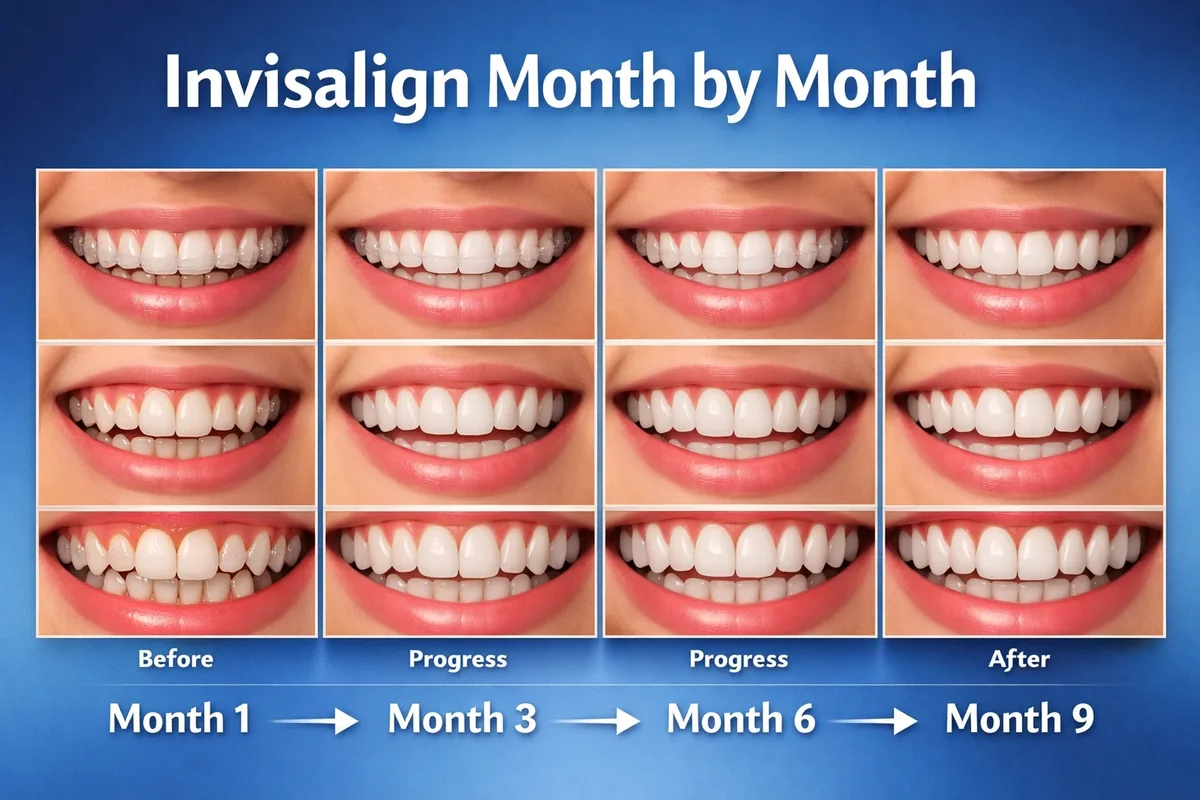
Invisalign Month by Month Before and After: Long-Term Smile Maintenance
Completing Invisalign treatment is an exciting milestone for many patients. After months of gradual improvements, the transformation achieved invisalign month by month becomes fully visible in the final result. Teeth that were once crowded, crooked, or unevenly spaced are now properly aligned, creating a balanced and confident smile. However, finishing Invisalign treatment does not mean the orthodontic journey is completely over. Maintaining the results achieved invisalign month by month requires long-term care and attention to dental habits.
Orthodontic treatment changes the position of teeth by guiding them through the surrounding bone and tissues. After the aligners are removed, these tissues need time to stabilize around the new positions of the teeth. Without proper retention, teeth may slowly begin shifting back toward their original alignment. This is why dentists emphasize the importance of maintaining the results achieved invisalign month by month through retainers and consistent oral care.
Understanding the Before and After Transformation
One of the most satisfying aspects of Invisalign treatment is comparing the smile before treatment with the final results. The improvements achieved invisalign month by month become especially clear when looking at photographs taken throughout the process. Patients often notice significant differences in tooth alignment, bite balance, and smile symmetry.
The before-and-after transformation often includes several improvements:
- Straighter and more evenly spaced teeth
- Improved bite alignment
- Better smile symmetry
- Reduced crowding or spacing problems
- Greater confidence when smiling
These improvements demonstrate how effective the Invisalign system can be when treatment progresses consistently invisalign month by month. Seeing these results helps patients appreciate the effort they invested in wearing their aligners and following their dentist’s instructions.
The Critical Role of Retainers After Treatment
Retainers are the most important tool for maintaining orthodontic results after Invisalign treatment. Once teeth reach their final positions, retainers help hold them in place while the surrounding bone and tissues stabilize. Without retainers, the improvements achieved invisalign month by month could gradually begin to reverse.
Dentists typically recommend wearing retainers every night for the first year after treatment. In some cases, patients may need to wear them for longer periods depending on their individual orthodontic history. The goal is to protect the alignment achieved invisalign month by month and ensure that the smile remains stable for years to come.
Types of Retainers Used After Invisalign
- Clear removable retainers: Similar in appearance to Invisalign aligners
- Hawley retainers: Traditional retainers with an acrylic base and metal wire
- Permanent bonded retainers: Thin wires attached behind the teeth
Each retainer type offers unique advantages, and your dentist will recommend the best option for preserving the alignment achieved invisalign month by month.
Maintaining Oral Health After Invisalign
Long-term oral health plays a vital role in preserving the results of orthodontic treatment. Straight teeth are easier to clean, which reduces the risk of plaque buildup and gum disease. However, maintaining these benefits requires consistent dental hygiene habits even after the improvements achieved invisalign month by month.
Patients should continue brushing their teeth twice daily and flossing regularly. These habits remove plaque and bacteria that can cause cavities and gum inflammation. The American Dental Association recommends regular dental checkups and professional cleanings to maintain optimal oral health.
Healthy gums and teeth help preserve the smile transformation achieved invisalign month by month, ensuring that orthodontic results remain stable over time.
Lifestyle Habits That Protect Your New Smile
Certain lifestyle habits can help maintain orthodontic results for many years. These habits support the alignment achieved invisalign month by month and prevent unnecessary wear or damage to the teeth.
Healthy Habits for Long-Term Smile Maintenance
- Wear retainers consistently as instructed
- Schedule regular dental checkups
- Avoid biting hard objects such as ice or pens
- Use a night guard if you grind your teeth
- Maintain good brushing and flossing habits
These habits help ensure that the improvements developed invisalign month by month remain intact long after treatment has finished.
Psychological Benefits of a Straighter Smile
Beyond physical improvements, Invisalign treatment often delivers significant emotional benefits. Many patients report increased self-confidence and greater comfort when smiling in social situations. The transformation achieved invisalign month by month often changes how individuals feel about their appearance.
A straighter smile can positively influence professional interactions, personal relationships, and overall self-esteem. Patients who once felt hesitant to smile in photos often find themselves smiling more naturally and confidently after completing their Invisalign journey.
When to Seek Professional Guidance
Even after Invisalign treatment is complete, regular dental visits remain important. Dentists monitor the stability of the teeth and ensure that retainers are functioning properly. These follow-up appointments help protect the alignment achieved invisalign month by month.
If you notice any shifting in your teeth or experience discomfort with your retainer, contacting your dentist promptly can prevent larger problems from developing. Early intervention helps maintain the smile transformation achieved invisalign month by month.
Patients who are considering Invisalign treatment or want to improve their smile can consult experienced dental professionals for personalized guidance. A qualified dentist can evaluate your teeth and design a treatment plan that shows how your smile may evolve invisalign month by month.
For consultation or additional information about orthodontic care, you can visit the Redent Klinik Contact Page. Dental specialists can guide you through every stage of Invisalign treatment and help you maintain a healthy, confident smile.
The Invisalign journey does not end when the final aligner is removed. Long-term care and consistent dental habits are essential for preserving the results achieved invisalign month by month. With proper retention, regular dental visits, and good oral hygiene, patients can enjoy the benefits of their beautifully aligned smile for many years to come.