
Many people who lose a tooth or several teeth begin searching online and asking their dentist the same question: what is the process of getting dental implants? Dental implants are widely considered one of the most reliable and natural-looking solutions for replacing missing teeth. Unlike removable dentures or traditional bridges, implants are designed to mimic the structure of a natural tooth by replacing both the root and the visible crown. Because of this advanced design, understanding what is the process of getting dental implants helps patients feel more confident and prepared before starting treatment.
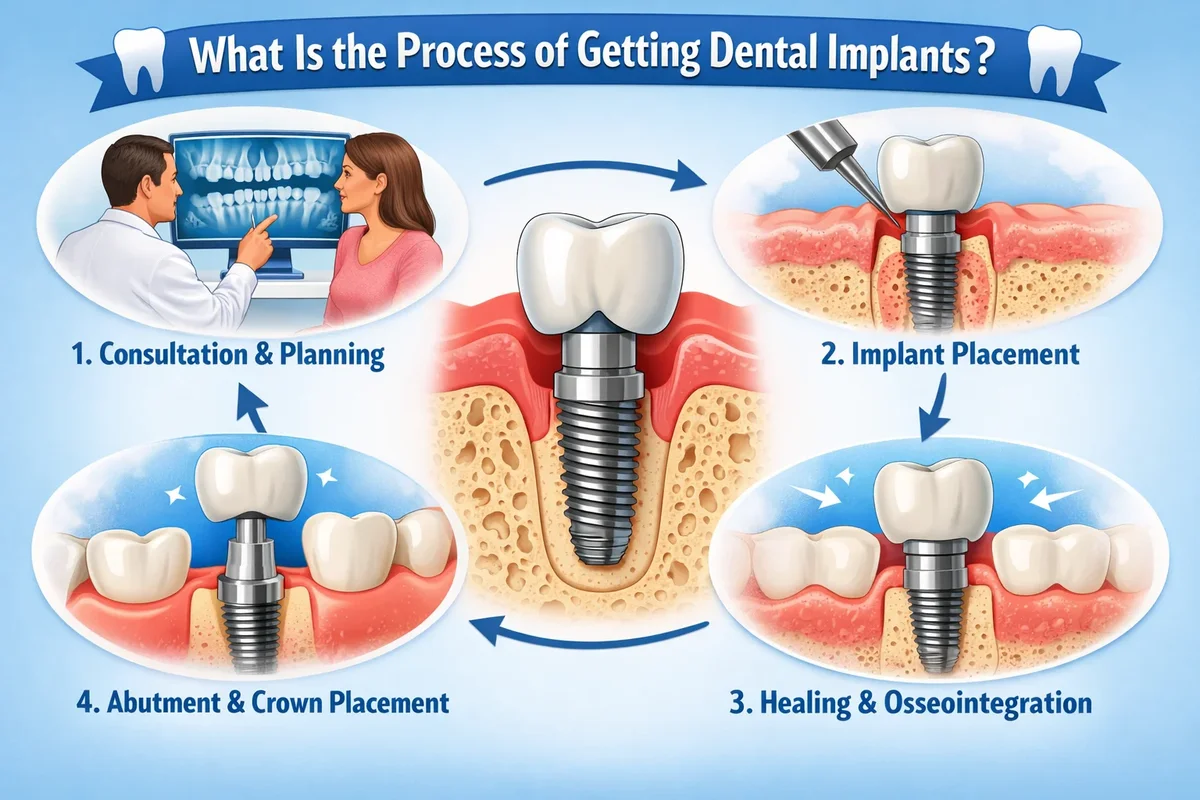
In simple terms, the answer to what is the process of getting dental implants involves several carefully planned stages performed by a dental professional. These stages include consultation, imaging, implant placement, healing, and the attachment of a permanent crown. Each phase is designed to ensure that the implant integrates securely with the jawbone and functions just like a natural tooth. While the entire process can take several months from start to finish, the result is a long-lasting and highly functional tooth replacement. 🦷
Understanding what is the process of getting dental implants is important because dental implant treatment is not a one-day procedure for most patients. The treatment requires careful planning, accurate diagnostics, and healing time for the implant to bond with the bone. Dentists typically evaluate your oral health, jawbone density, and overall medical history before recommending implants. According to guidance from the American Dental Association, proper assessment and planning are essential to ensure long-term implant success.
Another key reason patients want to understand what is the process of getting dental implants is to know whether they are suitable candidates for the procedure. Generally, ideal candidates have healthy gums, adequate jawbone density, and good overall health. Even if the bone has deteriorated due to tooth loss, modern dental procedures such as bone grafting can often restore enough bone to support an implant. This means that many people who initially think they are not eligible may still qualify after proper evaluation.
When discussing what is the process of getting dental implants, it is helpful to compare implants with other tooth replacement options. Traditional dentures sit on top of the gums and can sometimes shift during eating or speaking. Dental bridges rely on neighboring teeth for support, which may require altering healthy teeth. Dental implants, however, are surgically placed into the jawbone where they act as artificial tooth roots. This makes them extremely stable and durable. Because implants integrate with the bone through a process called osseointegration, they often feel and function like natural teeth.
Another aspect to understand about what is the process of getting dental implants is the timeline involved. The process usually unfolds over several stages that allow the implant to heal properly. While some modern techniques offer same-day implants, most treatments follow a phased approach to ensure the highest success rate. The typical timeline may include:
- Initial consultation and examination
- Diagnostic imaging such as X-rays or 3D scans
- Placement of the implant post into the jawbone
- Healing period for bone integration
- Attachment of an abutment and final crown
By learning what is the process of getting dental implants, patients can also better prepare for the recovery and aftercare stages. Although implant surgery is considered a minor oral surgery, following proper aftercare instructions helps prevent complications and promotes faster healing. Most patients experience only mild discomfort that can be managed with standard pain medication and proper oral hygiene. 🪥
Patients often ask whether the procedure is painful when researching what is the process of getting dental implants. In reality, modern dentistry uses local anesthesia and advanced surgical techniques to make the procedure comfortable. Many patients report that implant surgery feels similar to a routine tooth extraction. After the procedure, mild swelling or soreness may occur for a few days, but this usually resolves quickly.
Another benefit of understanding what is the process of getting dental implants is knowing the long-term advantages. Dental implants can last decades when properly cared for. They help preserve jawbone structure, maintain facial shape, and restore full chewing ability. Unlike dentures that may need replacement every few years, implants are designed as a permanent solution for tooth loss.
If you are considering this treatment and want personalized guidance, you can always consult a dental professional. The specialists at Redent Klinik Contact Page can evaluate your dental health and explain exactly what is the process of getting dental implants for your specific case.
In the following sections of this guide, we will explore each stage of the treatment in greater detail. From the first consultation to the final crown placement, you will gain a clear understanding of what is the process of getting dental implants and what to expect throughout the entire journey. This knowledge will help you approach dental implant treatment with confidence and realistic expectations.
What Is the Process of Getting Dental Implants and Why It Matters
For many people who have lost one or more teeth, the first question they ask their dentist is: what is the process of getting dental implants? Dental implants are widely considered one of the most advanced and reliable solutions for tooth replacement in modern dentistry. Unlike removable dentures or dental bridges, implants are designed to replace the root of the tooth as well as the visible crown, which provides exceptional stability, durability, and a natural appearance.
Understanding what is the process of getting dental implants is important because the treatment involves several carefully planned steps. Each stage ensures that the implant integrates safely with the jawbone and functions just like a natural tooth. Many patients believe that implants are placed in a single appointment, but in reality, the process usually unfolds over several months to ensure long-term success. Knowing what is the process of getting dental implants helps patients set realistic expectations and feel confident about the treatment journey.
Understanding the Purpose of Dental Implants
Before exploring what is the process of getting dental implants, it is essential to understand why implants are recommended in the first place. When a tooth is lost due to injury, decay, or gum disease, the jawbone beneath that tooth can gradually begin to shrink. This process is called bone resorption. Over time, bone loss can affect facial structure and cause surrounding teeth to shift.
Dental implants help prevent this problem because they replace the tooth root with a titanium post that integrates directly with the bone. This process, known as osseointegration, allows the implant to function like a natural root. By understanding what is the process of getting dental implants, patients learn how implants stimulate the jawbone and maintain bone health over the long term. 🦷
Another advantage of implants is their ability to restore normal chewing power. Unlike dentures that may slip or move during meals, implants are anchored securely in the jaw. This stability allows patients to eat a wide range of foods comfortably. For people researching what is the process of getting dental implants, this improvement in daily quality of life is often one of the most appealing benefits.
Why Understanding the Implant Process Is Important
Many patients underestimate the planning involved in implant dentistry. Learning what is the process of getting dental implants allows patients to prepare both mentally and physically for treatment. The procedure involves several phases including examination, imaging, surgical placement, healing, and final restoration. Each stage plays an essential role in achieving long-term implant success.
Patients who clearly understand what is the process of getting dental implants also tend to follow aftercare instructions more carefully. This includes maintaining good oral hygiene, attending follow-up visits, and protecting the implant during healing. These steps significantly increase the success rate of dental implants, which studies show can exceed 95% in healthy patients.
Organizations such as the American Dental Association emphasize the importance of professional evaluation and treatment planning before implant surgery. Proper diagnosis helps dentists determine whether additional procedures, such as bone grafting, are necessary before placing an implant.
Key Benefits of Dental Implant Treatment
To fully appreciate what is the process of getting dental implants, it helps to look at the long-term benefits that make implants such a popular treatment option.
1. Natural Appearance
Dental implants are designed to match the shape and color of natural teeth. Once the final crown is placed, the implant blends seamlessly with the surrounding teeth. Patients who understand what is the process of getting dental implants often appreciate how the final restoration looks and feels like a natural tooth.
2. Long-Term Durability
One of the main reasons people research what is the process of getting dental implants is because implants are extremely durable. With proper care and routine dental visits, implants can last for decades. In many cases, they can even last a lifetime.
3. Improved Oral Function
Dental implants restore strong chewing ability. Because the implant is anchored in bone, patients can eat foods that may be difficult with dentures. Understanding what is the process of getting dental implants helps patients realize how implants improve both function and comfort.
4. Bone Preservation
Unlike bridges or dentures, implants stimulate the jawbone and prevent bone loss. This is another reason dentists often explain what is the process of getting dental implants in detail before recommending treatment.
Who Is a Candidate for Dental Implants?
Another key aspect of what is the process of getting dental implants is determining whether a patient is a suitable candidate. Ideal candidates generally meet the following criteria:
- Healthy gums free of active periodontal disease
- Adequate jawbone density to support the implant
- Good overall health and healing ability
- Commitment to maintaining oral hygiene
However, even patients who do not initially meet these conditions may still qualify after additional treatments such as bone grafting or gum therapy. This is why understanding what is the process of getting dental implants begins with a comprehensive consultation and diagnosis.
Why Choosing the Right Clinic Matters
Because implant treatment involves several stages, choosing an experienced dental clinic is essential. Patients who research what is the process of getting dental implants often discover that success depends heavily on accurate planning and skilled surgical technique.
If you are considering dental implant treatment and want to learn more about what is the process of getting dental implants, consulting a qualified dental professional is the best first step. You can request an evaluation through the Redent Klinik Contact Page, where experienced specialists can assess your oral health and guide you through every stage of treatment.
By understanding what is the process of getting dental implants, patients gain a clearer picture of how modern dentistry can restore missing teeth safely and effectively. In the next section, we will explore the first step in detail: the initial consultation and dental evaluation that begins the implant journey.
Initial Dental Consultation: The First Step in the Implant Process
Before any surgical procedure begins, the first and most important stage in understanding what is the process of getting dental implants is the initial dental consultation. This step lays the foundation for the entire treatment plan. During this appointment, a dentist evaluates your oral health, discusses your concerns, and determines whether dental implants are the most suitable solution for replacing missing teeth.
Many patients searching online for what is the process of getting dental implants assume that implant surgery happens immediately. However, professional implant dentistry always begins with careful evaluation and planning. The consultation allows the dentist to gather essential information about your dental history, jawbone health, and treatment goals. By understanding what is the process of getting dental implants from the very beginning, patients can feel more confident and prepared for the steps ahead. 🦷
Why the Initial Consultation Is So Important
The consultation phase is crucial because it determines whether dental implants are the right treatment option for you. While dental implants are highly successful, not every patient is immediately ready for implant placement. Understanding what is the process of getting dental implants means recognizing that dentists must first evaluate bone structure, gum health, and overall oral condition.
During the consultation, your dentist will ask about your medical history and current health conditions. Certain health factors such as uncontrolled diabetes, smoking habits, or gum disease may affect healing after implant surgery. By carefully reviewing these factors, the dentist ensures the treatment plan follows the safest path for the patient.
Organizations such as the American Dental Association emphasize that proper patient evaluation significantly improves implant success rates. When patients fully understand what is the process of getting dental implants, they realize that this early diagnostic stage plays a vital role in long-term results.
What Happens During the First Appointment?
When patients arrive for their first implant consultation, several important assessments take place. This is where the dentist begins gathering detailed information about the patient’s oral structure and treatment expectations.
Review of Dental and Medical History
One of the first steps in understanding what is the process of getting dental implants is reviewing the patient’s complete dental and medical history. The dentist may ask about previous dental treatments, medications, chronic health conditions, and lifestyle habits such as smoking.
This information helps the dentist identify potential risk factors that could affect healing or implant integration. Patients researching what is the process of getting dental implants often overlook how important these early evaluations are for ensuring safe and predictable results.
Clinical Oral Examination
The dentist will perform a comprehensive oral examination to assess the condition of the gums, existing teeth, and bite alignment. This clinical exam helps determine whether there is enough space in the jaw to support an implant.
During this stage of what is the process of getting dental implants, dentists also look for signs of gum disease or infection. If periodontal disease is present, it must be treated before implant placement can occur. Healthy gums provide the stable environment necessary for implants to succeed.
Discussion of Patient Goals
Another important part of understanding what is the process of getting dental implants involves discussing the patient’s expectations. Some patients need a single implant, while others may require multiple implants or full-arch restoration.
The dentist will explain possible treatment options and recommend the best approach based on the patient’s needs. Patients who clearly understand what is the process of getting dental implants can make informed decisions about their treatment plan.
Diagnostic Imaging and Planning
In many cases, the consultation also includes preliminary imaging such as dental X-rays. These images allow the dentist to evaluate bone density, nerve positions, and sinus cavities. Advanced clinics may also use digital scanning technology to create precise 3D models of the patient’s mouth.
These diagnostic tools help answer the patient’s question: what is the process of getting dental implants in a safe and predictable way? By mapping the jawbone structure in detail, dentists can plan the exact position and angle of the implant.
This level of precision reduces surgical risks and improves long-term implant stability. Patients often feel reassured when they understand that modern technology plays an essential role in what is the process of getting dental implants.
Personalized Treatment Plan
After the examination and diagnostic evaluation, the dentist will create a personalized treatment plan. This plan outlines each stage of what is the process of getting dental implants, including any preparatory procedures that may be necessary.
For example, some patients may need bone grafting if the jawbone has weakened due to tooth loss. Others may require tooth extraction before implant placement. The treatment plan also includes an estimated timeline and expected healing periods.
During this stage, patients have the opportunity to ask questions and clarify any concerns about what is the process of getting dental implants. Clear communication between dentist and patient ensures that everyone understands the treatment journey ahead.
Consulting a Professional Implant Clinic
Choosing a qualified implant specialist is a key part of successfully completing what is the process of getting dental implants. Experienced clinics use advanced diagnostic tools and evidence-based treatment protocols to ensure the best outcomes.
If you are considering dental implants and want expert guidance on what is the process of getting dental implants, you can request a consultation through the Redent Klinik Contact Page. A professional evaluation will help determine the most effective treatment plan for your specific needs.
The initial consultation marks the beginning of the dental implant journey. Once this stage is complete, the next step in understanding what is the process of getting dental implants involves advanced imaging and detailed surgical planning, which ensures that the implant placement is precise, safe, and long-lasting.
Comprehensive Examination and 3D Imaging Before Implant Surgery
After the initial consultation, the next critical stage in understanding what is the process of getting dental implants involves a detailed clinical examination and advanced diagnostic imaging. This step is essential because dental implant placement requires precise planning. The implant must be positioned in the jawbone with exact accuracy to ensure long-term stability, proper bite alignment, and natural aesthetics.
Many patients who research what is the process of getting dental implants are surprised to learn how technology-driven the process has become. Modern implant dentistry relies heavily on digital diagnostics, including 3D scans, digital impressions, and advanced imaging systems. These tools allow dentists to evaluate bone density, identify anatomical structures such as nerves and sinuses, and design a surgical plan that maximizes safety and success.
Understanding what is the process of getting dental implants means recognizing that this stage is not simply about looking at the teeth. Instead, dentists perform a full structural analysis of the mouth and jaw. This evaluation ensures that implants can be placed safely and function like natural teeth for many years. 🦷
Why Detailed Examination Is Necessary
Before implant surgery can take place, dentists must carefully evaluate the patient’s oral structures. This examination helps determine whether the jawbone is strong enough to support the implant and whether additional procedures may be required.
When patients ask what is the process of getting dental implants, dentists often explain that implant success depends heavily on proper planning. If an implant is placed incorrectly, it could affect surrounding teeth, nerves, or sinuses. For this reason, modern implant dentistry emphasizes thorough diagnostic assessment.
According to guidelines referenced by the American Dental Association, accurate imaging and planning significantly improve the predictability and safety of implant treatment. By understanding what is the process of getting dental implants, patients can see why this preparation stage is one of the most important parts of the journey.
Types of Diagnostic Imaging Used
Advanced imaging technology plays a central role in determining what is the process of getting dental implants. Dentists use several diagnostic tools to gather detailed information about the patient’s jawbone and surrounding structures.
Digital Dental X-Rays
Digital X-rays are often the first imaging tool used during implant evaluation. These images allow dentists to assess bone structure, detect infections, and identify the position of neighboring teeth.
Patients exploring what is the process of getting dental implants should understand that X-rays provide an initial overview of the jawbone condition. They help determine whether additional imaging is needed and whether the patient may require procedures such as bone grafting.
3D Cone Beam CT Scans
One of the most advanced technologies used in implant dentistry is Cone Beam Computed Tomography (CBCT). This imaging method produces a three-dimensional model of the patient’s jaw, allowing dentists to evaluate bone density, nerve location, and sinus cavities.
For patients asking what is the process of getting dental implants, CBCT scans provide highly accurate measurements that guide surgical planning. Dentists can determine the ideal depth, angle, and position of the implant before the surgery even begins.
This level of precision dramatically reduces surgical risks and improves implant longevity.
Digital Intraoral Scanning
Many modern clinics also use digital intraoral scanners to create detailed impressions of the teeth and gums. These scanners replace traditional molds and provide highly accurate digital models.
Understanding what is the process of getting dental implants includes recognizing how these digital models help dentists design the final crown and ensure that the implant fits perfectly with the patient’s bite.
Evaluating Jawbone Health and Density
A crucial part of what is the process of getting dental implants involves assessing the strength and volume of the jawbone. Dental implants require sufficient bone support to remain stable.
If a patient has experienced bone loss due to long-term tooth loss or gum disease, the dentist may recommend bone grafting before implant placement. This procedure strengthens the jawbone and creates a stable foundation for the implant.
Patients researching what is the process of getting dental implants often feel reassured knowing that modern regenerative techniques allow many people with bone loss to still receive implants successfully.
Creating a Digital Implant Placement Plan
Once imaging and diagnostics are complete, the dentist uses specialized software to create a digital surgical plan. This plan maps out the exact position where the implant will be placed.
Understanding what is the process of getting dental implants includes learning how dentists use digital planning tools to simulate the procedure before surgery begins. The software allows the dentist to visualize the implant placement and ensure optimal alignment with surrounding teeth.
In some cases, dentists also create surgical guides. These guides act as templates during surgery, helping the dentist place the implant with precise accuracy.
How This Stage Improves Implant Success
Patients who fully understand what is the process of getting dental implants recognize that this examination and imaging phase significantly improves treatment outcomes. By analyzing bone structure, planning implant placement digitally, and identifying potential challenges early, dentists reduce complications and enhance long-term stability.
This preparation stage also allows the dental team to design a personalized treatment plan tailored to the patient’s needs. Factors such as bone quality, gum condition, and bite alignment are all considered.
If you are interested in learning more about what is the process of getting dental implants and want a personalized evaluation, you can contact experienced specialists through the Redent Klinik Contact Page. A professional assessment can help determine the most effective treatment strategy for your case.
Once this detailed examination and digital planning phase is complete, the next step in understanding what is the process of getting dental implants involves preparing the jawbone and surgical site for implant placement. This preparation ensures that the implant can integrate successfully with the bone and provide long-lasting support for the new tooth.
Preparing the Jawbone: Bone Grafting and Treatment Planning
One of the most important stages in understanding what is the process of getting dental implants is preparing the jawbone for implant placement. Dental implants require a strong and stable foundation in the jawbone in order to function like natural tooth roots. If the bone is too thin, too soft, or has been weakened due to tooth loss, additional preparation may be necessary before the implant can be safely placed.
Patients often assume that implants can always be placed immediately, but in reality, part of what is the process of getting dental implants involves evaluating the bone and, when needed, strengthening it through procedures such as bone grafting. This step ensures that the implant will integrate properly with the bone and remain stable for many years.
Understanding what is the process of getting dental implants also helps patients realize that proper preparation dramatically increases the long-term success of the treatment. Dental implants have very high success rates—often above 95%—but this success depends on creating the right biological conditions before surgery. 🦷
Why Jawbone Preparation Is Necessary
When a tooth is lost, the surrounding bone begins to shrink because it no longer receives stimulation from the tooth root. This process is called bone resorption. Over time, the jawbone may become too thin or weak to support a dental implant.
For this reason, dentists carefully assess bone quality when explaining what is the process of getting dental implants. If the bone structure is insufficient, placing an implant without preparation could lead to implant failure or instability.
By preparing the bone in advance, dentists create a strong base that allows the implant to integrate successfully. This preparation stage is a critical component of what is the process of getting dental implants, ensuring both safety and durability.
Professional dental organizations such as the American Dental Association emphasize that bone health is one of the key factors influencing the success of dental implants.
Bone Grafting: Strengthening the Jawbone
Bone grafting is a common preparatory procedure used when the jawbone lacks sufficient volume or density. When discussing what is the process of getting dental implants, dentists often explain that grafting allows many patients who previously were not candidates for implants to receive treatment successfully.
What Is Bone Grafting?
Bone grafting is a procedure that adds new bone material to areas where bone has deteriorated. Over time, the graft integrates with the existing bone and encourages natural bone regeneration.
For patients researching what is the process of getting dental implants, it is reassuring to know that bone grafting is a well-established and routine dental procedure. Once the graft heals, the jawbone becomes strong enough to support an implant.
Types of Bone Graft Materials
Several types of grafting materials may be used depending on the patient’s needs:
- Autograft: Bone taken from another area of the patient’s body.
- Allograft: Bone sourced from a donor.
- Xenograft: Bone material derived from animal sources, usually bovine.
- Synthetic graft: Laboratory-made materials designed to stimulate bone growth.
Understanding these options helps patients better understand what is the process of getting dental implants and how dentists select the most appropriate grafting material.
Healing After Bone Grafting
Once the graft is placed, the body gradually incorporates the new material into the existing bone. This healing process can take several months depending on the size of the graft and the patient’s natural healing ability.
This waiting period is an important part of what is the process of getting dental implants. Although patients may wish to proceed quickly with implant placement, allowing the bone to heal properly ensures a stronger and more predictable outcome.
During healing, the dentist monitors progress through follow-up visits and imaging. Once the bone has matured sufficiently, the implant placement stage can begin.
Sinus Lift Procedures for Upper Jaw Implants
In some cases, implants in the upper jaw require an additional procedure called a sinus lift. This procedure raises the sinus membrane and adds bone beneath it to create enough space for the implant.
Patients learning what is the process of getting dental implants often discover that sinus lifts are common when replacing upper molars. Because the sinus cavity sits close to the jawbone in this region, additional bone support may be necessary.
Although this procedure sounds complex, it is a routine part of implant dentistry and has a high success rate.
Developing the Final Implant Treatment Plan
After the jawbone has been evaluated and prepared if necessary, the dentist creates a final treatment plan. This plan outlines each step of what is the process of getting dental implants, including surgical placement, healing stages, and final restoration.
The treatment plan typically includes:
- Number of implants required
- Precise implant placement locations
- Estimated treatment timeline
- Expected healing periods
- Design of the final crown or prosthetic tooth
This personalized planning stage ensures that every detail of what is the process of getting dental implants is carefully coordinated before surgery begins.
When Preparation Leads to Long-Term Success
Although jawbone preparation may add extra time to the treatment timeline, it significantly improves the long-term success of dental implants. Patients who understand what is the process of getting dental implants often appreciate the importance of this stage in creating a durable and stable implant.
If you are considering implant treatment and want expert guidance about what is the process of getting dental implants, consulting a qualified dental clinic is the best step. Specialists can evaluate your bone structure and recommend the most effective preparation methods. You can request a consultation through the Redent Klinik Contact Page to receive personalized advice from experienced dental professionals.
Once the jawbone has been properly prepared and the treatment plan finalized, the next stage in understanding what is the process of getting dental implants involves the surgical placement of the titanium implant into the jawbone. This procedure forms the artificial tooth root that will support the final dental crown.
Dental Implant Surgery: Placing the Titanium Implant Post
One of the most important and transformative stages in understanding what is the process of getting dental implants is the surgical placement of the titanium implant post into the jawbone. At this stage, the treatment moves from planning and preparation to the actual placement of the artificial tooth root. Although the idea of oral surgery can sound intimidating, modern dental implant procedures are highly precise, minimally invasive, and typically performed under local anesthesia.
When patients research what is the process of getting dental implants, they often imagine a complicated operation. In reality, dental implant surgery is a carefully controlled procedure designed to place a small titanium post into the jawbone where a tooth root once existed. This implant acts as a stable anchor for the future crown or prosthetic tooth. Thanks to advanced imaging, digital planning, and specialized surgical tools, implant placement today is safer and more predictable than ever. 🦷
Understanding what is the process of getting dental implants during this surgical phase helps patients know exactly what happens in the dental chair and why each step is essential for long-term success.
Why Titanium Is Used for Dental Implants
A key component in what is the process of getting dental implants is the use of titanium as the implant material. Titanium has unique biological properties that allow it to integrate with human bone in a process known as osseointegration. This integration forms a stable connection between the implant and the jawbone.
Because titanium is biocompatible, the body generally accepts it without triggering rejection. This is why titanium implants are widely used in dentistry and other medical fields. When learning what is the process of getting dental implants, it becomes clear that this metal plays a crucial role in the strength and longevity of the implant system.
According to research supported by the American Dental Association, titanium implants demonstrate extremely high success rates when properly placed and maintained.
Steps Involved in Dental Implant Surgery
The surgical stage of what is the process of getting dental implants follows a series of precise steps designed to position the implant safely and accurately.
1. Local Anesthesia and Patient Preparation
Before the procedure begins, the dentist administers local anesthesia to numb the surgical area. In some cases, sedation options may also be offered to help patients feel relaxed during the procedure.
This stage is important when understanding what is the process of getting dental implants because patient comfort is always a priority. Most patients report that the procedure is far less uncomfortable than they expected.
2. Creating a Small Incision in the Gum
Once the area is numb, the dentist makes a small incision in the gum tissue to expose the jawbone. This allows direct access to the bone where the implant will be placed.
Patients researching what is the process of getting dental implants should know that this incision is typically very small and carefully positioned to minimize trauma to surrounding tissues.
3. Preparing the Implant Site
Next, the dentist uses specialized dental instruments to create a small opening in the jawbone. This opening is carefully measured and shaped to match the size of the titanium implant.
This stage is one of the most technical aspects of what is the process of getting dental implants. The dentist follows the surgical plan developed during the earlier imaging phase to ensure precise placement and optimal stability.
4. Inserting the Titanium Implant Post
The titanium implant post is then gently inserted into the prepared site in the jawbone. Once positioned correctly, the implant functions as an artificial tooth root.
Understanding what is the process of getting dental implants means recognizing that the implant itself is hidden beneath the gum line at this stage. The visible tooth replacement will be added later after healing is complete.
5. Closing the Gum Tissue
After the implant is placed, the dentist closes the gum tissue over or around the implant using small sutures. This allows the area to heal while the implant begins bonding with the bone.
This stage completes the surgical portion of what is the process of getting dental implants. Patients are usually able to return home shortly after the procedure.
How Long the Implant Surgery Takes
Patients often ask about the duration of this stage when learning what is the process of getting dental implants. In most cases, placing a single dental implant takes approximately 30 to 60 minutes. Multiple implants may require additional time depending on the complexity of the treatment.
Despite being a surgical procedure, implant placement is usually performed in a dental office rather than a hospital setting. Because the procedure is minimally invasive, most patients recover quickly and experience only mild discomfort afterward.
Recovery After Implant Placement
Recovery is an important part of what is the process of getting dental implants. After surgery, patients may experience minor swelling, slight bleeding, or mild soreness for a few days. These symptoms are generally manageable with over-the-counter pain medication and proper aftercare.
Dentists typically recommend the following aftercare steps:
- Applying cold compresses to reduce swelling
- Eating soft foods during the first few days
- Avoiding strenuous physical activity
- Maintaining gentle oral hygiene around the surgical site
Following these guidelines helps the body begin the healing process that is essential to what is the process of getting dental implants.
Temporary Tooth Options
In some cases, patients may receive a temporary tooth while the implant heals. This temporary restoration allows patients to maintain their smile during the healing phase.
However, the final crown cannot be attached immediately because the implant must first fuse with the jawbone. Understanding what is the process of getting dental implants includes recognizing that this healing stage is essential for long-term stability.
Professional Guidance Throughout the Implant Journey
Choosing an experienced dental clinic is vital for the surgical phase of what is the process of getting dental implants. Skilled implant specialists use advanced surgical techniques and digital planning tools to ensure precise implant placement.
If you are considering dental implants and want expert guidance about what is the process of getting dental implants, you can request a consultation through the Redent Klinik Contact Page. A professional dental team can evaluate your oral health and help you begin your implant journey with confidence.
Once the implant has been surgically placed, the next stage in understanding what is the process of getting dental implants involves the healing period known as osseointegration, where the implant gradually bonds with the surrounding jawbone to create a stable foundation for the final restoration.
Healing and Osseointegration: How the Implant Bonds with Bone
After the titanium implant has been placed into the jawbone, the next critical stage in understanding what is the process of getting dental implants is the healing period known as osseointegration. This phase is where the implant fuses with the surrounding jawbone, creating a secure and stable foundation for the future artificial tooth. Although this stage happens beneath the gum line and may not be visible to the patient, it is one of the most important parts of what is the process of getting dental implants.
Osseointegration is a biological process in which the bone gradually grows around the titanium implant. Over time, the implant becomes firmly anchored within the jawbone, functioning much like a natural tooth root. Without this bonding process, the implant would not have the stability required to support chewing forces. Understanding what is the process of getting dental implants means recognizing that successful osseointegration determines the long-term success of the entire treatment. 🦷
What Is Osseointegration?
Osseointegration refers to the natural biological interaction between the implant surface and the surrounding bone tissue. Titanium is uniquely suited for this process because it is biocompatible, meaning the human body accepts it without causing rejection. During healing, bone cells attach themselves to the implant surface and gradually form a strong structural bond.
Patients researching what is the process of getting dental implants often discover that this stage cannot be rushed. The body needs time to regenerate bone tissue around the implant. In most cases, osseointegration takes between three and six months depending on the patient’s bone quality, overall health, and the location of the implant.
According to research referenced by the American Dental Association, proper healing and bone integration are key factors behind the high success rate of dental implants. Understanding what is the process of getting dental implants helps patients appreciate why dentists recommend patience during this phase.
Healing Timeline After Implant Placement
Healing after implant surgery occurs gradually and varies from patient to patient. Understanding the healing timeline is an important part of learning what is the process of getting dental implants.
First Few Days After Surgery
Immediately after implant placement, the body begins the healing process. During the first few days, mild swelling, minor discomfort, and slight bleeding are common. These symptoms usually subside within a few days.
Patients learning what is the process of getting dental implants should know that these early symptoms are part of normal recovery and can typically be managed with prescribed medications, cold compresses, and proper oral hygiene.
First Few Weeks of Healing
During the first few weeks, the gum tissue surrounding the implant begins to heal and close around the surgical site. The implant remains hidden beneath the gum during this stage.
This period is crucial in what is the process of getting dental implants because the body begins producing new bone cells that gradually attach to the implant surface.
Three to Six Months: Full Osseointegration
Over the next several months, the bone continues to grow and integrate with the implant. This process ultimately creates a solid connection between the implant and the jawbone.
When patients understand what is the process of getting dental implants, they realize that this healing stage is what allows implants to function like natural tooth roots.
Factors That Influence Implant Healing
Several factors can influence the healing phase of what is the process of getting dental implants. These factors determine how quickly and successfully the implant integrates with the bone.
Bone Density and Quality
Patients with dense and healthy jawbone often experience faster osseointegration. Individuals who have experienced bone loss may require longer healing periods or additional procedures before implant placement.
Oral Hygiene
Maintaining excellent oral hygiene is essential during healing. Patients researching what is the process of getting dental implants should know that keeping the surgical area clean helps prevent infection and promotes proper bone healing.
Lifestyle Habits
Smoking and poor nutrition can slow healing and interfere with osseointegration. Dentists often recommend reducing or eliminating smoking during the healing period to support successful implant integration.
Temporary Restorations During Healing
Some patients may receive temporary restorations while waiting for osseointegration to complete. These temporary teeth allow patients to maintain their smile and basic chewing function during healing.
However, the final crown cannot be attached until osseointegration is complete. Understanding what is the process of getting dental implants includes recognizing that the implant must be fully stabilized before the final restoration is placed.
Importance of Follow-Up Appointments
During the healing stage, dentists schedule follow-up visits to monitor progress. These appointments allow the dental team to confirm that the implant is integrating correctly and that the surrounding tissues remain healthy.
Patients who clearly understand what is the process of getting dental implants know that these follow-up visits are essential for ensuring long-term implant success.
Professional Monitoring During the Healing Phase
Working with an experienced dental clinic ensures proper supervision throughout the healing stage of what is the process of getting dental implants. Skilled dentists use imaging and clinical evaluation to confirm that osseointegration is progressing correctly.
If you are considering dental implants and want expert advice about what is the process of getting dental implants, you can request a professional consultation through the Redent Klinik Contact Page. Dental specialists can evaluate your oral health and guide you through every step of the implant process.
Once osseointegration is complete and the implant has fully bonded with the bone, the next stage in understanding what is the process of getting dental implants involves attaching the abutment, which connects the implant to the final crown restoration.
Abutment Placement: Connecting the Implant to the Crown
Once the implant has successfully bonded with the jawbone during the healing stage, the next important phase in understanding what is the process of getting dental implants is the placement of the abutment. The abutment is a small but crucial connector piece that links the titanium implant embedded in the jawbone to the final dental crown that will be visible above the gum line.
Many patients researching what is the process of getting dental implants assume that the implant itself forms the entire replacement tooth. In reality, a dental implant restoration typically consists of three parts: the titanium implant post, the abutment, and the crown. The abutment acts as the middle component that securely connects the implant root to the artificial tooth.
This stage may seem minor compared to the surgical placement of the implant, but it plays a vital role in the overall function and appearance of the final restoration. Understanding what is the process of getting dental implants helps patients appreciate how each component contributes to the stability and aesthetics of their new tooth. 🦷
What Is an Abutment?
An abutment is a small metal or ceramic connector that attaches to the top of the dental implant. It extends slightly above the gum line and provides the base onto which the final dental crown will be secured.
For patients trying to understand what is the process of getting dental implants, it is helpful to think of the abutment as the support structure that holds the visible tooth in place. Without this connector, the crown would not be able to attach securely to the implant.
The abutment is typically made from durable materials such as titanium, zirconia, or other biocompatible substances. These materials are chosen because they are strong, long-lasting, and safe for use inside the mouth.
According to resources supported by the American Dental Association, properly fitted abutments contribute significantly to the long-term success and function of dental implants.
The Abutment Placement Procedure
Understanding what is the process of getting dental implants also means knowing what happens during the abutment placement procedure. This step typically occurs after the implant has fully integrated with the jawbone during the osseointegration phase.
Reopening the Gum Tissue
If the implant was placed beneath the gum during the initial surgery, the dentist may need to reopen the gum tissue slightly to expose the implant. This minor procedure is usually performed under local anesthesia and is far less invasive than the implant placement surgery.
This step in what is the process of getting dental implants allows the dentist to access the implant and attach the abutment securely.
Attaching the Abutment to the Implant
Once the implant is exposed, the dentist connects the abutment to the implant using a small dental screw. The abutment sits above the implant and extends through the gum tissue.
Patients learning what is the process of getting dental implants often find it interesting that this small component becomes the anchor point for the final crown.
Healing Around the Abutment
After the abutment is placed, the surrounding gum tissue needs time to heal and adapt to the new structure. The gums will gradually form a natural contour around the abutment, creating a stable and aesthetically pleasing foundation for the final crown.
This healing period is an essential part of what is the process of getting dental implants because it ensures that the gums properly support the final restoration.
Types of Abutments Used in Implant Dentistry
Different types of abutments may be used depending on the patient’s specific needs and the location of the implant. Understanding these options helps clarify what is the process of getting dental implants and how dentists customize treatment for each patient.
Standard Abutments
Standard abutments are prefabricated components designed to fit most implant systems. These are commonly used when the implant position allows for straightforward crown placement.
Custom Abutments
In some cases, dentists design custom abutments tailored specifically to the patient’s dental anatomy. These abutments provide improved aesthetics and optimal alignment for the final crown.
Patients exploring what is the process of getting dental implants often benefit from custom abutments when implants are placed in highly visible areas such as the front teeth.
Why the Abutment Stage Is Important
The abutment stage is critical because it determines how the final crown will sit within the mouth. Proper positioning ensures that the new tooth aligns with surrounding teeth and maintains a natural appearance.
When patients understand what is the process of getting dental implants, they realize that each stage of the treatment contributes to both function and aesthetics. The abutment helps distribute chewing forces evenly across the implant and jawbone, preventing stress on the surrounding structures.
Preparing for the Final Crown
Once the abutment has been placed and the gums have healed, the dentist can begin preparing for the final dental crown. At this stage, digital impressions or scans of the mouth are taken to design a custom crown that fits perfectly.
This stage marks the final step before completing what is the process of getting dental implants. The crown will be carefully designed to match the color, size, and shape of the patient’s natural teeth.
Professional Care During Implant Restoration
Working with experienced implant specialists ensures that every stage of what is the process of getting dental implants is performed with precision and attention to detail. Proper abutment placement contributes significantly to the durability and natural appearance of the final implant restoration.
If you are considering implant treatment and want professional guidance about what is the process of getting dental implants, you can request a consultation through the Redent Klinik Contact Page. Dental professionals can evaluate your oral health and guide you through every stage of the implant process.
After the abutment has been successfully placed and the gums have healed, the final step in understanding what is the process of getting dental implants involves creating and attaching the permanent dental crown that will restore the appearance and function of the missing tooth.
Creating and Attaching the Final Dental Crown
After the implant has successfully fused with the jawbone and the abutment has been placed, the next major step in understanding what is the process of getting dental implants is the creation and placement of the final dental crown. This stage completes the visible portion of the implant restoration and allows the patient to regain full function and aesthetics.
Many patients who research what is the process of getting dental implants are particularly interested in this phase because it is when the replacement tooth finally becomes visible. The dental crown is designed to replicate the appearance, shape, and function of a natural tooth. Once attached to the abutment, it restores the patient’s smile and chewing ability.
Understanding what is the process of getting dental implants helps patients appreciate that the crown is not just cosmetic. It must be precisely engineered to distribute chewing forces evenly and integrate seamlessly with the surrounding teeth. Modern dental technology allows dentists to design crowns that look and feel remarkably natural. 🦷
What Is a Dental Crown?
A dental crown is the artificial tooth that sits on top of the implant. While the implant acts as the root and the abutment acts as the connector, the crown forms the visible part of the tooth above the gum line.
Patients learning what is the process of getting dental implants should understand that crowns are custom-made restorations designed specifically for each patient. The dentist ensures that the crown matches the color, size, and contour of the surrounding natural teeth.
According to information supported by the American Dental Association, well-designed implant crowns can provide both excellent aesthetics and long-term durability.
Steps in Creating the Implant Crown
The creation of the final crown involves several detailed steps. Understanding these steps is essential when exploring what is the process of getting dental implants.
1. Taking Digital Impressions
The dentist begins by capturing detailed impressions of the patient’s teeth and gums. Today, many clinics use digital intraoral scanners instead of traditional molds.
These digital impressions allow the dental laboratory to design a crown that fits precisely on the abutment. This stage is critical in what is the process of getting dental implants because accurate measurements ensure that the crown will align properly with the patient’s bite.
2. Designing the Custom Crown
Using the digital impressions, dental technicians design the crown using specialized software. This design stage ensures that the crown matches the surrounding teeth in shape and color.
Patients who want to understand what is the process of getting dental implants should know that modern crowns are highly customizable. Dentists carefully consider factors such as tooth shade, gum contour, and bite alignment to achieve a natural result.
3. Fabricating the Crown
Once the design is finalized, the dental laboratory manufactures the crown using high-quality materials. The crown must be both aesthetically pleasing and strong enough to withstand chewing pressure.
This fabrication stage is another important step in what is the process of getting dental implants because the crown must perform just like a natural tooth.
Materials Used for Implant Crowns
Different materials may be used to create implant crowns. Understanding these options helps patients better understand what is the process of getting dental implants and how dentists choose the best material.
Porcelain Crowns
Porcelain crowns are known for their excellent aesthetics. They closely resemble natural tooth enamel and are often used for front teeth where appearance is especially important.
Zirconia Crowns
Zirconia crowns are extremely durable and resistant to wear. They are commonly used in areas of the mouth that experience strong chewing forces.
Porcelain-Fused-to-Metal Crowns
These crowns combine a metal base with a porcelain outer layer, offering both strength and natural appearance.
Understanding material choices is part of learning what is the process of getting dental implants, as the dentist will recommend the best option depending on the location of the implant.
Attaching the Crown to the Abutment
Once the crown has been fabricated, the dentist schedules an appointment to attach it to the abutment. This is often one of the most exciting moments for patients who have been following what is the process of getting dental implants, because it marks the completion of the treatment.
The dentist carefully positions the crown on the abutment and secures it using either dental cement or a small screw, depending on the implant system used.
During this stage, the dentist checks several factors:
- Bite alignment
- Comfort and stability
- Color match with surrounding teeth
- Proper gum contour
These adjustments ensure that the final restoration functions naturally within the mouth.
Immediate Benefits After Crown Placement
Once the crown is attached, patients can immediately experience the benefits of completing what is the process of getting dental implants. These benefits include:
- Restored chewing ability
- Improved speech clarity
- Enhanced smile aesthetics
- Improved confidence
Because the implant is anchored securely in the jawbone, the crown remains stable during everyday activities such as eating and speaking.
Long-Term Care for Implant Crowns
Completing what is the process of getting dental implants does not mean the treatment requires no further care. Proper oral hygiene and regular dental visits are essential for maintaining the health of the implant and surrounding tissues.
Dentists typically recommend:
- Brushing twice daily
- Flossing around the implant
- Routine dental checkups
- Avoiding excessive chewing on very hard objects
With proper care, implant crowns can last many years and provide a stable solution for missing teeth.
Professional Guidance Throughout the Implant Journey
Choosing an experienced dental team ensures that every step of what is the process of getting dental implants is handled with precision. Proper crown design and placement contribute significantly to both aesthetics and long-term functionality.
If you are considering dental implants and want expert guidance about what is the process of getting dental implants, you can schedule a consultation through the Redent Klinik Contact Page. Dental specialists can evaluate your situation and recommend the most suitable treatment plan.
Once the crown has been placed, the implant restoration is complete. However, maintaining the implant through proper aftercare and routine dental visits is essential for ensuring the long-term success of what is the process of getting dental implants.
Recovery, Aftercare, and Long-Term Implant Maintenance
Once the implant crown has been successfully placed, the visible treatment phase of dental implant therapy is complete. However, understanding what is the process of getting dental implants does not end with the final crown placement. Recovery, aftercare, and long-term maintenance play a crucial role in ensuring that the implant remains healthy and functional for many years. Patients who fully understand what is the process of getting dental implants know that consistent care and proper oral hygiene are essential to protect their investment and maintain their oral health.
Dental implants are designed to be a long-lasting solution for missing teeth, but like natural teeth, they require regular care and monitoring. Learning what is the process of getting dental implants includes understanding the steps needed after treatment to support healing and maintain the surrounding gum and bone tissue. When patients follow proper aftercare guidelines, dental implants can remain stable and functional for decades. 🦷
Immediate Recovery After Implant Treatment
Following the final crown placement, most patients can return to their normal routine relatively quickly. However, the body may still need some time to adapt to the new implant restoration. This period is a continuation of what is the process of getting dental implants because the tissues surrounding the implant continue to stabilize.
Common Post-Treatment Symptoms
After implant procedures, patients may experience minor symptoms such as:
- Mild gum sensitivity
- Temporary swelling around the implant site
- Slight discomfort while chewing
- Minor inflammation of surrounding tissue
These symptoms are usually temporary and resolve within a few days. Understanding what is the process of getting dental implants helps patients recognize that mild discomfort during recovery is normal and part of the healing process.
Managing Post-Procedure Discomfort
Dentists often recommend several strategies to manage minor discomfort during recovery. Patients who are informed about what is the process of getting dental implants can prepare for recovery more effectively.
- Using over-the-counter pain relief medication if needed
- Applying cold compresses to reduce swelling
- Eating soft foods for the first few days
- Avoiding extremely hot or spicy foods temporarily
Following these guidelines supports healing and ensures that the implant remains stable as the surrounding tissues adapt.
Daily Oral Hygiene for Dental Implants
Maintaining excellent oral hygiene is essential for protecting the implant and surrounding gums. Patients who clearly understand what is the process of getting dental implants know that implants require the same, if not greater, level of care as natural teeth.
Brushing Techniques
Patients should brush their teeth at least twice daily using a soft-bristled toothbrush. Gentle brushing helps remove plaque and bacteria that can accumulate around the implant crown.
Learning proper brushing techniques is an important aspect of what is the process of getting dental implants, because plaque buildup can lead to inflammation of the gums surrounding the implant.
Flossing Around the Implant
Flossing is equally important. Specialized implant floss or interdental brushes may be recommended to clean around the implant more effectively.
Patients who understand what is the process of getting dental implants recognize that plaque control helps prevent a condition called peri-implantitis, which is similar to gum disease but occurs around implants.
Regular Dental Checkups and Monitoring
Routine dental visits are another essential component of what is the process of getting dental implants. Dentists typically recommend checkups every six months to evaluate the health of the implant and surrounding tissues.
During these visits, dentists check:
- Implant stability
- Gum health around the implant
- Bite alignment
- Plaque accumulation
Professional cleanings also help remove hardened plaque deposits that cannot be eliminated through brushing alone. The American Dental Association recommends regular dental examinations to maintain long-term oral health and implant success.
Lifestyle Habits That Support Implant Longevity
Several lifestyle factors can influence the long-term success of dental implants. Patients who fully understand what is the process of getting dental implants are more likely to adopt habits that protect their implants.
Avoiding Tobacco Use
Smoking can reduce blood flow to the gums and interfere with the body’s ability to maintain healthy tissues around the implant. Dentists strongly encourage patients to reduce or eliminate smoking after implant treatment.
Maintaining a Balanced Diet
A healthy diet rich in vitamins and minerals supports strong bone and gum health. Adequate calcium and vitamin D intake are especially important for maintaining jawbone density.
Understanding what is the process of getting dental implants includes recognizing how nutrition plays a role in long-term oral health.
Protecting the Implant from Excessive Force
Patients should avoid chewing extremely hard objects such as ice, hard candy, or pens. Excessive force can damage both natural teeth and implant restorations.
Long-Term Success Rates of Dental Implants
Dental implants are one of the most successful procedures in modern dentistry. Studies show success rates exceeding 95% when patients follow proper care routines.
Patients researching what is the process of getting dental implants often find reassurance in knowing that implants are designed to be a long-term solution. With proper maintenance, implants can last for several decades and often a lifetime.
Professional Support for Implant Care
Choosing an experienced dental clinic ensures that patients receive proper guidance throughout every stage of what is the process of getting dental implants, including long-term care and maintenance.
If you would like personalized advice about what is the process of getting dental implants and how to maintain your implant after treatment, you can contact a qualified dental team through the Redent Klinik Contact Page. Professional dental guidance can help ensure that your implant remains healthy and functional for many years.
By understanding what is the process of getting dental implants from consultation to long-term maintenance, patients can confidently choose dental implants as a durable and effective solution for restoring missing teeth.