
If you or your child needs orthodontic treatment, one of the first questions that comes to mind is: will medical cover braces? Braces can significantly improve dental health, confidence, and overall quality of life, but they also represent a financial investment. Understanding whether medical insurance helps pay for orthodontic treatment is essential before starting the process. 🦷
The short answer to the question “will medical cover braces” is: sometimes, but not always. In most cases, traditional medical insurance does not automatically pay for braces unless the treatment is considered medically necessary. Orthodontic care is often categorized as dental or cosmetic rather than medical. However, there are important exceptions that can change the answer to will medical cover braces in your specific case.
To fully understand will medical cover braces, you need to look at the reason for treatment. If braces are required purely to straighten teeth for aesthetic purposes, medical insurance plans usually deny coverage. On the other hand, if braces are required to correct severe jaw misalignment, bite problems that interfere with chewing, speech issues, or trauma-related damage, the chances increase that medical insurance may contribute to the cost.
Many parents wonder will medical cover braces for children more often than adults. In reality, children are slightly more likely to qualify for coverage if their orthodontic condition affects overall health. Severe overbites, crossbites, or craniofacial abnormalities may fall under medically necessary care. Still, even in pediatric cases, the answer to will medical cover braces depends entirely on policy details and documentation provided by the orthodontist.
Another important factor in determining will medical cover braces is the type of insurance plan you have. Standard health insurance plans typically exclude orthodontic services unless they are linked to surgery or a diagnosed medical condition. Some plans may partially cover orthodontic work if it is connected to corrective jaw surgery (orthognathic surgery). In such cases, insurance may cover the surgical portion but not always the braces themselves.
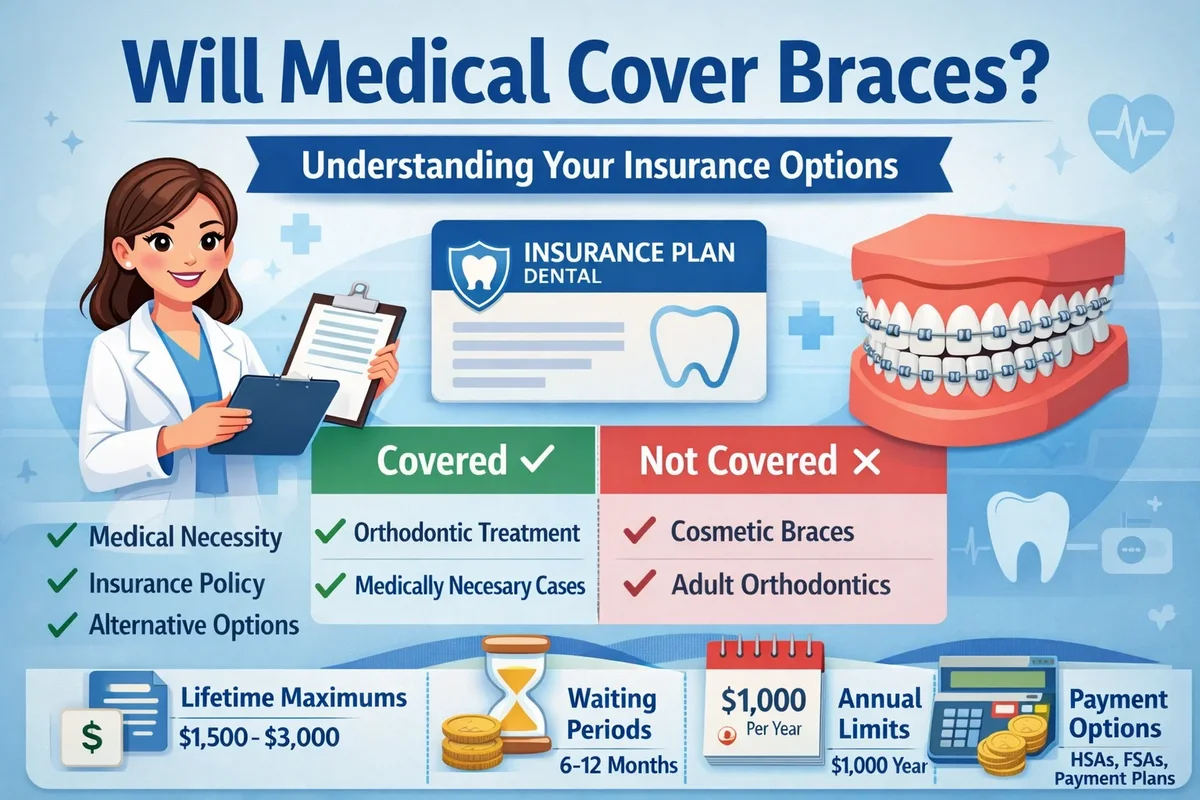
Dental insurance is often more relevant when asking will medical cover braces. Many dental plans offer orthodontic benefits as an add-on or optional rider. However, these benefits usually have lifetime maximum limits, such as $1,000 to $3,000. Even if dental insurance helps, families are often responsible for a significant portion of the total cost.
To better understand coverage policies and standards, you can review guidelines from trusted professional organizations such as the American Dental Association. They provide valuable information about orthodontic care, insurance considerations, and patient rights. Reviewing reputable sources helps clarify expectations when evaluating whether medical insurance will cover braces.
Let’s look at typical cost ranges to understand why this question is so important. Without insurance, braces in the United States usually cost:
- Traditional metal braces: $3,000 – $7,000
- Ceramic braces: $4,000 – $8,000
- Lingual braces: $8,000 – $10,000
- Clear aligners (such as Invisalign): $3,500 – $8,000
With these figures in mind, it’s completely understandable why families ask will medical cover braces before committing to treatment. Even partial insurance support can significantly reduce financial stress.
Documentation is critical when determining will medical cover braces. Orthodontists often provide detailed diagnostic records, including X-rays, photographs, and treatment plans. If the orthodontic issue causes pain, difficulty eating, speech problems, or risk of long-term dental damage, these details may support a medical necessity claim. Insurance companies require clear justification before approving coverage.
Another aspect to consider when asking will medical cover braces is coordination of benefits. If you have both medical and dental insurance, sometimes claims can be submitted to both providers. In rare situations, part of the treatment may be billed under medical insurance (for example, if surgery is involved), while orthodontic appliances are billed under dental insurance.
Adults frequently ask will medical cover braces later in life. Unfortunately, adult orthodontic coverage is generally more limited than pediatric coverage. Many insurance plans impose age restrictions, covering orthodontic treatment only for patients under 18. Therefore, if you are considering braces as an adult, it is especially important to review your policy documents carefully.
Ultimately, the answer to will medical cover braces depends on three key factors: the severity of the condition, the specific insurance policy, and whether the treatment is deemed medically necessary rather than cosmetic. Because every case is unique, the most reliable way to get a clear answer is to consult directly with your orthodontist and insurance provider.
If you would like personalized guidance about your orthodontic options, you can reach out through the Redent Klinik Contact Page. Our team can help you understand treatment plans, cost estimates, and how to approach insurance verification.
In summary, asking will medical cover braces is the right first step before beginning orthodontic treatment. While coverage is not guaranteed, understanding the rules, reviewing your plan details, and gathering proper documentation can significantly improve your chances. Taking time to research and consult professionals ensures that you make informed decisions about both your dental health and your financial planning. 😊
1. Will Medical Cover Braces for Children and Adults?
When families begin exploring orthodontic treatment, one of the most common and urgent questions is: will medical cover braces for both children and adults? The answer depends on age, diagnosis, and the type of insurance plan involved. While many people assume that health insurance automatically helps with orthodontic treatment, the reality is more complex. Understanding how coverage differs between children and adults is essential before starting treatment. 🦷
Will Medical Cover Braces for Children?
Parents frequently ask whether medical plans are more flexible when it comes to younger patients. In some cases, the answer to will medical cover braces for children is more favorable than for adults. Insurance companies are generally more willing to consider orthodontic treatment medically necessary when a child’s oral development is still ongoing and when serious functional issues are present.
For example, if a child has a severe malocclusion (improper bite), jaw growth problems, or congenital conditions such as cleft palate, medical insurance may contribute to treatment. In these situations, braces are not viewed as cosmetic but as corrective therapy essential for proper chewing, speech development, and long-term oral health. However, even in pediatric cases, the question will medical cover braces still depends on documented medical necessity and policy details.
Common Pediatric Conditions That May Qualify
- Severe overbite or underbite affecting chewing
- Crossbite causing jaw asymmetry
- Impacted teeth causing pain or infection risk
- Craniofacial abnormalities
- Speech impairment linked to bite issues
In such scenarios, insurance providers may review orthodontic records carefully before determining whether medical insurance will assist. Still, routine crowding or mild spacing problems rarely change the outcome when asking will medical cover braces for children.
Will Medical Cover Braces for Adults?
Adults considering orthodontic treatment often face greater limitations. The question will medical cover braces becomes more challenging once a patient is over 18. Many insurance plans specifically exclude adult orthodontic coverage unless it is tied to a serious medical condition or corrective jaw surgery.
For example, if an adult requires orthognathic (jaw) surgery due to skeletal misalignment, medical insurance may cover the surgical procedure. In such cases, the braces used before and after surgery may sometimes be partially included as part of the overall medically necessary treatment plan. However, in most adult cosmetic cases, the answer to will medical cover braces is typically no.
When Adult Coverage Is More Likely
- Jaw misalignment requiring surgery
- Temporomandibular joint (TMJ) dysfunction caused by bite problems
- Accident-related dental trauma
- Severe functional impairment
Even under these circumstances, approval is not automatic. Insurance companies require clear documentation from both orthodontists and medical specialists. Detailed X-rays, diagnostic scans, and treatment justifications are essential when determining will medical cover braces in adult cases.
The Role of Medical Necessity
The central factor influencing whether medical insurance contributes is medical necessity. Cosmetic improvement alone does not meet insurance standards. When evaluating will medical cover braces, providers assess whether the condition impacts basic bodily functions such as chewing, swallowing, breathing, or speaking.
Medical necessity often requires objective scoring systems. Some insurers use orthodontic severity indexes to determine eligibility. If the patient’s condition meets or exceeds a specific threshold, coverage may be approved. If it falls below that threshold, the claim may be denied—even if braces would significantly improve oral health.
Differences Between Medical and Dental Insurance
It is important to distinguish between medical insurance and dental insurance. When people ask will medical cover braces, they sometimes confuse medical plans with dental orthodontic benefits. Dental insurance is more likely to offer orthodontic coverage, but even then, limits apply.
Typical dental orthodontic coverage includes:
- Lifetime maximum benefits ($1,000–$3,000)
- Age restrictions (often under 18)
- Waiting periods (6–12 months)
- Percentage coverage (often 50%)
Medical insurance, on the other hand, may only help if braces are linked to a broader health issue. Therefore, the answer to will medical cover braces often requires coordination between both types of policies.
Financial Implications for Families
Because orthodontic treatment can range from $3,000 to $10,000 depending on the type of braces, families must plan carefully. Before assuming coverage, it is crucial to directly contact your insurance provider and request a written explanation of benefits. The question will medical cover braces should never be answered based on assumptions alone.
Orthodontic clinics typically assist patients with insurance verification and pre-authorization requests. They can submit documentation to determine whether medical insurance may contribute. However, final decisions always rest with the insurer.
Key Takeaways for Children and Adults
To summarize, the likelihood that medical insurance will assist differs significantly between age groups. For children with severe functional issues, the chances are higher—but not guaranteed. For adults, approval is less common unless surgery or trauma is involved. Ultimately, the question will medical cover braces depends on documented medical necessity, insurance terms, and professional evaluation.
Careful review of policy language, professional consultation, and early financial planning will help families navigate orthodontic decisions with confidence. 😊
2. When Is Orthodontic Treatment Considered Medically Necessary?
Understanding medical necessity is the key to answering the important question: will medical cover braces? Insurance providers do not approve orthodontic treatment simply because teeth are crooked or slightly misaligned. Instead, they evaluate whether the condition negatively affects a patient’s overall health, daily function, or long-term well-being. In many cases, determining whether will medical cover braces applies depends entirely on how the orthodontic problem impacts essential bodily functions.
What Does “Medically Necessary” Mean?
In insurance terminology, “medically necessary” refers to treatments required to diagnose, prevent, or correct a health condition that interferes with normal function. When families ask will medical cover braces, insurers look beyond cosmetic alignment and focus on whether braces are essential for health reasons.
For example, mild crowding or spacing rarely qualifies. However, severe malocclusion (improper bite) that causes chewing difficulty, chronic jaw pain, speech problems, or increased risk of dental damage may meet medical necessity criteria. In these cases, the answer to will medical cover braces becomes more favorable because treatment supports functional health rather than appearance.
Functional Problems That May Qualify
Orthodontic treatment may be considered medically necessary when structural or developmental abnormalities are present. Below are common conditions insurers review when evaluating whether will medical cover braces:
1. Severe Malocclusion
Malocclusion refers to misalignment between upper and lower teeth. Extreme overbite, underbite, or crossbite can cause jaw strain, uneven tooth wear, and difficulty chewing. If documented properly, these cases may support the argument that will medical cover braces should result in partial or full approval.
2. Jaw Growth Abnormalities
Improper jaw development can lead to facial asymmetry, breathing issues, or chronic pain. In children, early orthodontic intervention may prevent long-term complications. When growth abnormalities are severe, insurance companies may consider whether will medical cover braces applies as part of corrective treatment.
3. Speech Impairment
In some cases, bite misalignment directly contributes to speech disorders. If a speech therapist and orthodontist confirm the connection, insurers may reconsider the question will medical cover braces more seriously.
4. Trauma or Injury
If a patient suffers facial trauma due to an accident, braces may be required to restore proper dental alignment. Under these circumstances, will medical cover braces is more likely to receive a positive response because treatment is part of reconstructive care.
Orthognathic Surgery and Combined Treatment
One of the clearest examples where will medical cover braces may be answered with “yes” is when orthodontic treatment is combined with orthognathic (corrective jaw) surgery. In these cases, braces are necessary before and after surgery to align teeth with the corrected jaw structure.
Insurance providers often cover surgical procedures when they address functional impairments such as difficulty eating or breathing. Because braces are essential to the surgical outcome, the evaluation of will medical cover braces may include them as part of the comprehensive treatment plan.
Severity Index and Insurance Evaluation
Many insurers rely on orthodontic severity scoring systems to determine eligibility. These systems assign points based on the degree of misalignment, bite irregularity, and skeletal discrepancy. If the patient’s condition exceeds a specific threshold, coverage may be granted. If it falls below that level, the answer to will medical cover braces may unfortunately be no—even if improvement would benefit oral health.
This structured evaluation highlights why thorough documentation is critical. Orthodontists must provide X-rays, photographs, treatment plans, and detailed clinical notes explaining why braces are not cosmetic but medically required. Without this evidence, insurers rarely approve claims when patients ask will medical cover braces.
Differences Between Cosmetic and Medical Cases
It is important to distinguish aesthetic improvement from medical correction. Straightening mildly crooked teeth for cosmetic enhancement does not meet insurance standards. Therefore, in purely cosmetic cases, the question will medical cover braces typically results in denial.
However, if untreated misalignment could lead to tooth fractures, gum disease, chronic headaches, or TMJ disorders, insurers may reconsider. The distinction lies in measurable health impact rather than personal preference.
Why Documentation and Professional Support Matter
When determining whether will medical cover braces, insurance companies rely heavily on professional assessments. Orthodontists may collaborate with oral surgeons, pediatricians, or speech therapists to strengthen claims. The more interdisciplinary documentation available, the stronger the argument becomes.
Patients should request a pre-authorization review before beginning treatment. This proactive step helps clarify whether medical insurance will contribute and avoids unexpected financial surprises.
Key Takeaways
In summary, orthodontic treatment is considered medically necessary when it corrects functional impairments rather than cosmetic concerns. Severe bite problems, jaw abnormalities, trauma, and combined surgical cases offer the strongest justification. Ultimately, whether will medical cover braces depends on documented medical necessity, insurance guidelines, and the severity of the condition.
Understanding these criteria empowers patients and families to approach insurance discussions confidently and realistically. Careful evaluation, detailed documentation, and early communication with providers significantly increase the likelihood of approval. 😊
3. Types of Insurance Plans and Orthodontic Coverage
When patients ask the important question will medical cover braces, one of the first things to evaluate is the type of insurance plan they have. Not all insurance policies are structured the same way, and coverage for orthodontic treatment varies significantly depending on whether the plan is medical, dental, employer-sponsored, private, or government-funded. Understanding these differences helps clarify when the answer to will medical cover braces may be yes, partially yes, or no.
Medical Insurance Plans
Traditional health insurance plans are primarily designed to cover illnesses, injuries, surgeries, and medically necessary treatments. In most cases, orthodontic care is categorized as dental or cosmetic rather than medical. Therefore, when reviewing a standard medical policy, the answer to will medical cover braces is usually no unless the treatment addresses a serious health condition.
However, there are exceptions. Medical insurance may contribute if braces are required as part of:
- Corrective jaw (orthognathic) surgery
- Treatment following facial trauma or accident
- Congenital craniofacial disorders
- Severe functional impairments (chewing, speech, breathing)
In these specific cases, insurers may evaluate whether will medical cover braces applies because braces are essential to restoring normal function rather than improving appearance. Proper documentation and pre-authorization are critical in such scenarios.
Dental Insurance with Orthodontic Benefits
Dental insurance is more commonly associated with braces. Many dental plans offer orthodontic coverage either as a built-in feature or as an optional rider. When families ask will medical cover braces, they sometimes discover that dental insurance is actually the more relevant source of financial support.
Typical Orthodontic Coverage Under Dental Plans
- 50% coverage of treatment costs (in many cases)
- Lifetime orthodontic maximum ($1,000–$3,000 typical range)
- Age restrictions (often limited to children under 18)
- Waiting periods before benefits begin
Even when dental insurance contributes, it rarely covers the entire cost. Therefore, while dental benefits may help answer the financial concern behind will medical cover braces, patients are usually responsible for a significant remaining balance.
Employer-Sponsored Insurance Plans
Employer-sponsored health and dental insurance plans vary widely depending on the company and coverage tier selected. Some large employers provide enhanced orthodontic benefits as part of their compensation packages. In these situations, reviewing plan details carefully is essential to determine whether will medical cover braces applies under your specific employer policy.
Employees should examine the summary of benefits and coverage document (SBC) provided by their insurer. Look specifically for sections labeled “orthodontics,” “medically necessary dental procedures,” or “jaw correction.” If unclear, contacting the benefits administrator directly can clarify whether will medical cover braces is covered under the company’s plan.
Private and Marketplace Insurance Plans
Individuals who purchase insurance through government marketplaces or private insurers should carefully review orthodontic clauses. Most marketplace medical plans do not include routine orthodontic coverage for adults. Pediatric dental coverage is often required for children, but orthodontic benefits may still be limited.
When purchasing private insurance, consumers should ask directly: will medical cover braces under this specific plan? It is also important to ask about annual caps, lifetime maximums, waiting periods, and age restrictions. Transparency at the time of enrollment prevents misunderstandings later.
Government Programs and Public Assistance
Government-funded programs such as Medicaid may provide orthodontic coverage for children if treatment is deemed medically necessary. Eligibility requirements vary by state, but severe orthodontic conditions that affect function may qualify. For adults, coverage is much more limited.
In public health programs, the answer to will medical cover braces often depends on severity scoring systems. Only patients whose conditions exceed specific thresholds may receive approval. Cosmetic treatment is generally excluded.
Coordination of Benefits: Medical and Dental Together
Some patients have both medical and dental insurance coverage. In certain cases, coordination of benefits allows claims to be submitted to both insurers. For example, if braces are required alongside corrective jaw surgery, medical insurance may cover the surgical component while dental insurance contributes toward the orthodontic appliances.
In such coordinated cases, the question will medical cover braces may have a partial answer—meaning medical insurance covers part of the treatment plan while dental insurance covers another portion.
Key Financial Considerations
Because orthodontic treatment typically ranges between $3,000 and $10,000 depending on the type of braces, understanding insurance structure is crucial. Patients should always request a written pre-treatment estimate. This estimate should clearly outline:
- Total projected cost
- Insurance contribution
- Out-of-pocket responsibility
- Payment plan options
Relying solely on assumptions when asking will medical cover braces can lead to unexpected financial stress. Verification before treatment begins ensures clarity and peace of mind.
Conclusion
The answer to will medical cover braces depends largely on the type of insurance plan involved. Medical insurance rarely covers orthodontics unless linked to serious functional issues or surgery. Dental insurance more commonly provides limited orthodontic benefits, especially for children. Employer plans, private insurance, and government programs each have unique rules and restrictions.
By carefully reviewing policy documents, coordinating benefits when possible, and consulting with your orthodontic provider, you can better understand your coverage options and make informed financial decisions about your treatment. 😊
4. How Much Do Braces Cost Without Insurance?
Before patients even finalize treatment plans, many first ask a practical financial question: will medical cover braces, and if not, how much will they cost out of pocket? Understanding the full cost of braces without insurance is essential because coverage is never guaranteed. When the answer to will medical cover braces is no, families must be prepared to manage the complete expense themselves.
The cost of braces depends on multiple factors, including the type of braces, the complexity of the case, treatment duration, and geographic location. Orthodontic treatment is a specialized dental service requiring ongoing monitoring, adjustments, and customized appliances. Therefore, pricing reflects not just the materials used but also professional expertise and long-term care.
Average Cost of Different Types of Braces
If you are wondering what happens financially when will medical cover braces results in denial, reviewing national average costs provides clarity. Below are typical price ranges in the United States:
1. Traditional Metal Braces
- Average cost: $3,000 – $7,000
- Most affordable option
- Highly effective for complex cases
Metal braces remain the most common orthodontic solution. When patients learn that will medical cover braces may not apply, metal braces often become the preferred option due to lower cost compared to more aesthetic alternatives.
2. Ceramic (Tooth-Colored) Braces
- Average cost: $4,000 – $8,000
- Less visible than metal braces
- Slightly more expensive due to materials
Ceramic braces provide cosmetic appeal but come at a higher price. If will medical cover braces does not result in insurance assistance, patients should carefully weigh aesthetic preference against cost difference.
3. Lingual Braces
- Average cost: $8,000 – $10,000
- Placed behind the teeth
- Highly discreet but technically demanding
Lingual braces are among the most expensive orthodontic options. In most cases, if will medical cover braces is answered negatively, lingual braces may not be financially practical without significant personal budgeting.
4. Clear Aligners (e.g., Invisalign)
- Average cost: $3,500 – $8,000
- Removable and nearly invisible
- Best for mild to moderate alignment issues
Clear aligners are popular among adults seeking discreet treatment. However, when asking will medical cover braces, it is important to note that aligners are rarely covered by medical insurance unless linked to surgical or medically necessary cases.
What Influences the Final Price?
The total cost of orthodontic treatment without insurance depends on several clinical and practical factors. When will medical cover braces does not apply, understanding these variables helps patients plan responsibly.
Case Complexity
Severe bite problems, impacted teeth, or jaw discrepancies require longer treatment and more adjustments, increasing cost.
Treatment Duration
Most orthodontic treatments last between 18 and 24 months. Longer treatment often increases fees due to additional visits and monitoring.
Location and Provider Expertise
Orthodontic costs vary by region. Urban areas and highly experienced specialists may charge higher fees.
Additional Costs to Consider
When calculating expenses after discovering that will medical cover braces may not help, patients should also consider potential additional fees:
- Initial consultation fees (sometimes free, sometimes $100–$300)
- X-rays and diagnostic imaging
- Retainers after treatment ($150–$500)
- Emergency visits for broken brackets or wires
These smaller expenses can accumulate over time. Even if will medical cover braces provides partial support, these extra costs may still fall under patient responsibility.
Payment Plans and Financing Options
Orthodontic clinics understand that treatment can be a significant investment. Therefore, many offices offer flexible payment plans. If the answer to will medical cover braces is no, financing becomes especially important.
Common Financing Options
- Monthly in-house payment plans
- Third-party healthcare financing companies
- Health Savings Accounts (HSA)
- Flexible Spending Accounts (FSA)
HSAs and FSAs allow patients to use pre-tax income for eligible medical and dental expenses, including braces. While this does not change whether will medical cover braces, it can significantly reduce the overall financial burden.
Why Cost Transparency Matters
Before committing to orthodontic treatment, always request a detailed written estimate. This document should clearly outline total fees, insurance contributions (if any), and payment schedule. Never assume that will medical cover braces will apply without official verification from your insurance provider.
Even if medical insurance does not contribute, orthodontic treatment is often viewed as a long-term investment in oral health. Proper alignment reduces the risk of gum disease, tooth decay, abnormal wear, and jaw pain. Over time, these preventive benefits may offset future dental expenses.
Final Thoughts on Costs Without Insurance
In summary, when asking will medical cover braces, it is equally important to understand the financial reality if coverage is denied. Braces can cost anywhere from $3,000 to $10,000 depending on the treatment type and complexity. While this may seem significant, flexible payment plans and tax-advantaged accounts can make treatment more accessible.
Careful budgeting, insurance verification, and consultation with your orthodontist ensure you are financially prepared, whether or not medical insurance contributes. Being informed empowers you to prioritize both your dental health and financial stability. 😊
4. How Much Do Braces Cost Without Insurance?
Before starting orthodontic treatment, many patients ask two connected questions: will medical cover braces, and if not, how much will I have to pay myself? Understanding the real cost of braces without insurance is essential because in many cases, the answer to will medical cover braces is unfortunately no. When medical insurance does not contribute, patients must plan carefully for the full financial responsibility.
Orthodontic treatment is a long-term process that requires specialized expertise, customized appliances, regular adjustments, and follow-up care. That is why braces are considered an investment rather than a one-time dental procedure. If you are researching whether will medical cover braces applies to your case, it is equally important to understand the financial scenario if coverage is denied.
Average Cost of Braces in the United States
Costs vary depending on the type of braces and the complexity of the case. Below are typical price ranges based on current national averages:
Traditional Metal Braces
- $3,000 – $7,000
- Most affordable option
- Suitable for mild to severe alignment issues
Metal braces are the most common orthodontic treatment. If the outcome of will medical cover braces is negative, many patients choose metal braces because they offer the best balance between effectiveness and cost.
Ceramic (Tooth-Colored) Braces
- $4,000 – $8,000
- Less visible than metal braces
- Slightly higher cost due to aesthetic materials
Ceramic braces provide a more discreet appearance. However, if will medical cover braces does not provide financial assistance, patients must evaluate whether the cosmetic benefit justifies the higher cost.
Lingual Braces
- $8,000 – $10,000
- Placed behind the teeth
- Highly discreet but technically complex
Lingual braces are among the most expensive options. Since the answer to will medical cover braces is rarely yes for cosmetic orthodontics, lingual braces are typically paid entirely out of pocket.
Clear Aligners
- $3,500 – $8,000
- Removable and nearly invisible
- Best for mild to moderate cases
Clear aligners are especially popular among adults. However, when asking will medical cover braces, patients should know that aligner therapy is usually considered elective unless linked to a medically necessary condition.
What Determines the Final Price?
If you discover that will medical cover braces does not apply to your situation, understanding what affects pricing helps you prepare financially.
Case Complexity
Severe bite issues, jaw misalignment, or impacted teeth require longer and more advanced treatment, increasing total cost.
Treatment Duration
Most orthodontic treatments last 18–24 months. Longer treatment time means more adjustment visits, which can influence overall fees.
Geographic Location
Costs are typically higher in major metropolitan areas compared to smaller cities or rural regions.
Orthodontist’s Experience
Highly experienced specialists may charge more due to expertise and advanced technology.
These factors explain why the financial impact of a “no” answer to will medical cover braces can vary significantly between patients.
Additional Costs Beyond Braces
Many patients focus only on the base price of braces, but additional expenses may arise. If will medical cover braces does not provide coverage, these costs become the patient’s responsibility:
- Initial consultation ($100–$300 if not complimentary)
- X-rays and diagnostic imaging
- Tooth extractions (if required)
- Retainers after treatment ($150–$500)
- Replacement fees for lost or broken appliances
These supplementary costs should be included in your financial planning when the answer to will medical cover braces is negative.
Payment Plans and Financial Assistance
Orthodontic clinics understand that braces can be a significant investment. Even if will medical cover braces does not apply, many offices offer structured payment solutions.
Common Payment Options
- Interest-free monthly installment plans
- Third-party healthcare financing programs
- Health Savings Accounts (HSA)
- Flexible Spending Accounts (FSA)
Using HSA or FSA funds allows patients to pay for braces with pre-tax income, which reduces the overall financial burden. While this does not change whether will medical cover braces, it can make treatment more affordable.
Is Orthodontic Treatment Worth the Cost?
Even when will medical cover braces results in no insurance assistance, orthodontic treatment often provides long-term value. Proper alignment improves oral hygiene, reduces the risk of gum disease, prevents abnormal tooth wear, and supports jaw health. Over time, these benefits may reduce future dental expenses.
In summary, if the answer to will medical cover braces is no, total costs typically range from $3,000 to $10,000 depending on treatment type and complexity. Understanding pricing, additional fees, and financing options allows you to move forward confidently and make informed decisions about your oral health investment. 😊
7. Coverage Limits, Waiting Periods, and Annual Caps
Even if you receive a positive response to the question will medical cover braces, it is extremely important to understand the financial limitations that may still apply. Insurance approval does not always mean full coverage. In fact, most policies include strict coverage limits, waiting periods, and annual or lifetime caps that directly affect how much financial support you will actually receive.
When families research whether will medical cover braces applies to their situation, they often focus only on whether treatment is approved. However, the details hidden in the policy language—such as maximum payout amounts and timing restrictions—can significantly influence out-of-pocket expenses. Understanding these technical elements ensures there are no unexpected financial surprises. 🦷
Lifetime Orthodontic Maximums
One of the most common limitations in orthodontic coverage is the lifetime maximum. Even if the answer to will medical cover braces is yes under your dental or medical plan, many insurers cap orthodontic benefits at a fixed lifetime amount.
Typical Lifetime Maximum Ranges
- $1,000 – $1,500 (basic plans)
- $2,000 – $3,000 (mid-level plans)
- Higher-end employer plans may offer slightly more
This means that once the maximum benefit is reached, the insurance company will not pay any additional orthodontic expenses—even if treatment is still ongoing. For example, if your total braces cost is $6,000 and your lifetime maximum is $2,000, you are responsible for the remaining $4,000. Therefore, while will medical cover braces may technically be answered with yes, coverage may only represent a portion of the total expense.
Annual Coverage Caps
Some insurance plans impose annual caps instead of—or in addition to—lifetime maximums. An annual cap limits how much the insurer will pay within a single calendar year. If braces treatment spans multiple years, which is common, annual caps can delay reimbursement.
When evaluating whether will medical cover braces, you must ask:
- Is there an annual payment limit?
- How are payments distributed (monthly, quarterly, annually)?
- Does unused annual benefit roll over?
Most orthodontic treatments last between 18 and 24 months. If annual caps are low, even a “yes” to will medical cover braces may not significantly reduce immediate financial responsibility.
Waiting Periods Before Coverage Begins
Another important factor affecting whether will medical cover braces truly helps you is the waiting period. Many insurance plans require policyholders to wait several months before orthodontic benefits become active.
Common Waiting Period Durations
- 6 months for minor procedures
- 12 months for major orthodontic treatment
- Longer waiting periods for certain private plans
If orthodontic treatment begins before the waiting period ends, coverage may be denied. Therefore, even if your policy includes orthodontic benefits, starting treatment too early could result in a negative answer to will medical cover braces in practice.
Age Restrictions and Eligibility Limits
Many insurance plans limit orthodontic coverage to patients under 18 years old. If you are an adult considering braces, you must verify whether your policy imposes age restrictions. In adult cases, the answer to will medical cover braces is often more restrictive unless treatment is linked to medically necessary jaw correction or trauma.
Additionally, some policies require active enrollment before orthodontic problems are diagnosed. Pre-existing condition clauses may affect approval, especially if braces were recommended before insurance enrollment.
Percentage-Based Coverage
Even when braces are covered, insurers rarely pay 100% of treatment costs. Instead, they commonly cover a percentage—often 50%—after deductibles are met.
For example:
- Total braces cost: $5,000
- Insurance covers 50%
- Lifetime maximum: $2,000
In this scenario, even if will medical cover braces is approved, the patient would still pay $3,000 out of pocket because of the lifetime cap.
Coordination of Benefits
If you have dual coverage (both medical and dental insurance), coordination of benefits may increase financial assistance. For example, medical insurance may cover surgery-related components, while dental insurance handles orthodontic appliances.
When asking will medical cover braces, patients with dual coverage should verify how insurers coordinate payments. Some plans reduce benefits if another insurer is involved, which can affect total reimbursement.
Why Reviewing Your Policy Carefully Matters
Insurance documents often contain detailed clauses that significantly impact orthodontic coverage. Patients should review:
- Summary of Benefits and Coverage (SBC)
- Orthodontic rider details
- Deductible requirements
- Maximum benefit limits
- Waiting period clauses
Simply asking will medical cover braces without reviewing these details may lead to unrealistic expectations. Pre-authorization requests and written benefit confirmations provide the most reliable clarity.
Final Thoughts on Coverage Limitations
In conclusion, even when the answer to will medical cover braces is technically yes, coverage limits, annual caps, and waiting periods can significantly reduce the financial benefit. Orthodontic treatment is a long-term commitment, and understanding the fine print of your insurance policy ensures better financial planning.
Always request a written estimate from your orthodontist and verify benefits directly with your insurance provider before beginning treatment. Clear communication and careful review empower you to make confident decisions about both your oral health and your budget. 😊
8. How to Check If Your Plan Will Cover Braces
After understanding costs, medical necessity, and insurance limitations, the next practical step is verifying your own policy. Many patients repeatedly ask, will medical cover braces, but the only accurate answer comes from directly reviewing and confirming your individual insurance plan. Every policy is different, and assumptions can lead to unexpected expenses. Taking a structured approach helps you clearly determine whether will medical cover braces applies to your specific case. 🦷
Step 1: Review Your Insurance Policy Documents
The first step in answering will medical cover braces is carefully reading your Summary of Benefits and Coverage (SBC). This document outlines what procedures are covered, excluded, or limited.
What to Look For in Your Policy
- Orthodontic treatment clauses
- Medically necessary dental coverage
- Age restrictions
- Waiting periods
- Lifetime or annual maximums
When reviewing these sections, pay close attention to whether orthodontic services are listed under medical coverage or only under dental benefits. In many cases, the answer to will medical cover braces depends on whether treatment is classified as cosmetic or medically required.
Step 2: Contact Your Insurance Provider Directly
Reading your policy is important, but direct confirmation is even more critical. Call the customer service number on your insurance card and ask specific, detailed questions about orthodontic coverage.
Questions to Ask Your Insurance Representative
- Will medical cover braces in my situation?
- Is coverage limited to medically necessary cases?
- What documentation is required?
- Are there lifetime orthodontic maximums?
- Does my plan have a waiting period?
Take notes during the call and request written confirmation if possible. Simply assuming that will medical cover braces applies can lead to misunderstandings later.
Step 3: Request a Pre-Authorization
Pre-authorization (also called prior authorization) is one of the most reliable ways to confirm coverage before treatment begins. Your orthodontist submits clinical records, X-rays, photographs, and a treatment plan to your insurer for review.
This process helps determine in advance whether will medical cover braces results in approval. Without pre-authorization, you risk starting treatment without knowing how much insurance will contribute.
Documents Typically Required
- Diagnostic X-rays
- Intraoral and facial photographs
- Orthodontic treatment plan
- Medical necessity justification (if applicable)
Insurance providers evaluate whether braces are essential for correcting functional problems. If your case involves jaw misalignment, speech impairment, or trauma, your orthodontist can clearly explain why will medical cover braces should be approved.
Step 4: Verify Coordination of Benefits
If you have both medical and dental insurance, coordination of benefits can increase coverage. Ask each insurer how claims are processed when dual coverage exists. In some situations, medical insurance may cover surgery-related components while dental insurance handles the orthodontic appliances.
When evaluating will medical cover braces, understanding how both policies interact ensures you maximize available benefits.
Step 5: Confirm Payment Distribution
Even if insurance approves coverage, payments are often distributed over the course of treatment rather than provided upfront. Some insurers release benefits in monthly or quarterly installments.
Ask your provider how reimbursement works. A “yes” answer to will medical cover braces may still mean you need to pay a portion initially and receive insurance reimbursement later.
Step 6: Get a Written Cost Breakdown from Your Orthodontist
Your orthodontist plays a key role in clarifying financial expectations. Request a written estimate that includes:
- Total treatment cost
- Insurance contribution
- Remaining out-of-pocket amount
- Available payment plans
This detailed breakdown allows you to compare your insurer’s statement with your orthodontist’s calculations. If there is any discrepancy regarding will medical cover braces, you can address it immediately before starting treatment.
Step 7: Understand Appeals and Denials
If your insurance initially denies coverage, you may have the option to file an appeal. Many patients assume that a denial permanently answers the question will medical cover braces, but appeals sometimes succeed—especially if additional documentation is submitted.
When to Consider an Appeal
- Severe functional impairment exists
- Jaw surgery is involved
- Documentation was incomplete in the first submission
- Medical necessity criteria were misunderstood
Working closely with your orthodontist during the appeal process strengthens your case and increases the likelihood that will medical cover braces may eventually be approved.
Final Thoughts on Verifying Coverage
Determining whether will medical cover braces applies to your specific situation requires careful review, direct communication, and written confirmation. Never rely on assumptions or verbal assurances alone. By reviewing policy documents, requesting pre-authorization, verifying benefit coordination, and preparing for possible appeals, you ensure complete financial clarity before beginning orthodontic treatment.
Being proactive and informed empowers you to move forward confidently, knowing exactly what portion of treatment will be covered and what responsibilities remain. 😊
9. What to Do If Medical Will Not Cover Braces
After reviewing your policy, contacting your insurer, and possibly submitting pre-authorization documents, you may discover that the answer to will medical cover braces is no. While this can feel discouraging, it does not mean orthodontic treatment is out of reach. There are several practical strategies available to help you move forward confidently, even if medical insurance does not contribute financially.
When families realize that will medical cover braces does not apply to their case, the next step is shifting focus from insurance approval to financial planning and alternative support options. Orthodontic care is still a valuable long-term investment in oral health, function, and self-confidence. Understanding your options allows you to make informed decisions without unnecessary stress. 😊
Explore Dental Insurance Options
If medical insurance denies coverage, review whether you have dental insurance with orthodontic benefits. In many situations, people focus solely on will medical cover braces and overlook the possibility that dental coverage may offer partial support.
What to Check in Your Dental Plan
- Orthodontic lifetime maximum
- Percentage of coverage (often 50%)
- Age restrictions
- Waiting periods
Even limited dental benefits can reduce out-of-pocket costs significantly. While dental insurance may not fully replace the answer to will medical cover braces, it can ease financial pressure.
Ask About Flexible Payment Plans
Most orthodontic clinics understand that braces are a major investment. If will medical cover braces is not favorable, ask your provider about in-house financing options.
Common Payment Solutions
- Interest-free monthly installment plans
- Low initial down payments
- Extended repayment terms (12–36 months)
- Customized payment schedules
Many practices divide the total cost across the length of treatment. This makes orthodontic care more manageable even if will medical cover braces results in zero insurance assistance.
Use Health Savings Accounts (HSA) or Flexible Spending Accounts (FSA)
If you have access to an HSA or FSA, you can use pre-tax income to pay for orthodontic treatment. This approach reduces your overall financial burden, even though it does not change whether will medical cover braces applies.
Because HSAs and FSAs lower taxable income, they effectively provide indirect savings. Many families find this option helpful when insurance coverage is limited or denied.
Consider Phased Treatment Options
In some cases, orthodontists can design phased treatment plans. For example, urgent functional issues may be addressed first, with cosmetic improvements postponed. If the reason behind asking will medical cover braces relates to financial limitations, discussing phased treatment can make the process more affordable.
Benefits of Phased Treatment
- Spreads cost over time
- Addresses urgent health concerns first
- Allows for gradual budgeting
This approach ensures essential oral health needs are met while giving you flexibility in managing expenses.
Seek Alternative Treatment Options
If cost remains a concern after learning that will medical cover braces is negative, ask your orthodontist whether alternative appliances may reduce overall expense. Traditional metal braces are typically more affordable than lingual braces or premium clear aligners.
Choosing a cost-effective treatment type does not compromise effectiveness. In many cases, simpler solutions provide equally successful results at a lower price point.
Look for Community or Educational Clinics
Dental schools and university clinics sometimes offer orthodontic services at reduced rates. These treatments are supervised by experienced specialists while being performed by advanced students. If will medical cover braces does not provide assistance, exploring these clinics may offer a budget-friendly alternative.
Appeal the Insurance Decision
If you strongly believe your condition qualifies as medically necessary, you may have the right to appeal the insurer’s denial. Some patients assume that once will medical cover braces is answered negatively, the matter is closed. However, submitting additional documentation—such as updated X-rays or specialist reports—can sometimes reverse the decision.
When an Appeal May Be Worthwhile
- Severe jaw misalignment exists
- Speech or chewing difficulties are documented
- Trauma-related orthodontic correction is required
- Orthognathic surgery is part of the treatment plan
Appeals require persistence, but in medically complex cases, they can lead to partial or full approval.
Focus on Long-Term Benefits
Even if will medical cover braces does not result in insurance payment, orthodontic treatment offers long-term advantages. Proper alignment improves bite function, reduces abnormal tooth wear, lowers the risk of gum disease, and enhances self-confidence. These benefits can prevent future dental complications that may be more expensive to treat.
When evaluating costs, consider the lifetime value of improved oral health. Many patients find that the investment is worthwhile, even without insurance support.
Final Thoughts
Discovering that will medical cover braces does not apply can initially feel disappointing. However, multiple financial strategies—including dental insurance, payment plans, HSAs, phased treatment, and appeals—can make orthodontic care achievable. The key is proactive planning, open communication with your orthodontist, and a clear understanding of your financial options.
With the right approach, you can still achieve a healthier, more confident smile—regardless of insurance limitations. 😊
10. Final Considerations Before Starting Orthodontic Treatment
Before making a final decision about braces, it is essential to step back and evaluate every aspect of treatment—especially financial planning, medical necessity, and long-term benefits. Many patients begin their journey by asking will medical cover braces, but the answer to that question should be only one part of a broader decision-making process. Whether the response to will medical cover braces is yes, partially yes, or no, careful preparation ensures a smoother and more confident treatment experience. 😊
Understand the Full Scope of Your Treatment Plan
Orthodontic care is not just about placing brackets or aligners. It involves diagnostic assessments, periodic adjustments, potential refinements, and post-treatment retention. Even if will medical cover braces provides some financial support, you must understand the complete scope of care before committing.
Key Questions to Ask Your Orthodontist
- What is the estimated treatment duration?
- Are there potential additional procedures required?
- Will retainers be included in the total fee?
- What happens if treatment takes longer than expected?
These questions help you prepare beyond simply confirming whether will medical cover braces applies.
Evaluate Long-Term Oral Health Benefits
Orthodontic treatment provides more than cosmetic improvement. Proper alignment reduces plaque accumulation, lowers the risk of gum disease, and prevents uneven tooth wear. Even if will medical cover braces does not provide coverage, the preventive benefits may reduce future dental costs.
Severe misalignment can lead to:
- Chronic jaw pain
- Headaches
- Difficulty chewing
- Increased risk of tooth fractures
Addressing these issues early may prevent more expensive restorative procedures later. Therefore, while the question will medical cover braces is financially important, health outcomes should also guide your decision.
Consider Timing and Age Factors
Timing plays a significant role in orthodontic success. Children and teenagers often respond more quickly to treatment because their jaws are still developing. If you are deciding for a child and asking will medical cover braces, earlier intervention may improve outcomes and potentially reduce treatment duration.
Adults can also achieve excellent results, but treatment may take slightly longer due to fully developed bone structures. Even if will medical cover braces is less likely for adults, many find the long-term benefits worthwhile.
Plan Financially Beyond Insurance
Even when insurance contributes, orthodontic treatment usually involves out-of-pocket expenses. A positive answer to will medical cover braces does not always eliminate financial responsibility. Budgeting ahead of time ensures you are prepared for:
- Deductibles
- Co-payments
- Lifetime maximum limits
- Unexpected repair costs
Discuss financing options with your orthodontic clinic, especially if will medical cover braces does not provide significant reimbursement.
Verify Documentation and Written Agreements
Before signing any treatment agreement, ensure all financial terms are clearly documented. If your insurance confirmed that will medical cover braces applies, request written confirmation of benefits and payment structure. This protects you from misunderstandings later.
Important Documents to Keep
- Pre-authorization approval letter
- Detailed cost estimate
- Payment schedule agreement
- Insurance correspondence records
Having organized documentation provides peace of mind throughout the treatment process.
Assess Your Commitment to Treatment
Braces require responsibility and cooperation. Regular appointments, proper oral hygiene, and compliance with orthodontist instructions are essential. Whether or not will medical cover braces contributes financially, your commitment plays the biggest role in achieving successful results.
For patients using clear aligners, daily wear of 20–22 hours is typically required. Failing to follow instructions may extend treatment time, potentially increasing costs—even if will medical cover braces initially helped cover part of the expense.
Weigh Emotional and Confidence Benefits
Orthodontic treatment often improves self-confidence and quality of life. A healthy, aligned smile can positively influence social interactions and professional opportunities. Even if will medical cover braces does not provide coverage, many patients consider the emotional benefits invaluable.
Final Thoughts Before You Decide
In conclusion, asking will medical cover braces is a critical first step, but it should not be the only factor guiding your decision. Evaluate the complete treatment plan, understand financial responsibilities, verify insurance details, and consider long-term health benefits.
Orthodontic treatment is a long-term investment in your smile, oral health, and overall well-being. Whether insurance contributes or not, careful planning and open communication with your orthodontist ensure that you move forward confidently and make the best possible decision for your health. 😊