
When patients search for the cost of complete set of dental implants, they usually want a clear, trustworthy, and detailed explanation that helps them understand pricing, treatment stages, long-term value, and what makes this investment one of the most life-changing dental procedures available. This guide provides a full breakdown, written in a friendly and educational tone, so you can make confident and informed decisions about your oral health. 😊
A full-mouth implant solution is far more than “just implants.” It is a multi-step restorative transformation that replaces all missing or damaged teeth with strong, natural-looking prosthetic arches anchored by titanium implants. Because of this complexity, the cost of complete set of dental implants varies depending on many factors—including materials, clinical expertise, location, and additional treatments such as sinus lifting, bone grafting, or gum therapy. Understanding these elements is essential before choosing a clinic or dentist.
On average, a complete set of full-mouth dental implants usually involves replacing both the upper and lower arches using implant-supported bridges. This can require between four and eight implants per jaw, depending on the chosen technique and the patient’s bone density. Compared to removable dentures, full-mouth implants provide superior chewing function, longevity, and comfort. Patients often describe the treatment as “getting their real teeth back”—a life improvement that cannot be measured simply by price.
To satisfy the user’s search intent, we must address both **financial expectations** and the **clinical perspective**. Pricing is influenced by the technology used (such as 3D imaging, digital impressions, and guided surgery), the type of prosthetic teeth (porcelain, zirconia, or hybrid), and the complexity of your oral condition. Clinics that invest in advanced sterilization protocols, experienced implant surgeons, and high-grade implant brands naturally offer more predictable and long-lasting results. This directly affects the cost of complete set of dental implants, and understanding this helps patients choose quality over shortcuts.
In a typical treatment process, your journey begins with a consultation and 3D CBCT scan to assess bone strength. This is followed by detailed treatment planning and implant placement. After the implants heal and fuse with the bone (a process called osseointegration), the final prosthetic teeth are attached. Each stage requires precision, teamwork, and biocompatible materials to ensure success. That’s why the overall investment reflects both medical expertise and laboratory craftsmanship.
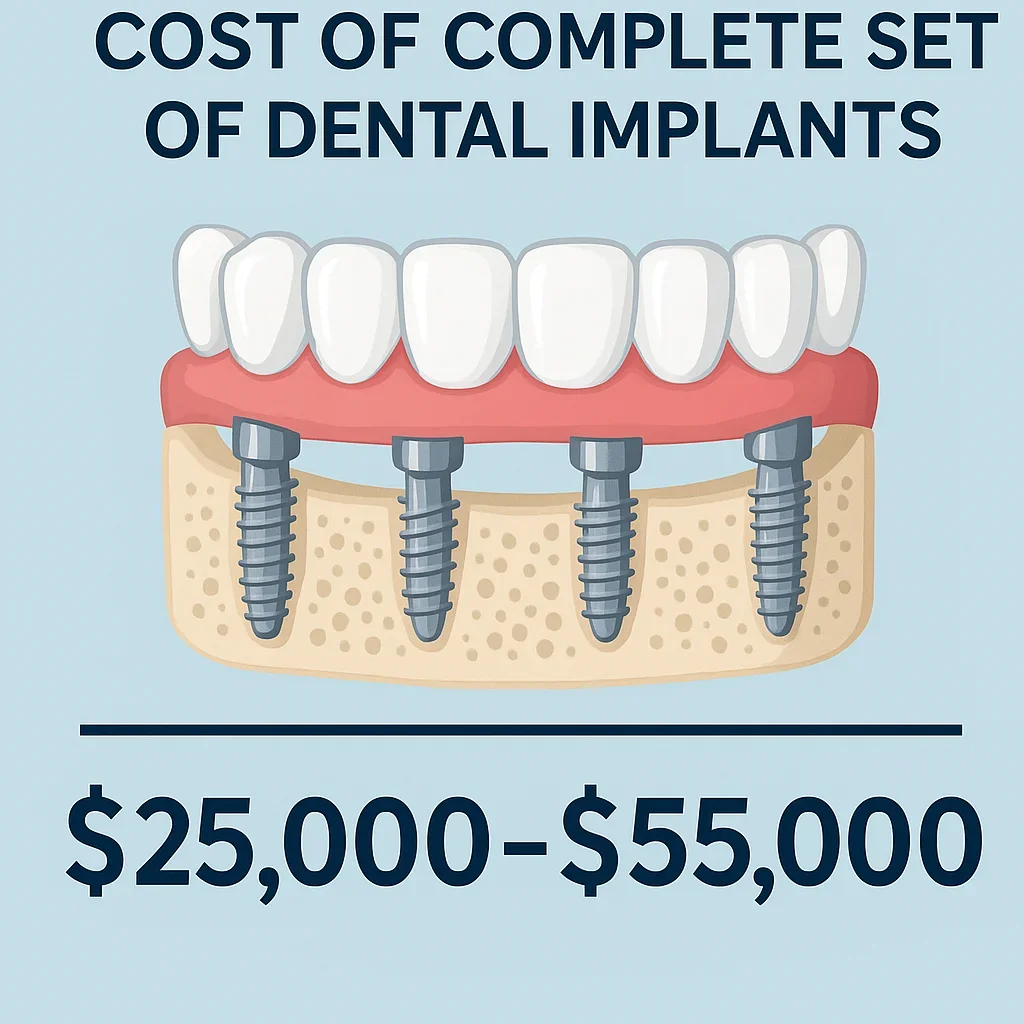
Based on online research, here is a general price range to give patients a realistic idea of what they might expect. Costs can vary widely by country and clinic, so these numbers are approximate averages:
Estimated Price Range for Full-Mouth Dental Implants (Both Arches)
---------------------------------------------------------------
United States: $40,000 – $90,000
United Kingdom: £20,000 – £40,000
Europe (general): €18,000 – €35,000
Turkey: $6,000 – $15,000
Australia: $30,000 – $60,000
Canada: $35,000 – $70,000
---------------------------------------------------------------
These figures show that location has a major impact on the cost of complete set of dental implants. Countries like Turkey provide more affordable treatment because of lower operational costs—not lower quality. Many clinics offer premium implant brands, advanced digital dentistry, and internationally accredited surgeons while maintaining significantly reduced prices compared to Western countries.
When comparing costs, remember that the long-term value matters just as much as the initial investment. Dental implants can last 20–30 years or more with proper care, making them a stable and reliable solution. Unlike dentures, they do not move, slip, or irritate the gums, and they preserve bone volume by stimulating jawbone tissue. This is why many dental professionals recommend implants as the gold standard for full-mouth restoration.
Patients interested in detailed treatment planning or receiving a personalized quotation can contact experienced clinics directly. For example, you may reach out via the
Redent Klinik Contact Page
for individualized pricing and professional guidance. It is also wise to review clinical standards and trusted dental organizations like the
American Dental Association
to ensure that you are receiving care aligned with international guidelines.
Finally, keep in mind that some clinics offer flexible payment plans, staged treatment, or financing options, making the cost of complete set of dental implants more accessible. Patients should also explore guarantee policies, follow-up schedules, and aftercare programs—because high-quality implant dentistry is an experience, not just a procedure. In summary, by understanding the variables, benefits, treatment phases, and long-term health advantages, you can make an empowered and educated decision about restoring your smile. 😄
Key Factors That Influence the Cost of Complete Set of Dental Implants
Understanding the cost of complete set of dental implants requires more than looking at a simple price tag. Several medical, technical, and material-related variables shape the final investment. Patients often wonder why prices differ drastically between countries, clinics, and even individual treatment plans. The reason is straightforward: every full-mouth implant case is unique, and the final cost reflects the complexity of restoring the entire dental system with long-lasting, natural-looking prosthetics. In this section, we explore the most important factors in comprehensive detail, helping you interpret pricing with clarity and confidence. 😊
1. Implant Brand and Material Quality
The brand and material quality of implants significantly influence the cost of complete set of dental implants. Premium implant brands, such as Straumann, Nobel Biocare, and Zimmer Biomet, undergo rigorous scientific testing and offer long-term clinical reliability. These brands ensure excellent biocompatibility, predictable osseointegration, and durability.
Cheaper implant systems exist, but they may not offer the same research backing, precision engineering, or longevity. When restoring an entire mouth, most patients prefer high-quality titanium implants because the success of the treatment depends on stable integration with the jawbone. For added clarity, zirconia implants are an alternative option, but they are often more expensive because of their advanced manufacturing processes and aesthetic advantages.
How Implant Engineering Affects Cost
Implants with enhanced surface technology—such as SLActive, TiUnite, or SLA surface treatments—accelerate healing and create a stronger bond between the implant and the bone. This advanced engineering naturally affects the final cost of complete set of dental implants, but it also improves treatment success rates. Investing in high-quality engineering ensures fewer complications and greater longevity.
2. Number of Implants Required for Each Jaw
Not all full-mouth implant treatments use the same number of implants. Some methods, like the All-on-4 protocol, use four implants per jaw, while other techniques (All-on-6 or All-on-8) use more implants for increased stability.
The more implants placed, the higher the overall cost of complete set of dental implants. However, additional implants may be recommended for patients with low bone density, severe tooth loss history, or those needing a stronger foundation for zirconia bridges.
Treatment Methods and Their Cost Differences
All-on-4 is usually the most cost-effective method because it minimizes the number of implants while still offering full-arch restoration. However, All-on-6 and All-on-8 options provide superior structural support, especially for patients with stronger chewing needs or those wanting premium prosthetics. Each technique influences the total cost, healing time, and stability of the final restoration.
3. Type of Prosthetic Teeth (Bridge Material)
The prosthetic teeth attached to the implants come in several material options. Your chosen material significantly impacts the cost of complete set of dental implants.
- Acrylic (PMMA): Most affordable, commonly used as temporary teeth.
- Composite: A mid-range option with improved aesthetics.
- Zirconia: The premium choice—high strength, stain resistance, and natural appearance.
- Porcelain-fused-to-metal (PFM): Durable but less common today due to more modern alternatives.
Zirconia bridges are typically the most expensive option because they offer unparalleled durability and aesthetics. They are milled using advanced CAD/CAM digital technology, which adds precision and longevity but also increases total cost. Patients seeking the most natural smile often choose zirconia, making it a popular choice for full-mouth restorations.
4. Bone Grafting, Sinus Lifting, and Additional Procedures
Before implants can be placed, the dentist must evaluate the condition of the jawbone. If bone volume is insufficient, bone grafting or sinus lifting may be required. These supportive treatments ensure strong implant stability but also have a direct impact on the cost of complete set of dental implants.
Bone grafting fills areas of jawbone that have deteriorated due to tooth loss. Sinus lifting adds vertical bone height in the upper jaw. While these procedures increase cost, they are essential for long-term stability and minimize risks of implant failure.
Why These Procedures Matter
Comprehensive full-mouth rehabilitation demands a stable foundation. Without sufficient bone and gum support, implants cannot securely integrate. Investing in these preparatory procedures enhances treatment outcomes and ensures that the results—both functional and aesthetic—remain strong for decades.
5. Geographic Location and Clinic Expertise
Different countries have different operating costs, labor expenses, and healthcare regulations. This is why the cost of complete set of dental implants in the U.S. or U.K. can be several times higher than in Turkey or Europe. Lower prices in certain countries do not automatically mean lower quality; instead, it often reflects reduced overhead costs and more cost-efficient healthcare systems.
Additionally, clinic expertise plays a major role. Surgeons with extensive implant experience, advanced technology (such as 3D CBCT scanners and guided implant systems), and in-house dental laboratories typically offer superior outcomes. Their advanced capabilities, however, may increase the total treatment cost.
If you would like a personalized assessment or wish to consult a specialist for your case, you can easily reach out through the
Redent Klinik Contact Page.
For scientific standards and dental guidelines, refer to trusted institutions like the
American Dental Association.
Both resources can help you explore options confidently.
In summary, many variables—implant quality, clinical technique, prosthetic materials, preparatory procedures, and geographic factors—work together to determine the final cost of complete set of dental implants. By understanding each component in depth, patients can evaluate pricing more accurately and choose the most suitable treatment plan for their long-term oral health and smile transformation. 😄
Comparing Full-Mouth Dental Implant Methods and Their Impact on Treatment Cost
When researching the cost of complete set of dental implants, patients quickly discover that the treatment method plays a major role in determining the final price. Full-mouth implant restoration is not a one-size-fits-all procedure. Several clinical approaches exist, each designed for specific jawbone conditions, aesthetic goals, and budget expectations. Understanding the differences among these treatment methods helps patients choose the option that delivers the best blend of value, durability, and natural appearance. This section explores each method in detail, ensuring that you can make a fully informed decision. 😊
1. All-on-4 Dental Implants
The All-on-4 technique is one of the most well-known full-mouth restoration methods. In this approach, four strategically angled implants support a fixed bridge of teeth. Because it uses fewer implants, it offers a lower starting price range compared to other methods. This directly influences the overall cost of complete set of dental implants, making All-on-4 a popular option for patients seeking effective results with minimal surgical intervention.
Advantages of All-on-4
- Uses fewer implants per arch, making it more cost-effective.
- Often avoids bone grafting thanks to angled posterior implants.
- Provides strong functional stability for moderate chewing needs.
- Typically allows faster recovery and quicker temporary teeth placement.
However, because it uses only four implants, the system may offer slightly less long-term load distribution compared to approaches with six or more implants. Patients with severe bone loss, bruxism, or heavy chewing habits may be better suited to more robust methods.
2. All-on-6 Dental Implants
The All-on-6 method provides a stronger structural foundation by using six implants per jaw. This option increases stability, distributes chewing forces more evenly, and offers better longevity—especially for patients with moderate bone quality.
Naturally, adding two more implants increases the cost of complete set of dental implants, but it also enhances durability. All-on-6 is widely considered a balanced solution between affordability and high performance. The method supports zirconia bridges exceptionally well, making it a strong choice for patients who prefer premium materials.
Ideal Candidates for All-on-6
- Patients with moderate bone volume.
- Individuals seeking long-term strength and stability.
- Those who want highly durable prosthetic materials like zirconia.
3. All-on-8 Dental Implants
All-on-8 is the most comprehensive and durable implant method, using eight implants per jaw to create maximum support. This technique is ideal for patients who want the highest level of restoration strength and long-term reliability. It is especially suitable for individuals with strong chewing demands or those who want a highly stable foundation for premium prosthetic teeth.
Because of the increased number of implants, the total cost of complete set of dental implants naturally increases. However, the value it provides—particularly in complex cases—often justifies the investment. The stability created by eight implants improves shock absorption, reduces prosthetic strain, and creates one of the most natural-feeling implant-supported arches available.
Why Patients Choose All-on-8
- Superior distribution of chewing forces.
- Exceptional long-term durability.
- Best support for heavy-duty zirconia bridges.
- Ideal for patients who prioritize top-level functionality.
4. Snap-On Dentures (Implant-Retained Dentures)
Snap-on dentures, also called overdentures, utilize two to six implants per jaw but remain removable. While far superior to traditional dentures, they are less stable than fixed full-arch implant bridges.
Because they require fewer implants and simpler prosthetics, the cost of complete set of dental implants for snap-on dentures is significantly lower compared to fixed implant bridges. They provide an economic alternative for patients wanting stronger retention than traditional dentures without the higher investment of fixed restorations.
Limitations of Snap-On Dentures
- Not fully fixed—must be removed daily.
- Less natural chewing power compared to fixed bridges.
- Prosthetic components may require more frequent maintenance.
5. Fixed Zirconia Implant Bridges
Regardless of the implant method chosen, the prosthetic material plays a major role in aesthetics and long-term value. Zirconia bridges provide exceptional strength, impressive lifelike translucency, and resistance to staining. They are milled using advanced CAD/CAM technology to match natural teeth with remarkable precision.
Because zirconia is a premium material requiring laboratory expertise, its inclusion increases the cost of complete set of dental implants. For many patients, the investment is worthwhile because zirconia bridges mimic natural teeth more closely than acrylic or composite prosthetics. They also offer outstanding durability for decades when cared for properly.
6. Temporary vs. Permanent Teeth
Full-mouth implant treatment commonly includes two sets of teeth: a temporary prosthesis and the final permanent restoration. The temporary set protects implants during healing and allows the patient to enjoy a functional, confident smile throughout the process.
The type, quality, and number of temporary restorations can influence the overall cost of complete set of dental implants. Higher-end clinics often provide more durable and aesthetically pleasing temporary teeth, which improve functionality during the healing phase and enhance patient comfort.
Why Temporaries Are Essential
- They protect healing implants and distribute pressure safely.
- They help patients adjust to a new bite shape and smile style.
- They allow dentists to refine aesthetics before the permanent set is made.
7. Which Method Is Best for You?
Choosing the right full-mouth restoration method requires a professional evaluation of bone structure, dental history, biting habits, and long-term aesthetic goals. Each system—from All-on-4 to All-on-8—offers unique advantages. What matters most is selecting a method that aligns with your oral health condition and expectations.
For expert guidance tailored to your needs, a personalized assessment can be arranged through the
Redent Klinik Contact Page.
For scientific information about implant standards, you may also visit the
American Dental Association.
These resources can help you better understand full-mouth implant systems and their long-term benefits.
In summary, the full-mouth implant method you choose directly affects the cost of complete set of dental implants, but each option also offers specific strengths. Whether you prefer the affordability of All-on-4, the balanced performance of All-on-6, or the unmatched durability of All-on-8, understanding these choices empowers you to select a treatment plan that restores both confidence and quality of life. 😄
The Full Treatment Process: Step-by-Step Breakdown and Its Effect on Total Costs
Many patients exploring the cost of complete set of dental implants want a clear and transparent understanding of every stage involved in full-mouth restoration. The total price is not simply the result of implant placement—it is the outcome of a complete medical, surgical, and prosthetic journey that requires expertise, advanced equipment, and multi-stage care. This section provides a detailed step-by-step explanation of the entire treatment process so you can understand exactly what you are paying for and how each phase contributes to the final investment in your smile. 😊
1. Initial Consultation and Diagnostic Imaging
Your journey begins with a comprehensive consultation. During this stage, the dentist evaluates your oral health, gum condition, jawbone density, and medical history. The most critical diagnostic tool is the 3D CBCT scan, which provides a precise, three-dimensional view of the bone structure.
This initial phase affects the cost of complete set of dental implants because advanced imaging, photographic records, and digital impressions are essential for accurate planning. Clinics using state-of-the-art diagnostic tools typically offer more predictable and long-lasting implant results.
Why Diagnostic Imaging Matters
- Identifies bone density and implant placement angles.
- Detects sinus proximity, nerve canals, and anatomical variations.
- Ensures safe implant placement with minimal surgical risks.
- Helps create a fully personalized treatment plan.
High-quality diagnostics reduce complications and increase long-term implant success rates, which is why many reputable clinics include them in the overall treatment package.
2. Treatment Planning and Digital Smile Design
After the diagnostic assessment, the dentist designs your complete treatment plan using advanced digital tools. Digital Smile Design (DSD) is commonly used to create a virtual preview of your new smile, incorporating facial proportions, bite alignment, and aesthetic preferences.
This detailed planning process plays a significant role in determining the cost of complete set of dental implants. Higher-end clinics invest heavily in premium software, digital scanners, and CAD/CAM technology to ensure accurate, lifelike results.
Components of a Detailed Treatment Plan
- Measurement of jawbone height and width.
- Analysis of gum contour and smile line.
- Choosing implant type, size, and angulation.
- Selecting material for temporary and final prosthetic teeth.
Patients benefit tremendously from this stage because it ensures a predictable, aesthetically pleasing outcome that aligns fully with their expectations.
3. Tooth Extraction and Pre-Implant Procedures
If you still have damaged or decayed teeth, they must be removed before implant surgery. Tooth extraction fees are usually included in the package price, but if multiple extractions are needed, they contribute to the final cost of complete set of dental implants.
In some cases, patients require additional procedures such as bone grafting, sinus lifting, or ridge augmentation. These preparatory treatments reinforce the jawbone to support the implants securely. While they increase total costs, they are essential for long-term success and stability.
Examples of Pre-Implant Requirements
- Bone grafting: Adds bone volume to weak areas.
- Sinus lift: Creates additional vertical space in the upper jaw.
- Gum therapy: Treats gum infection before implant surgery.
- PRF/PRP treatments: Accelerate healing with plasma-based regenerative therapy.
4. Implant Placement Surgery
This phase is the foundation of the entire treatment. During implant placement, titanium implants are inserted into the jawbone using a precise, computer-guided surgical protocol. The dentist ensures implants are positioned at ideal angles and depths for maximum stability.
Surgical expertise significantly influences the overall cost of complete set of dental implants. Clinics with experienced implant surgeons, advanced sterile facilities, and guided-surgery technology may have higher fees, but their results are often superior in terms of accuracy, comfort, and long-term success.
What Happens During Surgery?
- Local anesthesia or sedation is administered.
- Implants are placed using guided or free-hand protocols.
- Healing caps are added to protect the implant site.
- Immediate temporary teeth may be attached in many cases.
Most patients experience minimal discomfort and can resume daily activities within a few days thanks to modern minimally invasive techniques.
5. Healing and Osseointegration Period
Once implants are placed, they must bond naturally with the jawbone—a process known as osseointegration. This is a critical step, as it ensures that your implants become strong anchors for the final prosthetic bridge.
The healing period can vary between 3 and 6 months, depending on bone quality. Although this stage does not directly add to the cost of complete set of dental implants, it is fundamental to achieving long-lasting results. Temporary teeth worn during this period may influence the total cost depending on material selection.
Importance of Osseointegration
- Creates a stable base for implant-supported teeth.
- Reduces risk of implant mobility or failure.
- Ensures long-term chewing strength and bite stability.
6. Fabrication of Permanent Prosthetic Teeth
After healing, the dentist takes final impressions to fabricate your permanent prosthetic teeth. These are typically crafted using premium materials such as zirconia, porcelain, or hybrid composites.
Material selection is one of the biggest cost influencers in the cost of complete set of dental implants. Zirconia bridges, for example, are the most durable and aesthetically pleasing but require sophisticated milling technology. Composite and hybrid materials reduce costs while still offering excellent function for many patients.
Steps in Creating Your Final Smile
- Digital impression scanning.
- CAD/CAM modeling and bite registration.
- Lab fabrication using multi-layered zirconia or other materials.
- Final fitting and bite adjustments.
7. Final Placement and Bite Adjustment
Once the permanent bridge is ready, it is secured to the implants. The dentist adjusts its alignment, bite force distribution, and aesthetic harmony to ensure a perfect fit.
This stage demands clinical expertise. Precision in bite adjustment ensures that the teeth feel natural and function seamlessly, contributing indirectly to the long-term value behind the cost of complete set of dental implants.
What Happens During Final Fitting?
- Testing fit and comfort.
- Ensuring proper alignment with facial symmetry.
- Fine-tuning chewing balance.
- Educating the patient on cleaning and aftercare.
8. Long-Term Aftercare and Maintenance
Full-mouth implants are designed to last decades, but proper aftercare plays a crucial role in preserving your results. Routine dental checkups, professional cleanings, and daily hygiene practices ensure long-term success.
While maintenance costs are minimal compared to the overall cost of complete set of dental implants, they remain essential for ensuring the beautiful, functional smile remains intact over time.
Recommended Aftercare Practices
- Professional cleanings every 6 months.
- Daily brushing and water-flosser use.
- Avoiding tobacco and excessive grinding.
- Wearing a nightguard if needed.
For personalized assistance or in-depth planning, you may contact trusted specialists through the
Redent Klinik Contact Page. To review clinical guidelines and internationally recognized dental standards, you can also consult the
American Dental Association.
In conclusion, each stage of the full-mouth restoration process—from consultation to permanent prosthetics—contributes to the overall cost of complete set of dental implants. By understanding these steps in detail, patients can approach treatment with confidence, realistic expectations, and a clear understanding of the value behind this life-changing investment. 😄
Average Pricing Around the World: Understanding Global Cost Differences
One of the most common questions patients have when researching the cost of complete set of dental implants is why prices vary dramatically from one country to another. This difference is not random—global healthcare systems, clinical expenses, implant brands, technician labor, and economic structures all shape pricing. In this section, we break down international implant costs in a clear and detailed manner. Whether you are comparing domestic treatment options or considering dental tourism, this guide will help you understand what drives these price variations and what to expect in each region. 😊
1. United States and Canada: Premium Pricing with Advanced Technology
The U.S. and Canada consistently report some of the highest dental implant prices in the world. This is due to elevated clinical overhead, strict healthcare regulations, high dental education costs, and premium-quality implant systems commonly used across clinics.
In the U.S., the average cost of complete set of dental implants ranges between $40,000 and $90,000 for both arches combined. Canada follows a similar pattern, often ranging from $35,000 to $70,000. These prices typically include consultation, diagnostics, implant placement, temporary teeth, and final prosthetics—but they can be significantly higher if bone grafting or advanced materials like zirconia are selected.
Why Prices Are High in North America
- Advanced clinic infrastructure and digital equipment.
- Higher labor and specialist fees.
- Premium implant brands such as Nobel Biocare or Straumann.
- Strong regulatory compliance and sterilization standards.
- Costly laboratory fees for custom prosthetics.
Despite the high costs, many patients choose North America for its top-tier clinicians, advanced technology, and long-established dental accreditation systems.
2. Western Europe: High Quality with Slightly Lower Costs
Western European countries, including the U.K., Germany, France, and the Netherlands, generally offer high-quality implant services at lower prices than the U.S., though still higher than in medical tourism destinations.
In the U.K., the typical cost of complete set of dental implants ranges between £20,000 and £40,000. In Germany and France, costs often fall between €18,000 and €35,000, depending on materials and technique. These regions balance advanced dental care with slightly more affordable pricing thanks to more competitive clinic structures and national health frameworks.
Advantages of Western European Clinics
- Strong implantology education and training systems.
- Access to world-leading prosthetic labs and CAD/CAM technology.
- Strict sterilization and hygiene regulations.
- Wide availability of zirconia and premium implant brands.
Patients who prioritize familiarity, short travel distance, and European quality standards often choose these countries.
3. Eastern Europe: High Quality at Significantly Reduced Costs
Countries like Hungary, Poland, Romania, and Croatia have become popular choices for dental tourism due to their balance of affordability and high technical capabilities.
In this region, the cost of complete set of dental implants generally ranges from €10,000 to €18,000 for both arches. These prices can include advanced implant systems, zirconia prosthetics, and comprehensive surgical care—often matching the quality of Western Europe but at a lower cost due to reduced clinic overhead and lower labor expenses.
Why Eastern Europe Is Growing in Popularity
- Highly trained implant surgeons.
- Lower operating costs without sacrificing quality.
- Medical tourism infrastructure with hotel and airport support.
- Fast turnaround times for diagnostics and treatment planning.
For many patients, Eastern Europe offers one of the best value-to-quality ratios in the world.
4. Asia: Varied Pricing Across a Large Region
Asia offers widely varied implant pricing depending on the country. Japan, South Korea, and Singapore tend to have premium pricing similar to Western countries, while Thailand, India, and Vietnam offer far more accessible options without compromising quality.
The average cost of complete set of dental implants in Asian countries ranges between $8,000 and $35,000. Thailand and India, in particular, have become global hubs for dental tourism due to their combination of skilled clinicians and economical treatment packages.
Reasons Behind Cost Variability in Asia
- Diverse economic conditions across the region.
- Different types of implant brands being commonly used.
- Variation in clinic technology and laboratory resources.
- Differences in clinical expertise and specialization.
Asia remains a top choice for patients wanting a balance of affordability, high-tech clinics, and internationally trained dentists.
5. Australia and New Zealand: High Clinical Standards and Premium Fees
Australia and New Zealand are known for their strict regulatory frameworks, premium dental education, and advanced facility standards.
The cost of complete set of dental implants in this region typically ranges from $30,000 to $60,000. These prices reflect advanced clinical care, high labor expenses, and strict adherence to quality control.
What Sets Australia and New Zealand Apart?
- Exceptional hygiene and sterilization standards.
- Well-established dental boards and accreditation.
- Common use of high-quality implant materials.
- Strong patient safety regulations.
Patients often choose this region for its strong patient protection laws and consistent treatment outcomes.
6. Turkey: World-Leading Value and High Success Rates
Turkey has rapidly become one of the world’s top destinations for full-mouth dental implants. The country offers internationally accredited clinics, experienced implant surgeons, and dental laboratories equipped with cutting-edge digital technology—all at a fraction of Western prices.
The average cost of complete set of dental implants in Turkey ranges between $6,000 and $15,000, depending on the implant brand, prosthetic material, and any required preliminary procedures such as bone grafting or sinus lifting.
Why Turkey Is a Global Leader
- Lower overall clinical operating costs.
- Advanced technological facilities and digital dentistry tools.
- Well-trained surgeons with high caseload experience.
- Strong medical tourism support services (hotels, transport, coordinators).
Turkey is often seen as the best value worldwide, combining affordability with premium care and high success rates.
Choosing the Right Country for Treatment
Your choice ultimately depends on your budget, travel preferences, time availability, and the level of clinical technology you expect. While price is important, long-term results, dentist experience, and prosthetic quality matter even more when considering the lifetime value behind the cost of complete set of dental implants.
For personalized treatment planning or to calculate your estimated cost based on your needs, feel free to reach out through the
Redent Klinik Contact Page,
or explore dental standards set by the
American Dental Association.
In conclusion, full-mouth implant prices differ around the world due to variations in regional economics, clinical expertise, material costs, and technology levels. By understanding global pricing structures, you can confidently choose the location that offers the best balance between affordability and exceptional dental care. 😄
What’s Included in the Total Cost of Complete Set of Dental Implants?
When patients search for the cost of complete set of dental implants, one of the most important questions they have is: “What exactly am I paying for?” Full-mouth implant restoration is a comprehensive medical treatment, not a single procedure. The total price reflects multiple components, each essential for long-term function, comfort, and aesthetic excellence. In this section, we break down every element commonly included in full-mouth implant packages so you can understand where your investment goes and why each stage matters. 😊
1. Consultation and Diagnostic Imaging
Most treatment plans begin with a detailed consultation, including an oral examination, gum evaluation, and discussion of medical history. A 3D CBCT scan is typically included in the package. This advanced imaging allows the dentist to visualize bone density, identify ideal implant placement points, avoid nerve canals, and detect any underlying issues.
While the consultation may seem basic, it directly influences the cost of complete set of dental implants due to the precision technology involved. Clinics using high-resolution CBCT scanners, digital photography, and intraoral scanning equipment offer more accurate results, reducing complications later.
Diagnostic Services Usually Included
- 3D CBCT scan
- Full-mouth photographic documentation
- Digital impressions with intraoral scanner
- Bite analysis and occlusion study
2. Personalized Treatment Planning
Treatment planning is one of the most crucial phases. Using digital imaging and smile design software, the dentist develops a customized approach tailored to your bone structure, bite, aesthetic goals, and implant method (such as All-on-4, All-on-6, or All-on-8).
This planning process is often included in the overall cost of complete set of dental implants, especially at advanced clinics. The investment helps create a reliable, predictable, and long-lasting result by preventing errors during surgery.
Components of Treatment Planning
- 3D surgical guide creation (if applicable)
- Virtual implant placement simulation
- Material selection for prosthetic teeth
- Smile design preview
3. Tooth Extractions (If Needed)
Many full-mouth implant patients still have damaged, decayed, or loose teeth. Tooth extractions are often included in the treatment package, especially if a large number of teeth need to be removed. Simple extractions require minimal cost, but surgical extractions can add to the total.
Their inclusion in the cost of complete set of dental implants varies by clinic, but many comprehensive providers include extractions to provide patients with a seamless experience.
Types of Extractions
- Simple extraction (common for loose teeth)
- Surgical extraction (complex or broken teeth)
- Wisdom tooth extraction (rare, but sometimes required)
4. Implant Placement Surgery
At the heart of the treatment is implant placement surgery. This involves inserting titanium implants into the jawbone, using either a freehand method or guided-surgery protocol. The number of implants per arch (four, six, or eight) plays a major role in the final pricing.
This phase significantly impacts the cost of complete set of dental implants because it requires an experienced surgical team, advanced sterile operating conditions, and high-quality implant brands.
What’s Typically Included in the Surgical Fee?
- Use of titanium or premium zirconia implants
- Surgical tools and sterile operating conditions
- Local anesthesia or sedation (if part of the package)
- Placement of healing abutments
5. Temporary Teeth (Immediate Load Prosthetics)
One of the biggest benefits of modern implant dentistry is immediate loading—receiving temporary teeth on the same day as implant surgery. These temporary prosthetics allow you to chew lightly, smile confidently, and function comfortably while your implants integrate with the bone.
Temp teeth are included in nearly all full-mouth implant packages and affect the overall cost of complete set of dental implants. The quality of temporary prosthetics varies widely, from simple acrylic designs to sophisticated CAD/CAM-made temporaries.
Types of Temporary Teeth
- Acrylic (most common for healing phase)
- Composite resin (stronger and more aesthetic)
- Fiber-reinforced temporary bridges
6. Permanent Prosthetic Teeth
Your final set of teeth plays the largest role in determining cost. Permanent implant-supported bridges are made from advanced materials and customized using digital manufacturing technology. The type of material you choose—acrylic, composite, hybrid, porcelain, or zirconia—has a significant effect on the cost of complete set of dental implants.
Zirconia bridges are considered the gold standard due to their durability, natural appearance, and resistance to staining. They require sophisticated milling tools and highly experienced dental technicians, which contributes to higher cost but also best long-term value.
Key Features of Permanent Prosthetics
- Natural color and translucency
- Custom bite alignment
- Digital CAD/CAM fabrication
- Stain and fracture resistance
7. Additional Procedures (If Necessary)
Some patients require supplementary treatments to ensure successful implant placement. These procedures increase the overall cost of complete set of dental implants but are vital for cases with low bone density, gum disease, or jaw structural deficiencies.
Common Additional Treatments
- Bone grafting (minor or major)
- Sinus lifting
- Ridge augmentation
- Socket preservation
- PRF/PRP therapies for faster healing
The need for these procedures varies individually and must be evaluated through detailed diagnostics.
8. Post-Operative Care and Follow-Up Visits
After implant placement, follow-up is essential. Most clinics include a set number of check-ups to monitor healing and make adjustments to temporary teeth if needed. Quality aftercare ensures that implants integrate successfully and remain stable long term.
Although follow-up appointments usually make up a smaller portion of the cost of complete set of dental implants, they are indispensable for maintaining implant health and ensuring final prosthetic accuracy.
What Follow-Up Care Usually Includes
- Examination of implant integration
- Adjustment of temporary prosthetics
- Soft tissue monitoring
- Removal of sutures (if applicable)
9. Aftercare Guidance and Maintenance Support
Most comprehensive implant packages also include patient education, maintenance guidelines, and long-term care recommendations. Since implants are long-term investments, understanding how to care for them is critical.
While maintenance is not a major cost factor, it supports the long-term value behind the cost of complete set of dental implants and helps ensure your new smile lasts for decades.
10. Additional Support: Travel & Accommodation Packages (For Dental Tourism)
Some clinics—especially in popular destinations like Turkey—offer travel assistance, hotel partnerships, airport transfers, and patient coordinators. These add convenience but may or may not be included in standard pricing.
For personalized details, you may contact the clinic directly using the
Redent Klinik Contact Page.
For clinical standards and dental references, consult the
American Dental Association.
In conclusion, the complete cost of complete set of dental implants includes diagnostics, extractions, implant surgery, temporary and final teeth, additional procedures, and long-term aftercare. By understanding exactly what is included in your treatment package, you can make confident decisions about your investment and the lifelong benefits of full-mouth dental implant rehabilitation. 😄
Understanding Additional Costs and Hidden Expenses in Full-Mouth Implant Treatment
When evaluating the cost of complete set of dental implants, it’s important to consider not just the package price but also any additional or hidden expenses that may arise throughout the treatment process. Many patients assume that the advertised price includes everything, but depending on the clinic, country, or the complexity of your oral condition, extra costs may apply. In this detailed section, we explore all potential add-ons so you can make an informed financial plan and avoid unexpected charges. 😊
1. Diagnostic Upgrades and Additional Imaging
While most clinics provide a 3D CBCT scan as part of the initial evaluation, complex cases may require additional imaging or higher-resolution scans. These advanced diagnostics help surgeons plan implant placement with absolute precision, but they can contribute to the final cost of complete set of dental implants.
Examples of Advanced Imaging Costs
- High-resolution CBCT scans for detailed bone mapping
- Digital jaw tracking analysis
- Intraoral scanning upgrades
- TMJ functionality assessment
Not all patients need these additional diagnostics, but those with severe bone loss or complex anatomy may require them for safe implant placement.
2. Complex Tooth Extractions
Standard extractions are often included in full-mouth implant packages, but complex extractions—such as broken root removal, impacted teeth, or surgical extraction of multi-rooted molars—can incur additional fees.
These procedures can affect the cost of complete set of dental implants because they require more surgical time, specialized tools, and advanced anesthesia protocols.
Common Reasons for Additional Extraction Costs
- Severely decayed or fractured teeth
- Impacted teeth requiring surgical removal
- Previous root canal failures
- Retained roots embedded in the bone
Proper extraction is fundamental to creating a healthy foundation for implants, so investing in high-quality care during this step is essential.
3. Bone Grafting and Sinus Lift Surprises
Even though many implant packages include basic bone grafting, advanced grafting procedures may not be covered. Patients with significant bone loss may require major grafting to rebuild the jaw. Similarly, sinus lifting procedures may add to the cost of complete set of dental implants if the sinus floor is too low for implant placement.
Types of Additional Bone-Related Costs
- Major sinus lift surgery
- Vertical bone augmentation
- Block bone grafting
- Guided bone regeneration techniques
These procedures ensure implant stability but require experienced surgeons, extended healing time, and premium biomaterials—factors that justify their extra cost.
4. Premium Implant Brands and Special Components
Most standard packages include dependable implant brands, but upgrading to premium implant systems may increase the total cost of complete set of dental implants. Patients often choose these upgrades for enhanced biocompatibility, faster healing, and greater long-term success rates.
Examples of Premium Implant Upgrades
- Straumann SLActive implants
- Nobel Biocare TiUltra implants
- Zirconia implants instead of titanium
- Custom abutments or angled multi-unit abutments
Your dentist may recommend upgraded components for better performance or aesthetic outcomes, especially in highly visible smile zones.
5. Temporary Prosthetic Upgrades
While acrylic temporary teeth are typically included in implant packages, some clinics offer reinforced, higher-quality temporaries for additional fees. These options provide better durability during the healing phase, especially for patients with strong chewing habits.
Choosing upgraded temporaries can influence the cost of complete set of dental implants, but they may also improve comfort and functionality during osseointegration.
Temporary Upgrade Options
- Fiber-reinforced PMMA temporaries
- Composite resin temporaries
- Digitally milled temporary bridges
6. Choosing Premium Materials for Permanent Teeth
The material used for permanent prosthetic teeth is one of the largest cost variables. While acrylic and composite options are more affordable, many patients prefer zirconia for its exceptional strength, longevity, and lifelike aesthetics.
Selecting premium materials increases the cost of complete set of dental implants, but it also provides superior long-term value, making it a popular choice for those seeking high-end results.
Material Choices and Their Cost Effects
- Acrylic: Most affordable but less durable.
- Composite: More aesthetic and stronger than acrylic.
- Zirconia: Premium, strongest, most natural-looking.
- Hybrid designs: Combination of metal frameworks with composite or porcelain.
7. Sedation or General Anesthesia Fees
Some patients prefer deeper sedation, especially for full-mouth procedures. While local anesthesia is usually included, conscious sedation, IV sedation, or general anesthesia may carry extra charges, depending on clinic policies.
This can slightly increase the cost of complete set of dental implants, but many patients find sedation worth the investment for comfort and reduced anxiety.
Types of Sedation That May Cost Extra
- IV sedation
- Oral conscious sedation
- General anesthesia with anesthesiologist supervision
8. Follow-Up Visits Beyond the Standard Package
Most clinics include routine follow-ups, but extended aftercare or emergency visits related to healing complications may incur additional costs. These visits ensure your implants integrate properly, but they may be billed separately depending on clinic policy.
Although follow-up costs represent a small percentage of the total cost of complete set of dental implants, they are important to keep in mind when budgeting.
9. Travel, Accommodation, and Home Care Costs
For patients traveling abroad for dental tourism, travel and hotel expenses are not typically included in the implant package. Flights, accommodations, meals, and transportation all contribute to the total investment.
However, many clinics offer partnerships with hotels or airport transfer packages to ease the process. These may be included or available at discounted rates.
Travel-Related Costs to Consider
- Flight tickets
- Hotel stays during treatment
- Transportation to and from the clinic
- Local tourist expenses
For direct assistance with treatment planning and travel arrangements, you can reach the team via the
Redent Klinik Contact Page.
To verify clinical standards and guidelines, refer to the
American Dental Association.
In summary, while many clinics offer comprehensive packages, certain upgrades, additional procedures, or personal preferences may affect the overall cost of complete set of dental implants. Understanding potential hidden expenses ensures you can budget accurately and avoid surprises, making your full-mouth restoration journey smooth, predictable, and stress-free. 😄
Long-Term Value: Why Full-Mouth Dental Implants Are Worth the Investment
When researching the cost of complete set of dental implants, many patients initially focus on the price alone. However, the true value of this life-changing treatment becomes fully clear only when considering its long-term benefits. Full-mouth dental implants offer far more than an aesthetic improvement; they restore functionality, protect oral health, preserve bone structure, and dramatically enhance overall quality of life. This section explains in detail why full-mouth implants are one of the most worthwhile investments you can make in your long-term oral and general health. 😊
1. Superior Chewing Strength and Daily Functionality
One of the biggest advantages of full-mouth implants is their ability to mimic the strength and performance of natural teeth. Unlike traditional dentures—which can slip, shift, or cause discomfort—implant-supported teeth provide exceptional chewing stability.
This functional reliability directly enhances quality of life. Patients can enjoy foods they previously avoided, maintain a healthy diet, and experience confident eating habits. When you consider this level of restored functionality, the cost of complete set of dental implants becomes less of a financial burden and more of an intelligent long-term investment.
Benefits of Restored Chewing Efficiency
- Improved digestion due to efficient chewing
- Ability to enjoy a wider variety of foods
- Better nutrition and oral comfort
- Reduced risk of digestive issues caused by insufficient chewing
Compared to removable dentures, which often lose stability over time, full-mouth implants provide consistent performance year after year.
2. Bone Preservation and Facial Structure Protection
One of the most profound medical benefits of dental implants is their ability to preserve jawbone volume. When teeth are missing, the jawbone gradually deteriorates because it no longer receives the stimulation needed to maintain density. Dentures do nothing to stop this resorption.
Implants, however, act like artificial tooth roots. They stimulate the bone and prevent further deterioration. This alone significantly increases the long-term value of the cost of complete set of dental implants, as bone loss can otherwise lead to sunken facial features, premature aging, and difficulty wearing dentures.
Why Bone Preservation Matters
- Protects the jawbone from resorption
- Prevents collapse of facial features
- Supports long-term implant stability
- Maintains a youthful, natural appearance
This ongoing bone protection is one of the biggest reasons full-mouth implant treatment is considered a permanent and health-focused solution.
3. Lifespans Measured in Decades, Not Years
Dental implants are one of the most durable dental solutions available. With proper care, implants can last **20–30 years or more**, and zirconia bridges maintain their beauty and strength for long periods as well.
When compared to dentures or dental bridges that require frequent replacement or relining, the cost of complete set of dental implants often becomes more economical in the long run. Rather than paying for ongoing adjustments, adhesives, relines, and replacements, full-mouth implants provide long-term value with minimal repairs.
Longevity Benefits of Full-Mouth Implants
- Implants can last a lifetime when maintained properly
- Zirconia bridges maintain aesthetics and durability for decades
- Fewer replacement costs compared to dentures
- Lower long-term dentistry expenses overall
This long-lasting durability makes implants one of the most cost-effective restorative options over a patient’s lifetime.
4. Improved Speech and Natural-Looking Aesthetics
Missing teeth or poorly fitting dentures can significantly affect speech clarity. Full-mouth implants eliminate the instability that causes slurring, clicking sounds, or difficulty articulating certain words.
In terms of aesthetics, implant-supported bridges—especially zirconia—offer natural translucency, excellent color matching, and lifelike contours. The confidence gained from a restored, attractive smile adds tremendous emotional and psychological value to the cost of complete set of dental implants.
Aesthetic and Functional Language Enhancements
- Clearer pronunciation
- Better confidence in social settings
- Smile designs tailored to facial proportions
- No risk of dentures slipping during conversation
Patients often describe this improvement as one of the most life-changing outcomes of the entire treatment.
5. Eliminating Denture-Related Problems
Traditional dentures come with a wide range of inconveniences—adhesives, sore spots, limited chewing power, daily removal, and frequent maintenance. Full-mouth implants eliminate these issues entirely.
This factor alone can justify the cost of complete set of dental implants for many patients who want a permanent, hassle-free solution that feels like their natural teeth.
Problems Avoided by Choosing Implants
- Denture slipping or falling out
- Gum irritation and sore spots
- Messy adhesives
- Frequent relining or remaking
Full-mouth implants restore the confidence and freedom that many denture wearers lose over time.
6. Psychological and Emotional Benefits
The emotional impact of losing teeth can be profound, affecting confidence, self-esteem, and social engagement. Full-mouth implants restore not only the smile but also the sense of identity and self-worth.
Patients often report feeling younger, more confident, and more socially active after treatment. When considering how these changes affect daily happiness, the cost of complete set of dental implants becomes a meaningful investment in mental well-being.
Emotional Benefits Often Reported
- Increased self-confidence
- Happier social interactions
- Better professional presence
- Improved quality of life
The psychological boost from a new smile is often described as priceless by many implant patients.
7. Long-Term Financial Savings
While implants have higher upfront costs, the long-term financial advantages often outweigh the initial investment. Dentures require ongoing expenditures, including adjustments, replacement teeth, adhesives, and special cleaning solutions.
Over time, these recurring expenses exceed what patients typically spend on implants. This makes the cost of complete set of dental implants a financially smart option in the long run.
Cost Savings Compared to Dentures
- No adhesive costs
- No repeated denture replacements
- No ongoing relines or repairs
- Reduced dental emergencies due to stable implants
Implants offer predictable long-term expenses, making them a strategic health and financial decision.
8. Supported by Scientific Research and Advanced Clinic Standards
Full-mouth implant systems are supported by decades of clinical research, making them one of the safest and most reliable treatments in restorative dentistry. Reputable clinics follow international guidelines for implant placement, prosthetic design, and infection control.
For trusted dental standards, patients can refer to the
American Dental Association.
To begin planning your treatment or request a personalized quote, visit the
Redent Klinik Contact Page.
In conclusion, the cost of complete set of dental implants represents far more than a surgical fee—it is an investment in long-term health, function, confidence, and quality of life. When compared to dentures or temporary options, full-mouth dental implants stand out as the most valuable and durable restoration available today. 😄
How to Choose the Right Clinic and Avoid Overpaying for Full-Mouth Implants
Selecting the right dental clinic is one of the most important steps when evaluating the cost of complete set of dental implants. Prices vary widely between clinics, cities, and countries—not only because of economic differences but also because of clinical expertise, technology levels, implant brands, and prosthetic quality. Choosing the right provider directly affects your long-term satisfaction, the durability of the implants, and the natural look of your new smile. This detailed guide explains how to evaluate clinics wisely, avoid unnecessary expenses, and ensure you receive exceptional value for your investment. 😊
1. Verify the Implant Surgeon’s Credentials
The experience and qualifications of the implant surgeon play a major role in treatment success. Full-mouth restoration is a highly specialized procedure requiring advanced surgical skills, deep anatomical knowledge, and extensive case history.
A more experienced surgeon may charge higher fees, affecting the overall cost of complete set of dental implants, but this often translates into better outcomes, fewer complications, and more natural-looking prosthetic results.
What to Look for in a Qualified Surgeon
- Certification in implantology or oral surgery
- Years of hands-on experience with full-arch cases
- Membership in reputable organizations (e.g., ITI, AAID)
- A portfolio of before-and-after full-mouth implant cases
Choosing a clinic with a highly qualified surgeon helps ensure the longevity and success of your implant-supported smile.
2. Evaluate the Clinic’s Technology and Equipment
High-quality technology improves precision, safety, and treatment outcomes. Clinics that invest in digital dentistry tools provide more predictable results and lower complication rates. However, these advanced technologies can also influence the final cost of complete set of dental implants.
Essential Technologies to Look For
- 3D CBCT imaging systems
- Intraoral digital scanners
- CAD/CAM milling machines for prosthetic fabrication
- Computer-guided surgery platforms
- PRF/PRP centrifugation for healing support
Technologically advanced clinics often deliver faster, more precise, and more comfortable treatment experiences.
3. Check Implant Brands and Prosthetic Materials
Not all implants and prosthetics are created equal. The materials used significantly impact durability, aesthetics, and biocompatibility. Understanding which implant brands a clinic uses allows you to determine whether the cost of complete set of dental implants aligns with the quality provided.
Key Factors to Consider
- Whether the clinic uses globally recognized implant brands
- Availability of zirconia or porcelain prosthetics
- Laboratory quality and whether prosthetics are produced in-house
- Guarantee policies for implants and permanent bridges
Premium prosthetic materials—such as multi-layered zirconia—can increase the upfront cost but greatly enhance long-term value.
4. Review Before-and-After Photos and Patient Testimonials
One of the best ways to evaluate a clinic is by reviewing real patient outcomes. Clinics committed to transparency and excellence frequently share extensive galleries of before-and-after cases, allowing potential patients to assess the quality of aesthetic and functional results.
Satisfied patients often highlight the true value behind the cost of complete set of dental implants. Their experiences provide insights into the clinic’s communication, professionalism, cleanliness, and ability to deliver natural-looking smile restorations.
Signs of Genuine, High-Quality Results
- Natural gum contours around the prosthetics
- Balanced bite alignment
- Even, lifelike coloration and translucency
- Positive function-based feedback (chewing, comfort, stability)
5. Compare Detailed Treatment Plans — Not Just Prices
A common mistake is comparing clinics only by their advertised price. Instead, patients should compare what is included in the treatment plan. Two clinics may offer very different value at the same price point.
A thorough plan directly affects the actual cost of complete set of dental implants because it determines whether you will face additional charges later.
What a Good Treatment Plan Should Include
- Number of implants per arch
- Type of prosthetic material
- Details about temporary and permanent teeth
- Any expected additional procedures (bone grafting, sinus lift)
- Follow-up visits and aftercare
Always request a written, itemized quotation from each clinic before making a final decision.
6. Ask About Guarantees and Aftercare Policies
The best clinics offer long-term guarantees for both implants and prosthetic teeth. This not only ensures peace of mind but also enhances the long-term value of the cost of complete set of dental implants.
Guarantee policies protect your investment and demonstrate the clinic’s confidence in its own surgical and prosthetic work.
Important Guarantee Topics
- Implant survival guarantee duration
- Coverage for prosthetic fractures
- Warranty on zirconia or acrylic bridges
- Conditions that may void the guarantee
7. Be Cautious of Extremely Low Prices
While affordable options exist—especially in popular medical tourism destinations—extremely low prices should raise concerns. Unrealistically cheap packages may indicate the use of low-quality implants, inexperienced surgeons, or outdated materials.
A suspiciously low price may appear attractive, but it can negatively affect long-term results and increase hidden risks. Understanding this helps patients make better decisions about the real value in the cost of complete set of dental implants.
Red Flags to Watch For
- No information about implant brands
- Unclear treatment plans or vague pricing
- Absence of digital diagnostics
- Lack of sterilization transparency
8. Consider the Importance of Travel Convenience
For patients choosing treatment abroad, travel logistics matter. Many reputable clinics offer airport transfers, hotel partnerships, and dedicated coordinators to facilitate a smooth experience. While travel is part of the overall investment, clinics that provide logistical support help reduce stress and hidden expenses.
Patients interested in obtaining a full treatment plan and personalized quote can reach the team through the
Redent Klinik Contact Page.
Additionally, trusted standards and guidelines can be found at the
American Dental Association.
In conclusion, choosing the right clinic requires careful research into a surgeon’s expertise, clinic technology, prosthetic materials, treatment plans, guarantees, and transparency. Making informed decisions not only helps avoid unnecessary costs but also ensures that the cost of complete set of dental implants delivers maximum long-term value, comfort, and aesthetic excellence. 😄
Financing Options, Insurance Considerations, and How to Budget for Full-Mouth Implants
Understanding the financial aspects of full-mouth restoration is essential for anyone researching the cost of complete set of dental implants. While the investment may seem significant at first, proper budgeting, financing options, and insurance planning can make the process far more manageable. This section provides a comprehensive guide to all available payment routes, insurance possibilities, and smart budgeting strategies that help patients move forward with confidence and clarity. 😊
1. Why Full-Mouth Implant Costs Vary by Clinic and Region
Before exploring financial options, it’s helpful to understand why the cost of complete set of dental implants differs across countries, states, and clinics. These variations reflect differences in materials, surgeon expertise, clinic technology, and regional economic factors.
Because of these variables, financing needs and budgeting strategies depend heavily on where treatment is performed. For example, the same full-mouth procedure may cost $40,000 in the United States but only $10,000 in Turkey due to differences in operational expenses.
Primary Factors Affecting Price Differences
- Implant brand and prosthetic material
- Clinic location and labor costs
- Number of implants per arch
- Technology level and diagnostic tools
- Pre-implant procedures (grafting, sinus lifting, etc.)
Understanding these factors helps patients choose the right financial plan for their individual case.
2. Financing Options Available for Dental Implants
Modern dental clinics offer a variety of financing plans to make full-mouth implants more accessible. These options allow patients to distribute the cost of complete set of dental implants over time, reducing immediate financial pressure.
Financing is especially useful for patients in countries where implant treatment is more expensive, or for individuals who prefer to spread payments over several months or years.
Popular Financing Solutions
- In-house payment plans: Offered by some clinics, allowing monthly payments.
- Third-party financing companies: Such as CareCredit, LendingClub, or Affirm.
- Personal medical loans: Provided by banks for healthcare expenses.
- Credit card financing: Low-interest or promotional period offers may apply.
Financing plans can significantly reduce financial barriers and help patients prioritize long-term oral health.
3. Dental Insurance and What It Covers
Insurance coverage for dental implants varies widely. In many countries, insurance companies classify implants as cosmetic procedures, limiting coverage. However, some plans offer partial reimbursement for medically necessary cases or for specific stages of the procedure.
Patients must understand what aspects of the cost of complete set of dental implants insurance may or may not cover. Even when implant placement is not covered, related procedures—such as extractions or CBCT scans—may still be partially reimbursed.
Common Insurance Coverage Scenarios
- Covered: Extractions, x-rays, temporary teeth, or medically necessary procedures.
- Partially covered: Some implant components or prosthetics.
- Not covered: Implant surgery in cosmetic categories, zirconia upgrades.
Always consult your insurance provider and request a pre-treatment estimate to avoid surprises.
4. Health Savings Accounts (HSA) and Flexible Spending Accounts (FSA)
In countries like the U.S., patients can use HSA or FSA funds to pay for dental implant treatment. These accounts offer tax advantages that effectively reduce the real cost of complete set of dental implants.
Benefits of Using HSA/FSA for Implants
- Tax-free deposits reduce total treatment cost
- Flexible budgeting throughout the year
- Applicable to many parts of the implant process
Check your plan’s guidelines to confirm which implant procedures qualify.
5. Budgeting Strategies for Full-Mouth Implants
Budgeting wisely helps patients prepare for treatment without financial strain. Full-mouth implants are a long-term investment, so planning ahead is essential.
Whether you’re budgeting for a higher-cost location or exploring more affordable international options, understanding long-term value helps justify the overall cost of complete set of dental implants.
Smart Budgeting Tips
- Compare clinics by value—not just price.
- Ask for itemized treatment plans.
- Consider treatment abroad for better affordability.
- Set aside monthly savings leading up to treatment.
- Choose zirconia only if long-term durability is a priority.
6. Why Dental Tourism Can Help Reduce Costs
Dental tourism is an increasingly popular option for reducing implant expenses. Countries like Turkey, Hungary, and Thailand offer premium full-mouth implant treatments at a fraction of Western prices.
Patients often discover that including travel expenses still results in a lower total cost of complete set of dental implants compared to their home country.
Advantages of Dental Tourism
- High-quality treatment at affordable prices
- Experienced implant surgeons
- State-of-the-art clinics specializing in international patients
- Comprehensive packages with transportation and accommodation
For instance, Turkey offers advanced implant clinics equipped with modern technology and internationally certified surgeons—often at one-third of Western costs.
7. Avoiding Overpayment and Hidden Fees
To avoid unnecessary spending, patients must choose clinics with transparent pricing. The best clinics provide clear, itemized treatment plans and disclose all potential additional procedures upfront.
Transparency helps ensure the cost of complete set of dental implants matches the value offered, while protecting patients from hidden fees such as sedation charges, emergency visits, or prosthetic upgrades.
How to Verify Transparent Pricing
- Request a written and itemized quote
- Ask if temporary teeth are included
- Confirm implant brands used
- Check for follow-up visit fees
8. Resources for Expert Guidance
If you need personalized advice, you can contact specialists directly through the
Redent Klinik Contact Page.
Additionally, you can review clinical guidelines and trusted dental information from the
American Dental Association.
These resources help streamline the financial and medical decision-making process, empowering patients to choose the best treatment path.
In conclusion, while the cost of complete set of dental implants may seem substantial, proper budgeting, insurance planning, financing options, and international treatment opportunities can make full-mouth restoration accessible for many patients. By understanding all financial avenues, individuals can secure high-quality implant treatment without unnecessary financial stress—ultimately gaining a long-lasting, functional, and beautiful new smile. 😄