
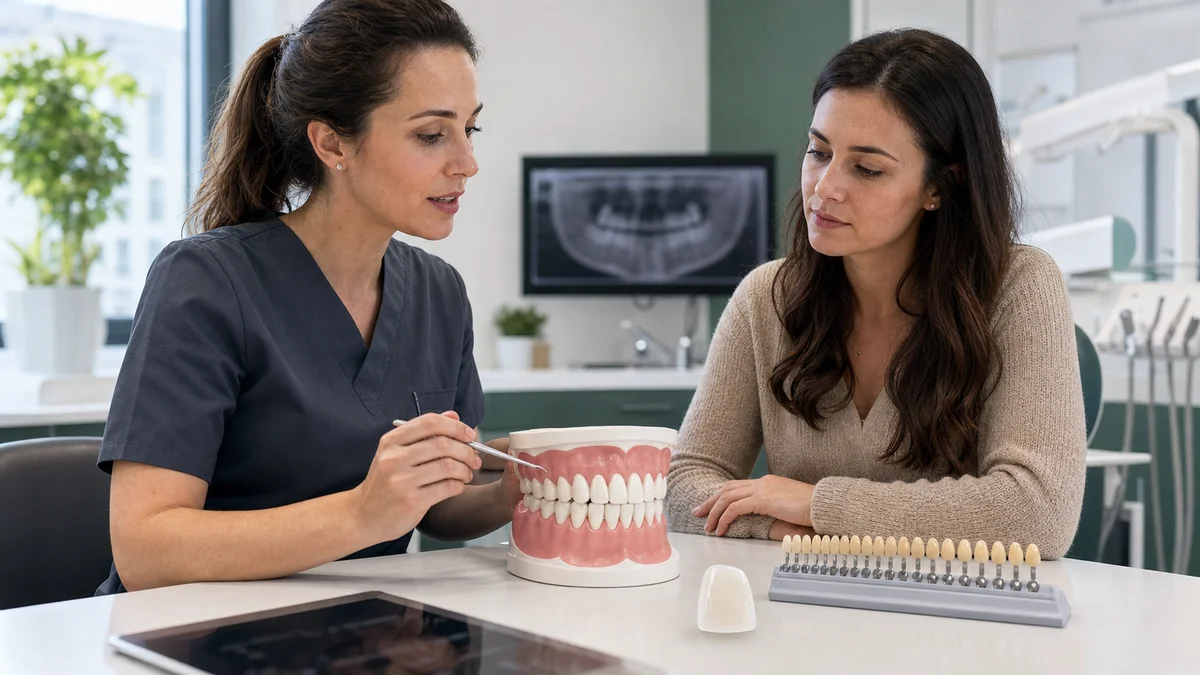
Quick answer: gum disease treatment vs veneers is not an either-or cosmetic choice. Periodontal treatment controls disease in the gums and supporting tissues; veneers change the visible front surface of selected teeth. Active inflammation, infection and unstable support should be assessed and managed first. Veneers may be considered later only if oral health, tooth structure, bite and expectations are suitable.
People comparing gum disease treatment vs veneers may be trying to solve one visible concern: bleeding gums, recession, uneven gum levels, gaps, discolouration or teeth that appear longer than before. Yet the two treatments have different purposes. Gum disease care is directed at health and stability. Veneers are bonded restorations used to alter the colour, contour or proportion of selected teeth. A veneer cannot remove infection below the gum, restore lost periodontal attachment or make an unstable tooth healthy.
The sequence matters. Placing cosmetic restorations while gums are inflamed can make margins difficult to plan, impressions or scans less reliable, bonding less controlled and final proportions unpredictable. If swelling later reduces or recession progresses, the edges of restorations may become visible. Disease can also continue around or beneath a restoration when plaque control and supporting tissues are not stable.
This patient guide explains how diagnosis, treatment and reassessment fit together before an elective smile plan. It does not diagnose bleeding, determine whether a tooth can be maintained or promise that veneers will be suitable after periodontal care. At Redent Klinik, recommendations require an examination, appropriate records, informed consent and a plan that puts health before appearance.
What Is Gum Disease, and What Do Veneers Do?
Gum disease is a broad term for conditions affecting tissues that surround and support teeth. Gingivitis involves inflammation confined to the gums and can often improve with effective plaque control and professional care. Periodontitis involves deeper supporting structures and bone loss. Treatment can control the disease and reduce risk, but lost support does not simply return because the visible gums stop bleeding.
The U.S. Centers for Disease Control and Prevention describes periodontal disease as inflammation and infection of the gum and bone around teeth. It distinguishes gingivitis from periodontitis and notes that more severe disease can be managed through professional treatment. The National Institute of Dental and Craniofacial Research similarly explains that the goal of treatment is to control infection and that the type of care depends on the extent of disease.
A veneer is a thin restoration bonded to the front surface of a tooth. Porcelain veneers are generally fabricated outside the mouth and then bonded, while direct composite veneers are layered and shaped on the tooth. Veneers can change certain aesthetic features, but they do not treat the biological cause of bleeding, pocketing, bone loss, mobility or bad breath related to periodontal infection.
- Periodontal treatment: controls inflammation and infection and creates conditions that can be maintained.
- Veneers: alter the visible surface of suitable teeth after disease and risk have been assessed.
- Gum contour procedures: may change tissue shape in selected stable cases but are not a substitute for disease control.
- Maintenance: remains necessary after both periodontal treatment and restorative work.
Gum Disease Treatment vs Veneers: The Decision Table
| Decision factor | Gum disease treatment | Veneer treatment | Question for the consultation |
|---|---|---|---|
| Primary purpose | Control disease affecting gums and supporting bone | Change the visible colour, shape or proportion of suitable teeth | Is my concern caused by disease, tooth appearance or both? |
| When it belongs in the sequence | Before elective cosmetic work when disease is active or suspected | After health, support and tissue position are sufficiently stable | What findings show that the gums are ready for restorative planning? |
| Diagnosis required | Periodontal examination, pocket measurements, history and imaging where indicated | Tooth, enamel, bite, shade, gum line and restorative assessment | Which records support each recommendation? |
| Effect on bone loss | Aims to stop or slow progression and maintain teeth; some cases need specialist procedures | Does not treat periodontal bone loss | What support has already been lost and what can realistically be stabilised? |
| Effect on appearance | Reduced swelling and healthier tissue may change gum contours and visible spaces | Can modify tooth surface appearance within biological limits | Should final cosmetic planning wait for tissue changes after healing? |
| Long-term responsibility | Daily plaque control and tailored periodontal maintenance | Hygiene, bite review and monitoring of restoration margins and supporting teeth | How often will my individual risk need review? |
| What it cannot promise | Cannot guarantee no recurrence or recreate all lost support | Cannot cure disease or guarantee a permanent cosmetic result | What risks remain even if treatment goes well? |
How Is Gum Disease Properly Assessed?
Bleeding during brushing is important, but it does not by itself identify the type or extent of disease. A periodontal assessment may include medical and dental history, smoking or nicotine exposure, diabetes status, medications, plaque levels, gum inflammation, recession, tooth mobility and bite. The clinician may use a periodontal probe to measure spaces around teeth and check where bleeding occurs.
Radiographs can help evaluate bone levels, patterns of loss, calculus and other dental conditions. They do not replace clinical probing, and a scan alone cannot show every aspect of inflammation or attachment. The NIDCR describes examination, pocket measurements, medical history and x-rays as parts of diagnosis. A periodontist may be involved when disease is advanced, complex or does not respond as expected.
Several conditions can resemble or contribute to gum symptoms. Forceful brushing can cause recession or trauma. A cracked tooth, food impaction, an overhanging filling, dry mouth, hormonal changes, certain medicines and systemic conditions can affect tissues. Persistent bleeding, swelling or bad breath deserves professional assessment rather than self-treatment based on a photograph.
Diagnosis should also identify prognosis. Some teeth may have stable support and respond well to care; others may have uncertain or poor support. A tooth-by-tooth explanation helps determine whether preservation, splinting, restorative treatment, specialist care or extraction should be discussed. Cosmetic planning should not hide this uncertainty.
What May Gum Disease Treatment Involve?
The treatment plan depends on whether the problem is gingivitis, periodontitis or another condition. Education in effective brushing and interdental cleaning is central because professional treatment cannot compensate for plaque that continually returns. A clinician may recommend a toothbrush technique, interdental brushes, floss or another device based on anatomy and dexterity. Tobacco cessation and coordination of diabetes care can also be relevant.
Professional cleaning may be appropriate for gingivitis and routine deposits. Periodontitis may require scaling and root planing, sometimes called deep cleaning, to remove plaque and calculus from affected root surfaces. Care can be delivered in sections, and local anaesthesia may be used according to need. Medication may be considered in selected situations, but antibiotics are not an automatic replacement for mechanical treatment and daily care.
More advanced or persistent cases may need periodontal surgery or regenerative procedures, depending on defect anatomy and prognosis. These treatments are not cosmetic shortcuts. Their aim may be access for cleaning, reduction of deep pockets, management of tissue or attempts to improve selected defects. A specialist should explain expected benefits, limitations, healing and alternatives.
Reassessment is essential. The clinician checks changes in inflammation, plaque, bleeding, pocket depths, tissue position, comfort and the patient’s ability to clean. Additional treatment or a modified maintenance interval may be recommended. A single cleaning does not establish lifelong stability, and absence of pain does not prove that periodontitis is inactive.
Why Veneers Should Usually Wait for Periodontal Stability
Inflamed gums can be enlarged and bleed easily. If veneer margins are planned against swollen tissue, the apparent gum line may move after health improves. This can expose a margin, change tooth proportions or create uneven spaces. It can also make shade records, isolation and adhesive procedures more difficult. Waiting for reassessment allows the restorative plan to use a more dependable tissue position.
Periodontitis can reduce the bone and attachment supporting teeth. A veneer adds a restoration to the surface; it does not improve that support. If a tooth is mobile or has an uncertain prognosis, placing an elective veneer may create cost and irreversible preparation on a tooth that needs a different health plan. Stability, cleansability and prognosis should be discussed before cosmetic coverage.
Restoration contours influence plaque retention. A veneer that is too bulky, has a rough margin or closes spaces without preserving cleaning access can make hygiene more difficult. Even a technically polished restoration can fail biologically if the patient cannot clean around it. The proposed design should respect the gum, contact areas and emergence of each tooth.
There is no universal waiting period after treatment. Healing depends on disease severity, procedure, tissue response, hygiene and risk factors. A fixed number of weeks in an online package cannot determine readiness. The treating team should document why tissues are considered stable enough for scans, preparation and final restorations.
Can Veneers Correct Recession, Gaps or Long-Looking Teeth?
Gum recession exposes root surfaces and can make teeth appear longer. Veneers cover the front of the crown and may not safely cover an exposed root or recreate a natural gum line. Extending a restoration onto a root can create bonding, contour and maintenance challenges. Depending on cause and anatomy, options might include monitoring, sensitivity management, periodontal grafting, orthodontics, restorative work or a combination.
Periodontal bone loss can create dark spaces between teeth, often called black triangles. Simply widening veneers to fill every space may make teeth look unnaturally broad or produce bulky contacts that trap plaque. The size and position of the space, root angulation, tooth shape and gum attachment need assessment. Orthodontic movement, conservative bonding or accepting a small cleanable space may be safer in some cases.
Uneven gum margins can reflect inflammation, recession, tooth position, altered eruption, wear or normal asymmetry. Treating the visible edge without understanding the cause can make proportions worse. Once inflammation is controlled, a clinician can assess whether tissue contouring, orthodontic movement, tooth reshaping, bonding or veneers are appropriate.
Veneers can improve colour and crown shape for suitable teeth, but they cannot promise that receding gums will stop. Future tissue changes can expose edges or change symmetry. That risk should be part of consent, particularly for patients with thin tissue, previous periodontitis, smoking exposure, traumatic brushing or unstable plaque control.
Tooth Preservation, Preparation and Material Choice
When veneers are considered after periodontal care, the amount of natural tooth change matters. Porcelain veneers may require controlled enamel reduction to create space and avoid bulky contours. Direct composite can be additive in selected cases, but preparation may still be needed for contour, old restorations or unsupported material. “No-prep” is not a diagnosis and should not be promised for every tooth.
Bonding to sound enamel is valuable for veneer treatment. Teeth with large fillings, cracks, decay, little remaining enamel or root exposure may need a different plan. A crown is not automatically better; it covers more tooth structure and needs its own justification. The most conservative restoration capable of meeting health and functional needs should be discussed.
Porcelain generally offers a stable glazed or polished surface and laboratory-controlled form. Composite is easier to add to or repair but can stain, wear or lose polish. For a patient with periodontal history, material choice must also consider margin placement, surface finish, repairability and cleaning access. A premium material name does not compensate for an over-contoured design.
- Ask how much enamel is expected to be changed on each tooth.
- Request an explanation of where every veneer margin will finish relative to the gum.
- Discuss how floss or interdental brushes will pass through restored contact areas.
- Ask what happens if recession later exposes a margin or root.
- Understand the repair and replacement pathway before treatment begins.
Alternatives to Discuss After Gum Health Improves
Periodontal treatment can change the appearance of the smile by reducing swelling and inflammation. The final gum position may reveal that less cosmetic treatment is needed than initially expected. A careful reassessment should distinguish remaining concerns about colour, shape, spacing, position and tissue contour.
Professional whitening may address general colour concerns in healthy teeth, although existing restorations do not bleach. Direct composite bonding can repair selected chips or alter small contours without covering the whole front surface. Orthodontic treatment may reposition teeth or roots and sometimes improve the shape of spaces. Each option has its own risks, maintenance and suitability requirements.
Periodontal plastic surgery may be considered for selected recession or tissue contour concerns, but results depend on anatomy, cause and risk control. Gum grafting is not guaranteed to cover every exposed root completely. Crown-lengthening procedures remove or reshape tissue for specific indications and should not be used simply to make every gum line identical.
Some patients may choose no elective cosmetic treatment after disease control. Monitoring, sensitivity care and acceptance of natural variation can be valid. Informed consent includes the option to postpone irreversible work and the consequences of doing so. A clinician should not turn health treatment into an automatic sales pathway for veneers.
Risk Factors That Affect Both Periodontal and Cosmetic Planning
Smoking and other nicotine exposure can increase periodontal risk and affect healing. Smoking can also reduce visible bleeding, which may mask inflammation rather than prove health. The NIDCR notes that smoking can make gum disease treatment less successful. Discuss all tobacco and nicotine use honestly so risk and support options can be addressed.
Diabetes and periodontal health can influence each other, particularly when glucose control is poor. Medical history, medications and communication with a medical clinician may be relevant. Pregnancy, immune conditions, dry mouth and medicines that change gum tissue or saliva can also affect planning. A dental professional should tailor advice rather than apply a blanket exclusion.
Clenching and grinding can affect tooth mobility, wear, restoration fracture and bite. A veneer plan should assess functional contacts, not only front-view photographs. A protective appliance may be considered after treatment, but it cannot guarantee against chipping or stop periodontal disease. The causes of mobility and wear should be identified.
Daily plaque control is the common foundation. Veneers do not prevent decay at their margins or inflammation around treated teeth. Patients must be able and willing to clean the final contours. If dexterity, crowding or prosthetic design makes that difficult, the treatment plan should adapt rather than assume maintenance will somehow improve later.
Costs and Timelines Without Misleading Promises
Gum disease treatment and veneers have different cost drivers. Periodontal care may involve examination, measurements, radiographs, professional cleaning, scaling and root planing, medication in selected cases, specialist procedures, reassessment and continuing maintenance. The number of teeth and severity can change the scope. A headline “deep cleaning” price does not describe every case.
Veneer estimates may include records, mock-ups, preparation, temporary restorations, laboratory work, bonding, bite refinement and review. Composite and porcelain use different workflows. The number of teeth should be based on a clinical and aesthetic plan, not a pre-set package. Future polishing, repair or replacement should also be considered.
Insurance coverage varies by policy, location and reason for care. Necessary periodontal treatment may have different benefits from elective cosmetic veneers, which are often excluded. Only the insurer can confirm a specific claim. Request a written plan and verify coverage before relying on reimbursement.
The total timeline should include periodontal healing and reassessment before final cosmetic records. Surgery or complex disease may extend that period. Rushing to match a travel date can undermine the purpose of stabilisation. If treatment is planned abroad, ask how maintenance findings and urgent concerns will be shared with a local dental professional.
Maintenance After Periodontal Treatment and Veneers
Periodontitis is managed over time. A personalised maintenance interval may be shorter than a routine schedule, depending on history, residual pockets, smoking, diabetes, plaque control and response. Visits can include review of symptoms, pocket and bleeding measurements where indicated, professional cleaning and reinforcement of home care.
Veneers also require review. The dentist checks margins, gum response, decay, fractures, debonding, surface wear and bite. Composite may need repolishing or repair. Porcelain can chip or require replacement. Neither material has a guaranteed lifespan, and a veneer does not shield the supporting tooth from all future disease.
Brush twice daily with fluoride toothpaste and clean between teeth using the method recommended for your spaces and restorations. Avoid using front teeth to open packaging or bite hard objects. Seek assessment for new bleeding, swelling, bad taste, increasing recession, mobility, persistent sensitivity, pain or a restoration that feels loose.
Maintenance is not evidence that treatment failed; it is part of controlling a chronic risk and protecting restorations. The schedule and home-care tools should be agreed before cosmetic work so the final design is realistic for the patient to maintain.
Frequently Asked Questions About Gum Disease Treatment vs Veneers
Can veneers cure gum disease?
No. Veneers cover the visible front surface of teeth and do not remove infection, calculus or inflamed tissue below the gum. They cannot rebuild periodontal support. Active disease needs diagnosis and treatment directed at its cause. Placing veneers without control can complicate cleaning and make future tissue changes more visible.
Can I get veneers if my gums bleed?
Bleeding should be assessed first. It may reflect gingivitis, periodontitis, local irritation or another condition. Cosmetic records and bonding are more predictable when tissues are healthy and stable. The dentist must determine the cause, provide appropriate care and reassess before deciding whether veneers are suitable.
Will deep cleaning make my teeth look longer?
As inflammation and swelling reduce, the true gum position can become more visible. Teeth may appear longer or spaces may appear larger, especially where support was previously lost. This does not mean treatment created the underlying bone loss. Discuss expected tissue changes and wait for reassessment before final cosmetic decisions.
How long after gum treatment can veneers be placed?
There is no universal waiting period. Readiness depends on disease severity, treatment type, healing, bleeding, plaque control, tissue position and tooth prognosis. The clinician should confirm stability using current findings rather than a calendar alone. Complex or surgical cases may require a longer observation period.
Can veneers hide black triangles caused by gum disease?
They may reduce selected spaces by changing tooth contour, but closing every triangle can make teeth too wide or create plaque-retentive contacts. Root position, tissue attachment, space size and cleansability must be assessed. Orthodontics, conservative bonding or accepting a cleanable space may be safer alternatives.
Do veneers stop gum recession?
No. A veneer does not control the causes of recession, such as thin tissue, traumatic brushing, tooth position, inflammation or ongoing periodontal breakdown. Future recession can expose a restoration margin. Cause-specific periodontal, orthodontic, behavioural or restorative options should be discussed before treatment.
Is porcelain safer for the gums than composite?
Both can be compatible with healthy tissue when correctly indicated, smoothly finished, appropriately contoured and maintainable. Poor margins or bulky shapes can cause problems with either material. Porcelain often maintains surface polish well, while composite is more repairable but may need repolishing. Design and hygiene matter as much as the label.
Will periodontal treatment guarantee that I can have veneers?
No. Successful disease control is only one part of candidacy. Tooth support, enamel, decay, cracks, bite, recession, restorative history, desired change and maintenance capacity also matter. Some patients may be better served by bonding, whitening, orthodontics, periodontal procedures, another restoration or no cosmetic intervention.
A 9-Question Consultation Checklist
- Do I have gingivitis, periodontitis, recession or another condition?
- Which measurements and images support the diagnosis?
- What is the prognosis of every tooth being considered for cosmetic work?
- Which periodontal treatment and home care are needed first?
- How will stability be reassessed before veneer planning?
- Could healing change the gum line, spaces or tooth proportions?
- What conservative alternatives could meet my remaining aesthetic goal?
- How will restoration margins be designed for cleaning and future recession risk?
- What maintenance, repair and urgent-care arrangements will follow treatment?
Use the checklist to turn a broad smile request into a health-based plan. A provider should explain uncertainty and allow time for informed choice. Be cautious about guaranteed gum cures, instant veneer packages offered without periodontal measurements, promises that one material never affects gums or pressure to prepare teeth before tissues have been reassessed.
For questions about records, periodontal reassessment and staged cosmetic planning, you can contact Redent Klinik. A remote conversation can help organise information but cannot replace an in-person gum and tooth examination.
The practical conclusion to gum disease treatment vs veneers is sequence, not competition. Control disease first, confirm stability, then reassess what aesthetic concern remains. If veneers are still appropriate, they should be conservative, cleanable and designed around the patient’s long-term periodontal risk.
This article provides general education and is not a diagnosis, fixed treatment recommendation, price or outcome guarantee. Individual care requires assessment by a licensed dental professional and, when indicated, a periodontist or another relevant clinician.