
Crooked lower teeth are one of the most common orthodontic concerns among teenagers and adults. Many people feel self-conscious about their smile when the lower front teeth overlap, twist, or appear crowded. Fortunately, modern orthodontic technology has made it easier than ever to address these concerns without traditional metal braces. If you are researching invisalign crooked bottom teeth, you are likely wondering whether clear aligners can effectively straighten your lower teeth, improve your smile, and enhance your oral health. The good news is that Invisalign has become one of the most popular and effective treatments for correcting mild to moderate lower teeth crowding.
When discussing invisalign crooked bottom teeth, it is important to understand that lower teeth often become crowded due to a lack of space in the dental arch. Genetics, jaw development, premature loss of baby teeth, and natural aging can all contribute to crooked lower teeth. Over time, even individuals who once had straight teeth may notice shifting and crowding in the lower front region. This gradual movement is a common reason why many adults seek orthodontic treatment later in life.
One of the biggest advantages of invisalign crooked bottom teeth treatment is the discreet nature of the aligners. Unlike traditional braces that use metal brackets and wires, Invisalign aligners are made from transparent medical-grade plastic. This means patients can continue their daily activities, attend professional meetings, and socialize with confidence while undergoing treatment. Many adults prefer Invisalign because it allows them to improve their smile without drawing attention to their orthodontic treatment. 😊
Another reason why invisalign crooked bottom teeth treatment has become increasingly popular is comfort. Traditional braces can sometimes cause irritation to the cheeks and lips due to brackets and wires. Invisalign aligners are custom-made to fit snugly over the teeth, reducing discomfort while gradually moving teeth into their ideal positions. Each set of aligners applies controlled pressure to specific teeth, encouraging gradual and predictable movement throughout the treatment process.
Many patients ask whether Invisalign is truly effective for lower teeth crowding. In many cases, the answer is yes. Modern digital treatment planning allows orthodontists and Invisalign providers to create highly customized treatment plans. During the consultation, advanced 3D imaging technology maps the patient’s teeth and predicts how they will move throughout treatment. This precision makes invisalign crooked bottom teeth correction highly effective for suitable candidates.
Besides cosmetic improvements, addressing invisalign crooked bottom teeth concerns can also provide significant oral health benefits. Crooked or crowded lower teeth are often more difficult to clean properly. Food particles and plaque can accumulate between overlapping teeth, increasing the risk of cavities, gum disease, and bad breath. Straightening the teeth helps create a healthier oral environment and may improve long-term dental health.
Patients considering invisalign crooked bottom teeth treatment should also understand that every case is unique. Mild crowding may require only a few months of treatment, while more complex cases can take a year or longer. The exact treatment duration depends on factors such as the severity of crowding, patient compliance, and overall oral health. Wearing aligners for the recommended 20 to 22 hours per day is essential for achieving optimal results.
The term clear aligners is often used interchangeably with Invisalign, but Invisalign remains one of the most recognized and extensively researched systems available today. For patients dealing with invisalign crooked bottom teeth, the system’s advanced SmartTrack material and digital treatment planning provide predictable tooth movement and excellent treatment outcomes. Many patients notice gradual improvements within the first few months of treatment, which helps maintain motivation and compliance.
It is also worth noting that correcting invisalign crooked bottom teeth can positively affect bite function. When lower teeth are severely crowded, they may contribute to uneven biting forces, excessive tooth wear, and jaw discomfort. Proper alignment helps distribute chewing forces more evenly and may contribute to better overall dental function.
Choosing an experienced provider is one of the most important factors in successful invisalign crooked bottom teeth treatment. A qualified dental professional can assess your condition, determine whether Invisalign is appropriate, and develop a customized treatment strategy tailored to your needs. Patients seeking expert guidance can schedule a consultation through the Redent Klinik Contact Page to discuss their orthodontic goals and treatment options.
For additional oral health information and professional guidance regarding orthodontic care, patients can also consult trusted organizations such as the American Dental Association. Educational resources from reputable dental organizations can help patients make informed decisions about their treatment journey.
In summary, invisalign crooked bottom teeth treatment offers a modern, discreet, and effective solution for individuals struggling with lower teeth crowding, overlapping teeth, or minor misalignment. By combining advanced digital technology, customized aligners, and professional supervision, Invisalign can help create a straighter smile while improving oral hygiene, dental function, and self-confidence. Whether your concern involves mild lower incisor crowding or more noticeable alignment issues, understanding the benefits and possibilities of invisalign crooked bottom teeth treatment is the first step toward achieving a healthier and more attractive smile. ✨
What Causes Crooked Bottom Teeth and Why They Matter
Many people begin researching invisalign crooked bottom teeth after noticing that their lower front teeth appear crowded, overlapping, or uneven. While crooked lower teeth may seem like a purely cosmetic concern, they often have deeper causes and can affect oral health in significant ways. Understanding why bottom teeth become misaligned is an important first step toward finding the right treatment solution and determining whether invisalign crooked bottom teeth treatment is appropriate for your needs.
Lower teeth crowding is one of the most common orthodontic issues seen in both teenagers and adults. In many cases, the problem develops gradually over time, making it difficult for patients to identify exactly when the changes began. Although every patient is unique, dental professionals have identified several common causes that contribute to crooked lower teeth and eventually lead people to seek invisalign crooked bottom teeth treatment.
Genetics and Jaw Size
One of the primary causes of crooked lower teeth is genetics. Just as individuals inherit eye color and facial features from their parents, they may also inherit certain dental characteristics. Some people naturally have smaller jaws but larger teeth, creating insufficient space for proper alignment. When there is not enough room in the lower dental arch, teeth begin competing for space and may rotate, overlap, or shift out of position.
This inherited crowding pattern often becomes noticeable during adolescence but can continue to worsen throughout adulthood. Patients with a family history of crowded teeth frequently become excellent candidates for invisalign crooked bottom teeth correction because clear aligners can gradually create better alignment without the appearance of traditional braces.
How Genetics Influences Tooth Position
Even when oral hygiene is excellent, inherited jaw structure can increase the likelihood of crowding. Some individuals inherit larger teeth from one parent and a smaller jaw from the other, creating a mismatch that contributes to alignment issues. This combination frequently results in lower incisor crowding, which is one of the most common reasons patients seek invisalign crooked bottom teeth treatment.
Natural Aging and Tooth Movement
Many adults are surprised to discover that teeth can continue moving throughout life. A smile that appeared straight during the teenage years may gradually develop crowding later in adulthood. This natural shifting process is sometimes referred to as age-related dental crowding.
As people age, subtle changes occur in the jawbone, gums, and supporting tissues. These changes can cause the lower front teeth to drift inward or overlap slightly. This explains why many adults who never needed orthodontic treatment in their youth eventually begin exploring invisalign crooked bottom teeth solutions later in life.
Because Invisalign uses a series of customized clear aligners, it can effectively address many cases of adult lower teeth crowding while allowing patients to maintain a professional appearance during treatment. 😊
Premature Loss of Baby Teeth
Childhood dental development plays a major role in the alignment of permanent teeth. When baby teeth are lost too early due to decay, trauma, or extraction, neighboring teeth may drift into the empty space before permanent teeth erupt. As a result, the incoming permanent teeth may lack sufficient room and emerge in crooked positions.
This early disruption can contribute to long-term crowding problems that persist into adulthood. Many adults who pursue invisalign crooked bottom teeth treatment discover that their alignment issues actually began during childhood dental development.
Wisdom Teeth and Crowding Myths
For years, many people believed wisdom teeth were solely responsible for lower front teeth crowding. While wisdom teeth can contribute to pressure within the dental arch in some situations, modern research suggests they are not always the primary cause of lower tooth misalignment.
Instead, crowding typically results from multiple factors working together, including genetics, jaw development, and natural aging. Nevertheless, patients concerned about crowding should consult a dental professional who can determine whether invisalign crooked bottom teeth treatment may help improve alignment.
Why Crooked Bottom Teeth Matter
Some people delay orthodontic treatment because they believe lower teeth are less visible than upper teeth. However, crooked lower teeth can create several oral health challenges that extend beyond appearance.
Difficulty Cleaning Teeth
When teeth overlap, it becomes more difficult to remove plaque and food particles effectively. Tight spaces between crowded teeth can be challenging to clean with standard brushing and flossing techniques. Over time, these hard-to-reach areas may become breeding grounds for harmful bacteria.
Many patients pursuing invisalign crooked bottom teeth treatment are motivated not only by aesthetics but also by the desire to improve oral hygiene and reduce future dental complications.
Increased Risk of Gum Disease
Crowded teeth often trap plaque near the gumline. If plaque is not removed regularly, inflammation may develop, increasing the risk of gingivitis and periodontal disease. Healthy tooth alignment makes routine oral care easier and helps maintain healthier gums.
This is another reason why invisalign crooked bottom teeth treatment is frequently recommended as part of a comprehensive approach to long-term oral health.
Uneven Tooth Wear
Misaligned lower teeth can alter the way teeth come together during chewing and biting. Certain teeth may absorb excessive force while others receive less pressure. Over time, this imbalance can lead to enamel wear, minor chipping, or increased sensitivity.
Correcting alignment through invisalign crooked bottom teeth treatment can help distribute bite forces more evenly and support healthier long-term function.
Impact on Confidence and Self-Esteem
Although oral health is important, the emotional impact of crooked teeth should not be overlooked. Many individuals feel uncomfortable smiling in photographs, speaking in public, or participating in social interactions because they are self-conscious about their lower teeth.
Modern clear aligner therapy offers a discreet solution for addressing these concerns. Patients who complete invisalign crooked bottom teeth treatment often report increased confidence, improved self-image, and greater satisfaction with their smile.
The Importance of Early Evaluation
Whether crowding is mild or severe, seeking professional evaluation early can help prevent complications from worsening. A qualified Invisalign provider can assess the cause of crowding, evaluate overall oral health, and determine whether invisalign crooked bottom teeth treatment is the most suitable option.
Ultimately, crooked lower teeth are more than a cosmetic issue. Genetics, aging, dental development, and bite function can all contribute to lower arch crowding. By understanding these causes and recognizing the potential health implications, patients can make informed decisions about treatment. For many individuals, invisalign crooked bottom teeth therapy provides an effective, comfortable, and discreet path toward a healthier, straighter, and more confident smile. ✨
Can Invisalign Correct Crooked Bottom Teeth Effectively?
One of the most common questions patients ask during an orthodontic consultation is whether invisalign crooked bottom teeth treatment actually works. Many adults and teenagers are attracted to Invisalign because of its nearly invisible appearance, but they also want reassurance that the treatment can deliver real and lasting results. The good news is that modern Invisalign technology has evolved significantly over the years, making it a highly effective solution for many cases involving crowded, overlapping, rotated, or misaligned lower teeth.
When discussing invisalign crooked bottom teeth, it is important to understand that treatment success depends on several factors, including the severity of the misalignment, patient compliance, and the experience of the Invisalign provider. For mild to moderate lower teeth crowding, Invisalign is often capable of producing results comparable to traditional braces while offering greater comfort and aesthetics.
How Invisalign Moves Crooked Bottom Teeth
The Invisalign system uses a series of custom-made clear aligners designed specifically for each patient’s dental structure. Every aligner is slightly different from the previous one, gradually moving teeth toward their ideal positions. Instead of relying on brackets and wires, Invisalign uses carefully controlled pressure to guide tooth movement over time.
For patients researching invisalign crooked bottom teeth, this gradual movement is one of the treatment’s greatest strengths. Each aligner is engineered using advanced digital treatment planning software that predicts how the teeth will move from the initial position to the final desired alignment.
Because lower front teeth are often affected by crowding and rotation, Invisalign aligners are designed to apply pressure in highly targeted areas. This precision allows many cases of invisalign crooked bottom teeth to be corrected successfully without the need for visible metal braces.
Customized Treatment Planning
Every patient’s smile is unique. Before beginning invisalign crooked bottom teeth treatment, the dentist or orthodontist performs a detailed examination using digital scans, photographs, and sometimes X-rays. These records are used to create a virtual treatment plan that shows the anticipated tooth movement throughout the process.
One major advantage of Invisalign is that patients can often preview their expected results before treatment even begins. This visual simulation helps individuals understand how their invisalign crooked bottom teeth treatment will progress and what improvements they can expect over time.
Cases Invisalign Can Successfully Treat
Many people assume Invisalign is only suitable for minor cosmetic issues. However, modern clear aligner technology can address a wide range of orthodontic concerns.
Common conditions treated with invisalign crooked bottom teeth therapy include:
- Mild lower teeth crowding
- Moderate lower arch crowding
- Rotated lower incisors
- Minor spacing issues
- Relapse after previous orthodontic treatment
- Minor bite alignment problems
- Overlapping lower front teeth
For many patients, invisalign crooked bottom teeth treatment can achieve dramatic improvements while maintaining a discreet appearance throughout the correction process.
When Invisalign May Be More Challenging
Although Invisalign is highly effective, not every orthodontic case can be treated exclusively with clear aligners. Severe crowding, significant jaw discrepancies, or complex bite problems may require additional orthodontic techniques or traditional braces.
This does not necessarily mean Invisalign is not an option. In some situations, dentists may combine Invisalign with attachments, interproximal reduction (IPR), or other supportive procedures to improve treatment outcomes. A professional assessment is necessary to determine whether invisalign crooked bottom teeth treatment is appropriate for a particular case.
The Role of Invisalign Attachments
Some patients require small tooth-colored attachments that are bonded to specific teeth during treatment. These attachments act as anchors that help aligners apply more precise force.
Attachments can be particularly helpful when correcting rotated teeth, which are common among patients seeking invisalign crooked bottom teeth solutions. Despite their effectiveness, these attachments remain discreet and are generally far less noticeable than traditional orthodontic brackets.
Patient Compliance Is Essential
The effectiveness of invisalign crooked bottom teeth treatment depends heavily on patient cooperation. Unlike braces, Invisalign aligners can be removed. While this flexibility offers many benefits, it also places responsibility on the patient.
Most providers recommend wearing aligners for 20 to 22 hours per day. Removing them too frequently or failing to wear them consistently can slow treatment progress and affect final results.
Patients who follow their provider’s instructions carefully often achieve excellent outcomes with invisalign crooked bottom teeth treatment. Consistency remains one of the strongest predictors of success.
Benefits Beyond Straight Teeth
The advantages of correcting invisalign crooked bottom teeth extend beyond aesthetics. Straighter teeth are generally easier to clean, which can help reduce plaque buildup and improve gum health. Better alignment may also contribute to improved bite function and more even distribution of chewing forces.
Many patients report increased confidence after completing invisalign crooked bottom teeth treatment. Feeling comfortable smiling, speaking, and interacting socially can have a meaningful impact on overall quality of life.
Predictable and Measurable Results
Modern Invisalign technology provides exceptional treatment predictability. Through digital monitoring and regular progress evaluations, providers can track tooth movement throughout the treatment journey.
This level of precision helps ensure that invisalign crooked bottom teeth treatment remains on schedule and that any necessary adjustments can be made promptly. Many patients appreciate being able to see measurable progress as their lower teeth gradually become straighter.
What Clinical Experience Shows
Over the years, Invisalign has been used by millions of patients worldwide. Clinical experience and technological advancements have significantly expanded the range of cases that can be treated successfully. Today, many orthodontists and dentists routinely recommend invisalign crooked bottom teeth treatment for suitable candidates because of its effectiveness, convenience, and patient satisfaction rates.
The key to achieving optimal results is choosing an experienced provider who understands the complexities of lower tooth alignment. Careful treatment planning, patient compliance, and regular monitoring all contribute to successful outcomes.
Final Thoughts
So, can Invisalign effectively correct crooked bottom teeth? In many cases, absolutely. Modern invisalign crooked bottom teeth treatment offers a sophisticated, comfortable, and discreet way to address lower teeth crowding and misalignment. Whether the issue involves overlapping incisors, mild crowding, or rotated lower teeth, Invisalign can often provide excellent results while allowing patients to maintain confidence throughout treatment. With proper planning and commitment, invisalign crooked bottom teeth therapy can help create a healthier bite, improved oral hygiene, and a more attractive smile that lasts for years. 😁✨
How Invisalign Works for Lower Teeth Alignment
Understanding how Invisalign functions is essential for anyone considering invisalign crooked bottom teeth treatment. Many patients are amazed to learn that clear plastic aligners can gradually move teeth into healthier positions without the use of traditional brackets and wires. Thanks to significant technological advancements in digital orthodontics, Invisalign has become one of the most effective methods for correcting lower teeth crowding, overlapping teeth, and minor bite issues.
The success of invisalign crooked bottom teeth treatment depends on a carefully planned process that combines digital imaging, customized aligners, and consistent patient compliance. Each stage of treatment is designed to move teeth incrementally while maintaining comfort and predictability. Understanding this process can help patients feel more confident about beginning their orthodontic journey.
The Initial Consultation and Assessment
Every invisalign crooked bottom teeth treatment begins with a comprehensive consultation. During this appointment, the dentist or orthodontist evaluates the patient’s oral health, examines the severity of lower teeth crowding, and determines whether Invisalign is the most suitable treatment option.
The provider will assess several important factors, including:
- The degree of lower teeth crowding
- The position of individual teeth
- Overall bite alignment
- Jaw relationships
- Gum health and bone support
- Previous orthodontic treatment history
This thorough evaluation ensures that invisalign crooked bottom teeth treatment is planned according to each patient’s unique needs rather than using a one-size-fits-all approach.
Digital Scanning Technology
Modern Invisalign providers typically use advanced intraoral scanners instead of traditional dental impressions. These scanners create highly accurate three-dimensional models of the patient’s teeth within minutes.
For patients considering invisalign crooked bottom teeth treatment, digital scanning offers a more comfortable experience while providing exceptional precision. The digital model serves as the foundation for the entire treatment plan and allows clinicians to visualize every stage of tooth movement.
Creating a Customized Treatment Plan
After the digital scan is completed, specialized Invisalign software is used to design a customized treatment plan. This technology predicts how each tooth will move throughout treatment and generates a sequence of aligners that gradually guide the teeth into proper alignment.
One of the most impressive aspects of invisalign crooked bottom teeth treatment is the ability to preview expected results before treatment begins. Patients can often see a virtual simulation of how their smile may look after completing the aligner series.
This digital planning process helps ensure that every stage of invisalign crooked bottom teeth correction is carefully controlled and optimized for predictable results.
How Clear Aligners Move Teeth
Many patients wonder how a thin plastic aligner can move teeth. The answer lies in controlled orthodontic force. Each aligner is designed with slight differences compared to the previous one. When worn consistently, the aligner applies gentle pressure to specific teeth.
As the teeth respond to this pressure, they gradually shift into new positions. Once the desired movement for that stage is achieved, the patient switches to the next aligner in the series. This process continues until the goals of invisalign crooked bottom teeth treatment are reached.
The gradual nature of Invisalign movement contributes to patient comfort and minimizes disruption to daily life. 😊
Biological Response to Tooth Movement
Tooth movement occurs through a natural biological process involving the surrounding bone and periodontal ligaments. When pressure is applied, the bone on one side of the tooth gradually remodels while new bone forms on the opposite side.
This controlled remodeling allows invisalign crooked bottom teeth treatment to achieve lasting alignment changes while preserving oral health. Because movement occurs incrementally, patients typically experience only mild pressure rather than significant pain.
The Importance of Attachments
Some Invisalign cases require small tooth-colored attachments to help guide tooth movement more effectively. These attachments are bonded temporarily to selected teeth and act as anchors for the aligners.
Attachments are often useful in invisalign crooked bottom teeth treatment when lower teeth are significantly rotated or require more complex movements. Despite their importance, they remain discreet and are usually difficult for others to notice.
Why Attachments Improve Precision
Certain tooth movements require additional leverage that aligners alone may not provide. Attachments create specific contact points that allow Invisalign to exert more precise control over tooth positioning.
For patients undergoing invisalign crooked bottom teeth correction, attachments can significantly improve treatment efficiency and predictability.
Daily Wear Requirements
One of the most critical aspects of successful invisalign crooked bottom teeth treatment is consistent aligner wear. Unlike braces, Invisalign aligners are removable. While this provides flexibility, it also requires responsibility.
Most providers recommend wearing aligners between 20 and 22 hours per day. Aligners should only be removed for:
- Eating meals
- Drinking beverages other than water
- Brushing teeth
- Flossing
- Cleaning the aligners
Patients who consistently follow these guidelines generally experience more predictable outcomes with invisalign crooked bottom teeth treatment.
Monitoring Progress Throughout Treatment
Regular follow-up appointments play an important role in Invisalign success. During these visits, the provider evaluates tooth movement, ensures treatment is progressing as planned, and addresses any concerns.
Most patients undergoing invisalign crooked bottom teeth treatment attend periodic checkups every six to ten weeks. These appointments are typically shorter and less frequent than traditional orthodontic visits.
If minor adjustments are needed, the provider can modify the treatment plan to keep progress on track.
Retention After Alignment
Completing active treatment is not the final step. Once the desired alignment has been achieved, retainers are usually prescribed to maintain results. Teeth naturally tend to shift over time, particularly in the lower front region.
Retainers help preserve the improvements gained through invisalign crooked bottom teeth treatment and reduce the risk of future crowding. Consistent retainer use is often essential for maintaining long-term success.
Long-Term Stability
Many patients invest considerable time and effort into achieving a straighter smile. Wearing retainers as instructed helps protect that investment and supports long-term stability.
For individuals who have completed invisalign crooked bottom teeth treatment, retention is a vital component of maintaining both aesthetic and functional improvements.
Final Thoughts
The process behind invisalign crooked bottom teeth treatment combines advanced digital planning, customized aligners, biological tooth movement, and ongoing professional supervision. From the initial scan to the final retainer, every stage is carefully designed to achieve predictable and comfortable alignment improvements. By understanding how Invisalign works for lower teeth alignment, patients can make informed decisions about treatment and approach the process with realistic expectations. With proper compliance and professional guidance, invisalign crooked bottom teeth treatment can successfully transform crowded lower teeth into a healthier, straighter, and more confident smile. ✨😁
Benefits of Choosing Invisalign for Crooked Bottom Teeth
For patients considering orthodontic treatment, understanding the advantages of Invisalign is just as important as understanding how it works. Many individuals researching invisalign crooked bottom teeth solutions want a treatment option that is effective, comfortable, and compatible with their daily lifestyle. Invisalign has become one of the most popular orthodontic systems worldwide because it offers numerous benefits that extend far beyond aesthetics. From improved confidence to enhanced oral health, invisalign crooked bottom teeth treatment provides several important advantages for suitable candidates.
While traditional braces remain an effective orthodontic solution, many patients prefer Invisalign because of its discreet appearance and convenience. Modern advancements in aligner technology have made invisalign crooked bottom teeth treatment highly capable of correcting lower teeth crowding while allowing patients to maintain their normal routines with minimal disruption.
Virtually Invisible Appearance
One of the most significant benefits of invisalign crooked bottom teeth treatment is its nearly invisible design. The aligners are made from clear medical-grade plastic and fit snugly over the teeth, making them difficult for others to notice during everyday interactions.
Many adults postpone orthodontic treatment because they feel self-conscious about wearing traditional metal braces. Invisalign eliminates this concern by providing a discreet alternative that blends naturally with the smile. Whether attending business meetings, social events, or family gatherings, patients undergoing invisalign crooked bottom teeth treatment can feel more confident throughout the process.
Ideal for Professional Environments
Professionals in customer-facing roles often prefer Invisalign because it allows them to maintain a polished appearance while improving their smile. The discreet nature of invisalign crooked bottom teeth treatment makes it especially appealing to adults who want orthodontic correction without drawing attention to their treatment.
Enhanced Comfort Compared to Traditional Braces
Comfort is another major reason why patients choose invisalign crooked bottom teeth treatment. Traditional braces use brackets and wires that may occasionally irritate the cheeks, lips, or gums. Invisalign aligners feature smooth edges and are custom-designed to fit comfortably over the teeth.
Although patients may experience mild pressure when switching to a new set of aligners, this sensation is typically temporary and indicates that the teeth are moving according to the treatment plan. Many individuals find invisalign crooked bottom teeth treatment significantly more comfortable than conventional orthodontic options.
Fewer Orthodontic Emergencies
Broken brackets and protruding wires can sometimes require emergency orthodontic appointments. Because Invisalign does not rely on metal components, patients undergoing invisalign crooked bottom teeth treatment often experience fewer unexpected issues that interrupt their schedules.
Removable for Greater Convenience
Unlike braces, Invisalign aligners can be removed when necessary. This flexibility is one of the most attractive features of invisalign crooked bottom teeth treatment.
Patients can remove aligners when:
- Eating meals
- Drinking beverages other than water
- Brushing teeth
- Flossing
- Attending special occasions if approved by their provider
This removable design allows patients to continue enjoying their favorite foods without many of the dietary restrictions commonly associated with braces.
Improved Oral Hygiene
Maintaining good oral hygiene during orthodontic treatment can be challenging with fixed braces. Brackets and wires often create areas where food particles and plaque accumulate. In contrast, invisalign crooked bottom teeth treatment allows patients to remove aligners and clean their teeth normally.
Being able to brush and floss thoroughly may help reduce the risk of cavities, plaque buildup, and gum inflammation throughout treatment. This is particularly important for individuals with crowded lower teeth, as overlapping teeth can already make oral hygiene more difficult.
Healthier Gums and Teeth
Proper alignment achieved through invisalign crooked bottom teeth treatment can create spaces that are easier to clean effectively. Improved accessibility supports healthier gums and may contribute to better long-term dental health.
Many patients discover that straightening crowded lower teeth not only improves appearance but also simplifies daily oral care routines.
Predictable and Personalized Results
Modern Invisalign treatment relies on advanced digital planning technology. Before beginning invisalign crooked bottom teeth treatment, providers create a customized roadmap that outlines every stage of tooth movement.
This digital precision allows patients to visualize their expected results and understand the treatment process from the beginning. The ability to see projected outcomes is one of the reasons many people feel more confident choosing invisalign crooked bottom teeth treatment.
Advanced Technology Supports Accuracy
Invisalign’s sophisticated software helps providers plan complex tooth movements with remarkable accuracy. As treatment progresses, periodic evaluations ensure that invisalign crooked bottom teeth correction remains on track and continues delivering the desired results.
Boosted Confidence Throughout Treatment
Many orthodontic patients worry about how braces may affect their appearance during treatment. Invisalign addresses this concern by providing a subtle solution that allows patients to smile confidently while their teeth gradually improve.
Patients often report that invisalign crooked bottom teeth treatment helps them feel more comfortable in social and professional situations even before treatment is completed. Knowing that their smile is improving can have a positive impact on self-esteem and overall confidence. 😊
Potential Functional Improvements
The benefits of invisalign crooked bottom teeth treatment extend beyond cosmetic enhancements. Properly aligned lower teeth can contribute to improved bite function and more balanced chewing forces.
Crowded or rotated lower teeth may create uneven pressure during chewing, potentially contributing to excessive tooth wear over time. By correcting alignment issues, invisalign crooked bottom teeth treatment may help improve both comfort and function.
Reduced Risk of Future Dental Problems
When teeth are aligned correctly, they often experience less abnormal wear and may be easier to maintain. Improved oral hygiene and better bite function can support long-term dental health and reduce the likelihood of certain complications.
This preventive aspect is another reason why many dental professionals recommend invisalign crooked bottom teeth treatment for suitable patients.
Suitable for Many Adult Patients
One of the greatest strengths of Invisalign is its popularity among adults. Many adults who avoided braces during childhood now seek treatment to address lower teeth crowding. Because Invisalign is discreet and convenient, it fits easily into busy lifestyles.
Whether the goal is correcting mild lower incisor crowding, improving smile aesthetics, or enhancing oral health, invisalign crooked bottom teeth treatment provides a flexible option that aligns well with adult responsibilities and professional commitments.
Final Thoughts
The growing popularity of invisalign crooked bottom teeth treatment is easy to understand when considering its many advantages. Patients benefit from a virtually invisible appearance, greater comfort, improved oral hygiene, customized treatment planning, and the convenience of removable aligners. Beyond aesthetics, Invisalign can also contribute to healthier gums, better bite function, and increased confidence. For individuals seeking a modern orthodontic solution, invisalign crooked bottom teeth treatment offers an effective combination of technology, comfort, and long-term dental benefits that continue to attract patients around the world. ✨😁
Treatment Timeline for Invisalign Crooked Bottom Teeth
One of the first questions patients ask before starting orthodontic treatment is how long the process will take. Individuals researching invisalign crooked bottom teeth treatment often want to know when they can expect visible improvements and how long it will take to achieve their desired smile. While every case is unique, Invisalign treatment follows a structured process that allows patients to gradually transform crowded or misaligned lower teeth through a series of customized clear aligners.
The timeline for invisalign crooked bottom teeth treatment depends on several factors, including the severity of crowding, the complexity of tooth movements, patient compliance, and overall oral health. Some patients achieve their goals in only a few months, while others may require more extensive treatment lasting over a year. Understanding each stage of the process can help patients set realistic expectations and remain motivated throughout their orthodontic journey.
Initial Consultation and Treatment Planning
The first stage of invisalign crooked bottom teeth treatment begins with a comprehensive consultation. During this appointment, the dentist or orthodontist evaluates the alignment of the lower teeth, examines bite relationships, and determines whether Invisalign is an appropriate solution.
Digital scans, photographs, and diagnostic records are typically collected during this visit. These records allow the provider to create a customized treatment plan specifically designed for the patient’s needs.
This planning stage generally takes one to two weeks before aligners are manufactured. Although patients may be eager to begin invisalign crooked bottom teeth treatment immediately, careful preparation is essential for achieving predictable results.
Why Treatment Planning Matters
The digital treatment plan serves as the blueprint for every stage of tooth movement. Advanced software predicts how the teeth will shift and generates a series of aligners designed to move them gradually into proper alignment.
Accurate planning is one of the reasons why invisalign crooked bottom teeth treatment has become so reliable and effective in modern orthodontics.
The First Few Weeks of Treatment
Once the aligners are delivered, patients begin wearing the first set according to their provider’s instructions. Most individuals are advised to wear their aligners for 20 to 22 hours per day.
During the first few weeks of invisalign crooked bottom teeth treatment, patients often notice mild pressure or tightness. This sensation is completely normal and indicates that the aligners are applying controlled force to move the teeth.
Some people begin noticing subtle changes in tooth positioning within the first month. However, significant visible improvements typically require more time as teeth gradually respond to treatment.
Adapting to Daily Wear
Most patients adjust quickly to their aligners. Speaking, eating, and oral hygiene routines usually become easier after the first few days. Consistent wear remains one of the most important factors in successful invisalign crooked bottom teeth treatment.
Months One to Three: Early Improvements
Between the first and third month, many patients start seeing noticeable improvements in lower tooth alignment. Mild crowding may begin to decrease, and overlapping teeth may appear less prominent.
This stage can be highly motivating because visible progress reinforces patient commitment. Individuals undergoing invisalign crooked bottom teeth treatment often feel encouraged when comparing their current smile to photographs taken before treatment began.
At this point, providers may schedule periodic evaluations to ensure that treatment is progressing according to plan.
Months Three to Six: Active Alignment Phase
The middle phase of invisalign crooked bottom teeth treatment is typically when the most dramatic changes occur. Teeth continue shifting into improved positions, rotations begin correcting, and the dental arch becomes more balanced.
Patients generally switch to a new set of aligners every one to two weeks, depending on their provider’s recommendations. Each aligner represents another step toward the final result.
Many cases of mild to moderate lower teeth crowding can achieve substantial correction during this stage. Patients frequently notice improvements in both appearance and oral hygiene as crowded areas become easier to clean.
The Importance of Consistency
Treatment progress during this phase depends heavily on compliance. Patients who fail to wear aligners as instructed may experience delays. Successful invisalign crooked bottom teeth treatment requires consistent daily use and adherence to professional recommendations.
Six to Twelve Months: Refinement and Final Adjustments
For moderate cases, the six-to-twelve-month period often focuses on refining tooth positions and perfecting alignment. Small adjustments may be necessary to optimize the final outcome.
During this stage, the provider carefully evaluates the results of invisalign crooked bottom teeth treatment and determines whether additional aligners are required. These refinement aligners help address minor details and ensure that treatment goals are fully achieved.
Many patients are surprised by how much their lower teeth have transformed by this point. Crowded incisors often appear dramatically straighter, creating a more balanced and attractive smile. 😊
Complex Cases May Require More Time
Although some cases can be completed within six months, more complex situations may require twelve to eighteen months or longer. Factors that can extend invisalign crooked bottom teeth treatment include:
- Severe lower teeth crowding
- Significant tooth rotations
- Complex bite problems
- Poor aligner compliance
- Need for additional refinements
Patients should remember that treatment duration varies considerably from person to person. A personalized consultation provides the most accurate estimate.
Why Longer Treatment Can Be Beneficial
Moving teeth too quickly can compromise stability and comfort. A carefully paced approach allows invisalign crooked bottom teeth treatment to achieve healthy, predictable, and long-lasting results while minimizing risks.
The Retention Phase
Completing active treatment does not mean the journey is over. After invisalign crooked bottom teeth treatment is finished, retainers are usually prescribed to maintain the newly achieved alignment.
Lower front teeth are particularly prone to shifting over time. Retainers help prevent relapse and protect the investment patients have made in their smile.
Most providers recommend wearing retainers consistently during the initial retention period and then transitioning to a maintenance schedule based on individual needs.
Factors That Influence Treatment Speed
Several variables can affect the overall duration of invisalign crooked bottom teeth treatment:
- Severity of crowding
- Age of the patient
- Biological response to tooth movement
- Daily aligner wear time
- Attendance at follow-up appointments
- Compliance with provider instructions
Patients who follow recommendations carefully often experience smoother progress and more predictable outcomes.
Final Thoughts
The timeline for invisalign crooked bottom teeth treatment varies depending on the complexity of each case, but most patients begin noticing improvements within the first few months. From the initial consultation and digital planning stage to active alignment and long-term retention, every phase plays an important role in achieving successful results. Whether treatment lasts six months or over a year, the gradual transformation provided by invisalign crooked bottom teeth therapy offers patients a comfortable, discreet, and highly effective path toward a healthier and more confident smile. ✨😁
Cost of Invisalign for Crooked Bottom Teeth
One of the most important factors patients consider before beginning orthodontic treatment is cost. Individuals researching invisalign crooked bottom teeth treatment often want to know how much they should expect to invest and whether the results justify the expense. While Invisalign is widely recognized for its comfort, convenience, and aesthetics, the total cost can vary significantly depending on several factors.
The price of invisalign crooked bottom teeth treatment is influenced by the complexity of the case, treatment duration, provider experience, geographic location, and whether additional procedures are required. Because every patient’s dental situation is unique, there is no universal price. However, understanding average cost ranges and the factors that affect pricing can help patients make informed financial decisions.
Average Cost of Invisalign Treatment
In the United States, the average cost of Invisalign treatment generally ranges between $3,000 and $8,000, depending on the complexity of the case and the number of aligners required. Many moderate orthodontic cases fall between $4,000 and $6,500. ([Charm Dental Care](https://www.charmdentalcare.com/average-cost-of-invisalign-in-2025/?utm_source=chatgpt.com))
For patients specifically seeking invisalign crooked bottom teeth correction, costs may be lower when only mild lower arch crowding requires treatment. Less complex cases often require fewer aligners and shorter treatment durations, which can reduce overall expenses.
Estimated Invisalign Cost Categories
| Treatment Type | Estimated Cost Range |
|---|---|
| Minor Lower Teeth Adjustments | $1,200 – $3,500 |
| Mild to Moderate Crowding | $3,500 – $5,500 |
| Moderate to Complex Cases | $4,500 – $8,000+ |
These figures are general estimates and may vary depending on the provider and treatment plan. Patients interested in invisalign crooked bottom teeth treatment should schedule a consultation to receive an individualized assessment and accurate pricing estimate.
What Is Included in the Cost?
Many patients assume they are only paying for the aligners themselves. In reality, comprehensive invisalign crooked bottom teeth treatment often includes multiple services throughout the orthodontic process.
Typical treatment fees may include:
- Initial consultation
- Digital scans and imaging
- Customized treatment planning
- Series of Invisalign aligners
- Progress monitoring appointments
- Refinement aligners if necessary
- Final retainers
Before beginning invisalign crooked bottom teeth treatment, patients should ask providers exactly what is included in the quoted fee. Transparent pricing helps avoid unexpected expenses later.
Why Comprehensive Packages Matter
A lower advertised price may not always include all treatment-related services. Some clinics charge separately for retainers, refinements, or additional appointments. Understanding the full scope of invisalign crooked bottom teeth treatment costs allows patients to compare options more accurately.
Factors That Affect Invisalign Pricing
Several variables influence the overall cost of invisalign crooked bottom teeth treatment. Even patients with similar crowding may receive different quotes based on their specific circumstances.
Severity of Lower Teeth Crowding
The complexity of tooth movement is one of the biggest cost factors. Mild lower incisor crowding generally requires fewer aligners and shorter treatment times. More severe crowding may require additional aligners, attachments, refinements, or longer treatment durations.
As complexity increases, the cost of invisalign crooked bottom teeth treatment typically rises as well.
Treatment Duration
Longer treatment plans often require more aligners and additional monitoring appointments. Patients undergoing extended invisalign crooked bottom teeth treatment may experience higher overall costs than those completing treatment within a few months.
Provider Experience
Experienced Invisalign providers often charge higher fees because of their advanced expertise and extensive case experience. However, choosing a skilled provider can improve treatment efficiency and reduce the likelihood of complications.
For many patients, investing in an experienced professional enhances the success of invisalign crooked bottom teeth treatment and contributes to better long-term outcomes.
Does Insurance Cover Invisalign?
Many dental insurance plans provide orthodontic benefits that may partially cover Invisalign treatment. Coverage varies significantly between insurance providers and individual plans.
Patients considering invisalign crooked bottom teeth treatment should contact their insurance provider to verify:
- Whether Invisalign is covered
- The maximum orthodontic benefit amount
- Age restrictions if applicable
- Coverage percentages
- Network provider requirements
Some plans contribute between $1,000 and $3,000 toward orthodontic treatment expenses. ([atlantadentalspa.com](https://www.atlantadentalspa.com/blogs/breaking-down-the-cost-of-invisalign-in-2025-is-it-affordable?utm_source=chatgpt.com))
Using Flexible Spending Accounts
Many patients use Flexible Spending Accounts (FSA) or Health Savings Accounts (HSA) to help cover invisalign crooked bottom teeth treatment expenses. These accounts may provide tax advantages that reduce overall out-of-pocket costs.
Financing and Payment Plans
Because orthodontic treatment can represent a significant investment, many clinics offer financing solutions that make care more accessible. Monthly payment plans allow patients to spread the cost of invisalign crooked bottom teeth treatment over time rather than paying the full amount upfront.
Common financing options include:
- Interest-free in-house payment plans
- Third-party healthcare financing
- Credit-based monthly installments
- Insurance coordination programs
Flexible financing helps many patients begin invisalign crooked bottom teeth treatment sooner without delaying necessary orthodontic care.
Is Invisalign Worth the Investment?
Some individuals initially hesitate because of the financial commitment involved. However, many patients feel that the benefits of invisalign crooked bottom teeth treatment justify the investment.
Potential long-term advantages include:
- Improved smile aesthetics
- Enhanced self-confidence
- Better oral hygiene
- Reduced crowding-related dental issues
- Improved bite function
- Lower risk of future periodontal complications
When viewed as an investment in oral health and personal confidence, invisalign crooked bottom teeth treatment often provides value that extends well beyond cosmetic improvements.
The Cost of Delaying Treatment
Postponing orthodontic correction may allow crowding to worsen over time. Increasing misalignment can make oral hygiene more difficult and potentially contribute to future dental problems.
For some patients, addressing invisalign crooked bottom teeth concerns earlier may help prevent more complex and costly dental interventions later.
Comparing Invisalign to Traditional Braces Costs
The cost difference between Invisalign and braces has narrowed significantly in recent years. Depending on the case, Invisalign may cost a similar amount or slightly more than traditional braces.
Many patients choose invisalign crooked bottom teeth treatment because they value the discreet appearance, removable design, improved comfort, and greater flexibility. These lifestyle advantages often influence treatment decisions as much as cost.
Final Thoughts
The cost of invisalign crooked bottom teeth treatment varies based on treatment complexity, provider expertise, location, and treatment duration. While average costs often range from several thousand dollars, many patients find the investment worthwhile because of the aesthetic, functional, and oral health benefits Invisalign provides. With insurance coverage, financing options, and personalized treatment plans, invisalign crooked bottom teeth correction has become increasingly accessible for patients seeking a modern solution to lower teeth crowding. Understanding pricing factors and discussing options with an experienced provider can help patients confidently begin their journey toward a healthier and straighter smile. ✨😁
Common Challenges During Invisalign Treatment
Although invisalign crooked bottom teeth treatment offers many advantages, patients should understand that every orthodontic journey comes with certain challenges. Invisalign is widely recognized for its comfort, convenience, and discreet appearance, but achieving successful results still requires commitment, patience, and proper care. Knowing what obstacles may arise during treatment helps patients prepare for the process and maintain realistic expectations.
The good news is that most challenges associated with invisalign crooked bottom teeth treatment are temporary and manageable. With proper guidance from an experienced provider and consistent adherence to treatment instructions, patients can overcome these issues and stay on track toward achieving a healthier, straighter smile.
Adjusting to Wearing Aligners
One of the first challenges patients encounter during invisalign crooked bottom teeth treatment is adapting to wearing aligners daily. Although Invisalign aligners are designed for comfort, they still represent a new appliance inside the mouth.
During the first few days, patients may experience:
- Mild pressure on the teeth
- A feeling of tightness
- Increased saliva production
- Minor speech adjustments
- Awareness of the aligners against the teeth
These sensations are completely normal and usually improve within a week as the mouth adapts. Most patients undergoing invisalign crooked bottom teeth treatment quickly become accustomed to wearing aligners and eventually forget they are even there.
Why Pressure Is a Positive Sign
Many patients worry when they feel pressure after switching to a new aligner. However, this pressure is often an indication that the aligners are functioning properly. The gentle force applied during invisalign crooked bottom teeth treatment is what gradually guides the teeth into better positions.
Maintaining the Recommended Wear Time
Perhaps the most significant challenge in invisalign crooked bottom teeth treatment is maintaining consistent wear time. Unlike traditional braces, Invisalign aligners are removable, which creates both convenience and responsibility.
Most providers recommend wearing aligners between 20 and 22 hours per day. Patients who frequently remove aligners or forget to wear them may experience slower progress and less predictable results.
Successful invisalign crooked bottom teeth treatment depends heavily on patient compliance. Consistency remains one of the most important factors influencing treatment outcomes.
Tips for Better Compliance
- Set reminders on your phone
- Keep the aligner case nearby
- Track daily wear time using Invisalign apps
- Develop consistent eating schedules
- Replace aligners immediately after meals
These simple habits can significantly improve the success of invisalign crooked bottom teeth treatment.
Temporary Speech Changes
Some patients notice minor speech differences when they first begin wearing aligners. Certain sounds, particularly “s” and “sh” sounds, may feel slightly different during the adjustment period.
Fortunately, these changes are usually temporary. Most individuals undergoing invisalign crooked bottom teeth treatment adapt within a few days and regain normal speech patterns without difficulty.
Reading aloud and practicing conversations can accelerate this adjustment process.
Managing Aligner Cleanliness
Keeping aligners clean is an essential part of invisalign crooked bottom teeth treatment. Because the aligners are worn for most of the day, they can accumulate bacteria, plaque, and stains if not cleaned properly.
Patients should clean their aligners regularly using approved cleaning methods and maintain excellent oral hygiene before reinserting them.
Common Cleaning Mistakes
Patients should avoid:
- Using hot water, which can warp aligners
- Using abrasive toothpaste
- Neglecting daily cleaning routines
- Reinserting aligners after eating without brushing
Proper cleaning supports the effectiveness and appearance of invisalign crooked bottom teeth treatment while helping maintain good oral health.
Eating and Drinking Restrictions
Although Invisalign offers greater flexibility than braces, patients still face certain dietary considerations. Aligners should be removed before consuming anything other than water.
Drinking coffee, tea, soda, or other colored beverages while wearing aligners can lead to staining and bacterial buildup. For patients undergoing invisalign crooked bottom teeth treatment, remembering to remove aligners before eating or drinking becomes an important daily habit.
While this adjustment may initially feel inconvenient, most patients quickly adapt to the routine.
Discomfort When Changing Aligners
Each new aligner set is designed to continue tooth movement. As a result, patients often experience mild soreness or pressure during the first one to three days after switching aligners.
This temporary discomfort is a normal part of invisalign crooked bottom teeth treatment and generally subsides quickly as the teeth adapt to the new aligner.
Ways to Reduce Mild Soreness
- Switch to new aligners before bedtime
- Use aligner chewies if recommended
- Stay hydrated
- Follow provider instructions carefully
- Use approved pain relief if necessary
Most patients find that discomfort decreases significantly after the first few aligner changes.
Losing or Damaging Aligners
Because aligners are removable, they can occasionally be misplaced or accidentally damaged. This is one of the most common practical challenges associated with invisalign crooked bottom teeth treatment.
Many lost aligners end up wrapped in napkins at restaurants or discarded accidentally during meals. Patients should always use their protective case when aligners are not being worn.
If an aligner is lost or damaged, patients should contact their provider promptly for instructions regarding the next steps.
Patience During Gradual Progress
Some patients expect dramatic results within the first few weeks. While Invisalign often produces visible improvements relatively quickly, orthodontic tooth movement is a gradual biological process.
Patients undergoing invisalign crooked bottom teeth treatment should understand that meaningful changes require time. Comparing current progress to older photographs rather than focusing on daily changes can help maintain motivation.
Trusting the Treatment Process
The digital treatment plan developed at the beginning of invisalign crooked bottom teeth treatment is designed to achieve progressive improvements over time. Remaining patient and consistent allows the treatment to unfold as intended.
Maintaining Oral Hygiene Throughout Treatment
While Invisalign generally makes oral hygiene easier than braces, patients must still remain diligent. Brushing and flossing after meals become especially important because aligners cover the teeth for most of the day.
Good hygiene habits support both oral health and the success of invisalign crooked bottom teeth treatment. Neglecting these routines can increase the risk of plaque accumulation, gum irritation, and cavities.
Final Thoughts
Like any orthodontic treatment, invisalign crooked bottom teeth correction comes with certain challenges. Patients may experience temporary pressure, speech adjustments, aligner maintenance responsibilities, and the need for consistent wear. However, most of these obstacles are manageable and become easier as treatment progresses. Understanding these common challenges allows patients to prepare effectively and maintain realistic expectations throughout the process. With commitment, patience, and professional guidance, invisalign crooked bottom teeth treatment can deliver outstanding results while minimizing disruption to everyday life. The temporary challenges are often far outweighed by the long-term benefits of a straighter, healthier, and more confident smile. ✨😁
Maintaining Results After Invisalign Treatment
Completing orthodontic treatment is an exciting milestone, but achieving straight teeth is only part of the journey. For patients who have successfully completed invisalign crooked bottom teeth treatment, maintaining those results becomes the next critical step. Many people assume that once the aligners are finished, their teeth will remain perfectly aligned forever. In reality, teeth naturally tend to shift throughout life, especially in the lower front region. Proper retention and long-term care are essential to preserve the investment made during invisalign crooked bottom teeth treatment.
Understanding why teeth move, how retainers work, and what habits support long-term stability can help patients protect their newly improved smile. Fortunately, maintaining the results of invisalign crooked bottom teeth treatment is generally straightforward when patients follow professional recommendations consistently.
Why Teeth Shift After Orthodontic Treatment
One of the most important concepts patients must understand is that teeth are never completely fixed in place. Throughout life, subtle forces continuously influence tooth positioning. Even after successful invisalign crooked bottom teeth treatment, the surrounding bone, gum tissues, and periodontal ligaments continue adapting.
Without proper retention, these natural forces may gradually cause teeth to drift back toward their original positions. This process is known as orthodontic relapse.
Lower front teeth are particularly vulnerable to relapse because they are located in a relatively small area of the dental arch where even minor changes can become noticeable.
Factors That Contribute to Tooth Movement
- Natural aging processes
- Changes in jaw structure over time
- Tongue pressure and muscle activity
- Teeth grinding or clenching
- Incomplete retainer use
- Periodontal disease
Understanding these influences helps explain why retention remains a crucial part of invisalign crooked bottom teeth treatment success.
The Role of Retainers
Retainers are the primary tool used to maintain the results achieved through invisalign crooked bottom teeth treatment. After the final aligners have completed their work, retainers help hold teeth in their new positions while the surrounding tissues stabilize.
Most Invisalign patients receive customized retainers that closely resemble clear aligners. These retainers are designed specifically for the patient’s final tooth positions and provide ongoing support against unwanted movement.
Without retainers, the risk of relapse increases significantly, particularly in cases involving lower teeth crowding.
How Long Should Retainers Be Worn?
The exact retention schedule varies according to the provider’s recommendations and individual patient needs. However, many patients who complete invisalign crooked bottom teeth treatment are advised to:
- Wear retainers full-time initially
- Transition to nighttime wear after stabilization
- Continue long-term nighttime retention
Some dental professionals recommend indefinite nighttime retainer use to maximize long-term stability.
Types of Retainers Used After Invisalign
Several retainer options are available following invisalign crooked bottom teeth treatment. The most appropriate choice depends on the patient’s needs and provider recommendations.
Clear Removable Retainers
Clear retainers are among the most popular options because they are discreet, comfortable, and easy to wear. These retainers closely resemble Invisalign aligners and are frequently used after invisalign crooked bottom teeth treatment.
Patients appreciate that these retainers maintain aesthetics while providing effective protection against tooth movement.
Fixed Retainers
Some patients receive bonded retainers attached behind the lower front teeth. These thin wires remain in place continuously and help prevent crowding relapse.
Fixed retainers may be particularly beneficial for patients who previously experienced significant lower incisor crowding before beginning invisalign crooked bottom teeth treatment.
Importance of Regular Dental Checkups
Routine dental visits remain important even after orthodontic treatment is completed. During these appointments, dental professionals can monitor the stability of invisalign crooked bottom teeth treatment results and identify potential issues early.
Regular examinations also help ensure that retainers continue fitting properly and functioning effectively.
Patients who attend routine checkups are often better positioned to maintain their orthodontic results over the long term.
Monitoring Retainer Condition
Retainers can wear out over time. Cracks, distortion, or poor fit may reduce their effectiveness. Providers often evaluate retainer condition during follow-up visits and recommend replacement when necessary.
Maintaining functional retainers is essential for preserving invisalign crooked bottom teeth treatment outcomes.
Oral Hygiene and Long-Term Stability
Maintaining excellent oral hygiene contributes to the long-term success of invisalign crooked bottom teeth treatment. Healthy gums and supporting bone structures help stabilize teeth and reduce the risk of complications that could affect alignment.
Patients should continue:
- Brushing twice daily
- Flossing regularly
- Attending professional cleanings
- Following preventive dental recommendations
Good oral health supports both the appearance and function of the smile long after treatment ends.
Protecting Teeth from Harmful Habits
Certain habits may increase the likelihood of relapse or damage after invisalign crooked bottom teeth treatment. Addressing these behaviors can help maintain stable results.
Teeth Grinding and Clenching
Bruxism, or teeth grinding, can place excessive pressure on teeth and contribute to unwanted movement. Patients who grind their teeth may benefit from protective night guards in addition to retainers.
Nail Biting and Object Chewing
Repeated pressure from habits such as nail biting, chewing pens, or opening packages with teeth can negatively affect alignment and potentially compromise the results of invisalign crooked bottom teeth treatment.
What to Do If Teeth Begin Shifting
Even with excellent compliance, some patients may notice minor tooth movement years after completing treatment. Early intervention is important.
Patients should contact their provider if they observe:
- Retainers becoming tight
- Visible tooth movement
- Changes in bite alignment
- Difficulty wearing retainers
Addressing small changes early may prevent more significant relapse and help preserve the benefits of invisalign crooked bottom teeth treatment.
Retreatment Options
In some cases, minor orthodontic refinements can correct limited relapse. Because Invisalign technology is highly adaptable, small adjustments can often be addressed efficiently if necessary.
Fortunately, patients who consistently follow retention guidelines rarely require extensive retreatment after invisalign crooked bottom teeth correction.
The Long-Term Benefits of Retention
The effort invested in maintaining orthodontic results pays significant dividends over time. Patients who protect their invisalign crooked bottom teeth treatment outcomes continue enjoying:
- A straighter smile
- Improved oral hygiene
- Greater confidence
- Better bite function
- Reduced risk of crowding relapse
These benefits often extend for decades when retention protocols are followed properly.
Final Thoughts
Maintaining the results of invisalign crooked bottom teeth treatment requires ongoing commitment, but the process is generally simple and highly effective. Retainers, regular dental visits, good oral hygiene, and healthy habits all play essential roles in preserving the alignment achieved through treatment. Because lower front teeth are naturally prone to shifting, long-term retention should never be viewed as optional. Patients who consistently follow professional recommendations can enjoy the benefits of invisalign crooked bottom teeth treatment for many years while protecting both the health and appearance of their smile. ✨😁
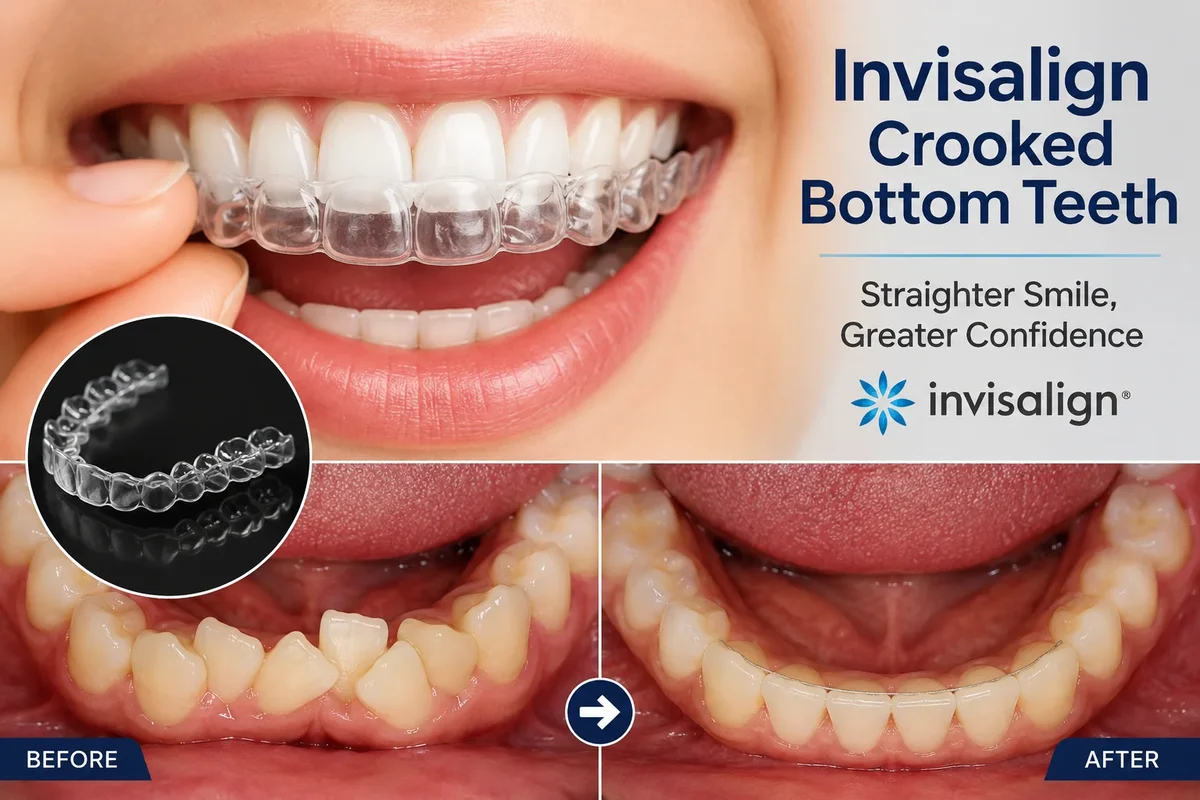
When to Consult an Invisalign Provider for Crooked Bottom Teeth
Many people live with crowded or misaligned lower teeth for years before seeking professional help. Some assume that crooked bottom teeth are purely cosmetic, while others are unsure whether their condition is severe enough to justify orthodontic treatment. However, early evaluation by an experienced Invisalign provider can help patients understand their options and determine whether invisalign crooked bottom teeth treatment is appropriate for their specific situation.
Knowing when to seek professional advice is an important step toward protecting both oral health and smile aesthetics. While not every case requires immediate intervention, certain signs indicate that consulting an orthodontic professional may be beneficial. Understanding these indicators can help patients make informed decisions about invisalign crooked bottom teeth treatment before alignment issues become more complex.
Visible Crowding of Lower Front Teeth
One of the most obvious reasons to schedule a consultation is noticeable crowding among the lower front teeth. Overlapping, twisting, or rotated teeth can affect both appearance and oral hygiene.
Many patients begin exploring invisalign crooked bottom teeth treatment after noticing that their lower incisors appear increasingly crowded over time. Even mild crowding can become more pronounced if left untreated.
An Invisalign provider can evaluate the severity of the crowding and determine whether clear aligners can effectively improve alignment.
Signs of Progressive Crowding
- Teeth appearing more overlapped than before
- Changes in smile symmetry
- Difficulty flossing between crowded teeth
- Food becoming trapped more frequently
- Visible tooth rotation
These signs may indicate that invisalign crooked bottom teeth treatment should be considered sooner rather than later.
Difficulty Cleaning Between Teeth
Oral hygiene challenges often accompany lower teeth crowding. When teeth overlap, plaque and food debris can accumulate in areas that are difficult to reach with brushing and flossing.
Patients who consistently struggle to clean crowded lower teeth should consider consulting an Invisalign provider regarding invisalign crooked bottom teeth treatment. Improved alignment often makes daily oral care significantly easier and more effective.
Addressing crowding before it contributes to dental disease can support better long-term oral health outcomes.
Potential Oral Health Consequences
Untreated crowding may increase the risk of:
- Plaque accumulation
- Tooth decay
- Gingivitis
- Periodontal disease
- Persistent bad breath
These concerns are among the reasons why many dental professionals recommend evaluating invisalign crooked bottom teeth treatment when crowding affects hygiene.
Changes in Bite Function
Crooked lower teeth do not only affect appearance. In some cases, misalignment can alter the way teeth fit together during chewing and speaking.
Patients experiencing bite-related issues may benefit from a professional assessment for invisalign crooked bottom teeth treatment. Proper alignment can contribute to improved function and more balanced distribution of biting forces.
Symptoms That May Indicate Bite Problems
- Uneven tooth wear
- Jaw discomfort
- Difficulty chewing certain foods
- Teeth that do not meet evenly
- Occasional jaw fatigue
These symptoms do not automatically require orthodontic treatment, but they justify an evaluation to determine whether invisalign crooked bottom teeth correction may help.
Shifting Teeth After Previous Orthodontic Treatment
Many adults previously wore braces during childhood or adolescence but later notice that their lower teeth have shifted. Orthodontic relapse is common, particularly when retainers are not worn consistently.
Patients experiencing relapse often become excellent candidates for invisalign crooked bottom teeth treatment because Invisalign can frequently address mild to moderate post-treatment crowding effectively.
Seeking professional guidance early may prevent the relapse from progressing further.
Concerns About Smile Appearance
While oral health is important, cosmetic concerns are also valid reasons to seek treatment. Many individuals feel self-conscious about their lower teeth and avoid smiling fully in photographs or social situations.
If crooked lower teeth are affecting confidence, consulting an Invisalign provider about invisalign crooked bottom teeth treatment may be worthwhile. Modern clear aligners offer a discreet solution that appeals to many adults and professionals.
The Psychological Benefits of Treatment
Patients who complete invisalign crooked bottom teeth treatment often report:
- Increased confidence
- Greater willingness to smile
- Improved self-image
- Enhanced comfort in social situations
- Higher satisfaction with appearance
These emotional benefits can be just as meaningful as the physical improvements achieved through treatment.
When Crowding Continues to Worsen
One common misconception is that teeth stop moving after adolescence. In reality, lower front teeth often continue shifting throughout adulthood.
Patients who notice progressive changes should consider consulting an Invisalign provider before crowding becomes more severe. Early intervention may simplify invisalign crooked bottom teeth treatment and potentially shorten overall treatment duration.
Addressing alignment concerns proactively often leads to more predictable outcomes.
Monitoring Long-Term Changes
Comparing current photographs with older images can sometimes reveal gradual crowding that might otherwise go unnoticed. These visual comparisons can help determine whether invisalign crooked bottom teeth treatment should be explored.
What Happens During an Invisalign Consultation?
Many patients hesitate to schedule a consultation because they are unsure what to expect. Fortunately, an Invisalign evaluation is generally straightforward and informative.
During the consultation, the provider may:
- Examine tooth alignment
- Assess bite relationships
- Review oral health status
- Take digital scans
- Discuss treatment goals
- Estimate treatment duration
- Provide cost information
This evaluation allows patients to determine whether invisalign crooked bottom teeth treatment aligns with their expectations and objectives.
Who Is an Ideal Candidate?
Many patients with mild to moderate lower teeth crowding are excellent candidates for invisalign crooked bottom teeth treatment. Ideal candidates are generally committed to wearing aligners consistently and maintaining good oral hygiene throughout treatment.
However, only a qualified provider can determine candidacy accurately. Every case is unique, and treatment recommendations should always be based on a comprehensive clinical assessment.
Questions to Ask During Your Consultation
- How severe is my crowding?
- Am I a suitable Invisalign candidate?
- How long will treatment take?
- Will attachments be necessary?
- What results can I realistically expect?
- What are the estimated costs?
Asking these questions helps patients better understand the process and make informed decisions about invisalign crooked bottom teeth treatment.
Final Thoughts
Consulting an Invisalign provider is an important step for anyone concerned about lower teeth crowding, alignment changes, oral hygiene difficulties, or smile aesthetics. Whether the issue involves mild crowding, orthodontic relapse, bite concerns, or declining confidence, an early professional evaluation can provide valuable clarity. Modern invisalign crooked bottom teeth treatment offers an effective and discreet solution for many patients, but determining suitability requires expert assessment. By seeking guidance at the right time, patients can take proactive steps toward improving oral health, preserving dental function, and achieving a straighter, more confident smile through invisalign crooked bottom teeth treatment. ✨😁
Disclosure: this page may contain affiliate links. We may earn a commission if you use them, at no extra cost to you.