
Imagine achieving a beautifully aligned smile without the hassle of wearing braces during the day. That’s the promise of night time Invisalign — a revolutionary orthodontic solution designed for busy individuals who want discreet and comfortable teeth straightening while they sleep 😴. Unlike traditional aligners worn for 20–22 hours per day, this innovative system offers flexibility by focusing treatment during nighttime hours, typically 8–10 hours per night. Whether you’re a professional, student, or parent, night time Invisalign gives you the freedom to smile confidently all day without the visibility of aligners.
The night time Invisalign system uses clear, removable trays customized for your unique dental structure. These trays apply gentle, consistent pressure to move your teeth into the ideal alignment gradually. Since they are made with SmartTrack® material — a patented, medical-grade polymer — they fit snugly and comfortably, reducing irritation and enhancing effectiveness. Over time, your teeth shift into their proper positions, improving both aesthetics and oral function. Patients appreciate that this method combines orthodontic science with convenience, providing noticeable results without disrupting daily routines.
When considering night time Invisalign, it’s important to understand that consistency is key. Wearing the aligners for at least 10 hours each night ensures effective tooth movement. Most patients begin to see visible results within a few months, although treatment duration can vary depending on the complexity of each case. In simpler cases of mild crowding or spacing, results can appear in as little as six months. For more advanced corrections, your orthodontist might recommend a slightly longer plan to achieve optimal alignment while maintaining comfort and efficiency.
Another advantage of night time Invisalign is hygiene and convenience. Since the trays are removable, you can easily brush, floss, and maintain proper oral hygiene — something that traditional braces often complicate. You can also eat freely without worrying about food getting trapped in wires or brackets. Simply remove the aligners during meals and reinsert them afterward. This flexibility makes it ideal for adults who value practicality and aesthetics. It’s orthodontic treatment that adapts to your lifestyle, not the other way around.
From an aesthetic standpoint, night time Invisalign aligners are virtually invisible. Many patients report that no one even notices they’re undergoing treatment. This is especially beneficial for professionals who interact frequently with clients or attend social events. You can enjoy the confidence of a natural smile throughout your day, knowing that your teeth are gradually improving at night. The aligners are made to fit seamlessly, so there’s no awkward speech adjustment period — just a discreet path to a perfect smile 🌙.
Cost-wise, night time Invisalign treatment is typically comparable to standard Invisalign, although exact pricing can vary based on individual needs and geographic region. At Redent Klinik Contact Page, patients can receive a personalized consultation to determine the best plan. This clinic’s experienced orthodontic specialists use 3D digital scanning to map your dental structure precisely, eliminating the discomfort of traditional molds. They’ll provide a transparent overview of your treatment duration, expected results, and payment options before you begin.
One important consideration for night time Invisalign users is compliance. Since the aligners are worn only at night, maintaining discipline is crucial to success. Skipping nights or inconsistent use can delay progress and extend treatment time. Orthodontists typically schedule regular check-ups to track tooth movement and ensure each tray fits correctly. With advanced dental monitoring tools, many clinics even allow for virtual progress assessments, reducing the need for in-person visits — a convenient feature for those with demanding schedules.
From a health perspective, night time Invisalign offers numerous benefits beyond cosmetic improvement. Properly aligned teeth contribute to better chewing efficiency, reduced risk of tooth wear, and easier oral hygiene maintenance. Misaligned teeth can lead to jaw strain, gum issues, and even chronic headaches. By correcting alignment during sleep, this treatment enhances both function and aesthetics. According to the American Dental Association, straight teeth also support long-term oral health by minimizing plaque buildup and uneven bite pressure.
Patients often wonder whether night time Invisalign is as effective as daytime wear. The answer largely depends on the severity of your dental condition. For mild to moderate cases, studies show that nighttime aligners can achieve comparable outcomes, provided they’re used consistently. However, individuals with complex orthodontic needs may benefit from traditional full-time Invisalign wear. A professional evaluation at a trusted dental clinic can determine suitability and ensure expectations are aligned with achievable results.
Ultimately, night time Invisalign represents a modern, flexible, and patient-friendly approach to orthodontic care. It’s perfect for those seeking subtle, effective alignment without disrupting daily life. With proper commitment and professional guidance, you can wake up each morning one step closer to your dream smile 😁. The combination of comfort, discretion, and scientific precision makes it one of the most popular advancements in dental care today — and an ideal solution for anyone who prefers treatment that works while they rest.
What Is Night Time Invisalign and How Does It Work?
Night time Invisalign is an advanced orthodontic treatment designed to help patients straighten their teeth comfortably during sleep. Instead of wearing aligners for 20 to 22 hours a day, this treatment focuses on nighttime wear — generally 8 to 10 hours per night. This approach provides convenience and flexibility, particularly for adults who want discreet, low-maintenance teeth alignment. The system uses the same high-quality, transparent aligners as traditional Invisalign, but the treatment plan is optimized for shorter daily wear time while maintaining gradual and effective tooth movement.
Understanding the Science Behind Night Time Invisalign
At the core of night time Invisalign is SmartTrack® technology — a specialized, medical-grade polymer that provides gentle, consistent force across the teeth. This advanced material was engineered to fit tightly around every contour of your dental anatomy, ensuring precise movement without unnecessary discomfort. The trays work by exerting light pressure on targeted areas, encouraging gradual tooth repositioning over time. Each set of aligners is worn for about two weeks before progressing to the next stage in your treatment plan.
Because night time Invisalign is worn for fewer hours each day compared to traditional aligners, the material must maintain efficiency even during limited use. For this reason, it’s slightly thicker and more durable. This ensures your teeth continue to move correctly despite shorter wear times. The aligners are also customized using 3D scanning technology, which eliminates the need for messy impressions and enhances accuracy. Your orthodontist maps out each stage digitally, creating a smooth and predictable progression from start to finish.
How Night Time Invisalign Differs from Traditional Aligners
Both night time Invisalign and traditional Invisalign share the same goal — achieving straighter, healthier teeth. However, their application and daily routines differ significantly. Traditional aligners must be worn nearly all day, which can interfere with meals and social activities. In contrast, night time Invisalign allows complete freedom during daytime hours. You can eat, drink, and speak naturally without worrying about removing aligners repeatedly.
Additionally, traditional Invisalign is often recommended for more complex orthodontic cases requiring continuous force, while night time Invisalign is best suited for mild to moderate corrections, such as crowding, spacing, or minor bite issues. It offers an ideal balance between comfort and effectiveness, allowing patients to maintain an active lifestyle without compromising results.
Key Advantages of the Nighttime System
- 🦷 Discreet Treatment: Aligners are worn while you sleep, ensuring complete invisibility during your day.
- 🌙 Comfortable Fit: SmartTrack® material ensures smooth edges and a snug fit, reducing gum irritation.
- 💼 Lifestyle-Friendly: Perfect for professionals, parents, and students with daytime commitments.
- 🪥 Better Hygiene: Easy to clean and maintain compared to fixed braces.
- 📆 Predictable Results: Each treatment phase is digitally mapped for precision and accuracy.
Step-by-Step: How Night Time Invisalign Works
The night time Invisalign process starts with a comprehensive dental evaluation. During your first appointment, the orthodontist performs a 3D digital scan to create an exact model of your teeth. This scan forms the foundation of your custom treatment plan. Once approved, the lab fabricates your aligners in a series of sets — each slightly different to gradually guide your teeth toward their final alignment.
When your aligners are ready, your dentist provides clear instructions: wear them every night for 8–10 hours and replace them with the next set every two weeks. Each aligner applies controlled pressure on specific teeth, allowing for safe, incremental adjustments. You may feel slight tightness when switching trays, which indicates the aligners are working effectively. Regular check-ups are scheduled to monitor progress, ensuring that your teeth are moving as planned.
Nightly Routine for Best Results
Consistency is crucial when using night time Invisalign. Here’s how a typical evening routine might look:
- Brush and floss thoroughly before inserting your aligners. This prevents plaque buildup and staining.
- Insert the clean aligners before going to bed. Ensure they fit snugly over your teeth.
- Sleep comfortably while the aligners work throughout the night to move your teeth gently.
- Remove them in the morning, rinse with cold water, and store them in their protective case.
Following this regimen ensures optimal results and minimizes the risk of delays. Even one skipped night can set progress back, so maintaining discipline is key. Your orthodontist might provide “chewies” — small rubber cylinders that help seat the aligners fully — ensuring even contact and better force distribution.
How Long Does the Treatment Take?
Treatment duration with night time Invisalign varies based on individual needs. Most mild cases take between 8 to 18 months to complete. Patients with slightly more complex alignment issues may need longer. Because nighttime wear provides fewer daily hours of active tooth movement, total treatment time can be 20–30% longer than traditional Invisalign. However, most patients find the trade-off worthwhile for the convenience and comfort it provides.
Safety and Effectiveness Considerations
Some patients wonder if night time Invisalign is as effective as wearing aligners full-time. Research and clinical experience suggest that for mild to moderate cases, outcomes are highly comparable — as long as patients adhere strictly to their wear schedule. The key is consistency. Modern SmartTrack® technology allows the aligners to retain their active force over shorter wear periods, making nighttime-only treatment a viable and safe alternative for many adults.
Clinics such as Redent Klinik Contact Page use digital tracking and follow-up appointments to ensure steady progress. Moreover, aligner monitoring apps now allow for remote supervision, enabling orthodontists to check progress virtually. This integration of technology with convenience makes night time Invisalign a modern, reliable approach to aesthetic dentistry.
In summary, night time Invisalign combines scientific precision, lifestyle adaptability, and comfort to deliver an effective, discreet solution for straightening teeth. It’s the perfect option for individuals who value their daytime freedom but still want visible improvement in their smile. Supported by professional supervision and digital innovation, this treatment continues to gain popularity among adults seeking a confident, radiant smile without compromise.
Day vs. Night Aligners: Which Option Is Right for You?
Choosing between day aligners and night time Invisalign is one of the most common questions patients ask when exploring clear aligner treatments. Both systems are designed to gently move your teeth into better alignment, but they differ in lifestyle compatibility, daily routine, and overall wear time. Understanding the advantages and limitations of each will help you make an informed decision that matches your goals, comfort level, and daily habits.
Key Differences Between Daytime and Nighttime Aligners
The primary distinction between standard aligners and night time Invisalign lies in the wear schedule. Traditional aligners require 20 to 22 hours of daily wear, offering nearly constant pressure on teeth throughout the day and night. This continuous force often leads to faster movement and slightly shorter treatment times.
In contrast, night time Invisalign is designed for individuals who prefer convenience and flexibility. These aligners are worn only while you sleep — generally 8 to 10 hours each night. Although treatment may take a little longer due to fewer active hours, the comfort and discretion they provide make them a popular choice among adults and working professionals. Patients enjoy not having to worry about removing aligners for meals, coffee, or social gatherings during the day.
Comparative Overview
| Feature | Daytime Aligners | Night Time Invisalign |
|---|---|---|
| Daily Wear Time | 20–22 hours | 8–10 hours (at night) |
| Visibility | Visible during the day | Invisible (worn while sleeping) |
| Treatment Duration | 6–18 months | 8–24 months (varies) |
| Lifestyle Impact | May need removal for eating/drinking | No daytime interruption |
| Ideal For | Teens, complex cases | Adults, mild to moderate corrections |
Benefits of Choosing Night Time Invisalign 🌙
Night time Invisalign offers a unique blend of convenience, aesthetics, and comfort. Many professionals and parents choose this option because it integrates seamlessly with busy schedules. Here are some key benefits worth considering:
- Discreet and Convenient: Because aligners are worn only during sleep, there’s no daytime self-consciousness or inconvenience.
- Comfort-Driven Design: Made with SmartTrack® technology, night time Invisalign trays apply steady, controlled pressure without irritation.
- Easy Maintenance: Aligners are removed in the morning for cleaning, reducing bacterial buildup and ensuring fresher breath.
- Minimal Lifestyle Disruption: Eat, drink, and communicate freely throughout the day without worrying about aligners.
- Predictable Results: 3D digital scans and AI-based monitoring make treatment precise and reliable.
Advantages of Daytime Aligners ☀️
On the other hand, traditional aligners worn during the day can offer faster results due to longer wear time. Patients with more complex dental corrections — such as significant crowding, rotation, or bite misalignment — often achieve better outcomes with this approach. Continuous wear provides constant pressure on the teeth, accelerating alignment and reducing the total number of months needed for treatment.
Another advantage is progress consistency. Since aligners are active for almost the entire day, the biological response of tooth movement occurs more predictably. For individuals who don’t mind wearing aligners publicly, this option ensures steady, efficient progress with fewer potential delays.
Factors to Consider Before Choosing
Before deciding whether night time Invisalign or daytime aligners are right for you, consider the following factors:
1. Lifestyle and Work Routine
If your daily activities involve frequent meetings, public speaking, or social events, night time Invisalign may be the better option. It allows you to enjoy your day aligner-free while your teeth align as you sleep. Conversely, those with flexible schedules or less social interaction might find daytime aligners manageable and potentially faster.
2. Orthodontic Complexity
The complexity of your dental alignment plays a major role in determining suitability. Night time Invisalign is ideal for mild to moderate spacing or crowding issues. However, patients with significant bite discrepancies or rotation might achieve better results with full-time aligners. Your orthodontist can evaluate X-rays and 3D scans to determine which system aligns best with your needs.
3. Commitment Level
While both options require discipline, night time Invisalign demands consistent nightly wear. Skipping even a few nights can slow down progress. Daytime users, however, must remember to reinsert their aligners after meals or snacks. Your personality and commitment level can influence which method you’ll find easier to maintain long-term.
4. Cost and Availability
Both aligner systems are priced similarly, though night time Invisalign may have slightly different costs depending on your location and provider. Reputable clinics such as Redent Klinik Contact Page offer customized assessments to determine the best treatment type and payment plan. You’ll receive a transparent breakdown of fees, expected timelines, and treatment projections before starting.
Effectiveness Comparison and Clinical Insights
Scientific studies and orthodontic reports show that night time Invisalign can achieve nearly identical results to daytime wear for mild to moderate cases when compliance is high. For example, according to research cited by the American Dental Association, aligner effectiveness depends primarily on consistent usage and tray accuracy — both achievable with proper supervision and digital tracking.
That said, complex bite corrections (such as deep overbites or severe rotations) may respond more predictably to 20+ hours of wear. Patients should have realistic expectations and follow professional advice regarding which system best suits their goals.
Making the Final Choice
Ultimately, the decision between daytime aligners and night time Invisalign comes down to your lifestyle and dental condition. If you value convenience, discretion, and comfort, the nighttime system offers a stress-free path to straighter teeth without interrupting your daily rhythm. If you prioritize speed and have a more complex case, full-time aligners may deliver results more efficiently. Either way, both systems reflect the future of orthodontics — personalized, digital, and designed around your lifestyle 🌟.
Consult your orthodontist for a customized evaluation and digital scan to see which solution aligns best with your smile goals. Whether you choose traditional daytime aligners or the freedom of night time Invisalign, both options lead to one destination: a confident, radiant smile that lasts a lifetime.
Who Can Benefit Most from Night Time Invisalign Treatment?
Night time Invisalign has become an increasingly popular orthodontic solution for adults and teens who want straighter teeth without the commitment of wearing aligners throughout the day. This discreet system is particularly designed for individuals with mild to moderate alignment issues who prefer flexibility and comfort. However, while nearly anyone can benefit from clear aligners, not every case is ideal for the nighttime version. In this section, we’ll explore exactly who benefits most from night time Invisalign, what makes it suitable for different lifestyles, and how to determine whether it’s the right treatment for you.
Ideal Candidates for Night Time Invisalign
Generally, night time Invisalign is best suited for adults or older teens with simpler orthodontic needs. If you have minor crowding, slight spacing, or small bite irregularities, this system can help you achieve a straighter smile effectively. Since the aligners are worn for fewer hours compared to traditional options, they work best when only minimal tooth movement is required.
Adults often choose night time Invisalign because it fits seamlessly into their lifestyle. Professionals who engage in public speaking, client meetings, or social events appreciate being aligner-free during the day. Students and parents with demanding schedules also find the nighttime wear convenient, as it eliminates the need to remove trays for meals or drinks. It’s an ideal match for anyone seeking a low-visibility, low-maintenance orthodontic experience.
Best Fit for Mild to Moderate Cases
Tooth misalignment is categorized by severity. Night time Invisalign is most effective for mild to moderate cases, including:
- 🦷 Slight overcrowding in the front teeth
- ✨ Small gaps or spacing between teeth
- 😬 Minor overbite, underbite, or crossbite corrections
- 💫 Patients who previously wore braces and experienced mild relapse
Because the aligners are worn only 8–10 hours per night, they apply gentler, intermittent pressure on the teeth. This makes them less suitable for patients with severe malocclusion or complex bite issues that require continuous force. In such cases, a traditional full-day Invisalign treatment might be more appropriate to achieve complete alignment efficiently.
Adults with Professional or Active Lifestyles
Adults are among the top beneficiaries of night time Invisalign. For those who work in public-facing environments, such as corporate offices, media, education, or healthcare, the idea of wearing visible aligners all day can be uncomfortable. With nighttime treatment, your smile transformation happens discreetly while you rest. You wake up every morning knowing your teeth are gradually improving — without impacting your daily confidence or communication. 🌙
Additionally, active individuals such as athletes or performers often prefer night time Invisalign because it eliminates interference during sports or stage performances. There’s no risk of losing trays during practice or damaging them with frequent removal. It’s a treatment that adapts effortlessly to your lifestyle instead of demanding daily adjustment.
Parents and Busy Professionals
Parents with busy family lives also benefit immensely from night time Invisalign. It allows them to focus on their daytime responsibilities — from work meetings to children’s activities — without constantly managing aligner schedules. The simplicity of putting aligners in before bed and removing them in the morning is especially appealing for those who value convenience and efficiency.
Teens and Young Adults
While night time Invisalign is primarily designed for adults, older teenagers with good self-discipline can also achieve excellent results. Teen aligners include compliance indicators — small blue dots that fade with proper use — allowing orthodontists and parents to monitor adherence. For students involved in sports, arts, or social events, nighttime aligners provide a confidence boost without the limitations of daytime braces.
However, it’s important to note that younger patients may need closer supervision to ensure they wear aligners every night for the required duration. Skipping nights or inconsistent wear can slow down progress and lead to suboptimal outcomes. Regular check-ins with a dental professional ensure the treatment remains on track and effective.
Who Might Not Be an Ideal Candidate?
Although night time Invisalign offers incredible flexibility, it’s not suitable for every case. Individuals with complex orthodontic problems may require more intensive correction that demands longer daily wear time. This includes patients with:
- Severe crowding or large gaps
- Significant bite discrepancies (deep overbite, open bite, or crossbite)
- Rotated or intruded teeth needing complex movements
- Temporomandibular joint (TMJ) disorders requiring specific jaw adjustments
For such cases, dentists often recommend full-time Invisalign wear (20–22 hours daily) or a hybrid treatment combining both daytime and nighttime use. The goal is to ensure proper tooth movement without compromising long-term oral health.
Health and Lifestyle Considerations
Beyond dental complexity, lifestyle and health habits can influence suitability for night time Invisalign. For example, patients who grind their teeth (bruxism) at night might need specialized trays designed to withstand extra pressure. Likewise, those with irregular sleep patterns or shift work schedules should consult their orthodontist to adapt their treatment plan accordingly. The key is maintaining consistent wear — ideally 8 to 10 uninterrupted hours — to guarantee predictable movement.
Clinics such as Redent Klinik Contact Page perform thorough assessments before recommending nighttime aligners. Using advanced 3D scanning, they analyze tooth movement potential and simulate results before treatment even begins. This ensures that only suitable candidates move forward, maximizing efficiency and satisfaction.
Psychological and Lifestyle Benefits
Another major benefit of night time Invisalign is psychological comfort. Many adults feel self-conscious about orthodontic devices. Wearing aligners exclusively at night eliminates this concern, leading to greater treatment compliance and overall satisfaction. You can maintain your social life, eat freely, and speak naturally throughout the day — all while working toward a confident smile.
Boosting Confidence and Long-Term Compliance
Because night time Invisalign minimizes daytime disruptions, patients tend to remain more consistent and motivated. The system feels effortless — you simply wear it while you sleep. This sense of simplicity encourages ongoing compliance, which is one of the most critical factors in orthodontic success. Over time, consistent use leads to visible, sustainable improvements that enhance both appearance and oral health.
Conclusion: A Tailored Solution for the Modern Lifestyle
In conclusion, night time Invisalign is best suited for adults and teens with mild to moderate alignment needs who prioritize convenience, comfort, and aesthetics. It’s a lifestyle-friendly treatment that blends seamlessly with modern routines, offering effective results without compromising freedom. For those who lead busy lives, frequently interact with others, or simply prefer minimal daytime disruption, nighttime aligners offer an ideal solution backed by clinical science and patient satisfaction. To confirm your eligibility and start your journey toward a radiant smile, consult a certified provider or visit the American Dental Association for additional resources on orthodontic best practices.
Step-by-Step Process: How to Get Started with Night Time Invisalign
Beginning your night time Invisalign journey is a straightforward and rewarding process that combines advanced technology with personalized dental care. From your first consultation to the day you complete treatment, every step is carefully planned to ensure comfort, accuracy, and optimal results. Whether you’re an adult professional, a busy parent, or simply looking for a subtle way to straighten your teeth, understanding each stage of the process will help you prepare for a smooth and successful orthodontic experience.
Step 1: Initial Consultation and Smile Assessment
Your path to night time Invisalign begins with an in-depth consultation with a qualified dentist or orthodontist. During this visit, your provider examines your teeth, bite alignment, and overall oral health to determine whether nighttime treatment suits your needs. This evaluation often includes digital X-rays, photographs, and a 3D intraoral scan — a quick, painless process that creates an exact model of your teeth. This digital mapping ensures your treatment plan is fully customized to your unique dental structure.
At clinics like Redent Klinik Contact Page, specialists use advanced imaging systems to visualize the final outcome before treatment even begins. You’ll see a digital simulation of your projected smile, allowing you to set realistic expectations and understand the gradual changes that will occur during your night time Invisalign journey. This transparency helps build trust and ensures you are confident about your decision to proceed.
Step 2: Personalized Treatment Planning
After confirming you are a good candidate for night time Invisalign, your orthodontist designs a custom treatment plan tailored to your goals and schedule. Using computer-aided design (CAD) software, they map out each tooth movement with precision. Every stage is digitally planned, predicting how your teeth will shift as you progress from one aligner to the next. Each aligner set is crafted to apply controlled, gentle force to specific teeth, gradually bringing them into alignment over several months.
Unlike traditional braces, which require frequent adjustments, the night time Invisalign system is mostly self-directed. Once your aligners are manufactured, you’ll receive a complete series to use at home according to your dentist’s instructions. Most patients switch to a new set every two weeks, ensuring continuous progress without constant clinic visits. However, periodic check-ins — either in person or virtually — allow your orthodontist to monitor results and make adjustments if necessary.
Digital Precision and Predictability
Modern digital technology has revolutionized the orthodontic process. The 3D simulation used in night time Invisalign planning guarantees accuracy down to fractions of a millimeter. This means fewer surprises and more predictable results. The aligners themselves are made from SmartTrack® material — a patented, flexible polymer that ensures consistent pressure and a comfortable fit throughout treatment. Each aligner is laser-trimmed to match your gum line, enhancing both aesthetics and comfort.
Step 3: Fabrication of Custom Aligners
Once your digital plan is approved, your aligners are fabricated in a specialized laboratory. Each set is produced with precision machinery to ensure an exact fit for your teeth. Depending on the complexity of your treatment, you might receive between 10 and 30 sets of aligners. These trays are lightweight, transparent, and discreet — almost invisible when worn.
Because night time Invisalign aligners are designed for nighttime wear only (8–10 hours per night), they are slightly thicker and more durable than daytime versions. This allows them to exert sufficient pressure during shorter wear intervals without compromising results. Before you receive them, your orthodontist carefully inspects each tray for quality assurance and fit accuracy.
Initial Fitting and Instructions
During your fitting appointment, your dentist will show you how to insert, remove, and clean your aligners properly. They may provide “chewies” — small silicone cushions that help seat the aligners snugly against your teeth. You’ll also receive a protective case for storage during the day. At this stage, it’s vital to follow your provider’s instructions closely, as consistent nightly wear is the key to successful night time Invisalign results.
Step 4: Beginning Treatment and Daily Routine
Starting your night time Invisalign treatment is simple. Each night before bed, brush and floss your teeth thoroughly to remove food particles and plaque. Insert your clean aligners, ensuring they fit snugly over each tooth. While you sleep, the aligners gently apply pressure, guiding your teeth toward the desired position. In the morning, remove the trays, rinse them with cold water, and store them in the provided case.
During the day, you can eat, drink, and speak naturally without any restrictions — one of the greatest advantages of nighttime aligners. This freedom makes it easier to maintain oral hygiene and enjoy your favorite foods. However, consistency is essential: skipping nights or wearing the aligners for less than eight hours can slow progress and extend the overall treatment time.
Tracking Progress and Adjustments
Your orthodontist will schedule regular follow-ups (usually every 6–8 weeks) to monitor progress. Some clinics also use smartphone apps that allow you to upload photos of your teeth for remote tracking. These digital check-ins make night time Invisalign even more convenient, especially for patients with busy schedules or those living far from their clinic. If needed, your provider may adjust the plan or provide refinement trays to perfect the final alignment.
Step 5: Completing Treatment and Retention Phase
When you’ve worn all your night time Invisalign aligners, your orthodontist will evaluate your final results. At this point, your teeth should be beautifully aligned and your bite balanced. To maintain your new smile, you’ll receive a set of retainers — usually Vivera® retainers, which are similar to Invisalign trays but designed for long-term stability. Wearing your retainers nightly helps prevent teeth from shifting back to their previous positions, ensuring your investment lasts for years to come.
Post-Treatment Smile Maintenance
To keep your smile radiant and healthy, maintain regular dental checkups and cleanings. Good oral hygiene habits — brushing twice daily, flossing, and avoiding staining beverages before bedtime — will help preserve the brightness of your teeth. You can also periodically polish your retainers with mild cleanser tablets to keep them fresh and odor-free.
Step 6: Embracing Your New Smile 😁
The final step in your night time Invisalign journey is celebrating your success. You’ve dedicated months of consistent nighttime wear, and now you can enjoy the benefits: improved confidence, easier oral hygiene, and a harmonious smile that enhances your overall appearance. Many patients describe it as life-changing — not just because of the cosmetic improvement, but also because properly aligned teeth reduce jaw strain, improve chewing function, and promote long-term oral health.
If you’re considering night time Invisalign and want expert guidance, reach out to a trusted provider or consult resources from the American Dental Association for further insight. Remember, the key to success lies in consistency, communication with your dentist, and adherence to the plan. With modern technology and dedicated care, achieving a dream smile while you sleep has never been easier.
How Long Does Night Time Invisalign Take to Show Results?
One of the most common questions among patients considering night time Invisalign is: “How long will it take to see visible results?” The answer depends on several individual factors, including the complexity of your dental alignment, your consistency in wearing the aligners, and the biological response of your teeth. While some people notice subtle changes in as little as six weeks, full treatment usually spans several months to over a year. In this section, we’ll explore the timeline, influencing factors, and ways to accelerate your progress for the best possible outcome.
Understanding the Treatment Timeline
For most patients, night time Invisalign treatments typically last between 8 and 24 months. Because aligners are worn for fewer hours per day (8–10 hours) compared to traditional Invisalign (20–22 hours), the process can take slightly longer overall. However, this time frame varies depending on your specific case and commitment level.
In mild alignment cases — such as minor crowding or small gaps — visible improvements can often be observed after 3 to 4 months of consistent nighttime wear. Moderate cases generally take between 9 and 15 months to complete, while more complex situations can extend closer to 18–24 months. Despite the extended timeline, many patients prefer night time Invisalign because of its convenience and discretion, which make the journey far more comfortable and manageable.
Factors That Affect Treatment Duration
- Severity of Misalignment: Mild issues move faster, while more complex dental shifts require longer treatment time.
- Wear Consistency: The biggest factor in achieving timely results. Wearing aligners every night for the recommended 8–10 hours is non-negotiable.
- Biological Response: Everyone’s bone density and tooth mobility differ, influencing how quickly movement occurs.
- Aligner Fit: Properly fitting aligners ensure even pressure distribution. Loose or damaged trays can delay progress.
- Dental Health: Healthy gums and clean teeth promote better movement efficiency and comfort during treatment.
What to Expect During the First Few Weeks
When you first begin night time Invisalign, your teeth may feel slightly tight or sore — a positive sign that the aligners are working. Within the first few weeks, most patients begin noticing subtle shifts in tooth positioning, particularly when looking at their front teeth or smile alignment. By the end of the first month, some crowding or spacing may already begin to diminish.
Your orthodontist will usually schedule your first follow-up within 6–8 weeks after starting to evaluate early progress. They may use digital scans or photographs to track tooth movement and confirm that everything is progressing according to the treatment plan. It’s common to feel impatient early on, but remember: consistent nightly wear is key to predictable and efficient results 🌙.
When Results Become Noticeable
For most night time Invisalign patients, visible changes begin around the 10–12 week mark. As your teeth start aligning, your smile gradually becomes more even and symmetrical. Friends and family may start to notice improvements without even realizing you’re undergoing treatment, thanks to the system’s invisible design. This subtle yet steady transformation keeps motivation high and ensures continuous progress without lifestyle disruption.
Comparing Speed: Nighttime vs. Daytime Aligners
A frequent comparison is made between night time Invisalign and traditional full-day aligners. Daytime aligners apply constant pressure for nearly 22 hours per day, accelerating movement and shortening total treatment duration by about 20–30%. However, the trade-off is reduced convenience and flexibility. Nighttime aligners, though slightly slower, provide the same long-term results when worn as directed.
It’s crucial to understand that orthodontic treatment isn’t just about speed — it’s about achieving stable, healthy alignment. Rushing the process can strain teeth and gums, leading to discomfort or relapse. The controlled, gradual movement achieved through night time Invisalign ensures lasting results and minimizes any potential risk of root resorption or enamel stress.
How to Stay on Track with Your Treatment Plan
To ensure that your night time Invisalign stays on schedule, follow these essential guidelines:
- Wear aligners consistently for at least 8–10 hours per night without skipping days.
- Clean your aligners regularly to maintain fit accuracy and hygiene.
- Switch to new trays on schedule, usually every two weeks or as instructed by your provider.
- Store your aligners properly in their protective case to avoid damage or warping.
- Attend regular check-ins with your orthodontist or upload progress photos through monitoring apps.
Neglecting these steps can delay your treatment and extend your timeline by weeks or even months. Consistency remains the number one predictor of success with night time Invisalign.
Tips to Accelerate Your Results
While every smile progresses at its own pace, there are practical ways to maximize your night time Invisalign efficiency:
- 🪥 Maintain Excellent Oral Hygiene: Clean teeth move more efficiently, reducing friction between aligners and enamel.
- 🥦 Eat a Balanced Diet: Proper nutrition supports bone density and gum health, which are critical for tooth movement.
- 💧 Stay Hydrated: Dry mouth can increase aligner friction; drinking water helps keep tissues healthy.
- 📱 Track Progress Digitally: Many clinics offer apps for uploading photos to monitor progress remotely.
- 🧴 Avoid Heat Exposure: Hot water or direct sunlight can deform aligners, affecting fit and delay results.
After Treatment: What Happens Next?
Once your night time Invisalign treatment concludes, your orthodontist will assess your final alignment. You’ll receive retainers — often Vivera® retainers — to maintain the new position of your teeth. Wearing retainers nightly prevents relapse and helps stabilize the bone structure supporting your teeth. Typically, patients wear retainers every night for the first few months, then gradually transition to several nights per week.
To keep your new smile looking its best, continue scheduling regular dental visits and maintain daily brushing and flossing habits. Avoid habits like nail-biting or using your teeth to open objects, as these can shift alignment over time. For ongoing guidance and expert support, you can always visit the Redent Klinik Contact Page or refer to trusted dental authorities like the American Dental Association.
Conclusion: Patience Pays Off with Night Time Invisalign
In summary, night time Invisalign treatment generally takes a few months to a couple of years, depending on individual conditions and adherence. While results may take longer than traditional Invisalign, the benefits of flexibility, discretion, and comfort make it an excellent choice for modern patients. With consistent nightly wear, proper hygiene, and professional guidance, your dream smile is entirely achievable — even while you sleep 😴. Remember, orthodontic success is not about rushing but about progressing steadily and confidently toward a beautifully aligned, healthy smile that lasts a lifetime.
Top Advantages of Choosing Night Time Invisalign 😴
For many adults and teens, night time Invisalign represents a perfect balance between modern convenience and effective orthodontic care. Unlike traditional braces or full-day aligners, this system allows patients to align their teeth discreetly during sleep, freeing up their daytime routine for complete comfort. In this section, we’ll explore the main advantages of choosing night time Invisalign, from lifestyle flexibility to oral health benefits, and why it’s become the go-to choice for busy professionals and image-conscious individuals.
1. Ultimate Convenience for a Busy Lifestyle
One of the most compelling benefits of night time Invisalign is its convenience. Patients no longer have to worry about removing aligners during meals, coffee breaks, or meetings. Since the aligners are worn only 8–10 hours per night, your daytime activities remain entirely unaffected. This is a major advantage for individuals with demanding schedules, such as business professionals, students, or parents.
During the day, you can speak, eat, and smile naturally without any visible dental appliance. Whether attending a work presentation or enjoying lunch with friends, night time Invisalign ensures your orthodontic journey stays completely invisible. It’s an approach that respects your lifestyle while still delivering effective alignment progress every night as you rest.
Freedom Without Sacrifice
Traditional braces and full-day aligners can sometimes interfere with eating habits, social confidence, or comfort. With night time Invisalign, you gain the freedom to live normally during the day without compromising your long-term results. The trays are removable, easy to clean, and don’t require constant maintenance. You simply wear them overnight, store them safely in the morning, and repeat the cycle consistently for optimal outcomes.
2. Enhanced Comfort and Safety
Comfort is one of the standout features of night time Invisalign. The aligners are made from SmartTrack® material — a soft, medical-grade polymer developed for maximum flexibility and precision. Unlike metal braces that can cause irritation, ulcers, or speech difficulties, these aligners fit smoothly along the gum line. Their customized design ensures gentle and even pressure, resulting in gradual tooth movement without pain or discomfort.
Additionally, the shorter wear duration minimizes potential gum irritation or enamel stress. This makes night time Invisalign an ideal choice for individuals with sensitive gums, enamel erosion, or dental restorations. Patients often report that the first few nights of adjustment are the only period of noticeable tightness — a sign that the aligners are effectively guiding the teeth.
Minimized Side Effects
Because the aligners are worn only while you sleep, there’s significantly less friction and dryness compared to all-day wear. You won’t experience the same levels of saliva imbalance or mouth dryness often associated with continuous aligner use. Moreover, since you’re not eating or drinking with the aligners in, there’s a lower risk of bacterial buildup or staining — leading to better overall oral hygiene.
3. Aesthetic and Social Confidence
Modern orthodontic patients care not just about results but also about how treatment affects their appearance. Night time Invisalign is designed with this in mind — you wear it when no one sees you. During the day, your smile remains completely natural, free from the visibility of aligners or wires. This provides immense confidence for those in careers requiring client interaction, public speaking, or on-camera presence.
Knowing that your smile is improving silently at night boosts self-esteem and comfort. You can take photos, attend events, or give presentations without worrying about visible aligners. This advantage makes night time Invisalign particularly appealing for adults who prefer subtlety and professionalism in every aspect of their lives.
Psychological Benefits of Invisible Treatment
Orthodontic treatment can sometimes make patients self-conscious. With night time Invisalign, those concerns disappear. Patients often express that they feel more in control and less anxious about their appearance during treatment. This mental comfort encourages consistency, improving results while reducing stress.
4. Improved Oral Hygiene and Dental Health
Another major benefit of night time Invisalign is the ease of maintaining oral hygiene. Unlike braces, there are no brackets or wires that trap food particles. You can brush and floss normally every morning and night, ensuring cleaner teeth and healthier gums. Because you remove the aligners before eating, there’s zero restriction on food choices — you can enjoy everything from apples to popcorn without worry.
Over time, properly aligned teeth are easier to clean and maintain, reducing your risk of cavities, gum disease, and plaque buildup. Straight teeth also distribute bite forces evenly, helping prevent enamel wear and jaw strain. This makes night time Invisalign not just a cosmetic solution, but a long-term investment in your oral health.
Hygiene Tips During Treatment
- 🪥 Always brush and floss before reinserting aligners at bedtime.
- 💧 Rinse aligners daily with cold water to prevent odor or bacterial growth.
- 🚫 Avoid using toothpaste on aligners — it can cause scratches.
- 🧴 Clean aligners weekly with specialized Invisalign cleaning crystals or mild soap.
5. Scientifically Proven Results
Night time Invisalign may seem like a relaxed approach, but its effectiveness is supported by clinical studies and years of orthodontic research. For mild to moderate cases, studies show that treatment outcomes are comparable to those achieved with traditional full-day aligners, provided the patient adheres to consistent nighttime use. Each aligner is engineered to deliver controlled tooth movement — ensuring results are both safe and predictable.
Clinics equipped with digital monitoring tools can even track your progress remotely. At Redent Klinik Contact Page, advanced 3D modeling and AI-driven analysis are used to verify that your teeth move as expected. This data-driven approach eliminates guesswork and ensures your night time Invisalign journey stays on schedule.
Support from Dental Authorities
According to the American Dental Association, properly monitored orthodontic treatments like Invisalign help improve oral function, bite alignment, and aesthetics simultaneously. They recommend clear aligner systems as a reliable alternative to braces for adults seeking minimally invasive options. This further validates night time Invisalign as a scientifically backed, patient-friendly treatment model.
6. Cost-Effectiveness and Long-Term Value
While night time Invisalign may seem like a luxury, it often costs about the same as traditional Invisalign or braces. The difference lies in the lifestyle value — you’re investing in convenience, comfort, and aesthetics. Many dental providers offer flexible payment plans that make treatment affordable, spreading costs over manageable installments.
Additionally, because nighttime aligners are removable and easier to maintain, there are fewer emergency visits and repairs compared to fixed braces. This saves both time and money in the long term. When you consider the psychological comfort, freedom, and enhanced oral health benefits, night time Invisalign delivers exceptional return on investment.
7. Sustainable and Hygienic Choice
Modern night time Invisalign systems are also designed with sustainability in mind. The SmartTrack® material used is medical-grade, recyclable, and free from harmful plastics such as BPA or phthalates. This eco-conscious design minimizes environmental impact while ensuring the highest safety standards for patients. You can feel good knowing your treatment not only benefits your smile but also aligns with eco-friendly values 🌍.
Conclusion: The Smarter, More Comfortable Way to a Perfect Smile
In summary, night time Invisalign offers numerous advantages — from comfort and convenience to aesthetics and oral health. It empowers patients to achieve beautiful, natural-looking smiles without interfering with daily life. Whether you’re balancing work, family, or social commitments, this system adapts to your lifestyle rather than forcing you to adapt to it. With consistent use and expert supervision, you’ll experience a seamless transformation that’s both comfortable and clinically effective. A straighter smile has never been easier — or more convenient — than with night time Invisalign.
Common Mistakes to Avoid During Night Time Invisalign Treatment
While night time Invisalign offers unmatched convenience and comfort, success heavily depends on how carefully patients follow the treatment guidelines. Many individuals unknowingly make small errors that can delay results, compromise aligner fit, or even cause dental discomfort. Understanding these mistakes—and knowing how to prevent them—can make a world of difference in achieving a perfect, healthy smile efficiently. In this section, we’ll uncover the most common pitfalls during night time Invisalign treatment and explain how to avoid them with expert-backed strategies.
1. Inconsistent Wear Schedule
The number one mistake that prolongs night time Invisalign treatment is failing to wear the aligners consistently for the recommended 8–10 hours per night. Since these aligners rely on steady, controlled pressure to move teeth, skipping even a few nights can reverse progress. Teeth may start to shift back toward their original positions, forcing patients to repeat certain aligner stages.
Consistency is critical because every tray is programmed to move teeth incrementally. Missing wear time weakens this progression and can result in aligners feeling too tight or uncomfortable when reinserted. To stay on track, it’s helpful to set a nightly reminder on your phone or link the routine to a specific bedtime ritual—like brushing your teeth before sleep 😴.
How to Fix It
- Establish a fixed bedtime routine and always wear your aligners at the same time each night.
- Use smartphone apps or timers to track total wear time daily.
- Never skip a night—if you miss one, extend the current aligner by a day before switching to the next set.
2. Not Cleaning Aligners Properly
Another frequent error in night time Invisalign care is neglecting proper cleaning. Since aligners stay in your mouth for hours during sleep, they collect saliva and bacteria. Without daily cleaning, this can lead to odor, discoloration, or even bacterial buildup that harms your gums and teeth.
Many patients make the mistake of rinsing aligners only with water or, worse, using toothpaste. Toothpaste is abrasive and can scratch the aligner’s surface, causing it to become cloudy and uncomfortable. A scratched surface also provides hiding spots for bacteria, which may compromise oral hygiene.
Best Cleaning Practices
- 🧴 Rinse aligners every morning with cold or lukewarm water (never hot—it can warp the material).
- 🪥 Use a soft-bristle brush and mild, clear soap for gentle cleaning.
- 💧 Soak aligners weekly in Invisalign cleaning crystals or denture-cleaning solution for freshness.
- 🚫 Avoid mouthwash containing alcohol—it can degrade the aligner material.
By keeping your night time Invisalign trays spotless, you maintain not just oral hygiene but also transparency, ensuring the aligners remain virtually invisible throughout your treatment.
3. Ignoring Oral Hygiene Before Wearing Aligners
Many patients underestimate how crucial it is to brush and floss before inserting their night time Invisalign aligners. Wearing trays over food particles or plaque traps bacteria against your enamel for hours, increasing the risk of cavities, gum inflammation, and staining.
Nighttime wear means your mouth naturally produces less saliva, reducing its ability to wash away bacteria. Therefore, going to bed without cleaning your teeth properly can cause dental decay faster than you might think. Maintaining immaculate oral hygiene before bedtime ensures your aligners work efficiently while keeping your teeth protected.
Pro Tips for a Healthy Routine
- Brush for at least two minutes with fluoride toothpaste before inserting aligners.
- Floss thoroughly to remove debris between teeth.
- Consider using an antibacterial mouth rinse before bedtime for extra protection.
4. Switching to New Aligners Too Early or Too Late
Every night time Invisalign set is designed to be worn for a specific duration—typically 10 to 14 nights. Some patients, eager to finish faster, switch trays early. Others forget to change them on time, thinking a few extra nights won’t matter. Both habits disrupt the planned tooth movement and can result in discomfort or extended treatment time.
Follow the Schedule Precisely
Stick to your orthodontist’s timeline for switching aligners. If a tray feels excessively tight after switching, it might mean you advanced too soon. Conversely, if a tray fits loosely before its due date, you might have worn it too long. Always consult your provider before making adjustments to the schedule. Using digital tracking tools or clinic apps can also help keep your night time Invisalign progress on track.
5. Exposing Aligners to Heat
Aligners are made of thermoplastic material, which can warp when exposed to heat. Some patients mistakenly rinse their trays in hot water or leave them near a heater or car dashboard during the day. Even slight warping can alter the fit, reducing their ability to apply correct pressure to your teeth.
How to Protect Aligners
- Use cold or lukewarm water only when rinsing or cleaning.
- Always store aligners in their protective case when not in use.
- Never sterilize them using boiling water or dishwashers.
Keeping your night time Invisalign trays in perfect shape ensures consistent pressure distribution and predictable alignment results.
6. Skipping Dental Check-Ups
Some patients assume that because night time Invisalign is a self-managed system, they can skip follow-up visits. This is a major mistake. Regular check-ins allow your orthodontist to verify progress, detect fit issues early, and make any necessary refinements. Missing appointments could lead to unnoticed alignment delays or improper movement.
Stay Connected with Your Dentist
Regular monitoring—either in-person or through digital photo uploads—ensures your treatment stays on schedule. Clinics like Redent Klinik Contact Page offer advanced remote monitoring options, allowing professionals to evaluate your progress without frequent visits.
7. Improper Storage or Loss of Aligners
Misplacing or damaging aligners is more common than many patients realize. Wrapping them in tissue or leaving them uncovered on a bedside table can easily lead to loss or contamination. Replacing a single tray may take days and temporarily stall treatment.
Storage Safety Tips
- Always use the provided aligner case when not wearing them.
- Label your cases with contact details if you travel frequently.
- Keep aligners away from pets—dogs, in particular, are known to chew them!
8. Expecting Instant Results
Another common psychological mistake during night time Invisalign treatment is impatience. Because progress occurs gradually, some users feel discouraged if they don’t see noticeable changes within a few weeks. It’s important to remember that every millimeter of movement takes time and precision.
Visible results typically begin around 8–12 weeks into treatment. Comparing your teeth to earlier photos can help you appreciate subtle progress. Orthodontic alignment is a steady process—patience is key to achieving a lasting, beautiful smile.
9. Ignoring Professional Advice or Online DIY Adjustments
Finally, one of the biggest risks comes from patients seeking shortcuts or following unverified online advice about night time Invisalign. Attempting to modify trays, shorten wear times, or skip check-ups can lead to misalignment or jaw discomfort. Orthodontic movement should always be guided by professional supervision to ensure both effectiveness and safety.
Trust the Experts
Always rely on certified orthodontists and verified dental sources such as the American Dental Association for accurate information. Aligners are precision tools; improper handling can compromise your results and increase costs for corrections later on.
Conclusion: Consistency and Care Equal Success
In conclusion, avoiding these common mistakes can make your night time Invisalign journey smoother, safer, and more effective. The treatment’s success depends not just on technology but also on patient discipline. By maintaining a consistent schedule, cleaning properly, following professional guidance, and keeping a positive mindset, you’ll ensure that every night brings you closer to your dream smile. Remember — perfection takes time, but with dedication, the results will last a lifetime ✨.
Night Time Invisalign vs Traditional Braces: Which Is Better for You?
Choosing between night time Invisalign and traditional braces is one of the most important decisions in orthodontic care today. Both options have the same goal — to straighten teeth and improve oral function — but they differ significantly in comfort, appearance, convenience, and cost. This section breaks down every major difference between these two treatments so you can make a fully informed decision based on your lifestyle, goals, and dental condition.
1. Aesthetics and Appearance
One of the biggest advantages of night time Invisalign over traditional braces is aesthetics. Invisalign aligners are made from clear, medical-grade SmartTrack® material, making them nearly invisible when worn. Since they are used only at night, most people will never see them. In contrast, metal braces involve brackets, wires, and rubber bands that are permanently attached to your teeth for the duration of treatment.
For adults and professionals who value a polished appearance, night time Invisalign is often the preferred choice. You can smile confidently during work meetings, social events, or video calls without feeling self-conscious about visible orthodontic hardware. Traditional braces, while highly effective, can make some individuals feel uncomfortable in professional or social environments — especially adults who prefer discreet dental care.
Confidence Through Discretion
Because night time Invisalign works while you sleep, it offers the ultimate “invisible” orthodontic experience. Many patients report improved confidence and motivation throughout treatment because their smile remains unchanged during the day. This emotional and psychological comfort can play a significant role in treatment satisfaction.
2. Comfort and Oral Health
Comfort is another key differentiator. Traditional braces use metal brackets and wires that can irritate gums, lips, and cheeks. Adjustments can cause soreness after each tightening session. Meanwhile, night time Invisalign uses smooth, flexible aligners customized to your teeth using 3D scans. These trays fit snugly without sharp edges or rough surfaces, ensuring a more pleasant experience.
Moreover, because aligners are removable, you can maintain proper brushing and flossing habits — something that’s difficult with braces. This means lower risk of plaque buildup, tooth decay, and gum inflammation during your night time Invisalign journey.
Better Hygiene, Better Results
- 🪥 Aligners can be removed before eating, allowing full access for brushing and flossing.
- 💧 No food restrictions — you can enjoy crunchy or sticky foods without fear of damage.
- 🧴 Aligners can be cleaned separately, reducing bacterial growth and staining.
In comparison, traditional braces require extra care, special brushes, and regular dental cleanings to avoid plaque accumulation around brackets. This makes night time Invisalign a far more hygienic and low-maintenance option.
3. Treatment Duration and Efficiency
When comparing night time Invisalign to braces, one of the main considerations is how long treatment takes. Traditional braces are worn 24/7 and thus apply continuous pressure, often producing faster results for severe alignment cases. They are especially effective for complex bite corrections, rotations, or vertical adjustments.
Night time Invisalign, on the other hand, is worn for shorter periods — usually 8–10 hours per night. As a result, mild to moderate cases may take slightly longer to complete, typically between 8 and 24 months. However, the convenience and comfort of limited wear often outweigh the marginally longer timeline for many patients.
Predictable Progress with Digital Planning
Unlike braces that rely on manual adjustments, night time Invisalign uses computer-generated precision to map every stage of your tooth movement. This digital predictability ensures safe, accurate progress with minimal discomfort. Patients can also preview their final smile before starting treatment using 3D simulations — a feature braces cannot offer.
4. Maintenance and Lifestyle Impact
Traditional braces demand significant lifestyle adjustments — avoiding certain foods, scheduling frequent orthodontic visits, and dealing with visible metal components. Night time Invisalign, however, allows complete flexibility. You can remove the aligners when eating, speaking, or attending important events. The low maintenance aspect makes it ideal for travelers, busy professionals, and those who value convenience.
Ease of Use
Simply insert your aligners before bed, sleep through the night, and remove them in the morning. Rinse them with cool water, store them safely in the provided case, and continue your day without restrictions. This simplicity is why night time Invisalign is widely preferred among adults seeking minimal disruption to their routines.
5. Cost Comparison
Cost varies based on case complexity and provider location, but generally, night time Invisalign and traditional braces are within the same price range. The key difference lies in maintenance and comfort value. Braces may require repairs if brackets loosen or wires break, while Invisalign trays rarely need replacement when handled correctly.
Many clinics offer flexible financing plans to make both treatments accessible. For example, some providers spread payments over 12–24 months, allowing patients to budget effectively. It’s important to consult your dentist for a detailed quote. You can reach out via the Redent Klinik Contact Page for customized advice and transparent cost estimates.
Long-Term Investment
Though night time Invisalign may initially seem costlier due to advanced digital scanning and aligner manufacturing, its benefits — like reduced emergency visits and better hygiene — often make it more cost-effective in the long run. You’re investing not only in a straighter smile but also in convenience and comfort.
6. Effectiveness for Different Cases
Both night time Invisalign and braces are effective, but they excel in different scenarios. Braces are generally recommended for complex cases involving severe overcrowding, jaw misalignment, or rotated teeth. Invisalign, including nighttime versions, is ideal for mild to moderate issues such as minor gaps, crooked teeth, or spacing problems.
During your initial consultation, your orthodontist will determine if night time Invisalign is suitable based on your dental scans and bite analysis. Advanced cases might require hybrid treatments — for example, wearing aligners longer each night or combining with short-term braces.
Professional Recommendation
The American Dental Association supports both braces and aligners as clinically proven methods for achieving optimal alignment and bite correction. What truly matters is proper evaluation, adherence to treatment, and regular monitoring by a certified orthodontist.
7. Long-Term Comfort and Post-Treatment Care
After treatment, both options require retainers to maintain results. However, patients often find post-treatment care easier with night time Invisalign retainers. These retainers resemble aligners and are comfortable, discreet, and easy to clean. Traditional brace patients typically transition to retainers as well, but the initial adjustment can be more noticeable due to prolonged hardware wear.
Post-Treatment Tips
- Continue nightly retainer use for at least 6 months post-treatment.
- Visit your orthodontist for routine maintenance checks.
- Maintain excellent oral hygiene to protect your investment.
Conclusion: Which Option Should You Choose?
In conclusion, the choice between night time Invisalign and traditional braces depends on your personal needs, lifestyle, and alignment complexity. If you prioritize comfort, discretion, and convenience, nighttime aligners are the superior choice. For more severe orthodontic corrections, traditional braces may still be necessary. The best way to decide is by consulting a trusted dental professional who can design a personalized treatment plan.
Ultimately, both systems can give you the smile you’ve always wanted — it’s about finding the path that fits your life best. With night time Invisalign, you can wake up every morning one step closer to your dream smile without ever disrupting your day 💫.
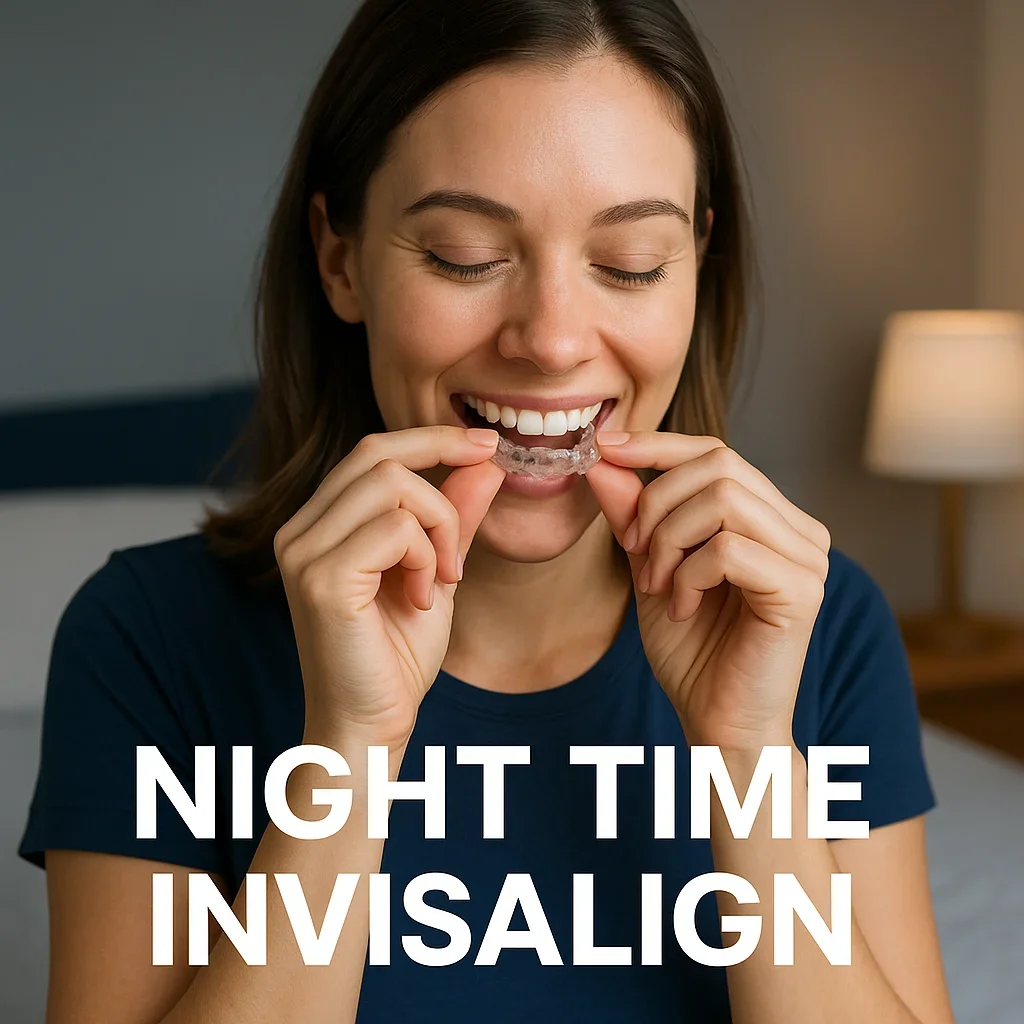
Long-Term Results and Aftercare for Night Time Invisalign
Completing your night time Invisalign treatment is a major milestone — but it’s not the end of your orthodontic journey. To maintain your beautifully aligned smile for years to come, proper aftercare and long-term maintenance are essential. Teeth have a natural tendency to shift back to their previous positions, especially during the first year after treatment. In this section, we’ll cover everything you need to know about post-treatment care, including retainers, oral hygiene, and lifestyle habits that help preserve your results.
1. The Importance of the Retention Phase
Once your night time Invisalign journey is complete, your orthodontist will provide you with retainers to maintain the new alignment. This phase, known as retention, is just as crucial as the active treatment phase. Without retainers, teeth can slowly drift out of position — a phenomenon called “relapse.”
Typically, you’ll be given custom-made Vivera® retainers, which are designed from the same durable SmartTrack® material as Invisalign aligners. These retainers fit snugly over your teeth and are clear, comfortable, and virtually invisible. In the first few months after night time Invisalign, most dentists recommend wearing retainers every night for 8–10 hours, similar to your previous aligner routine.
Gradual Transition Schedule
After the initial retention period, you may slowly reduce wear time under your orthodontist’s guidance. Most patients transition to wearing retainers only 3–4 nights a week after one year, depending on how stable the teeth remain. Consistent use is key; skipping nights can allow teeth to drift slightly, undoing months of progress.
2. Maintaining Oral Hygiene After Treatment
Good oral hygiene remains essential after night time Invisalign. Straight teeth are easier to clean, but proper habits ensure your smile stays bright and healthy. Even with perfect alignment, poor hygiene can lead to gum disease, discoloration, and plaque buildup.
Daily Care Routine
- 🪥 Brush twice daily using a soft-bristle toothbrush and fluoride toothpaste.
- 🧵 Floss daily to remove debris between teeth, especially near the gum line.
- 🪞 Rinse with antibacterial mouthwash at night to reduce oral bacteria.
- 💧 Stay hydrated — dry mouth can increase bacterial growth and bad breath.
During the night time Invisalign retention phase, you’ll still wear your retainers while sleeping, so keeping them clean is crucial. Rinse them each morning and occasionally soak them in Invisalign cleaning crystals or a mild soap solution to eliminate bacteria and odor.
3. Dietary and Lifestyle Adjustments
After completing night time Invisalign treatment, you can enjoy all your favorite foods freely, but maintaining a balanced diet supports long-term dental health. Avoid excessive sugar, sticky sweets, or acidic drinks that can damage enamel over time. Smoking or frequent coffee consumption can stain teeth and retainers, diminishing your smile’s brightness.
Nutrition Tips for a Healthy Smile
- 🥦 Eat calcium-rich foods such as yogurt, milk, and leafy greens to strengthen enamel.
- 🍎 Snack on crunchy fruits and vegetables like apples or carrots to promote gum health.
- 🧃 Limit acidic drinks such as soda, citrus juice, and wine that erode enamel.
These dietary habits not only preserve your post-treatment smile but also promote the longevity of your night time Invisalign results by supporting healthy bone and gum structure.
4. Regular Dental Check-Ups and Monitoring
Even after finishing night time Invisalign, it’s vital to maintain routine dental check-ups every six months. Your dentist will monitor your bite, gum health, and retainer condition. Early detection of small issues prevents more serious complications like jaw tension, shifting teeth, or retainer warping.
Some orthodontic clinics now offer digital monitoring through photo uploads, making follow-ups more convenient. You can send periodic photos of your smile, allowing your provider to check alignment remotely. Clinics such as Redent Klinik Contact Page offer such services, ensuring your smile remains perfectly maintained long after your active treatment ends.
Signs You May Need Adjustment
- Your retainer feels tighter than usual or doesn’t fit properly.
- You notice minor gaps or overlapping teeth returning.
- Jaw discomfort or bite misalignment develops over time.
If you experience any of these symptoms, visit your orthodontist promptly for evaluation and possible refinement retainers.
5. Preventing Teeth Relapse
Relapse prevention is one of the most crucial elements of post-night time Invisalign care. Teeth can shift slightly even years after treatment if not stabilized. To prevent this, never stop wearing retainers completely unless your orthodontist approves. Using retainers consistently — even if only a few nights a week — ensures your smile stays aligned.
Additionally, be mindful of habits that can influence tooth position. Nail biting, grinding (bruxism), or using your teeth to open objects can place pressure on specific areas and lead to unwanted movement. Some patients may also benefit from wearing a night guard if grinding is an issue; it can be custom-made to fit over retainers.
Bruxism and Retainer Protection
Nighttime teeth grinding is more common than most people realize. It can wear down enamel and even distort retainer fit. If your dentist detects bruxism, they may recommend a thicker retainer or combination device that protects your teeth while maintaining alignment. This simple adjustment can protect the long-term integrity of your night time Invisalign results.
6. Whitening and Aesthetic Maintenance
After achieving a beautifully straight smile with night time Invisalign, many patients consider professional whitening to enhance brightness. It’s safe to whiten your teeth after treatment as long as your gums and enamel are healthy. Your orthodontist can recommend appropriate whitening products or in-office treatments that won’t interfere with retainers.
Pro Tip:
Some whitening gels can even be applied directly inside retainers for gentle overnight whitening — a perfect follow-up to night time Invisalign therapy. However, always consult your dentist before using whitening agents, as improper application can cause sensitivity or uneven results.
7. Emotional Benefits of Maintaining Your Smile
The emotional impact of completing night time Invisalign treatment is often underestimated. Patients frequently report increased self-confidence, improved communication at work, and greater overall happiness. Maintaining your results keeps this confidence alive and reinforces the motivation that began your orthodontic journey in the first place.
Every time you smile, you’re reminded of your dedication and the discipline that made transformation possible. That daily reminder can inspire healthier habits in other aspects of life — from fitness and nutrition to personal growth. A beautiful smile often marks the beginning of broader self-improvement.
8. Retainer Replacement and Longevity
Retainers, while durable, aren’t designed to last forever. Over time, natural wear and tear can cause them to lose their shape or develop minor cracks. Typically, replacement is recommended every 12–24 months, depending on use frequency and material condition. Always inspect your retainers regularly for damage or warping.
When it’s time for a new set, your orthodontist can easily create replacements using your latest 3D scan data. At clinics equipped with advanced scanning technology, like American Dental Association-approved systems, the process is quick and precise.
Conclusion: Lifelong Benefits with Proper Aftercare
In conclusion, the success of night time Invisalign extends beyond the day you remove your final aligner. With proper aftercare — including consistent retainer use, excellent oral hygiene, and routine checkups — you can preserve your smile for decades. Think of your retainers as a long-term insurance policy for your investment in a beautiful smile. By following your dentist’s advice and caring for your teeth daily, your results will remain stable, your bite healthy, and your confidence radiant for life. 🌙✨