
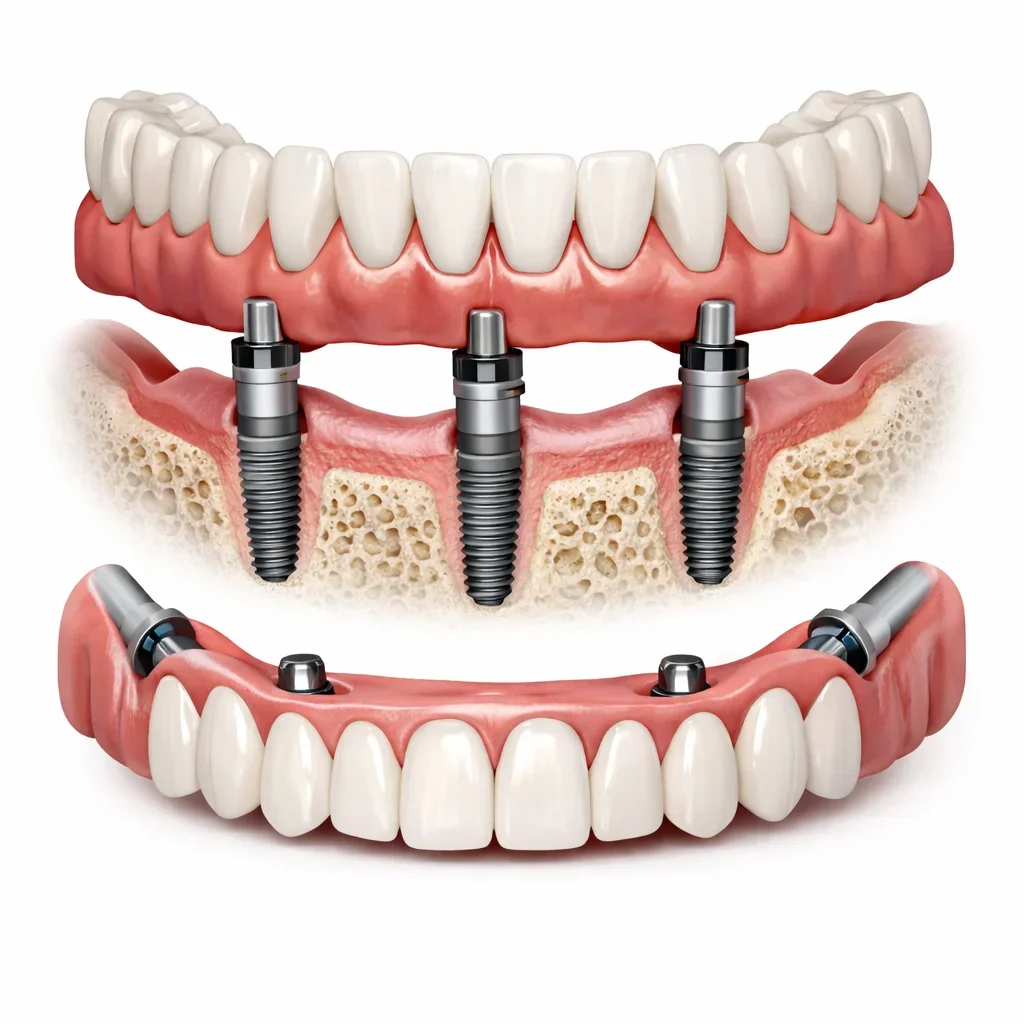
On all four dental implants is one of the most advanced and patient-friendly solutions for individuals who have lost most or all of their teeth. Designed to restore full dental function using just four strategically placed implants, this treatment has transformed modern implant dentistry. Instead of placing one implant for each missing tooth, dentists use four titanium implants to support a full-arch prosthetic, offering stability, aesthetics, and long-term reliability in a single comprehensive approach 😊.
The concept behind on all four dental implants is both innovative and efficient. Two implants are placed vertically in the front of the jaw where bone density is highest, while the remaining two are positioned at an angle in the back. This angled placement maximizes bone contact and often eliminates the need for bone grafting, even in patients with bone loss. As a result, many patients who were previously told they were not suitable for implants can now benefit from this treatment.
One of the most appealing aspects of on all four dental implants is the possibility of immediate loading. In many cases, patients can walk into the clinic with missing or failing teeth and leave the same day with a fixed temporary set of teeth. This dramatically reduces the emotional and functional burden of being without teeth and allows patients to speak, smile, and eat soft foods almost immediately 🦷.
From a functional perspective, on all four dental implants restore bite force far more effectively than removable dentures. Traditional dentures sit on the gums and can shift or slip during daily activities, causing discomfort and embarrassment. In contrast, implants are anchored directly into the jawbone, providing a level of stability that closely mimics natural teeth. This allows patients to enjoy a wider variety of foods and maintain proper nutrition.
Another critical advantage of on all four dental implants is their role in preserving jawbone health. When teeth are missing, the jawbone begins to resorb over time due to lack of stimulation. Dental implants act like natural tooth roots, stimulating the bone and preventing further bone loss. This helps maintain facial structure, preventing the sunken appearance commonly associated with long-term tooth loss 😌.
Aesthetically, on all four dental implants offer highly natural-looking results. The prosthetic teeth are custom-designed to match the patient’s facial features, lip support, and smile line. Modern materials such as zirconia or high-quality acrylic ensure that the final restoration looks realistic and feels comfortable. Many patients report a significant boost in self-confidence after completing treatment.
It is also important to understand that on all four dental implants are not just about appearance or comfort; they are a long-term medical solution. When properly planned and maintained, this treatment can last decades. Regular dental check-ups, good oral hygiene, and healthy lifestyle habits play a crucial role in the long-term success of the implants.
Compared to placing individual implants for every missing tooth, on all four dental implants are often more time-efficient and cost-effective. Fewer implants mean fewer surgical procedures, reduced healing time, and lower overall treatment complexity. This streamlined approach benefits both patients and clinicians while still delivering excellent clinical outcomes.
Patients considering on all four dental implants often have many questions about safety and reliability. Clinical studies and long-term data show high success rates when the procedure is performed by experienced professionals using proper planning techniques. Organizations like the American Dental Association recognize dental implants as a predictable and effective solution for tooth replacement.
Ultimately, on all four dental implants are designed to restore not just teeth, but quality of life. Whether the goal is to eat comfortably, speak clearly, smile confidently, or avoid the daily inconvenience of removable dentures, this treatment offers a comprehensive answer. If you are exploring whether this solution is right for you, a professional consultation is the first and most important step.
If you would like personalized information or wish to discuss your suitability for on all four dental implants, you can reach out directly through the Redent Klinik Contact Page. A tailored evaluation will help determine the best path toward a healthier, more confident smile 🌟.
What Are On All Four Dental Implants and How Do They Work?
On all four dental implants are a modern full-arch tooth replacement solution designed for patients who are missing most or all of their teeth. Instead of replacing each tooth individually, this technique uses four dental implants placed at precise angles to support an entire arch of fixed prosthetic teeth. The goal is to achieve maximum stability, functionality, and aesthetics while minimizing surgical complexity and treatment time.
At its core, on all four dental implants rely on strategic implant positioning rather than quantity. Traditional implant methods may require six to eight implants per jaw, often combined with bone grafting. In contrast, this approach uses the natural anatomy of the jaw to anchor four implants in areas with the highest bone density. This makes it a highly efficient and predictable solution for many patients 😊.
The Science Behind On All Four Dental Implants
The effectiveness of on all four dental implants is based on biomechanics and bone biology. The two front implants are placed vertically in the anterior region of the jaw, where bone quality is typically strongest. The two posterior implants are angled backward, usually at 30 to 45 degrees. This angulation increases the surface area of bone contact and allows for greater support without interfering with anatomical structures such as the sinus cavity or nerve canals.
This angled placement is a key reason why on all four dental implants often eliminate the need for bone grafting. By utilizing existing bone more efficiently, dentists can provide stable implant support even in patients with moderate bone loss. This not only shortens treatment time but also reduces overall discomfort and healing periods.
How the Implants Support a Full Arch of Teeth
Once the implants are placed, a fixed prosthetic bridge is attached to them. In the case of on all four dental implants, this bridge is typically screw-retained rather than cemented. Screw-retained restorations allow for easier maintenance, adjustments, and future repairs if needed. The prosthetic teeth are custom-designed to distribute bite forces evenly across all four implants, ensuring durability and comfort.
The result is a stable, non-removable set of teeth that functions much like natural dentition. Patients with on all four dental implants can chew, speak, and smile without worrying about movement or slippage, which is a common concern with removable dentures.
Immediate Loading Explained
One of the most distinctive features of on all four dental implants is immediate loading. This means that, in many cases, a temporary fixed prosthesis can be attached on the same day as implant surgery. While the implants integrate with the bone over the following months, patients are never left without teeth. This immediate transformation has a powerful psychological and functional impact 😄.
However, immediate loading is only possible when primary implant stability is achieved. Factors such as bone quality, bite alignment, and overall health play a role in determining whether immediate loading is suitable. An experienced implant dentist will carefully evaluate these factors before proceeding with on all four dental implants.
Materials Used in On All Four Dental Implants
The implants themselves are usually made of medical-grade titanium, a material known for its biocompatibility and strength. Titanium integrates naturally with the jawbone through a process called osseointegration. This biological bond is what makes on all four dental implants so stable and long-lasting.
The prosthetic teeth can be made from various materials, including high-quality acrylic, porcelain, or zirconia. Each material has its advantages in terms of aesthetics, durability, and cost. During the planning phase of on all four dental implants, the dentist will recommend the most suitable option based on the patient’s needs and expectations.
Why This System Works So Well
The success of on all four dental implants lies in their holistic design. By combining strategic implant placement, advanced materials, and precise digital planning, this system restores full dental function with fewer surgical steps. It is especially beneficial for patients who want a fixed solution without undergoing multiple surgeries.
In addition, on all four dental implants are designed to work in harmony with facial muscles and jaw movements. This ensures not only comfort but also a natural appearance when speaking or smiling. The restoration supports the lips and cheeks, helping patients maintain a youthful facial profile.
In summary, on all four dental implants work by maximizing existing bone, minimizing invasiveness, and delivering a stable, long-term solution for full-arch tooth replacement. Understanding how this system functions helps patients make informed decisions and feel confident about choosing a treatment that can significantly improve their quality of life 🌟.
Who Is the Ideal Candidate for On All Four Dental Implants?
On all four dental implants are designed to help a wide range of patients who struggle with missing teeth, failing dentition, or uncomfortable dentures. However, like any advanced dental treatment, this solution works best when specific clinical and personal criteria are met. Understanding who qualifies for this treatment helps patients set realistic expectations and make confident, informed decisions 😊.
In general, on all four dental implants are ideal for individuals who have lost most or all of their teeth in one or both jaws, or whose remaining teeth are no longer healthy enough to be saved. This often includes patients with advanced gum disease, severe tooth decay, or long-term denture wearers seeking a more stable and permanent solution.
Patients with Multiple Missing or Failing Teeth
One of the primary groups that benefit from on all four dental implants are patients with extensive tooth loss. When multiple teeth are missing, replacing them individually can be time-consuming, invasive, and costly. This full-arch solution offers a streamlined alternative that restores an entire row of teeth using just four implants.
Patients who have teeth that are cracked, loose, infected, or structurally compromised may also be excellent candidates for on all four dental implants. In many cases, these failing teeth can be extracted, and implants placed during the same appointment, reducing the total number of procedures required.
Denture Wearers Seeking a Fixed Solution
Long-term denture wearers often experience discomfort, instability, and reduced chewing efficiency. Over time, dentures can also accelerate bone loss in the jaw. On all four dental implants are especially suitable for these patients because they provide a fixed, non-removable alternative that dramatically improves comfort and function.
Unlike removable dentures, on all four dental implants do not rely on adhesives or suction. They are securely anchored to the jawbone, allowing patients to eat, speak, and smile with confidence. Many denture wearers describe the transition to implants as life-changing 😄.
Patients with Limited Jawbone Density
A common concern among patients considering implants is insufficient jawbone. Fortunately, on all four dental implants are specifically designed to address this issue. By angling the rear implants and placing them in areas with higher bone density, this technique often avoids the need for bone grafting.
This makes on all four dental implants an excellent option for patients who were previously told they were not candidates for traditional implants due to bone loss. However, a detailed 3D scan and clinical evaluation are still essential to confirm suitability.
Bone Quality vs Bone Quantity
When assessing candidates for on all four dental implants, dentists focus more on bone quality than sheer volume. Dense, healthy bone provides better initial implant stability, which is critical for long-term success and for immediate loading protocols.
Even patients with reduced bone height in the back of the jaw may still qualify for on all four dental implants thanks to angled implant placement that avoids sensitive anatomical structures.
General Health Requirements
Overall health plays an important role in determining candidacy for on all four dental implants. Most healthy adults can safely undergo implant surgery, but certain medical conditions require special consideration. Controlled diabetes, for example, is generally acceptable, while uncontrolled systemic diseases may increase risks.
Smoking does not automatically disqualify a patient from on all four dental implants, but it can negatively affect healing and implant success. Patients are strongly encouraged to reduce or stop smoking before and after treatment to improve outcomes.
Patients Seeking a Long-Term, Fixed Solution
On all four dental implants are best suited for patients who want a permanent, fixed solution rather than a removable appliance. This treatment requires commitment to oral hygiene, regular dental check-ups, and proper maintenance. Patients who are motivated to care for their oral health tend to achieve the best long-term results 🌟.
It is also important that candidates have realistic expectations. While on all four dental implants provide excellent function and aesthetics, the final outcome depends on proper planning, surgical expertise, and patient cooperation during the healing process.
The Importance of a Professional Evaluation
Ultimately, the best way to determine if someone is a suitable candidate for on all four dental implants is through a comprehensive dental consultation. This includes clinical examinations, digital imaging, and a detailed discussion of medical history and treatment goals.
A personalized treatment plan ensures that on all four dental implants are not only possible but optimized for long-term success. With the right assessment and professional guidance, many patients who once felt limited by tooth loss can regain full oral function and confidence.
Key Benefits of Choosing On All Four Dental Implants
On all four dental implants have become one of the most sought-after full-arch restoration options because they offer a powerful combination of function, aesthetics, and long-term reliability. Unlike traditional dentures or complex multi-implant solutions, this technique is designed to deliver maximum results with minimal invasiveness. Understanding the benefits helps patients clearly see why this treatment is often considered a life-changing decision 😊.
The advantages of on all four dental implants extend beyond simply replacing missing teeth. They address comfort, confidence, oral health, and daily quality of life in a comprehensive way. Below, we explore the most important benefits in detail.
Immediate Improvement in Quality of Life
One of the most impactful benefits of on all four dental implants is how quickly patients experience positive changes. In many cases, patients receive a fixed temporary prosthesis on the same day as surgery. This means they do not have to live without teeth during the healing period.
Being able to smile, speak, and eat soft foods immediately after treatment has a profound emotional effect. Patients often report renewed self-confidence and social comfort almost instantly. Compared to removable dentures, on all four dental implants provide stability that feels natural from day one 😄.
Superior Stability Compared to Dentures
Traditional dentures rely on the gums for support, which can lead to slipping, clicking sounds, and discomfort. On all four dental implants eliminate these issues by anchoring the prosthetic teeth directly into the jawbone. This creates a solid foundation that does not shift during speaking or chewing.
This stability allows patients with on all four dental implants to enjoy foods that are often difficult with dentures, such as fruits, vegetables, and lean proteins. Improved chewing efficiency also supports better digestion and overall health.
Preservation of Jawbone and Facial Structure
One of the most overlooked benefits of on all four dental implants is their role in preventing bone loss. When teeth are missing, the jawbone gradually shrinks due to lack of stimulation. This can lead to a sunken facial appearance over time.
Dental implants act like natural tooth roots, stimulating the bone and helping preserve its volume. By choosing on all four dental implants, patients protect their facial structure and maintain a more youthful appearance 😊.
Why Bone Preservation Matters Long-Term
Maintaining jawbone health is not only about appearance. Bone loss can make future dental treatments more complicated and may affect speech and bite alignment. On all four dental implants provide long-term structural support that benefits both oral and overall health.
Reduced Need for Bone Grafting
Many implant treatments require bone grafting when bone volume is insufficient. A key advantage of on all four dental implants is the angled placement of the posterior implants. This technique maximizes existing bone and often eliminates the need for grafting procedures.
By avoiding bone grafts, patients undergoing on all four dental implants experience shorter treatment times, fewer surgical procedures, and lower overall complexity. This makes the process more comfortable and accessible for a wider range of patients.
Cost-Effective Full-Arch Solution
Although on all four dental implants are a premium treatment, they are often more cost-effective than placing individual implants for each missing tooth. Using only four implants per arch reduces surgical time, materials, and laboratory costs.
Additionally, fewer procedures mean fewer follow-up visits and a faster return to normal life. When viewed as a long-term investment, on all four dental implants often provide excellent value due to their durability and low maintenance requirements.
Natural Look and Feel
Aesthetics play a major role in patient satisfaction. On all four dental implants are custom-designed to complement the patient’s facial features, smile line, and bite. The prosthetic teeth are crafted to look realistic, with natural shape and color.
Because they are fixed in place, on all four dental implants feel much closer to natural teeth than removable options. Patients often forget they even have implants, which is a testament to the comfort and realism of this solution 🌟.
Long-Term Reliability and Predictability
Clinical studies consistently show high success rates for on all four dental implants when proper planning and maintenance are followed. The combination of strong implant anchorage and even bite force distribution contributes to long-term stability.
With good oral hygiene, regular dental check-ups, and healthy habits, on all four dental implants can last for decades. This reliability makes them a preferred option for patients seeking a permanent, worry-free solution to tooth loss.
In summary, on all four dental implants offer a unique blend of immediate results, comfort, aesthetics, and long-term health benefits. They are not just a dental treatment, but a comprehensive upgrade to daily living, confidence, and overall well-being.
The Step-by-Step Procedure of On All Four Dental Implants
On all four dental implants follow a carefully structured clinical process designed to deliver predictable, long-lasting results while minimizing patient discomfort and downtime. Understanding each step of the procedure helps reduce anxiety and allows patients to approach treatment with clarity and confidence 😊. Although individual cases may vary, the core stages of this treatment are consistent and based on proven clinical protocols.
Initial Consultation and Comprehensive Assessment
The journey toward on all four dental implants begins with a detailed consultation. During this appointment, the dentist evaluates the patient’s oral health, medical history, and expectations. Digital imaging such as panoramic X-rays and 3D CBCT scans are used to assess bone quality, bone volume, nerve locations, and sinus anatomy.
This planning phase is critical for the success of on all four dental implants. Using digital tools, the dentist determines the exact implant positions, angles, and sizes. A personalized treatment plan is created to ensure optimal stability, aesthetics, and bite function.
Pre-Surgical Preparation
Before placing on all four dental implants, any remaining unhealthy teeth are identified. If extractions are necessary, they are often scheduled for the same day as implant placement to reduce the number of surgical sessions. Patients may also receive instructions regarding medications, fasting, or lifestyle adjustments such as avoiding smoking.
Local anesthesia is typically sufficient for the procedure, though sedation options may be available for anxious patients. Comfort and safety are top priorities throughout the on all four dental implants process 😌.
Surgical Placement of the Implants
The surgical phase of on all four dental implants involves placing four titanium implants into the jawbone. Two implants are positioned vertically in the front of the jaw, while two are placed at an angle in the back. This angled placement maximizes bone contact and avoids anatomical structures like sinuses or nerves.
The procedure is performed with precision to ensure strong primary stability, which is essential for long-term success and for immediate loading when appropriate. Despite sounding complex, many patients are surprised by how efficient and controlled the surgery feels.
Why Implant Angulation Is So Important
The angled placement used in on all four dental implants is a major reason for its effectiveness. By tilting the posterior implants, dentists can use available bone more efficiently and often avoid bone grafting. This reduces healing time and overall treatment complexity.
Immediate Loading with a Temporary Prosthesis
One of the defining features of on all four dental implants is the ability to attach a temporary fixed prosthesis on the same day as surgery. This step is known as immediate loading. The temporary teeth are securely attached to the implants, allowing patients to leave the clinic with a full smile.
While these temporary teeth are functional and aesthetic, patients are advised to follow a soft-food diet during the initial healing phase. This protects the implants while osseointegration takes place 🦷.
Healing and Osseointegration Phase
After surgery, on all four dental implants enter a healing phase where the implants fuse with the jawbone. This biological process, called osseointegration, typically takes three to six months. During this time, the implants become a permanent part of the jaw structure.
Patients are closely monitored during this phase. Follow-up visits ensure that healing is progressing well and that the temporary prosthesis remains comfortable and stable.
Final Prosthetic Placement
Once osseointegration is complete, the final prosthetic bridge is fabricated and placed. This is the last major step in the on all four dental implants process. The final restoration is custom-designed for durability, aesthetics, and precise bite alignment.
Materials such as zirconia or reinforced ceramic are commonly used to ensure long-term strength and a natural appearance. The final teeth feel more refined and robust than the temporary set, marking the completion of treatment 😊.
Post-Treatment Adjustments and Maintenance
After completing on all four dental implants, minor adjustments may be made to optimize comfort and bite balance. Patients receive detailed instructions on oral hygiene, including proper brushing techniques and the use of interdental tools.
Regular dental check-ups are essential to monitor implant health and prosthetic integrity. With proper care, on all four dental implants can provide reliable function and aesthetics for many years.
In summary, the step-by-step procedure of on all four dental implants is designed to be efficient, predictable, and patient-centered. Each stage builds upon the previous one, resulting in a stable, natural-looking smile that restores both function and confidence 🌟.
Recovery Timeline and Aftercare for On All Four Dental Implants
The recovery process after on all four dental implants is a crucial phase that directly affects long-term success, comfort, and implant stability. While this treatment is designed to minimize downtime compared to traditional implant methods, proper aftercare and realistic expectations are essential. Understanding the recovery timeline helps patients feel prepared and confident throughout the healing journey 😊.
The First 24–72 Hours After Surgery
Immediately following surgery, patients with on all four dental implants may experience mild to moderate swelling, tenderness, and minor bleeding. These symptoms are completely normal and typically peak within the first 48 hours. Prescribed pain medication, antibiotics, and anti-inflammatory drugs help manage discomfort and reduce the risk of infection.
Cold compresses applied externally during the first day can significantly reduce swelling. Patients are advised to rest, avoid strenuous activity, and keep their head elevated. Even though a fixed temporary prosthesis is already in place, the underlying implants need protection during this initial phase.
The First Two Weeks: Early Healing Phase
During the first one to two weeks after on all four dental implants, soft tissue healing becomes the primary focus. The gums begin to adapt around the implants, and any surgical sites gradually close. Most patients find that swelling and discomfort decrease significantly during this time.
A soft-food diet is essential in this stage. Foods such as soups, yogurt, mashed vegetables, eggs, and smoothies help prevent excessive pressure on the implants. Even though the teeth feel stable, avoiding hard or crunchy foods protects the implants while they begin integrating with the bone 🦷.
Oral Hygiene in the Early Healing Stage
Maintaining oral hygiene after on all four dental implants is extremely important, but it must be done gently. Patients are usually instructed to rinse with an antiseptic mouthwash and use a soft toothbrush around the prosthesis. Aggressive brushing or flossing near the surgical area should be avoided until approved by the dentist.
Weeks 3–8: Osseointegration Begins
As healing progresses, on all four dental implants enter the critical osseointegration phase. This is when the implants fuse biologically with the jawbone, creating a strong and permanent foundation. Although patients often feel fully recovered at this point, the bone is still stabilizing internally.
During this period, patients can usually return to most normal daily activities. However, biting directly into very hard foods should still be avoided. Follow-up appointments allow the dentist to monitor implant stability and ensure that healing is progressing as expected 😊.
Months 3–6: Transition to the Final Prosthesis
By the third to sixth month after surgery, osseointegration is typically complete. This milestone is essential for the long-term success of on all four dental implants. At this stage, impressions are taken to fabricate the final prosthetic bridge.
The final restoration is stronger, more refined, and designed for long-term durability. Once placed, it provides improved bite strength, enhanced aesthetics, and greater comfort compared to the temporary prosthesis.
Long-Term Aftercare and Maintenance
Long-term success with on all four dental implants depends heavily on proper aftercare. Although implants are not susceptible to cavities, the surrounding gum tissue can still develop inflammation if oral hygiene is neglected. Daily brushing, cleaning under the bridge, and using water flossers or special implant brushes are strongly recommended.
Routine dental check-ups allow professionals to monitor implant health, assess bite alignment, and professionally clean areas that are difficult to reach at home. Patients who commit to maintenance enjoy significantly longer-lasting results 🌟.
Lifestyle Factors That Affect Healing
Certain lifestyle habits can influence recovery after on all four dental implants. Smoking is one of the most significant risk factors, as it reduces blood flow and slows healing. Patients are strongly encouraged to avoid smoking, especially during the first few months.
Proper nutrition, hydration, and managing systemic conditions such as diabetes also play an important role in maintaining implant health. A balanced lifestyle supports both healing and long-term implant stability.
What Patients Typically Feel During Recovery
Most patients report that recovery from on all four dental implants is far easier than expected. Discomfort is usually manageable, and the psychological benefit of having fixed teeth from day one often outweighs temporary soreness.
As healing progresses, patients gain confidence in eating, speaking, and smiling. By following professional instructions and attending follow-up visits, recovery becomes a smooth and predictable process.
In conclusion, the recovery timeline for on all four dental implants is structured, manageable, and highly rewarding. With proper aftercare and patience, patients can enjoy a stable, functional, and natural-looking smile that lasts for many years.
On All Four Dental Implants vs Traditional Implant Solutions
When considering full-arch tooth replacement, patients often compare on all four dental implants with traditional implant solutions. Each approach has its place in modern dentistry, but they differ significantly in terms of procedure complexity, treatment time, cost structure, and patient experience. Understanding these differences is essential for choosing the most suitable option 😊.
On all four dental implants were developed specifically to address the limitations of conventional implant methods, especially for patients with extensive tooth loss or reduced bone volume. Below, we examine how these two approaches compare across critical clinical and practical factors.
Number of Implants and Surgical Complexity
Traditional full-arch implant solutions often require six to eight implants per jaw. In some cases, individual implants are placed for each missing tooth. This increases surgical time, invasiveness, and the number of healing sites. In contrast, on all four dental implants use just four strategically placed implants to support an entire arch.
Fewer implants mean fewer surgical steps, reduced trauma to the jawbone, and a more streamlined procedure. For many patients, this makes on all four dental implants a less intimidating and more accessible option.
Treatment Duration and Immediate Results
One of the most noticeable differences between on all four dental implants and traditional implant solutions is treatment time. Conventional implants often involve multiple phases, including bone grafting, implant placement, healing, and final restoration. This process can take 9 to 18 months or longer.
With on all four dental implants, patients frequently receive a fixed temporary prosthesis on the same day as surgery. This immediate loading approach allows patients to avoid long periods without teeth, significantly improving comfort and confidence 😄.
Bone Grafting Requirements
Bone grafting is commonly required in traditional implant cases when jawbone volume is insufficient. These additional procedures add cost, healing time, and complexity. A key advantage of on all four dental implants is the angled placement of the posterior implants, which maximizes existing bone.
As a result, many patients who would otherwise need bone grafts can proceed directly with on all four dental implants. This not only simplifies treatment but also reduces surgical risk.
Why Angled Implants Change the Game
The angled implant design used in on all four dental implants avoids critical anatomical structures and utilizes denser bone regions. This biomechanical advantage is a major reason why fewer implants can successfully support a full arch.
Cost Comparison and Value
At first glance, traditional implant solutions may appear flexible because they can be staged over time. However, when total costs are calculated, including multiple surgeries, grafting, and extended treatment duration, they are often more expensive.
On all four dental implants typically offer a more predictable overall cost. Fewer implants, fewer procedures, and a shorter timeline translate into better value for patients seeking a comprehensive solution.
Function and Bite Strength
Both traditional implants and on all four dental implants provide excellent bite strength when properly placed. However, traditional dentures supported by fewer implants may still allow some movement if not fully fixed.
On all four dental implants are designed as a fixed solution from the outset, offering consistent stability across the entire arch. This allows patients to chew more naturally and comfortably.
Aesthetic Outcomes and Comfort
Aesthetics depend heavily on planning and prosthetic design in both approaches. That said, on all four dental implants are specifically engineered to support the lips and facial muscles evenly, helping prevent the sunken appearance often associated with long-term tooth loss.
Because the prosthesis is fixed, patients often report that on all four dental implants feel more natural than removable or hybrid traditional options 🌟.
Maintenance and Long-Term Care
Both solutions require good oral hygiene and regular dental visits. However, maintaining on all four dental implants is often simpler because the prosthetic design allows easier access for cleaning under the bridge.
Traditional implant systems with multiple individual crowns may require more complex maintenance over time. Simplicity and accessibility are key reasons many patients prefer on all four dental implants.
Which Option Is Right for You?
The choice between on all four dental implants and traditional implant solutions depends on individual anatomy, health status, budget, and expectations. Patients seeking faster results, fewer surgeries, and a fixed full-arch solution often find on all four dental implants to be the superior option.
In summary, while traditional implants remain an excellent solution in many cases, on all four dental implants stand out for their efficiency, predictability, and patient-centered design. A professional evaluation is essential to determine the most appropriate approach for long-term success.
Longevity and Success Rates of On All Four Dental Implants
The long-term reliability of on all four dental implants is one of the main reasons this treatment has become a gold standard for full-arch tooth replacement. Patients are not only interested in immediate results, but also in how long those results will last. Fortunately, extensive clinical research and real-world outcomes show that this solution offers excellent longevity when properly planned, placed, and maintained 😊.
Understanding the success rates and lifespan of on all four dental implants helps patients feel confident that they are making a durable, future-proof investment in their oral health.
Clinical Success Rates Explained
Studies consistently report success rates of on all four dental implants above 95% over long-term follow-up periods. Success is defined by stable implants, healthy surrounding bone and gums, absence of pain or infection, and a fully functional prosthetic restoration.
These high success rates are achieved because on all four dental implants are designed around biomechanical principles that evenly distribute chewing forces. By spreading bite pressure across four strategically placed implants, stress on individual implants is minimized, reducing the risk of failure.
What Longevity Really Means for Patients
When patients ask how long on all four dental implants last, the answer depends on two components: the implants themselves and the prosthetic bridge. The titanium implants are designed to last a lifetime in most cases. Once they successfully integrate with the jawbone, they become a permanent part of the oral structure.
The prosthetic teeth may need replacement or refurbishment after 10–20 years, depending on the material used and daily wear. However, this does not mean the entire on all four dental implants system must be redone—only the visible bridge may require updating.
Factors That Influence Long-Term Success
Although on all four dental implants have excellent predictability, several factors influence how long they last. Proper surgical planning, implant positioning, and prosthetic design are essential. This is why experience and precision play such a critical role in treatment outcomes.
Patient-related factors also matter. Good oral hygiene, regular dental check-ups, and healthy lifestyle habits significantly improve the longevity of on all four dental implants.
The Impact of Oral Hygiene
While implants cannot decay like natural teeth, the surrounding gum tissue can still become inflamed if plaque accumulates. Conditions such as peri-implantitis can compromise on all four dental implants if left untreated.
Daily brushing, cleaning under the prosthesis, and professional maintenance are essential to keep the implants and gums healthy over the long term.
Bone Stability and Implant Survival
One of the reasons on all four dental implants perform so well long term is their ability to preserve jawbone density. Because implants stimulate the bone during chewing, they help prevent the bone resorption commonly seen with dentures.
Stable bone support ensures that on all four dental implants remain firmly anchored, which is critical for decades of reliable function.
How Immediate Loading Affects Longevity
Some patients worry that receiving teeth immediately might reduce the lifespan of on all four dental implants. When done correctly, immediate loading does not compromise success. In fact, research shows comparable long-term outcomes to delayed loading when proper primary stability is achieved.
Careful case selection and controlled bite forces during healing are key to ensuring that immediate loading supports, rather than harms, implant longevity.
Comparison with Other Full-Arch Solutions
Compared to removable dentures, on all four dental implants offer dramatically superior longevity. Dentures typically require frequent relining or replacement due to ongoing bone loss. Traditional multi-implant systems can also be successful, but they often involve more implants, more surgeries, and higher long-term complexity.
On all four dental implants strike a balance between durability, efficiency, and biological preservation, making them a preferred option for many patients 🌟.
Realistic Expectations for the Future
With proper care, many patients enjoy on all four dental implants for decades without major complications. Routine dental visits allow early detection of minor issues before they become serious.
In summary, the longevity and success rates of on all four dental implants are among the highest in modern dentistry. When combined with good maintenance and professional oversight, this treatment offers a reliable, long-lasting solution that supports both oral health and overall quality of life.
Cost, Pricing Factors, and Global Treatment Options
The cost of on all four dental implants is one of the most common and important considerations for patients exploring this advanced full-arch solution. While the treatment is a premium option, it is essential to understand what influences pricing, what is typically included, and how costs vary around the world. When evaluated as a long-term investment in health and quality of life, on all four dental implants often provide excellent overall value 😊.
What Determines the Cost of On All Four Dental Implants?
The price of on all four dental implants is not a single fixed number because several variables affect the final cost. One of the most significant factors is the complexity of the case. Patients requiring extractions, treatment for gum disease, or additional diagnostic procedures may see variations in pricing.
Another major factor is the material used for the final prosthesis. Acrylic-based bridges are generally more affordable, while zirconia restorations are more durable and aesthetic but come at a higher cost. Both options can work well with on all four dental implants, depending on patient expectations and lifestyle.
Typical Price Ranges by Region
Below is a general overview of estimated costs for on all four dental implants per arch based on global averages. These figures are approximate and may vary depending on clinic standards, technology, and materials used.
Estimated Cost Block (Per Arch)
- United States: $20,000 – $30,000
- United Kingdom: £12,000 – £18,000
- Western Europe: €12,000 – €20,000
- Turkey: $5,000 – $9,000
- Eastern Europe: €6,000 – €10,000
These ranges typically include surgery, implants, temporary teeth, and the final prosthetic bridge. When comparing prices, it is crucial to confirm exactly what is included in the on all four dental implants package.
Why Prices Vary So Much Between Countries
Global cost differences for on all four dental implants are influenced by factors such as labor costs, clinic overhead, laboratory expenses, and currency exchange rates. In countries like Turkey, high-quality dental care is available at significantly lower prices due to lower operational costs rather than reduced treatment quality.
Many international patients choose to travel abroad for on all four dental implants, combining dental treatment with accommodation and transportation while still saving a substantial amount compared to domestic prices 🌍.
What Should Be Included in the Total Price?
A comprehensive on all four dental implants treatment plan should be transparent and inclusive. Patients should look for packages that cover:
- Initial consultation and diagnostic imaging
- Extractions if required
- Surgical placement of implants
- Temporary fixed prosthesis
- Final prosthetic restoration
- Follow-up visits and adjustments
Clarifying these details helps patients avoid unexpected costs and ensures that the quoted price for on all four dental implants truly reflects the complete treatment journey.
Insurance and Financing Considerations
In many countries, dental insurance does not fully cover on all four dental implants, as implants are often classified as elective procedures. However, some insurance plans may contribute to portions of the treatment, such as extractions or diagnostics.
Many clinics offer financing plans or staged payment options, making on all four dental implants more accessible. Patients are encouraged to discuss payment flexibility during their consultation.
Is On All Four Dental Implants Worth the Cost?
When evaluating the cost of on all four dental implants, it is important to consider long-term benefits rather than upfront expenses alone. Removable dentures often require frequent replacements, relining, and adhesives over time. These recurring costs can add up significantly.
On all four dental implants provide a fixed, durable solution that improves chewing efficiency, preserves bone, and enhances confidence. Many patients find that the improvement in daily comfort and quality of life justifies the investment 🌟.
Choosing the Right Clinic and Location
Price should never be the only deciding factor when choosing on all four dental implants. Experience, technology, hygiene standards, and patient support are equally important. Selecting a clinic that offers clear communication, transparent pricing, and comprehensive aftercare is essential for long-term success.
In conclusion, the cost of on all four dental implants varies globally, but understanding pricing factors and treatment value helps patients make informed decisions. With careful planning and the right provider, this treatment offers a powerful return on investment in both oral health and overall well-being.
Possible Risks and Complications of On All Four Dental Implants
Although on all four dental implants are considered a safe, predictable, and well-documented treatment, no surgical procedure is entirely free of risks. Understanding possible complications does not mean expecting failure; rather, it empowers patients to make informed decisions, recognize early warning signs, and follow professional guidance closely. When performed by experienced clinicians and supported by proper aftercare, on all four dental implants have very high long-term success rates 😊.
Common Short-Term Side Effects
In the days following surgery, patients receiving on all four dental implants may experience temporary side effects. These are generally mild and part of the normal healing response. Common short-term effects include swelling, bruising, tenderness, and minor bleeding around the surgical sites.
These symptoms usually peak within the first 48 hours and gradually subside over one to two weeks. Pain is typically manageable with prescribed or over-the-counter medication. When patients follow post-operative instructions carefully, recovery from on all four dental implants is usually smoother than expected.
Risk of Infection
As with any surgical procedure, infection is a potential risk with on all four dental implants. Infections may occur if bacteria enter the surgical area during or after implant placement. Symptoms can include persistent pain, swelling, redness, discharge, or fever.
To minimize this risk, dentists prescribe antibiotics when appropriate and provide detailed hygiene instructions. Maintaining excellent oral hygiene after on all four dental implants is one of the most effective ways to prevent infection 🦷.
How Infection Risk Is Controlled
Modern implant dentistry relies on sterile surgical environments, advanced imaging, and evidence-based protocols. These measures significantly reduce infection risk associated with on all four dental implants. Early detection and prompt treatment ensure that minor infections do not progress into serious complications.
Implant Failure and Osseointegration Issues
Implant failure occurs when an implant does not successfully integrate with the jawbone. While rare, this can happen with on all four dental implants, particularly during the early healing phase. Poor bone quality, excessive bite forces, smoking, or uncontrolled medical conditions may increase this risk.
If an implant fails to integrate, it can often be replaced after healing. Importantly, one failed implant does not automatically mean the entire on all four dental implants system has failed. Early diagnosis allows for corrective measures that preserve long-term outcomes.
Nerve or Sinus Complications
In the lower jaw, nerve proximity is a consideration, while in the upper jaw, sinus cavities must be respected. Improper planning could lead to nerve irritation or sinus issues. However, on all four dental implants are specifically designed to avoid these structures through angled implant placement.
Advanced 3D imaging and digital planning significantly reduce these risks. When treatment is properly planned, nerve or sinus complications with on all four dental implants are extremely uncommon.
Peri-Implantitis: A Long-Term Risk
Peri-implantitis is an inflammatory condition affecting the gum and bone around dental implants. It is one of the most significant long-term risks associated with on all four dental implants. The condition is often caused by plaque buildup and inadequate oral hygiene.
Symptoms may include gum bleeding, swelling, bad breath, and bone loss around the implants. Regular professional check-ups and daily home care are essential to prevent peri-implantitis and protect on all four dental implants over time 😌.
Why Maintenance Matters
Unlike natural teeth, implants do not decay, but the surrounding tissue still requires care. Proper maintenance dramatically reduces the risk of peri-implant disease and helps ensure the longevity of on all four dental implants.
Prosthetic-Related Complications
While the implants themselves are highly durable, the prosthetic bridge attached to on all four dental implants may experience wear over time. Issues such as screw loosening, chipping, or material wear can occur, especially in patients who grind their teeth.
These problems are usually repairable without affecting the implants. Night guards, regular check-ups, and timely adjustments help minimize prosthetic complications.
Lifestyle and Patient-Related Risk Factors
Certain lifestyle choices can influence the success of on all four dental implants. Smoking is one of the most significant risk factors, as it reduces blood flow and impairs healing. Excessive alcohol consumption and poor nutrition can also negatively affect outcomes.
Patients who actively participate in their care—by following dietary guidelines, attending follow-ups, and maintaining hygiene—greatly reduce complication risks and improve the long-term success of on all four dental implants 🌟.
Balancing Risks with Benefits
While it is important to acknowledge possible risks, it is equally important to place them in context. The overall complication rate for on all four dental implants is low, especially when treatment is performed by experienced professionals using modern technology.
In conclusion, understanding the potential risks and complications of on all four dental implants allows patients to approach treatment with realistic expectations and confidence. With proper planning, expert execution, and consistent aftercare, most risks can be minimized, resulting in a safe, stable, and life-enhancing outcome.
Disclosure: this page may contain affiliate links. We may earn a commission if you use them, at no extra cost to you.