
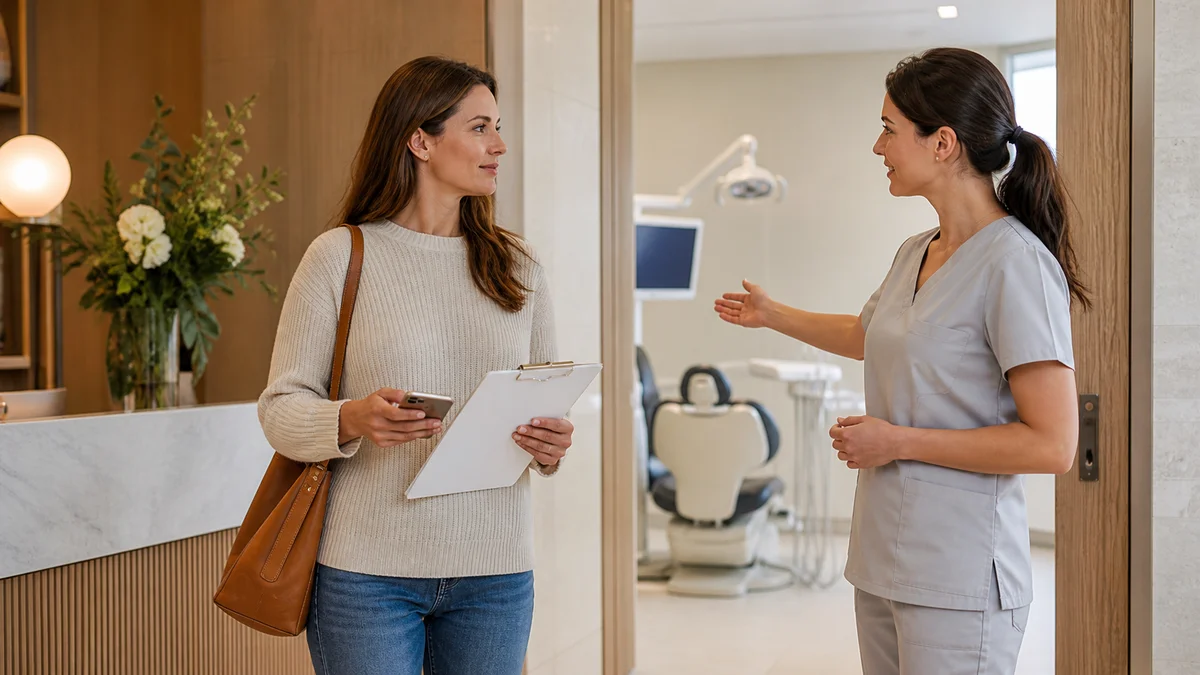
A walk in dentist clinic may assess tooth pain, swelling, a broken tooth, a lost restoration, or minor dental trauma without a long-planned appointment. Availability and treatment scope vary, so call while traveling if possible. Breathing or swallowing difficulty, rapidly spreading swelling, uncontrolled bleeding, or major facial trauma requires emergency medical care rather than routine dental waiting.
Searching for a walk in dentist clinic usually means something has changed quickly: a tooth started hurting, a filling broke, swelling appeared, or a schedule suddenly opened. The phrase suggests immediate access, but it does not describe one standardized type of facility. Some dental offices reserve same-day slots, some offer urgent examinations only, and others accept unscheduled patients only when clinical capacity allows.
This guide helps you choose the right level of care, prepare for triage, understand what may happen during a same-day visit, and plan follow-up. It cannot diagnose the cause of pain or promise that a particular treatment will be completed immediately. A dentist must review your health history and examine you before advising on care. If symptoms are severe or affect breathing, swallowing, consciousness, or general health, do not wait in an ordinary walk in dentist clinic queue.
What a walk in dentist clinic can—and cannot—mean
A true walk-in model lets patients arrive without a scheduled time, but even then, care is prioritized by urgency and available staff. Another practice may use “walk-in” to mean call-now, same-day scheduling. A third may offer an examination and temporary stabilization while referring definitive treatment elsewhere. Ask what the term means before assuming that you will be seen in arrival order or receive a complete procedure.
A walk in dentist clinic may be able to examine the mouth, take clinically indicated dental images, reduce a sharp edge, replace or secure a temporary restoration, manage a localized problem, discuss pain control, or start appropriate treatment. The exact options depend on the diagnosis, consent, medical history, time, equipment, clinician skills, and whether a specialist or hospital is more appropriate.
Same-day access is not the same as instant treatment. A safe practice will not skip medical screening, diagnostic reasoning, consent, or infection-prevention steps to move faster. It should explain whether the goal is assessment, symptom stabilization, definitive care, or referral. A responsible walk in dentist clinic can say “this needs a different setting” when that protects the patient.
Confirm the promised scope of a walk in dentist clinic before assuming that every procedure is available.
Start with triage: choose the right care setting
Triage asks how urgent the situation is and which service can manage it safely. Describe the symptom rather than trying to name a diagnosis. Tell the clinic when it started, where it is, whether it is worsening, and whether you have swelling, fever, trauma, bleeding, difficulty opening the mouth, or trouble breathing or swallowing.
A walk in dentist clinic is often a reasonable starting point for significant toothache, a broken tooth, a lost filling or crown, localized gum discomfort, a dental appliance problem, or minor trauma when you are otherwise medically stable. Call first when possible. A receptionist cannot diagnose you, but a trained team can identify information a clinician should review and tell you whether to come in, schedule a set time, contact a specialist, or seek emergency medical care.
Use this decision table as general orientation, not as a substitute for professional triage:
| Situation | Likely first contact | What to communicate | Why the setting matters |
|---|---|---|---|
| Tooth pain, lost restoration, localized sensitivity, or small chip without severe symptoms | Dental practice offering urgent or same-day assessment | Onset, triggers, pain pattern, swelling, medical history | A dentist can assess the dental cause and plan definitive care |
| Swelling, fever, worsening pain, dental trauma, or a displaced permanent tooth | Urgent dental triage immediately; follow local escalation advice | Location and spread, fever or malaise, injury time, bleeding, medications | Time and systemic involvement can change priorities |
| Breathing or swallowing difficulty, rapidly spreading face or neck swelling, uncontrolled bleeding, major facial trauma | Emergency medical services or hospital emergency department | Airway symptoms, progression, trauma, medical conditions | Airway, circulation, imaging, and hospital support may be required |
| Routine examination, cleaning, cosmetic consultation, or stable long-term concern | Scheduled dental appointment | Goals, history, records, access needs | Planned time supports comprehensive assessment and continuity |
If you are uncertain, call an appropriate local triage service and describe the facts. Do not delay emergency care while comparing reviews or prices. The nearest walk in dentist clinic may be useful for many dental problems, but it is not a replacement for emergency medical services when the airway or general health may be threatened.
Use the walk in dentist clinic option only after the triage setting matches the symptoms.
Call before traveling, even when the clinic advertises walk-in care
A quick call can prevent an unnecessary journey and help the team prepare. Ask whether a dentist is on site, whether new patients are accepted that day, how urgent cases are prioritized, and whether the practice has the equipment and clinician needed for your concern. Confirm the address; local listings can be duplicated, outdated, or point to an administrative office rather than a treatment site.
For a walk in dentist clinic, ask whether “walk-in” means arrival without a booking or a same-day appointment arranged by phone. Request an estimated check-in window, but understand that triage and unpredictable procedures can affect waiting time. Ask what happens if the practice reaches capacity before you arrive.
Useful questions include:
- Can a clinician assess my type of symptom today, and should I come now or at a set time?
- Which dentist would see me, and can I verify that clinician’s professional license?
- Is the visit for evaluation only, or might treatment be available if clinically appropriate?
- What records, medication list, identification, and insurance details should I bring?
- How does the practice handle dental images from another provider?
- What consultation or imaging fees may apply before treatment is known?
- How are after-hours problems and necessary specialist referrals handled?
- Can the site meet my mobility, language, sensory, or anxiety-related needs?
A good walk in dentist clinic will avoid diagnosing over the reception phone, but it should communicate scope and safety clearly. If the answer is simply “we do everything immediately” without asking about symptoms or medical risk, pause and seek a more careful explanation.
Record the arrival instructions given by the walk in dentist clinic, especially if capacity may change.
Symptoms commonly assessed in same-day dental care
Toothache is a symptom, not a diagnosis. Decay, a cracked tooth, pulpal inflammation, infection, gum disease, bite-related stress, sinus problems, jaw disorders, and non-dental conditions can feel similar. A walk in dentist clinic should assess rather than assume the cause from your description alone.
Same-day dental services commonly receive calls about:
- persistent or escalating tooth pain;
- localized gum or facial swelling;
- a broken, cracked, loose, or displaced tooth;
- a lost filling, crown, bridge component, or temporary restoration;
- bleeding after a recent dental procedure;
- a denture, retainer, or orthodontic wire causing injury;
- pain when biting, temperature sensitivity, or a sudden bite change;
- an ulcer, lump, or oral change that is painful, concerning, or not healing;
- trauma to teeth, lips, tongue, or jaw.
The urgency within that list varies. A small painless chip may be scheduled differently from spreading swelling. Tell the walk in dentist clinic about fever, malaise, immune suppression, pregnancy, diabetes, anticoagulant use, significant heart conditions, allergies, recent surgery, and medicines. Do not stop prescribed medication unless the relevant clinician advises it.
Accurate health details help a walk in dentist clinic decide whether on-site care is appropriate.
Warning signs that belong in emergency medical care
Breathing difficulty, swallowing difficulty, rapidly increasing face or neck swelling, uncontrolled bleeding, major facial trauma, altered consciousness, or signs of serious systemic illness should be treated as medical emergencies. Call emergency services or go to an appropriate hospital according to local guidance. Do not sit in a routine waiting room hoping the condition will settle.
A walk in dentist clinic may coordinate later dental treatment, but a hospital can provide airway management, medical monitoring, advanced imaging, and multidisciplinary care when necessary. The safest sequence can involve emergency stabilization first and dental follow-up afterward.
Do not use a walk in dentist clinic waiting room as a substitute for emergency medical triage.
Symptoms can evolve. If a clinic advised waiting but swelling spreads, breathing changes, you become faint or confused, or bleeding no longer stops with reasonable pressure, seek urgent reassessment. Online checklists cannot capture every medical factor, so trust worsening general symptoms as a reason to escalate.
What happens during a walk in dentist clinic visit
Check-in usually begins with identity and contact details, a health questionnaire, medication and allergy review, the main complaint, and consent for assessment. Accurate information matters in urgent care. Bring a current medication list and explain relevant conditions, previous reactions, pregnancy, or recent treatment. Mention how you have already managed the symptom and what was taken.
The dentist will generally ask about onset, duration, triggers, severity, swelling, trauma, and prior dental history. The examination may include teeth, gums, bite, soft tissues, face, jaw movement, temperature or percussion tests, and clinically indicated imaging. Not every test is necessary for every patient. A safe walk in dentist clinic should explain why an image or procedure is proposed.
The outcome may be one of several pathways:
- Definitive same-day care: treatment is appropriate, consented to, and feasible within the visit.
- Stabilization: a temporary measure reduces risk or protects tissue until a planned appointment.
- Diagnostic visit: findings are explained and a treatment plan is scheduled.
- Specialist referral: complexity or scope requires an endodontist, oral surgeon, pediatric dentist, periodontist, or another clinician.
- Medical escalation: symptoms or health factors require hospital or physician involvement.
Ask what the immediate goal is, what remains untreated, how soon follow-up is needed, and what changes should trigger another call. Leaving a walk in dentist clinic with less pain does not always mean the underlying problem has been definitively resolved.
Request a written next step from the walk in dentist clinic whenever additional care is required.
Temporary pain relief is a bridge, not the endpoint
Definitive dental treatment addresses the cause when possible. The American Dental Association’s living guidance indicates that non-opioid medicines such as NSAIDs, alone or with acetaminophen, can be effective first-line options for many adolescents and adults with acute dental pain when dental care is not immediately available. However, medicines are not appropriate for everyone and individual instructions depend on age, pregnancy, allergies, kidney or liver disease, ulcers, bleeding risk, other medicines, and medical history.
Before taking an over-the-counter medicine, follow the product label and check with a pharmacist, dentist, or physician when contraindications or interactions may apply. Avoid taking multiple products that contain the same ingredient. Do not exceed labeled or prescribed limits. A walk in dentist clinic can review what you have taken and discuss a patient-specific plan.
Do not place aspirin directly on a tooth or gum because it can injure tissue. Do not apply caustic household substances, attempt to drain swelling, glue a restoration with household adhesive, or use another person’s prescription. These measures can delay care or make examination more difficult.
Why antibiotics are not the default answer for tooth pain
The ADA’s evidence-based guideline recommends against antibiotics for most pulpal and periapical dental pain and localized swelling when dental treatment is available; it prioritizes appropriate dental procedures and, when needed, suitable pain relief. Antibiotics may be indicated in particular situations, including progression with systemic involvement such as fever or malaise, but prescribing requires clinical judgment.
A trustworthy walk in dentist clinic should not promise antibiotics before assessment. Antibiotics do not repair a crack, remove decay, restore a lost filling, or reliably eliminate every source of tooth pain. Unnecessary use can cause adverse effects and contribute to antimicrobial resistance.
Never use leftover antibiotics, share them, or save part of a course for another episode. If a clinician prescribes one, ask why it is indicated, how to take it, what adverse effects or interactions matter, and which symptoms require urgent help. Follow the prescribed instructions and complete the necessary dental follow-up rather than treating the medicine as a replacement for care.
An evidence-based walk in dentist clinic links medication decisions to examination findings and medical risk.
Dental trauma: time, tooth type, and handling matter
After dental trauma, call immediately and explain when and how it happened, whether there was loss of consciousness, vomiting, neck pain, uncontrolled bleeding, or suspected jaw injury. Major trauma belongs in emergency medical care. For isolated tooth injury, a walk in dentist clinic may be able to assess or direct you to the right service.
For a knocked-out permanent tooth, the ADA advises keeping it moist and getting to a dentist right away. Handle the tooth by the crown rather than the root and avoid scrubbing it. If immediate re-positioning is not feasible, an appropriate tooth-preservation product or milk may be used while seeking professional care. A primary tooth is managed differently and should not be treated as though it were an adult tooth.
For a cracked tooth, rinse gently with warm water and use a cold compress on the face if swelling follows trauma. Do not bite on the injured area. Fractures that look small can extend below the visible surface, so an examination matters. Bring any recovered tooth fragment in a clean container if the clinic asks you to do so.
Costs, insurance, and consent in unscheduled care
Urgency does not remove the right to financial information and informed consent. Ask the walk in dentist clinic about the examination fee, imaging charges, emergency or after-hours fees, and whether payment is expected at check-in. Treatment cost cannot be reliable until the problem and proposed care are known.
“We accept your insurance” does not necessarily mean the clinician is in network. Confirm participation with the practice and insurer using the dentist’s name and treatment location. Deductibles, annual maximums, frequency limits, exclusions, waiting periods, and prior-authorization rules may still apply. An insurer’s estimate is usually conditional rather than a guarantee of payment.
Before non-life-threatening treatment, request an itemized estimate where feasible. Ask which part is urgent, which part is temporary, what alternatives exist, what might change the total, and how follow-up is billed. A fixed online price from a walk in dentist clinic advertisement may omit imaging, laboratory work, specialist care, additional visits, or complexity discovered during examination.
Clinical consent should cover the problem being addressed, expected benefits, material risks, alternatives, uncertainty, and what could happen without treatment. You may ask questions or seek a second opinion when delay is clinically safe. Pressure based on an expiring discount is not a substitute for informed decision-making.
Urgency at a walk in dentist clinic should never erase informed consent for non-life-threatening treatment.
How to verify a walk in dentist clinic before treatment
Time pressure can make verification feel inconvenient, but basic checks are still possible. Confirm the treating dentist’s full name and look up the license through the official dental regulator or board for the jurisdiction. Commercial directories, profile badges, and social media are not official license sources.
Check that the walk in dentist clinic has a real treatment address, a clear privacy process, and an explanation of who is responsible for care. Ask whether the dentist is a general practitioner or recognized specialist when that distinction matters. Promotional terms such as “expert” do not by themselves establish specialty credentials.
Online reviews may identify patterns about communication, waiting, or billing, but they cannot show the full clinical context or guarantee safety. Give more weight to current licensure, a real examination, appropriate referral, clear consent, records access, and the quality of the explanation you receive.
If you are evaluating Redent Clinic or any other provider, apply the same independent checks. A clinic’s website can explain its services and logistics, but it is not independent evidence about your diagnosis or likely outcome.
Infection prevention still applies when the schedule is busy
The U.S. Centers for Disease Control and Prevention describes Standard Precautions as the minimum infection-prevention practices for all patient care. In dental settings these include hand hygiene, appropriate personal protective equipment, respiratory hygiene, sharps safety, safe injection practices, sterile instruments and devices, and cleaned and disinfected environmental surfaces.
A busy walk in dentist clinic should not shorten sterilization cycles, reuse single-use items, or skip cleaning between patients. Speed should come from organized triage and workflow, not reduced safety. The team should answer reasonable questions about instrument processing and infection control without revealing another patient’s information.
If you have symptoms of a contagious respiratory illness, call before arriving. The practice may reschedule non-urgent care or refer urgent treatment to a setting with appropriate precautions. Follow the facility’s current instructions about masks, waiting areas, and accompanying persons.
Tell the walk in dentist clinic about respiratory symptoms before entering a shared reception area.
Accessibility, communication, and anxiety support
Tell the clinic about mobility, hearing, vision, sensory, language, neurodivergence, or dental-anxiety needs during the first call. Confirm step-free access, an accessible treatment room, interpretation arrangements, or support-person policies rather than relying on a generic website symbol.
A patient-safe walk in dentist clinic explains before touching, obtains permission, and allows questions. You may ask for plain language, a pause signal, breaks, or written aftercare. Sedation is not automatically available in an unscheduled visit and is not suitable for everyone; it requires screening, consent, trained staff, equipment, monitoring, and transport planning when indicated.
Do not hide a medical condition or medicine because you fear being turned away. Accurate information helps the team choose a safe setting and treatment plan. If the facility cannot meet an essential need, ask for a specific referral rather than trying to proceed unsafely.
Affordable access and options without dental insurance
If cost is the main barrier, ask whether the urgent examination can be separated from later elective care and whether a written staged plan is available. The U.S. Health Resources and Services Administration states that funded health centers provide health and dental care to people of all ages, whether or not they have insurance or money to pay, with local services and availability varying.
A community health center may function differently from a commercial walk in dentist clinic. It may use scheduled triage, income-based fees, limited dental days, or referral networks. Use HRSA’s official health-center finder and contact the location directly. Dental schools, dental hygiene schools, Medicaid or CHIP programs, and local charitable services may also be relevant, depending on eligibility and the care needed.
Be cautious of ads promising free implants, guaranteed grants, or government payments that require unusual fees or sensitive data. Verify programs on official government or institutional domains. In urgent symptoms, explain the financial barrier during triage; do not assume there is no pathway to assessment.
Red flags in walk-in dental advertising
Same-day convenience can be valuable, but urgency can also be exploited. A walk in dentist clinic should not guarantee a painless visit, permanent result, exact diagnosis, or fixed treatment before an examination. Biological response, medical factors, anatomy, maintenance, and clinical complexity create uncertainty.
- The treating dentist will not be named before irreversible care.
- A complex procedure is recommended from a photograph or message alone.
- The team discourages questions, alternatives, records, or second opinions.
- A large payment or financing agreement is demanded before meaningful assessment.
- Every caller is sold the same procedure regardless of symptoms.
- No one can explain follow-up, complications, referral, or after-hours contact.
- Patient information is requested through an insecure public channel without explanation.
One administrative mistake does not prove unsafe practice, but repeated vagueness matters. Pause non-urgent treatment if you cannot identify the clinician, understand the plan, or obtain answers. For a true emergency, seek the correct care setting first and address complaints or regulatory questions after immediate safety is protected.
Plan the next step before leaving
Ask for a plain-language summary of findings, what was done, what remains, expected short-term symptoms, medicine instructions, eating or hygiene precautions, and the follow-up interval. Obtain a contact route for worsening symptoms. If another provider will continue care, request appropriate records and dental images.
A walk in dentist clinic visit may solve an immediate problem, but ongoing oral health benefits from a dental home that maintains records, prevention, recall, and referrals. Ask whether the urgent practice also provides continuity or whether you should return to your regular dentist.
Contact the clinic if symptoms do not follow the expected course or new concerns appear. Seek emergency medical care for breathing or swallowing difficulty, rapidly spreading swelling, uncontrolled bleeding, serious allergic symptoms, or major deterioration. Do not rely on a previously reassuring assessment if the condition changes.
The walk in dentist clinic should explain exactly how and when to request reassessment.
Frequently asked questions
Can I really arrive at a walk in dentist clinic without calling?
Possibly, but the term is used differently. Some facilities accept unscheduled arrivals; others require a same-day telephone slot. Capacity, triage, staff, equipment, and procedure length can affect whether you are seen. Calling first is safer and can confirm the address, scope, waiting process, costs, and whether your symptoms require a different setting.
Will a walk in dentist clinic complete treatment the same day?
Not always. Same-day care may include examination, imaging when indicated, definitive treatment, temporary stabilization, or referral. The outcome depends on the diagnosis, medical history, consent, time, complexity, and clinician scope. Ask what was resolved and what follow-up remains before leaving.
Can I visit for a routine cleaning?
Some practices may have hygiene availability, but urgent walk-in capacity is often intended for new symptoms or trauma. A planned preventive visit usually allows enough time for history, periodontal assessment, individualized prevention, and recall planning. Call to ask rather than assuming routine services are available without an appointment.
What should I bring to urgent dental care?
Bring requested identification, insurance information if relevant, a medication and allergy list, important medical details, recent dental records or images if accessible, and any lost restoration or tooth fragment in a clean container. Note when symptoms began and what medicines you took. Do not delay urgent care solely because a record is unavailable.
Does severe tooth pain always need antibiotics?
No. ADA guidance recommends dental treatment rather than antibiotics for most pulpal and periapical pain and localized swelling when appropriate treatment is available. Antibiotics may be indicated in selected situations, including systemic involvement, but a clinician must assess this. Do not use leftovers or another person’s prescription.
How much does a walk in dentist clinic cost?
There is no safe universal figure. Cost varies with the examination, imaging, diagnosis, procedure, materials, location, network status, and follow-up. Ask about the evaluation fee before arrival and request an itemized estimate after assessment. A promotional starting price should not be treated as your final total.
What if I have no insurance?
Ask about the evaluation fee, staged care, payment policy, and written estimates. In the United States, check HRSA-funded health centers, dental schools, Medicaid or CHIP eligibility, and verified local programs. Services and eligibility vary. Do not ignore breathing difficulty, spreading swelling, uncontrolled bleeding, or major trauma because of cost concerns.
How do I know whether a clinic is legitimate?
Identify the treating dentist and verify current licensure through the official regulator for that location. Confirm the physical address, privacy process, consent, records access, infection-prevention practices, fees, referral route, and follow-up. Reviews and advertisements can support discovery but do not replace official credentials or an individualized assessment.
Bottom line: use same-day access without sacrificing safety
A walk in dentist clinic can be a practical route for tooth pain, a broken restoration, localized swelling, or minor trauma when rapid dental assessment is needed. Call before traveling, describe symptoms accurately, bring health information, and clarify whether the visit offers assessment, stabilization, definitive treatment, or referral.
Choose emergency medical care for airway symptoms, rapidly spreading swelling, uncontrolled bleeding, major trauma, or serious general deterioration. For dental care, verify the clinician, expect an examination before promises, ask about costs and consent, and leave with a clear follow-up plan. If you need to ask about Redent Clinic logistics, use the official contact page; clinical suitability still requires an individual assessment.
The right walk in dentist clinic balances access with diagnostic care, infection prevention, informed consent, and continuity. Convenience matters most when it leads to the correct setting and a safe next step.
Sources and further reading
- American Dental Association: professional and patient resources
- American Dental Association: Emergency Patient Treatment
- ADA MouthHealthy: Dental Emergencies
- American Dental Association: Antibiotics for Dental Pain and Swelling Guideline
- American Dental Association: Acute Pain Management for Toothache
- Centers for Disease Control and Prevention: Infection Prevention Practices in Dental Settings
- Health Resources and Services Administration: Get Affordable Health Care
- World Health Organization: Oral health fact sheet