
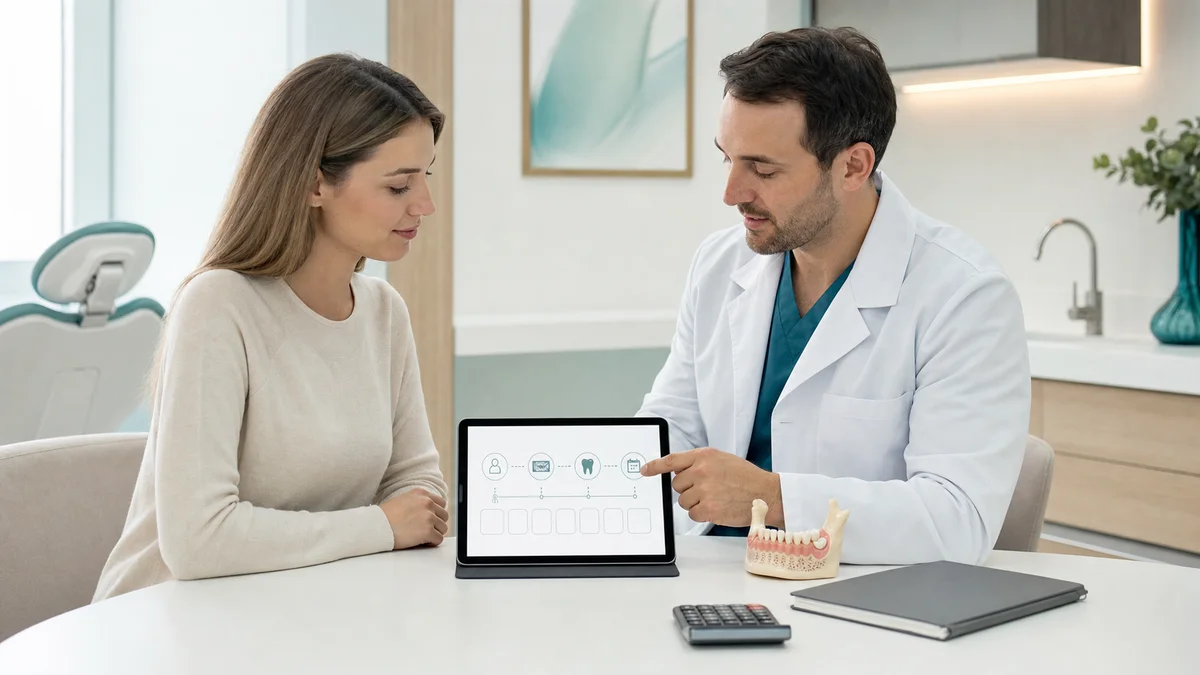
Quick answer: A wisdom tooth removal payment plan divides an agreed bill into instalments, but the monthly amount is only one detail. Confirm the diagnosis, itemised clinical scope, total repayable amount, interest method, fees, due dates, credit consequences, cancellation terms and follow-up cover. Compare insurance or public-care eligibility before borrowing, and never let financing pressure decide whether a healthy tooth is removed.
A wisdom tooth removal payment plan can make a necessary extraction easier to budget, especially when several teeth, surgical access or sedation are involved. It can also hide important differences. One arrangement may be an interest-free schedule administered by a clinic; another may be a regulated loan or medical credit card whose promotional rate expires. A low monthly figure does not reveal the full cost, who owns the debt or what happens if the clinical plan changes.
Start with two separate decisions. The clinical decision asks whether removal is indicated and which technique and setting are proportionate. The financial decision asks how the valid treatment will be paid for. Approval for finance is not evidence that surgery is needed, and a treatment recommendation should not become more aggressive because a larger credit limit is available.
This guide explains how to compare payment structures without giving personal financial advice, legal advice or a fixed price. Credit rules, insurance, public dental systems and consumer protections vary by country and contract. Read the current disclosure supplied by the lender and clinic, and seek independent financial or legal guidance when the terms are unclear.
1. Confirm the Removal Is Clinically Justified Before Financing
Wisdom teeth may be fully erupted, partly erupted or impacted. Position alone does not prove that extraction is required. Problems that can support removal include pain linked to the tooth, recurrent infection around a partly erupted tooth, non-restorable decay, gum damage, abscess, cystic change, resorption or damage to a neighbouring tooth. Examination and imaging selected for a clinical purpose should establish the reason.
The National Institute for Health and Care Excellence advises against prophylactic removal of pathology-free impacted third molars in its NHS guidance. It recommends limiting surgery to defined disease or other clinical indications. The NHS wisdom tooth removal guide likewise states that a tooth causing no problems is usually monitored during routine dental reviews.
Why diagnosis belongs in the finance file
The written estimate should identify which teeth are planned for treatment and why. “Wisdom teeth” is not sufficiently specific when only one tooth is diseased or when techniques differ by side. Ask whether the recommendation could change after a new panoramic image, specialist examination or review of symptoms. If the plan is not yet final, the finance agreement should not assume the maximum procedure without explaining adjustments and refunds.
- Diagnosis and indication for each tooth.
- Whether monitoring remains a reasonable alternative.
- Expected simple or surgical extraction route.
- Main personalised risks, including nerve or sinus proximity.
- Imaging or specialist review still needed before confirmation.
2. Separate the Treatment Estimate From the Credit Agreement
A treatment estimate describes healthcare: services, anticipated technique, clinician, setting and included aftercare. A credit agreement describes money: principal, lender, interest, fees, repayment dates and default consequences. They may be presented on the same screen, but they are different contracts with different responsibilities.
If a third-party lender pays the clinic immediately, the patient may owe the lender even while disputing a clinical charge with the provider. If the clinic manages instalments itself, the treatment and payment relationship may remain together, but cancellation and missed-payment rules still matter. Ask for both documents before authorising treatment or credit.
Three names to identify
- Clinical provider: the dentist, surgeon or organisation responsible for care.
- Finance provider: the organisation that advances or administers the credit.
- Payment processor or collector: the party that takes instalments or pursues arrears.
These roles may be held by one or several organisations. Record contact details for each. A clinic receptionist may not be authorised to change a lender’s terms, and a lender cannot answer whether postoperative review is clinically adequate.
3. Build an Itemised Wisdom Tooth Removal Estimate
A useful quote shows the expected care pathway rather than one unexplained total. The purpose is not to predict every event; it is to distinguish included services from possible additional charges. The estimate should state its validity period and whether tax, facility or laboratory fees apply.
Pre-treatment components
Confirm whether the consultation, clinical examination, panoramic radiograph, CBCT when justified, medical review and specialist opinion are included. Not every patient requires three-dimensional imaging. If records from another clinic are diagnostically usable, ask whether they can prevent unnecessary duplication.
Procedure and anaesthesia components
The estimate should identify the teeth, simple or surgical classification, local anaesthetic and any separate sedation or general anaesthetic service. Sedation can involve an additional clinician, monitoring, facility, medicines and recovery requirements. “All-inclusive extraction” should be unpacked so that a change in technique or anaesthesia has a known financial process.
Recovery and follow-up components
Ask whether routine review, suture care, urgent advice, dry-socket assessment, necessary local dressings and record transfer are included. Medicines may be prescribed separately and should not be promised as a standard bundle. Antibiotics are not automatically appropriate for every extraction. Travel, accommodation, an escort, time away from work and home follow-up are real budget items even when they are outside the dental invoice.
4. Payment Plan Comparison Table
| Payment route | Who is usually owed money | Potential advantage | Main term to inspect | Question before signing |
|---|---|---|---|---|
| Clinic-managed instalments | The dental provider or its processor | May be simpler and may carry no interest | Deposit, schedule, missed-payment and cancellation rules | Does treatment progress depend on every instalment clearing? |
| Third-party instalment loan | A lender or finance company | Can spread repayment beyond the treatment date | APR, total repayable, fixed or variable rate and fees | What happens to the loan if treatment is reduced or cancelled? |
| Medical credit card | The card issuer | May offer a promotional period | Deferred interest, minimum payments and promotional deadline | Will interest be charged on the original amount if a balance remains? |
| Regular credit card or personal borrowing | The existing card issuer, bank or credit union | Terms may already be familiar and independently comparable | APR, fees, available limit and effect on other obligations | Is it cheaper than the clinic-offered finance after all costs? |
| Insurance, public care or assistance | Depends on the system; borrowing may not be required | Can reduce the amount paid or financed | Eligibility, referral, network, authorisation and exclusions | Have benefits been checked in writing before taking credit? |
No row is automatically best. A genuinely interest-free clinic schedule may be economical but have a short repayment period. A longer loan may reduce each instalment while increasing the total amount paid. Public or insurance pathways may reduce direct cost but have eligibility and referral requirements. Compare like with like: the same confirmed clinical scope over the full repayment term.
5. Calculate Total Repayable, Not Only the Monthly Instalment
The central calculation is straightforward in concept:
Total repayable = amount financed + all interest + mandatory credit fees.
The deposit and any charges paid directly to the clinic belong in the complete treatment budget even if they are not part of the loan. Optional insurance or membership products should be listed separately. Ask whether the quoted rate is an annual percentage rate, whether it is fixed or variable, how interest compounds, and whether early repayment changes the cost.
Why a smaller monthly payment can cost more
Extending the term can make an instalment look manageable while adding more interest periods. Compare the number of payments, total repayable and end date. Check whether a final balloon payment, account fee or early-settlement charge exists. A verbal statement such as “about this much per month” is not a substitute for the lender’s written disclosure.
Stress-test the schedule
Consider whether payments remain affordable if income falls, travel costs rise or another dental problem needs treatment. Check the grace period, late fee, default rate, collection process and credit-reporting policy. This is not pessimism; it is the same risk planning used for the surgical pathway.
6. Understand Deferred Interest Before Accepting “No Interest”
“No interest if paid in full” can describe deferred interest rather than a true zero-interest loan. The distinction matters. The US Consumer Financial Protection Bureau warns that some medical credit products charge interest on the full original amount if the balance is not completely paid by the promotional deadline or if terms are breached. Minimum payments may not be enough to clear the balance in time.
Ask the issuer to identify the exact promotional end date, standard rate, events that cancel the promotion and how payments are allocated. Set a repayment target based on clearing the balance before that date, not merely making the minimum. Keep statements and confirmation of the final zero balance.
True zero interest versus deferred interest
With a true zero-interest period, interest generally does not accrue during the stated period, although terms after it ends still matter. With deferred interest, interest may accrue in the background and become payable retroactively if the conditions are not met. The product name or advertising headline does not establish which structure applies; the agreement does.
7. Check Insurance and Public-Care Eligibility Before Borrowing
Verify whether dental insurance, medical insurance, a public dental pathway, employer benefits or financial assistance can reduce the amount that needs financing. Coverage can depend on diagnosis, network, referral, anaesthesia, setting and plan rules. “Covered” does not mean every component is paid in full.
Request a written estimate of benefits when available, but remember that it may not be a guarantee. Ask how deductibles, annual maximums, waiting periods, exclusions, coordination of benefits and pre-authorisation apply. Confirm whether the surgeon, anaesthesia provider, imaging centre and facility are assessed separately.
In England, the NHS explains that qualifying wisdom tooth removal by an NHS dentist is generally handled within the applicable dental charge band, with exemptions or help available for eligible patients; hospital referral arrangements can differ. The NHS Business Services Authority publishes current charge and help information. Patients elsewhere should use the official public or insurer source for their jurisdiction rather than applying English rules globally.
8. Match Payment Milestones to Clinical Milestones
A payment schedule should reflect what happens if the plan changes. The clinic may require a booking deposit, a balance before sedation, or staged payments around consultation and surgery. Ask which amounts are refundable, when they become non-refundable and whether third-party charges continue after cancellation.
Before diagnosis is final
A limited consultation or imaging fee can be clearer than financing a presumed operation. If specialist review could change full removal to coronectomy, simple to surgical extraction, or treatment to monitoring, the agreement should explain how the principal is adjusted.
If fewer teeth are removed
The contract should state how the clinic notifies the lender, how quickly a refund or principal reduction is processed, and whether interest or fees are recalculated. Do not assume that a verbal clinic credit automatically changes the lender balance. Obtain written confirmation from both organisations.
If treatment is postponed
Illness, unresolved infection, medical clearance, pregnancy considerations, equipment problems or clinician judgement can change timing. Clarify whether repayments start at approval, at disbursement or after treatment. A patient should not discover after postponement that the credit clock began on the application date.
9. Do Not Trade Away Follow-Up to Lower the Quote
Wisdom tooth surgery is not complete when the tooth leaves the socket. Patients need written aftercare, a route for bleeding or worsening symptoms, and access to assessment for dry socket, infection, altered sensation or another complication. A lower quote that excludes all postoperative responsibility may become expensive and unsafe.
Ask which reviews are included, which events create a new fee and how urgent contact works outside opening hours. If a different clinic provides follow-up, obtain the record, procedure note, imaging and medication details. The original provider should explain how it will communicate with that clinician.
Clinical red flags override finance timing
Persistent bleeding despite instructed measures, severe or worsening pain and swelling, fever with feeling unwell, difficulty swallowing or breathing, or rapidly spreading facial swelling needs prompt professional assessment. Do not wait for the next payment date or lender approval. Emergency access should be identified before surgery.
10. Payment Plans for Dental Travel
International care adds currencies, card conversion, travel and cross-border dispute questions. Request the treatment estimate in a stated currency and ask whether the payment processor adds conversion or foreign-transaction fees. Confirm which law governs the credit agreement and where a complaint can be made.
Budget for flights, accommodation, local transport, an escort when required, recovery time and potential date changes. A complication treated at home may not be covered by the overseas clinic, travel insurance or dental insurance. Read each policy directly; do not rely on an informal promise that “everything is covered.”
Before paying an overseas deposit
- Confirm the clinician, clinic address and professional registration route.
- Obtain the provisional diagnosis, planned teeth, anaesthesia and included aftercare.
- Read deposit, cancellation, refund and rescheduling terms.
- Check payment currency, processor, conversion and card-dispute rules.
- Agree how records and urgent follow-up will be provided after returning home.
Patients considering care in Istanbul can review Redent Klinik’s English clinic information and use the contact page to submit existing records for an initial discussion. A remote estimate remains provisional until appropriate examination and imaging confirm the clinical plan.
11. Protect Personal and Financial Information
A credit application can request identity, income, banking and credit information. Confirm that the application is on the lender’s genuine secure domain and understand what the clinic can see. Do not send complete card details, passwords or identity documents through an unverified messaging account.
Read consent for credit checks and data sharing. A soft enquiry and a hard credit enquiry can have different consequences. Ask whether missed instalments are reported to credit agencies, whether automatic payments can be changed, and how to revoke authorisation after the balance is cleared.
12. Warning Signs in a Wisdom Tooth Removal Payment Plan
- Finance approval is offered before a documented dental diagnosis.
- The monthly payment is promoted, but the total repayable amount is hidden.
- “Zero interest” is used without identifying deferred-interest conditions.
- The clinic will not provide itemised clinical and financial documents.
- A larger loan is used to encourage removal of additional healthy teeth.
- The patient is pressured to sign immediately or told the price exists only for minutes.
- Refunds depend on an undefined internal decision after the lender has paid the clinic.
- No written postoperative or urgent-care route is included.
- Guarantees of painless surgery, exact recovery or permanent absence of complications are made.
One concern may have an explanation, but unresolved pressure or missing terms is a reason to pause non-urgent care. Obtain the paperwork, compare another provider or finance route, and ask an independent professional to review unfamiliar terms.
13. A 12-Point Pre-Signature Checklist
- Is the clinical indication documented for each tooth?
- Does the estimate separate consultation, imaging, extraction, anaesthesia and follow-up?
- Is the final technique confirmed or still provisional?
- Have insurance, public-care and assistance options been checked first?
- Who is the lender, and who receives each payment?
- What are the deposit, principal, interest method and mandatory fees?
- What is the total repayable amount and final payment date?
- Is a promotional rate true zero interest or deferred interest?
- What happens after a late payment or unaffordable month?
- How are cancellation, reduced treatment and refunds handled with the lender?
- Which routine and urgent postoperative services are included?
- Have you received complete copies of both contracts before signing?
A safe agreement should allow these questions to be answered without guesswork. Keep the accepted treatment estimate, credit disclosure, receipts, insurer correspondence and clinical consent in one place.
14. Frequently Asked Questions
Can I get a wisdom tooth removal payment plan with no credit check?
Some clinic schedules or finance products may not use a conventional credit check, but that does not make them free or affordable. Review the total repayable, fees, missed-payment consequences and data reporting. Approval criteria vary, and the clinic should not promise acceptance on a lender’s behalf.
Is an interest-free dental payment plan really free?
It can be, but only the contract confirms this. Check for administrative fees and whether the offer uses deferred interest. With deferred interest, failing to clear the balance by the deadline can trigger interest calculated from the original transaction under the product’s terms.
Should I finance all four wisdom teeth together?
Only teeth with a defensible clinical plan should enter the estimate. Treating several indicated teeth in one session may be reasonable, but finance should not determine the number removed. Ask for the diagnosis and risk assessment for each tooth and an adjustment process if the plan changes.
Does insurance cover wisdom tooth removal?
Coverage varies by plan, diagnosis, provider, network, setting and anaesthesia. Ask for a written benefit estimate and clarify deductibles, limits and exclusions. Even pre-authorisation may not guarantee final payment, so understand who is responsible if the insurer pays less than expected.
Can the clinic increase the price after I sign?
The documents should describe what is fixed, what is estimated and which new findings can change the fee. Additional clinically necessary services should be explained and consented to where circumstances allow. Ask how a higher or lower final bill changes the finance principal and instalments.
What happens to the loan if surgery is cancelled?
That depends on lender and clinic terms. The clinic may need to return funds or notify the lender, but cancellation of treatment may not automatically cancel credit. Get written confirmation of the revised balance, fees and repayment status from the finance provider.
Can I repay a dental loan early?
Some agreements allow early repayment without penalty; others calculate charges differently. Ask for the early-settlement process and a written payoff amount. With deferred-interest products, clearing the eligible balance before the promotional deadline can be especially important.
Is sedation included in the extraction payment plan?
Do not assume so. Sedation or general anaesthesia may involve separate professionals, facilities and monitoring. The itemised estimate should show the proposed method and whether changes create an additional fee. Anaesthesia choice must remain clinical, not a finance package upgrade.
Can I delay painful wisdom tooth treatment until I save enough?
A dentist should assess the symptoms and urgency. Some conditions can be planned electively; spreading infection, systemic illness, airway concerns or uncontrolled symptoms may need prompt care. Ask about safe interim management and legitimate assistance options rather than self-treating or waiting without assessment.
What is the best wisdom tooth removal payment plan?
There is no universal best plan. The safer choice funds an appropriate, itemised treatment, has a manageable schedule, transparent total cost, acceptable credit consequences, fair change and refund terms, and adequate follow-up. Compare the complete contract, not only the advertised monthly amount.
15. Bottom Line
A payment plan is useful when it supports necessary care without obscuring risk. First establish whether each tooth should be removed and what procedure is likely. Then compare the same clinical scope across finance routes, calculate total repayment, identify deferred interest and verify insurance or public-care options before borrowing.
The best protection is documentation: an itemised treatment estimate, a separate credit disclosure, clear milestone and refund rules, and a written follow-up pathway. Financial convenience should improve access to sound care, never replace diagnosis or pressure a patient into unnecessary surgery.
Sources
- NICE: Guidance on the extraction of wisdom teeth
- NHS: Wisdom tooth removal
- NHS Business Services Authority: Help with NHS dental costs
- Consumer Financial Protection Bureau: Medical credit cards and payment plans
- Consumer Financial Protection Bureau: Medical credit cards and financing plans report
- American Dental Association
- World Health Organization: Oral health fact sheet