
If you are researching modern dental treatments, one of the most common questions you may ask is
does orthodontia include Invisalign. This question reflects a growing shift in patient expectations,
where people want effective orthodontic solutions without the visual and lifestyle challenges of traditional braces.
Orthodontia has evolved significantly over the past few decades, and Invisalign has become a major part of that evolution.
To clearly answer the question does orthodontia include Invisalign, it is important to first understand
what orthodontia actually covers. Orthodontia is a specialized field of dentistry focused on diagnosing, preventing,
and correcting misaligned teeth and jaws. Traditionally, orthodontic treatment was almost entirely associated with
metal braces, wires, and brackets. However, modern orthodontia now includes a wide range of treatment options,
and Invisalign is one of the most widely recognized among them 😊.
So, does orthodontia include Invisalign as an official and legitimate treatment method?
Yes, absolutely. Invisalign is considered a form of orthodontic treatment because it is designed to gradually move teeth
into their correct positions using controlled, planned force—just like braces. The difference lies in how that force is
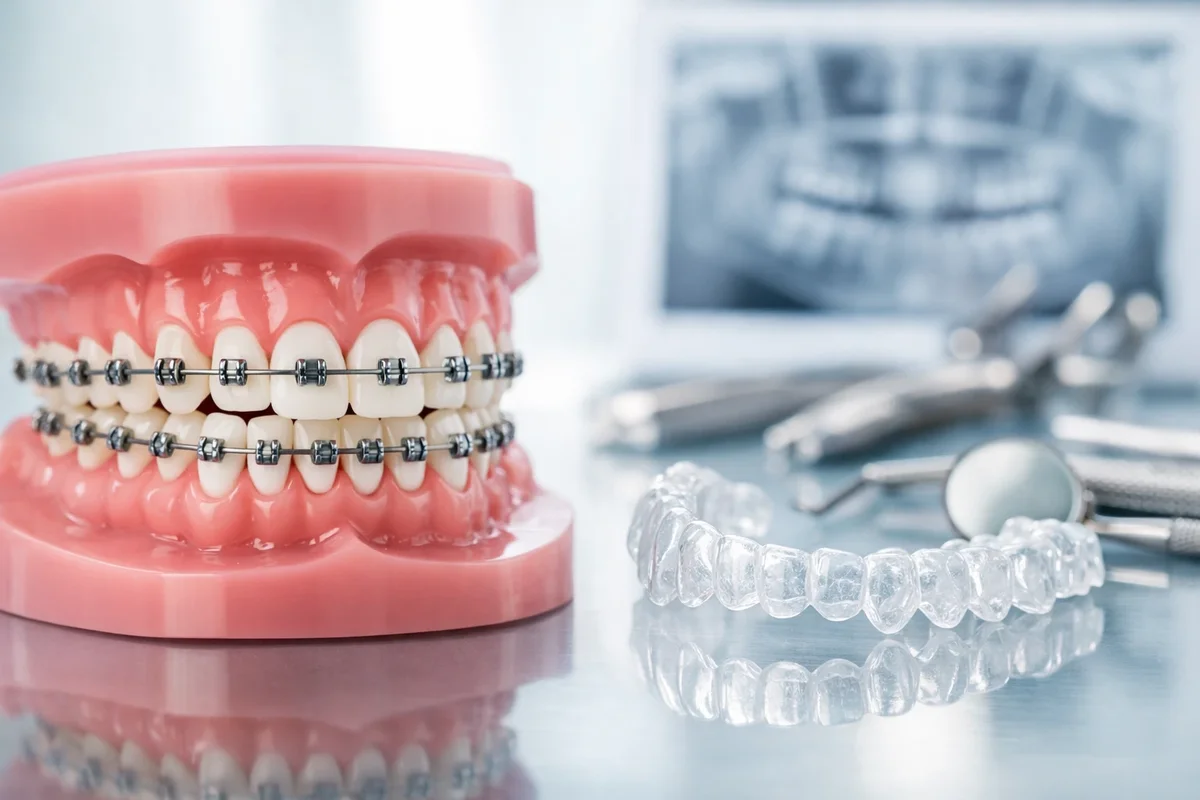
applied. Instead of metal brackets and wires, Invisalign uses a series of custom-made, clear aligners that fit snugly over
your teeth.
Many patients mistakenly believe that Invisalign is a cosmetic shortcut rather than a true orthodontic solution.
This misconception often leads people to question whether does orthodontia include Invisalign in the same
category as braces. In reality, Invisalign aligners are developed using advanced digital orthodontic planning, often
overseen by licensed orthodontists who specialize in tooth movement, bite correction, and jaw alignment.
From a clinical perspective, Invisalign is firmly rooted in orthodontic science. Each aligner is designed to move teeth
by fractions of a millimeter according to a precise treatment plan. This controlled movement is the defining principle
of orthodontia, which means the answer to does orthodontia include Invisalign is not only yes, but yes in
a fully scientific and professional sense.
Another reason people frequently ask does orthodontia include Invisalign is that Invisalign is sometimes
marketed differently than traditional braces. You may see Invisalign promoted as a “clear aligner” or “invisible braces,”
which can make it feel separate from orthodontics. However, professional dental organizations and orthodontic associations
recognize Invisalign as a legitimate orthodontic treatment when prescribed and supervised by qualified professionals.
In fact, many orthodontic clinics now offer Invisalign alongside braces as part of their standard treatment options.
When you visit an orthodontic clinic and discuss alignment issues, bite problems, or spacing concerns, Invisalign is often
presented as one of several orthodontic solutions. This further confirms that does orthodontia include Invisalign
is not a debate, but an established reality in modern dentistry.
Patients also ask does orthodontia include Invisalign because they are concerned about treatment scope.
Can Invisalign really address the same problems as braces? While Invisalign may not be suitable for every complex case,
it is highly effective for many orthodontic conditions, including mild to moderate crowding, spacing issues, overbites,
underbites, and crossbites. Orthodontia is not defined by the tool used, but by the goal of correcting alignment—and Invisalign
clearly meets that goal in many cases.
Another key factor is professional oversight. Invisalign treatment is not a DIY solution when done correctly. It is planned,
monitored, and adjusted by orthodontists or dentists trained in orthodontics. This professional involvement reinforces that
does orthodontia include Invisalign should be answered with confidence and clarity.
If you are considering orthodontic treatment and wondering whether Invisalign is right for you, consulting a professional
clinic is essential. You can reach out through the
Redent Klinik Contact Page
to receive a personalized orthodontic evaluation and understand whether Invisalign fits your treatment needs.
For authoritative information about orthodontic standards and treatments, you can also refer to the
American Dental Association,
which recognizes clear aligner therapy as part of modern orthodontic care.
In summary, if you are still asking does orthodontia include Invisalign, the answer is a clear and
well-supported yes. Orthodontia has expanded beyond traditional braces, and Invisalign is now an integral part of how
teeth are aligned safely, effectively, and discreetly. Understanding this helps patients make informed decisions and
feel confident choosing a treatment that aligns with both their dental health and lifestyle goals 😁.
What Orthodontia Really Means in Modern Dentistry
Before fully understanding does orthodontia include Invisalign, it is essential to clarify what orthodontia
means in today’s dental landscape. Many patients associate orthodontia only with metal braces, but this view is outdated.
Modern orthodontia is a comprehensive dental specialty focused on correcting tooth alignment, jaw positioning, and bite
function using scientifically guided methods and tools 😊.
Orthodontia is not defined by the appearance of the appliance but by the biological process of controlled tooth movement.
This is why the question does orthodontia include Invisalign is so relevant today—because orthodontia has
expanded alongside technology, patient expectations, and advancements in digital dentistry.
The Core Purpose of Orthodontia
At its core, orthodontia aims to improve both oral health and function. Crooked teeth, misaligned bites, and jaw irregularities
can lead to long-term issues such as uneven tooth wear, gum disease, speech difficulties, and even jaw pain. Orthodontic
treatment addresses these concerns by applying gradual force to reposition teeth into healthier alignments.
This fundamental principle helps explain does orthodontia include Invisalign. If a treatment method applies
controlled, planned force to move teeth safely, it falls under orthodontia. Invisalign aligners do exactly that, using a
series of precisely engineered trays that guide teeth step by step toward ideal positioning.
How Modern Orthodontia Has Evolved
In the past, orthodontia relied almost exclusively on metal brackets and wires. While these methods remain effective,
modern orthodontia now includes multiple treatment options designed to meet different clinical needs and lifestyle
preferences. Clear aligners, lingual braces, ceramic braces, and hybrid systems are all part of today’s orthodontic toolkit.
This evolution directly supports the answer to does orthodontia include Invisalign. Invisalign emerged as a
response to patients seeking less visible, more comfortable orthodontic solutions without sacrificing effectiveness.
As orthodontia evolved, Invisalign became integrated—not separated—from mainstream orthodontic practice.
Digital Planning and Orthodontic Precision
One of the defining features of modern orthodontia is digital treatment planning. Advanced 3D imaging and computer-guided
models allow orthodontists to map tooth movement from start to finish. Invisalign is built entirely on this technology,
which further reinforces why does orthodontia include Invisalign is answered affirmatively in clinical settings.
Each Invisalign treatment plan is customized using digital scans, allowing orthodontists to predict outcomes, monitor
progress, and make adjustments as needed. This level of precision was not always available with traditional methods,
yet it aligns perfectly with orthodontic goals.
The Role of Diagnosis in Orthodontia
Orthodontia begins with diagnosis, not appliance selection. An orthodontist evaluates tooth alignment, jaw relationships,
facial structure, and bite function before recommending any treatment. Whether the final plan includes braces or aligners,
the diagnostic process remains the same.
This diagnostic-first approach explains why does orthodontia include Invisalign is not a marketing question
but a clinical one. If Invisalign is chosen after proper diagnosis and planning, it becomes part of orthodontia by definition.
Orthodontia vs Cosmetic Dentistry
Another reason patients ask does orthodontia include Invisalign is confusion between orthodontia and cosmetic
dentistry. Cosmetic dentistry focuses on appearance, while orthodontia focuses on structure, alignment, and function.
Although Invisalign is discreet, its purpose is orthodontic—not merely cosmetic.
Invisalign corrects bite issues, spacing, and crowding, which are functional dental problems. This distinction is important
because it places Invisalign squarely within orthodontia rather than outside of it.
Why the Definition Matters for Patients
Understanding what orthodontia truly means helps patients make informed decisions. When people ask does orthodontia
include Invisalign, they are often concerned about effectiveness, legitimacy, and professional oversight. Knowing
that Invisalign follows the same orthodontic principles as braces provides reassurance and clarity.
Orthodontia today is patient-centered, flexible, and technology-driven. Invisalign is a direct result of that evolution.
Rather than replacing orthodontia, Invisalign represents how orthodontia has adapted to modern needs while maintaining
scientific integrity 😁.
In conclusion, understanding what orthodontia really means in modern dentistry makes it clear why does orthodontia
include Invisalign is no longer a gray area. Orthodontia is defined by treatment goals and biological principles,
not by metal or wires. Invisalign fits seamlessly into this definition, making it a recognized and respected part of
contemporary orthodontic care.
Does Orthodontia Include Invisalign as a Standard Treatment?
One of the most important questions patients ask today is does orthodontia include Invisalign as a standard
treatment rather than a niche or optional alternative. As orthodontic care has modernized, Invisalign has moved from being
a new technology to a mainstream solution used in clinics around the world. Understanding how Invisalign fits into standard
orthodontic practice helps patients feel confident when choosing their treatment 😊.
To accurately answer does orthodontia include Invisalign, we must look at how orthodontic standards are set.
Orthodontia is governed by clinical guidelines, professional training, and evidence-based outcomes. Invisalign meets these
criteria because it is prescribed, planned, and monitored by trained dental professionals using orthodontic principles.
What Defines a “Standard” Orthodontic Treatment?
A standard orthodontic treatment is not defined by how common it is alone, but by whether it follows accepted orthodontic
protocols. These protocols include diagnosis, treatment planning, controlled force application, progress monitoring, and
retention after treatment. Invisalign aligns with all of these stages, which directly supports the conclusion that
does orthodontia include Invisalign as a standard option.
In many orthodontic clinics today, Invisalign is presented alongside traditional braces during consultations. This shows
that Invisalign is no longer considered experimental or secondary. Instead, it is a standard orthodontic tool used when
clinically appropriate.
Why Invisalign Is Included in Orthodontic Education
Another strong indicator that does orthodontia include Invisalign as a standard treatment is professional
education. Orthodontists and dentists receive formal training in clear aligner therapy during their education or through
certified postgraduate programs. Invisalign is taught as part of orthodontic biomechanics, treatment planning, and case
selection.
Because orthodontia evolves with scientific progress, new tools become part of standard care once they are proven safe and
effective. Invisalign has undergone extensive research, clinical trials, and real-world use, which has secured its place
within standard orthodontic practice.
Clinical Acceptance and Guidelines
Professional dental organizations recognize clear aligner therapy as an orthodontic treatment method. This recognition is
important because it confirms that Invisalign operates within established orthodontic frameworks. When patients ask
does orthodontia include Invisalign, the answer is reinforced by institutional acceptance, not just popularity.
Orthodontists follow guidelines to determine whether Invisalign or braces are more suitable for a given case. This clinical
decision-making process further demonstrates that Invisalign is embedded within orthodontia, not outside of it.
How Invisalign Became a Routine Orthodontic Option
Invisalign became standard over time as technology improved. Early versions were best suited for simple cases, but modern
aligner systems can now address more complex orthodontic issues. This expansion of capability is a major reason why
does orthodontia include Invisalign is now answered with confidence in most clinical settings.
Digital scanning, artificial intelligence-assisted planning, and improved aligner materials allow Invisalign to produce
predictable results. As a result, orthodontists routinely recommend Invisalign for suitable patients as part of standard
care protocols.
Patient Demand and Clinical Validation
Patient demand alone does not make a treatment standard. However, when demand aligns with clinical success, adoption follows.
Patients appreciate Invisalign for its comfort, aesthetics, and convenience, but orthodontists support it because it delivers
reliable outcomes. This balance strengthens the argument that does orthodontia include Invisalign as a standard
treatment is no longer a question of opinion.
In many clinics, Invisalign cases make up a significant portion of orthodontic treatments. This prevalence further confirms
its standard status within orthodontia.
When Invisalign Is Considered Standard vs Alternative
It is important to note that while Invisalign is a standard orthodontic option, it is not always the best option for every
case. Severe skeletal discrepancies or highly complex movements may still require traditional braces or combined treatments.
However, this does not diminish the fact that does orthodontia include Invisalign remains true for a wide range
of cases.
Standard treatment does not mean universal treatment. Instead, it means Invisalign is a recognized, trusted, and commonly
used orthodontic method when conditions allow.
In conclusion, the answer to does orthodontia include Invisalign as a standard treatment is a clear yes.
Invisalign is fully integrated into modern orthodontic practice, supported by education, clinical guidelines, and consistent
results. For patients seeking effective and discreet orthodontic care, Invisalign stands as a standard, not secondary,
option within today’s orthodontia 😁.
How Invisalign Fits Into Orthodontic Treatment Plans
To fully understand does orthodontia include Invisalign, it is essential to examine how Invisalign is
actually integrated into orthodontic treatment plans. Orthodontia is not a one-size-fits-all discipline. Every patient
receives a customized plan based on dental structure, bite alignment, jaw function, and long-term oral health goals.
Invisalign fits into this process as a structured, orthodontically guided treatment rather than a standalone cosmetic option 😊.
When patients ask does orthodontia include Invisalign, they are often trying to understand whether Invisalign
is planned with the same depth and precision as traditional braces. The answer is yes. Invisalign treatment plans are
developed using detailed diagnostics, including digital scans, bite analysis, and movement simulations that follow core
orthodontic principles.
The Orthodontic Treatment Planning Process
Orthodontic treatment begins with a comprehensive assessment. This includes evaluating tooth alignment, spacing, crowding,
jaw symmetry, and bite relationships. These evaluations determine the mechanics needed to move teeth safely and effectively.
This diagnostic stage is critical in answering does orthodontia include Invisalign, because Invisalign is
only recommended when it can meet these orthodontic requirements.
Once diagnostics are complete, the orthodontist creates a phased treatment plan. With Invisalign, this plan is translated
into a series of aligners, each designed to move teeth incrementally. This step-by-step movement mirrors the mechanics of
braces, reinforcing that Invisalign is fully embedded in orthodontia.
Digital Simulation and Predictable Outcomes
One of Invisalign’s strongest roles in orthodontic treatment plans is digital simulation. Orthodontists can visualize the
entire treatment journey before it begins. This allows precise control over tooth movement and bite correction. Because of
this predictability, the question does orthodontia include Invisalign becomes easier to answer—Invisalign
follows orthodontic planning at the highest technological level.
Each aligner is worn for a specific period, applying controlled force. The orthodontist monitors progress and adjusts the
plan if needed. This ongoing supervision confirms Invisalign’s place within orthodontic care rather than outside it.
How Invisalign Addresses Orthodontic Goals
Orthodontic goals typically include straightening teeth, correcting bite issues, improving function, and enhancing facial
balance. Invisalign can achieve these goals in many cases, which further clarifies does orthodontia include Invisalign.
Modern aligners can correct crowding, spacing, overbites, underbites, and crossbites when properly planned.
The success of Invisalign depends on case selection and patient compliance, both of which are managed within orthodontic
treatment planning. This reinforces that Invisalign is not separate from orthodontia—it operates within it.
Combining Invisalign With Other Orthodontic Techniques
In some cases, Invisalign is combined with other orthodontic tools such as attachments, elastics, or temporary anchorage
devices. These additions are common orthodontic techniques and demonstrate how Invisalign integrates seamlessly into
comprehensive treatment plans. This hybrid approach further supports the conclusion that does orthodontia include Invisalign
is not a theoretical question but a practical reality.
Attachments bonded to teeth allow aligners to apply more complex forces, expanding the range of orthodontic movements
possible with Invisalign. This makes it suitable for increasingly complex cases.
Monitoring, Adjustments, and Retention
Orthodontic treatment does not end when teeth are straight. Monitoring progress and maintaining results are essential
components of orthodontia. Invisalign treatment plans include regular check-ups, refinements, and retention strategies,
just like traditional braces. This full lifecycle approach answers does orthodontia include Invisalign
with clarity and confidence.
After active treatment, retainers are prescribed to maintain alignment. Invisalign retainers are often used, keeping the
entire process within the orthodontic framework.
In summary, Invisalign fits into orthodontic treatment plans as a fully structured, professionally guided system. It follows
the same diagnostic, planning, execution, and retention principles as any orthodontic treatment. For this reason, the answer
to does orthodontia include Invisalign is a definitive yes. Invisalign is not an add-on or shortcut—it is an
integrated orthodontic solution designed to meet modern patient needs while preserving clinical excellence 😁.
Traditional Braces vs Invisalign in Orthodontia
When patients compare treatment options, one of the most common follow-up questions after asking
does orthodontia include Invisalign is how Invisalign compares to traditional braces. Both systems are
orthodontic treatments, but they differ significantly in appearance, mechanics, comfort, and lifestyle impact.
Understanding these differences helps patients choose the option that best fits their needs while staying within
the scope of professional orthodontia 😊.
It is important to emphasize that asking does orthodontia include Invisalign does not mean Invisalign
replaces braces. Instead, modern orthodontia includes multiple tools, and both braces and Invisalign are used based
on clinical suitability, patient preferences, and treatment complexity.
How Traditional Braces Work in Orthodontia
Traditional braces use brackets bonded to the teeth and connected by wires that are periodically adjusted. These
adjustments apply controlled force to move teeth into alignment over time. Braces have been used successfully for
decades and remain a gold standard for complex orthodontic cases.
Because braces can apply continuous force and allow for precise control of tooth movement, they are often chosen
for severe crowding, significant bite discrepancies, or skeletal issues. This does not contradict the idea that
does orthodontia include Invisalign; it simply means orthodontia offers different solutions for
different needs.
How Invisalign Works Compared to Braces
Invisalign uses a series of removable, clear aligners that gradually shift teeth. Each aligner is worn for a specific
period before moving to the next one in the series. Like braces, Invisalign relies on orthodontic biomechanics, but
the force is delivered through aligner material rather than wires and brackets.
This comparison highlights why does orthodontia include Invisalign is best answered by understanding
function rather than form. Both systems are designed to achieve orthodontic goals—straight teeth, proper bite, and
long-term stability.
Aesthetic and Lifestyle Differences
One of the biggest reasons patients prefer Invisalign is aesthetics. Clear aligners are nearly invisible, making
them popular among adults and professionals. Braces, while effective, are more noticeable. This difference often
leads patients to ask does orthodontia include Invisalign as a more discreet alternative—and the
answer remains yes.
Lifestyle factors also play a role. Invisalign aligners are removable, allowing easier eating and oral hygiene.
Braces require dietary restrictions and more meticulous cleaning. However, removable aligners require strong
patient compliance, which is an important consideration in orthodontic planning.
Effectiveness and Case Selection
Both braces and Invisalign are effective when used appropriately. The key difference lies in case selection.
Orthodontists evaluate whether Invisalign can achieve the necessary movements for a given patient. When it can,
it becomes a valid orthodontic option, reinforcing the idea that does orthodontia include Invisalign
depends on clinical judgment rather than preference alone.
For moderate alignment issues, Invisalign can produce results comparable to braces. For more complex cases, braces
or a combination of treatments may be recommended. This flexibility is a strength of modern orthodontia.
Treatment Duration and Adjustments
Treatment time varies for both systems depending on complexity and compliance. Invisalign may offer shorter or
similar treatment times in suitable cases, but missed wear can delay progress. Braces provide constant force but
require regular in-office adjustments. These differences do not change the fact that does orthodontia include Invisalign
remains true within structured treatment plans.
Professional Oversight in Both Methods
Another misconception is that Invisalign requires less professional involvement than braces. In reality, both
treatments require ongoing orthodontic supervision. Invisalign plans are reviewed, refined, and adjusted by
orthodontists just like brace treatments.
This level of oversight reinforces that Invisalign is not a shortcut or cosmetic workaround. It is an orthodontic
system that operates under the same professional standards, further confirming that does orthodontia include Invisalign
is a well-established fact.
In conclusion, traditional braces and Invisalign are not competitors within orthodontia—they are complementary tools.
Each has strengths and limitations, and both serve the same orthodontic purpose when used correctly. Understanding
their differences helps patients see that the question does orthodontia include Invisalign is not
about choosing sides, but about choosing the right orthodontic solution for each individual case 😁.
Who Is a Good Candidate When Orthodontia Includes Invisalign?
After understanding does orthodontia include Invisalign and how it compares with traditional braces,
the next crucial question for patients is whether they are suitable candidates. Orthodontia is highly personalized,
and while Invisalign is a powerful orthodontic tool, it is not universally appropriate for every case. Determining
candidacy requires a careful clinical evaluation rooted in orthodontic science 😊.
When people ask does orthodontia include Invisalign, they are often really asking, “Can Invisalign work
for me?” The answer depends on several orthodontic factors, including the severity of misalignment, bite relationships,
jaw structure, and patient compliance.
Common Orthodontic Issues Invisalign Can Treat
Invisalign is effective for a wide range of orthodontic concerns. These include mild to moderate crowding, spacing
between teeth, overbites, underbites, crossbites, and minor rotations. In many of these cases, Invisalign performs
at a level comparable to braces when properly planned and supervised.
This effectiveness reinforces why does orthodontia include Invisalign is answered affirmatively for
many patients. Invisalign is not limited to cosmetic alignment—it addresses functional orthodontic problems that
impact long-term oral health.
Mild to Moderate Alignment Problems
Patients with mild to moderate orthodontic issues are often ideal candidates for Invisalign. Teeth that require
predictable, controlled movement without extensive vertical correction typically respond very well to aligner therapy.
In these situations, orthodontists frequently recommend Invisalign as part of standard orthodontia, further supporting
that does orthodontia include Invisalign is a practical, real-world truth.
Cases Where Invisalign May Be Limited
Although Invisalign has advanced significantly, there are still cases where traditional braces may be more effective.
Severe skeletal discrepancies, complex bite corrections, or cases requiring significant jaw repositioning may exceed
the limits of aligner-only treatment.
However, even in these situations, Invisalign may still be used as part of a combined orthodontic approach. This hybrid
use further demonstrates that does orthodontia include Invisalign does not mean exclusivity—it means
integration within orthodontic planning.
The Importance of Orthodontic Evaluation
Only a qualified orthodontist can determine whether Invisalign is appropriate. This evaluation includes digital scans,
X-rays, bite analysis, and a review of oral health. This diagnostic process is identical whether Invisalign or braces
are being considered.
Because Invisalign is prescribed through this same orthodontic evaluation, it clearly falls under orthodontia. This
professional assessment is a key reason why does orthodontia include Invisalign should never be answered
based on advertising alone.
Age Considerations: Teens vs Adults
Both adults and teenagers can be good candidates for Invisalign. Adults often prefer Invisalign for aesthetic and
professional reasons, while teens may benefit from compliance features designed specifically for younger patients.
Age alone does not determine eligibility. Instead, orthodontic needs and patient responsibility are the deciding
factors. This further supports that does orthodontia include Invisalign applies across age groups
when conditions are appropriate.
Patient Compliance and Responsibility
One of the most important candidacy factors is compliance. Invisalign aligners must be worn 20–22 hours per day to
achieve desired results. Patients who are disciplined and motivated tend to succeed with Invisalign.
Orthodontists consider this behavioral factor carefully. Invisalign’s success relies on patient participation, which
is why candidacy is evaluated within orthodontia rather than assumed. This reinforces the professional nature of the
question does orthodontia include Invisalign.
Health and Lifestyle Factors
Good oral hygiene is essential for Invisalign candidacy. Patients with untreated gum disease or extensive decay may
require preliminary treatment before beginning orthodontic care. Once oral health is stabilized, Invisalign may be
considered as part of orthodontia.
Lifestyle factors such as frequent travel, professional visibility, and dietary habits may also influence treatment
choice. Invisalign’s flexibility makes it appealing in many modern lifestyles, strengthening its role within
orthodontia.
In conclusion, a good candidate for Invisalign is someone whose orthodontic needs align with aligner capabilities and
who can commit to the treatment plan. The decision is always guided by orthodontic evaluation, not convenience alone.
For this reason, the question does orthodontia include Invisalign is best answered through professional
assessment—and in many cases, the answer is a confident yes 😁.
Does Orthodontia Include Invisalign for Adults and Teens?
A very common follow-up to the question does orthodontia include Invisalign is whether this treatment
is appropriate for different age groups. Many people assume Invisalign is only for adults, while others believe teens
must rely on traditional braces. In reality, modern orthodontia serves both adults and adolescents, and Invisalign
plays an important role for each group when clinically appropriate 😊.
To properly answer does orthodontia include Invisalign for adults and teens, it is important to
understand that orthodontia is based on biological response, not age alone. Teeth move through the same physiological
process in both teenagers and adults, although growth patterns, compliance, and treatment goals may differ.
Why Invisalign Is Popular in Adult Orthodontia
Adults often seek orthodontic treatment later in life for reasons such as relapse after childhood braces, cosmetic
concerns, or functional bite problems. Invisalign is especially attractive to adults because it offers discretion,
comfort, and flexibility without compromising orthodontic effectiveness.
This popularity helps explain why does orthodontia include Invisalign is so frequently asked by adult
patients. Invisalign allows adults to correct alignment issues while maintaining professional and social confidence,
which has significantly expanded access to orthodontic care.
Orthodontic Challenges Unique to Adults
Adult orthodontic patients may present challenges such as slower tooth movement, existing dental restorations, or
gum sensitivity. Orthodontists account for these factors when planning Invisalign treatment. Digital planning allows
precise force control, making Invisalign a reliable orthodontic option for many adults.
Because Invisalign is carefully adapted to adult oral conditions, it reinforces that does orthodontia include Invisalign
is not limited by age but guided by professional evaluation.
Invisalign for Teens: A Structured Orthodontic Option
Teenagers are also strong candidates for Invisalign in many cases. Modern Invisalign systems designed for teens include
features such as compliance indicators and eruption accommodation. These enhancements allow orthodontists to monitor
wear time and adapt treatment as permanent teeth continue to emerge.
This innovation supports the idea that does orthodontia include Invisalign applies equally to teens
when orthodontic criteria are met. Invisalign is no longer an adult-only solution.
Growth and Development Considerations
Teen orthodontic treatment often coincides with jaw growth and dental development. Orthodontists carefully evaluate
growth patterns before recommending Invisalign. When growth allows predictable tooth movement, Invisalign becomes
a valid orthodontic option.
This growth-aware planning ensures Invisalign remains within orthodontic standards, reinforcing the answer to
does orthodontia include Invisalign across age groups.
Compliance Differences Between Adults and Teens
Compliance is a key factor in Invisalign success. Adults are generally highly compliant due to motivation and lifestyle
awareness. Teens can also succeed with Invisalign when properly supervised and educated.
Orthodontists assess responsibility levels during consultations. This assessment is part of orthodontic planning and
is another reason why does orthodontia include Invisalign cannot be answered without professional input.
Parental Involvement in Teen Invisalign Treatment
For teens, parental involvement plays a significant role in treatment success. Parents help ensure aligners are worn
as prescribed and appointments are attended regularly. This collaborative approach keeps Invisalign firmly within
orthodontia rather than outside it.
With proper support, teen patients often achieve excellent results, further confirming that does orthodontia include Invisalign
is age-inclusive when managed correctly.
Long-Term Outcomes for Adults and Teens
Both adults and teens can achieve stable, long-lasting results with Invisalign when retention protocols are followed.
Retainers are prescribed after treatment to maintain alignment, just as with traditional braces. This retention phase
is a standard part of orthodontia.
The inclusion of retention and follow-up care demonstrates once again that Invisalign is not a cosmetic shortcut. It
is a full orthodontic treatment system, which makes the answer to does orthodontia include Invisalign
clear and consistent.
In conclusion, Invisalign is widely used in orthodontia for both adults and teens. Age alone does not determine
eligibility—orthodontic needs, growth patterns, and compliance do. When these factors align, Invisalign becomes a
powerful and effective orthodontic solution for patients at different stages of life 😁.
The Role of Orthodontists in Invisalign Treatment
When patients ask does orthodontia include Invisalign, one of the most important yet often overlooked
aspects is the role of the orthodontist. Invisalign is sometimes marketed directly to consumers, which can create the
false impression that professional oversight is optional. In reality, orthodontists play a central and irreplaceable
role in ensuring Invisalign treatment is safe, effective, and truly orthodontic in nature 😊.
Understanding the orthodontist’s role helps clarify does orthodontia include Invisalign beyond the
appliance itself. Orthodontia is defined not only by tools but by expertise, diagnosis, and clinical judgment—areas
where orthodontists are essential.
Orthodontists as Specialists in Tooth Movement
Orthodontists are dental specialists who undergo additional years of training beyond general dentistry. This training
focuses on facial growth, bite mechanics, jaw alignment, and controlled tooth movement. Invisalign treatment relies
heavily on these principles, which is why orthodontist involvement is critical.
Because Invisalign uses the same biological mechanisms as braces, the question does orthodontia include Invisalign
is inseparable from orthodontic expertise. Aligners without proper planning can lead to incomplete correction, bite
issues, or relapse.
Diagnosis Before Appliance Selection
Orthodontists begin every Invisalign case with a comprehensive diagnosis. This includes digital scans, X-rays, bite
analysis, and evaluation of jaw relationships. Invisalign is only recommended if it can achieve orthodontic goals
safely and predictably.
This diagnostic process is identical to that used for braces, reinforcing that does orthodontia include Invisalign
depends on clinical assessment—not marketing claims.
Treatment Planning and Digital Control
One of the orthodontist’s most important roles in Invisalign treatment is creating and approving the digital treatment
plan. While Invisalign software can suggest tooth movements, orthodontists determine whether those movements are
biologically realistic and orthodontically sound.
This oversight ensures that Invisalign remains part of orthodontia. Without orthodontic planning, aligners become
generic trays rather than a true orthodontic treatment. This distinction is key to answering does orthodontia include Invisalign
accurately.
Adjustments, Refinements, and Monitoring
Orthodontic treatment is dynamic. Teeth do not always move exactly as predicted. Orthodontists monitor progress,
identify deviations, and order refinements when necessary. Invisalign treatment often includes additional aligners
to fine-tune results.
This ongoing involvement demonstrates that Invisalign is not a passive process. It requires professional decision-making
throughout treatment, which firmly places it within orthodontia.
Why Orthodontist Supervision Matters for Safety
Unsupervised or poorly planned aligner use can cause problems such as bite collapse, uneven tooth contact, gum
recession, or root damage. Orthodontists are trained to prevent these complications by controlling force direction,
timing, and magnitude.
This safety-focused approach is another reason why does orthodontia include Invisalign must be answered
with an emphasis on professional involvement. Invisalign is orthodontia only when used under proper supervision.
Orthodontists vs General Dental Providers
While some general dentists offer Invisalign, orthodontists bring specialized knowledge that is especially valuable
for complex cases. Orthodontists are better equipped to manage bite correction, jaw discrepancies, and long-term
stability.
This does not diminish Invisalign’s orthodontic status, but it highlights why the question does orthodontia include Invisalign
is closely tied to who provides the treatment.
Retention and Long-Term Stability
Orthodontists also manage the retention phase after Invisalign treatment. Retainers are prescribed to maintain tooth
alignment and prevent relapse. This phase is critical for long-term success and is a core component of orthodontia.
By overseeing retention, orthodontists ensure that Invisalign results are stable and durable, further confirming that
Invisalign is not a temporary cosmetic fix but a full orthodontic treatment.
In conclusion, orthodontists are the backbone of successful Invisalign treatment. Their expertise transforms clear
aligners into a precise orthodontic system. Without orthodontists, Invisalign loses its orthodontic foundation. This
is why the answer to does orthodontia include Invisalign is inseparable from professional oversight—and
why that answer remains a confident yes 😁.
Benefits of Choosing Invisalign Within Orthodontia
Once patients clearly understand does orthodontia include Invisalign, the next logical step is exploring
why Invisalign is often chosen within orthodontic care. Invisalign is not simply an aesthetic alternative to braces; it
offers a wide range of functional, clinical, and lifestyle benefits when used as part of professionally planned
orthodontia 😊.
The growing popularity of Invisalign has prompted many patients to ask does orthodontia include Invisalign
because they want reassurance that these benefits do not come at the expense of effectiveness. In reality, Invisalign
was developed to enhance orthodontic treatment—not weaken it.
Improved Comfort During Orthodontic Treatment
One of the most significant advantages of Invisalign within orthodontia is comfort. Traditional braces can cause irritation
from brackets and wires rubbing against the cheeks and lips. Invisalign aligners are made of smooth, medical-grade material
designed to fit comfortably over the teeth.
This comfort advantage often leads patients to explore does orthodontia include Invisalign as a gentler
treatment option. Because Invisalign still applies controlled orthodontic force, comfort does not compromise results.
Reduced Soft Tissue Irritation
Because Invisalign has no sharp edges or protruding components, patients typically experience fewer sores and less
inflammation. This makes orthodontic treatment easier to tolerate, especially for adults and teens with sensitive tissues.
These comfort-related benefits strengthen Invisalign’s role within orthodontia and further validate the answer to
does orthodontia include Invisalign.
Enhanced Aesthetics Without Sacrificing Orthodontic Results
A major benefit of Invisalign is its nearly invisible appearance. This is especially important for adults and working
professionals who want orthodontic treatment without noticeable appliances. Invisalign allows patients to maintain
confidence while correcting alignment issues.
This aesthetic advantage is one of the main reasons people ask does orthodontia include Invisalign.
Patients want assurance that discreet treatment is still clinically legitimate—and it is.
Psychological and Social Benefits
Feeling confident during orthodontic treatment can improve compliance and overall satisfaction. Patients who feel
comfortable smiling and speaking are more likely to follow treatment instructions, leading to better outcomes.
These psychological benefits complement Invisalign’s orthodontic effectiveness, reinforcing its inclusion within
orthodontia.
Better Oral Hygiene During Treatment
Invisalign aligners are removable, which allows patients to brush and floss normally. This reduces the risk of plaque
buildup, cavities, and gum inflammation during orthodontic treatment.
Patients often ask does orthodontia include Invisalign because they are concerned about oral hygiene
challenges with braces. Invisalign offers a clear advantage in this area without compromising orthodontic goals.
Lower Risk of Enamel Damage
Braces can make cleaning difficult, increasing the risk of white spot lesions or enamel demineralization. Invisalign’s
removability helps protect tooth surfaces throughout treatment.
This preventive benefit makes Invisalign an appealing orthodontic option for patients focused on long-term oral health.
Flexibility and Lifestyle Convenience
Invisalign allows patients to eat without restrictions by removing aligners during meals. This flexibility is especially
valuable for individuals with active social or professional lives.
Because orthodontia must adapt to real-world lifestyles, Invisalign’s convenience helps explain why does orthodontia include Invisalign
is increasingly answered with enthusiasm by both patients and professionals.
Fewer Emergency Visits
Traditional braces may require emergency visits due to broken wires or brackets. Invisalign eliminates these issues,
resulting in fewer unplanned appointments and smoother treatment experiences.
This reliability further supports Invisalign’s integration into orthodontia as a modern, patient-friendly solution.
Predictable Results Through Digital Planning
Invisalign treatment plans are created using advanced digital simulations that show expected tooth movement from start
to finish. This transparency helps patients understand their orthodontic journey and builds trust in the process.
This predictability answers concerns behind does orthodontia include Invisalign by demonstrating that
Invisalign follows precise, orthodontically sound planning protocols.
Confidence in Long-Term Outcomes
With proper retention and orthodontic supervision, Invisalign results are stable and long-lasting. Retainers help
maintain alignment just as they do after brace treatment.
This long-term success confirms that Invisalign is not a temporary cosmetic fix but a durable orthodontic solution.
In conclusion, choosing Invisalign within orthodontia offers numerous benefits, including comfort, aesthetics, hygiene,
flexibility, and predictable outcomes. These advantages exist without compromising orthodontic principles or clinical
standards. For patients seeking effective and modern treatment, understanding does orthodontia include Invisalign
leads to a clear and confident answer: yes—and it offers meaningful benefits that enhance the orthodontic experience 😁.
Cost, Insurance, and Long-Term Value When Orthodontia Includes Invisalign
After fully understanding does orthodontia include Invisalign from a clinical and practical perspective,
many patients naturally turn their attention to cost, insurance coverage, and long-term value. Orthodontic treatment is
an investment in oral health, function, and confidence, and Invisalign is no exception. Evaluating Invisalign within
orthodontia requires looking beyond upfront numbers and focusing on overall value 😊.
The question does orthodontia include Invisalign is often closely tied to financial concerns. Patients
want to know whether Invisalign is priced similarly to traditional braces, whether insurance applies, and whether the
benefits justify the investment. In modern orthodontia, Invisalign is typically positioned as a comparable treatment
option rather than a luxury upgrade.
How Invisalign Costs Compare Within Orthodontia
In many regions, the cost of Invisalign falls within the same range as traditional braces. Pricing depends on case
complexity, treatment duration, and geographic location. Mild cases may cost less, while complex cases requiring
refinements may be similar to comprehensive brace treatment.
Because Invisalign is planned, monitored, and completed as a full orthodontic treatment, its pricing structure supports
the conclusion that does orthodontia include Invisalign as a standard, not premium-only, option.
Typical Cost Ranges (General Overview)
While exact prices vary, Invisalign treatment commonly ranges from moderate to comprehensive orthodontic fees when
researched globally. Costs usually reflect professional expertise, digital planning, aligner fabrication, follow-up
appointments, and retention.
This bundled approach is consistent with orthodontic care models, further reinforcing that Invisalign belongs within
orthodontia rather than outside it.
Insurance Coverage and Orthodontic Benefits
Many dental insurance plans that include orthodontic benefits apply those benefits to Invisalign just as they do to
braces. Coverage is typically based on orthodontic necessity rather than appliance type.
This insurance recognition is another strong indicator that does orthodontia include Invisalign is not
a theoretical question. When insurers categorize Invisalign under orthodontic benefits, it confirms its accepted status
within orthodontia.
Age-Based Insurance Considerations
Some insurance plans offer orthodontic coverage primarily for patients under a certain age, often teenagers. However,
an increasing number of plans now provide adult orthodontic benefits as well, which may include Invisalign.
This expanding coverage reflects the growing role of Invisalign in orthodontia for patients of all ages.
Payment Plans and Financial Flexibility
Orthodontic clinics often offer flexible payment plans for Invisalign, allowing patients to spread costs over the
duration of treatment. This makes orthodontia more accessible and reduces financial barriers to care.
Because Invisalign is offered under the same financial structures as braces, it further supports that does orthodontia include Invisalign
is answered with a practical yes in real-world clinical settings.
Transparency in Treatment Value
Digital treatment planning allows patients to see projected outcomes before starting Invisalign. This transparency
helps patients understand what they are paying for and increases confidence in the investment.
This clarity is part of modern orthodontia’s patient-centered approach and enhances the perceived value of Invisalign.
Long-Term Value Beyond Initial Cost
The true value of orthodontic treatment lies in long-term outcomes. Properly aligned teeth are easier to clean, less
prone to wear, and more stable over time. Invisalign delivers these orthodontic benefits when used appropriately.
Patients who ask does orthodontia include Invisalign often focus on short-term costs, but the long-term
savings in dental maintenance and oral health can be significant.
Retention and Stability as Part of Value
Retention is included in orthodontic planning regardless of appliance type. Invisalign retainers help maintain results,
protecting the investment and ensuring lasting benefits.
This long-term stability underscores that Invisalign is not a temporary cosmetic expense but a durable orthodontic
solution.
Weighing Cost Against Quality of Life
Beyond financial metrics, Invisalign offers lifestyle advantages that many patients consider invaluable. Comfort,
aesthetics, ease of hygiene, and flexibility all contribute to quality of life during treatment.
When these factors are considered alongside clinical effectiveness, the question does orthodontia include Invisalign
becomes not just about cost, but about overall value.
In conclusion, Invisalign fits squarely within orthodontia from a financial and value-based perspective. Its costs are
comparable to traditional treatments, insurance often applies, and the long-term benefits justify the investment. When
evaluated holistically, the answer to does orthodontia include Invisalign remains consistent and clear:
yes—and it offers strong value for patients seeking modern, effective orthodontic care 😁.